
Dragon Fruit
Selenicereus undatus
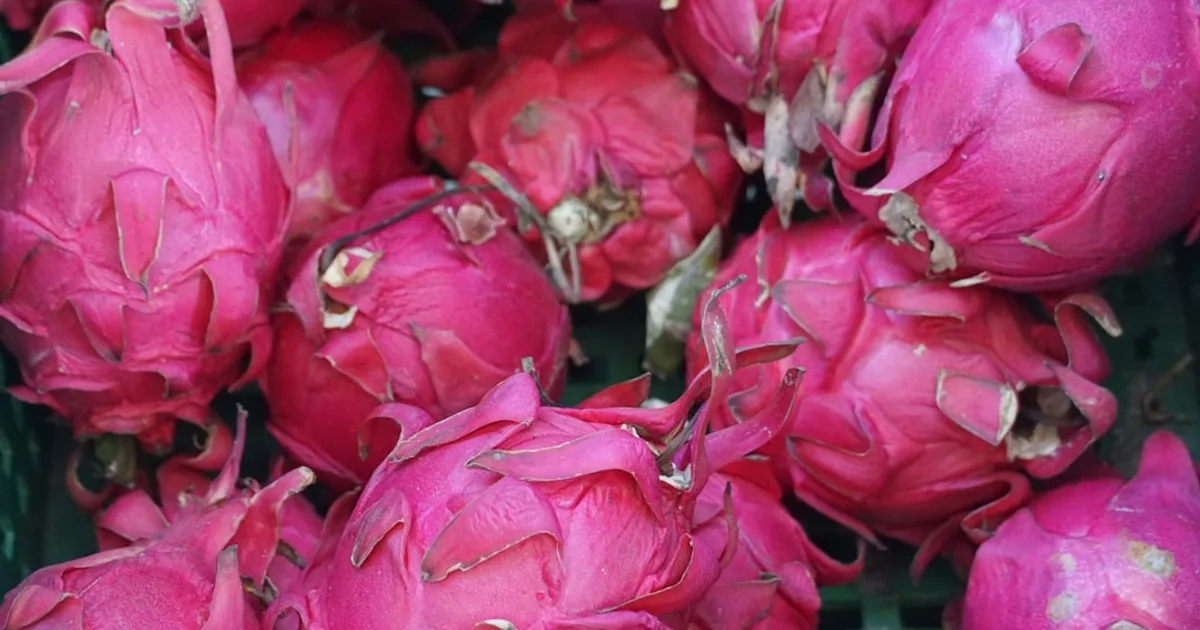
Walk into a Whole Foods and dragon fruit is $5-12 per individual fruit. A single fruit weighs 0.5-1.5 lb. Do the math and you’re looking at $4-24 per pound at the retail end, depending on variety and store. USDA AMS Specialty Crop Market News reports wholesale imported conventional product at $1-3/lb - which means the retail markup is not a rounding error. It’s a specialty premium that reflects scarcity, not difficulty. The plant itself is a cactus. In the right zone, it asks almost nothing of you.
What You’re Actually Growing
Dragon fruit is Selenicereus undatus - a vining tropical cactus native to Central America, now extensively cultivated across Southeast Asia, Australia, Israel, and increasingly the United States. It was classified as Hylocereus undatus for most of the 20th century. Following phylogenetic revision by Korotkova et al. (2017, Willdenowia), the genus Hylocereus was folded into Selenicereus, and the reclassification is now standard in botanical literature. You’ll still see the old name on nursery tags and in older extension publications - it refers to the same plant.
Three species dominate commercial production and home growing:
S. undatus (white flesh, pink-red skin) is what you find in most US grocery stores. Widely available, self-fertile, mild flavor, flesh that’s white to pale cream with small black seeds distributed throughout. Yields well and handles a wide range of conditions within its climate limits.
S. costaricensis (red flesh, deep magenta skin) is what you pay a premium for at farmers markets. The red pigmentation comes from betacyanins - the same pigment class as beets. Flavor tends toward higher Brix than S. undatus, with a more complex sweetness. Less common in mass market retail, which is exactly why home production of red-flesh varieties makes economic sense.
S. megalanthus (yellow skin, white flesh) is the outlying species - slower to establish, smaller fruit, but flavor that many tasters rate higher than either of the above. Typically requires cross-pollination to set fruit reliably. Hardest to source as a cutting in the US, but specialty tropical nurseries stock it.
All three are vining cacti with triangular, heavily modified stems and vestigial leaf structures called areoles. They climb using aerial roots and, given adequate support, can reach 20 feet or longer. A well-established plant produces for 20-30 years.
The ROI Case
The frontmatter numbers - days_min: 30, days_max: 50 - refer to the time from open flower to ripe fruit, not from planting to first harvest. State that clearly before you make any purchase decisions. First fruit on a rooted cutting in good conditions typically appears 12-18 months after planting. Some growers see flowers earlier; some wait two years. The timeline depends on cutting size at planting, root zone establishment, and how much sun the plant is actually getting.
Once established in year 2 and beyond, a mature plant produces 4-6 fruiting cycles per year. Each cycle can yield multiple fruits from multiple flowers. Individual fruits weigh 0.5-1.5 lb. A productive established plant at 10 lb/year is a conservative estimate - University of Florida IFAS trials on Florida-adapted varieties showed yields well above that in good production years.
The math at the frontmatter inputs:
- Annual yield: 10 lb
- Retail price equivalent: $8/lb (midpoint of grocery retail range)
- Gross annual value: $80
- Starting plant cost: $14.99
- Return on investment (year 2+): 5.3x per year
That $80 figure represents the grocery price you’re no longer paying. It also understates the case, because the red-flesh varieties you’re most likely to grow at home are $10-12/lb at specialty retail when you can find them at all.
The plant cost recovers itself inside the first productive harvest if you’re growing red-flesh varieties. After that, the economics are as favorable as any perennial fruit crop in this price tier.
Variety Comparison
| Variety | Flesh Color | Skin Color | Self-Fertile | Notes |
|---|---|---|---|---|
| ’American Beauty’ | Red-magenta | Deep red | Yes | Bred for US conditions; developed by California Tropicals; high Brix, widely available from specialty nurseries |
| ’Physical Graffiti’ | Deep red | Red | Yes | Higher sugar than standard red-flesh types; popular in home production trials; widely available |
| ’Neitzel’ | White | Pink-red | Yes | Disease-resistant; reliable producer in Florida conditions; UF IFAS trial performer; good starting variety for Zone 9-10 |
| ’Edgar’s Baby’ | White | Pink | Yes | Smaller fruit (6-8 oz), very high productivity per cycle; popular among home growers for consistent yields |
‘American Beauty’ and ‘Physical Graffiti’ command the highest retail price when sold at market - their flesh color and flavor profile are what buyers are actually paying a premium for. If your goal is maximum gross value per pound of fruit, grow red-flesh varieties.
‘Neitzel’ is the reliable workhorse for Florida growers specifically. University of Florida IFAS has conducted multi-year production trials on dragon fruit varieties suited to Florida’s humid subtropical climate, and ‘Neitzel’ consistently shows up in their recommendations for disease resistance and yield consistency. Their dragon fruit production guide (IFAS Extension Publication HS1018) is the most authoritative US-based growing resource available.
Zone Strategy
Zones 9-11 (South Florida, coastal California, Hawaii, South Texas): In-ground, perennial, minimal management. Plant in well-draining soil, install the support structure, water occasionally, and harvest. This is the zone where dragon fruit production is low-effort.
Zones 7-8 (Southeast, Pacific Northwest coast, mid-Atlantic): In-ground production is possible with frost protection. The plant can tolerate brief dips to 28°F, but extended freezes kill stems and damage the root crown. Growers in this range report reduced production and need to cover plants or use frost cloth on cold nights. Production is real but not as reliable as Zone 9+. Research your microclimate before committing to in-ground planting.
Zones 4-6 (most of the continental US): Container growing required. Dragon fruit in a container can produce real fruit - but the logistics change. The plant still needs full sun, still needs a support structure, and still needs the same well-draining soil. The new constraint is mobility: everything has to move inside below 32°F. See the container section below.
Support Structure
Dragon fruit is a vining cactus, not a self-supporting shrub. It needs a sturdy vertical support from day one. Getting this wrong - using a thin stake or wire trellis that gets overwhelmed in year 2 - means cutting the vine down and starting over, which costs you a year of production.
The standard approach in commercial and serious home production: a 4x4 or 6-inch diameter post, 5-6 feet tall, set in concrete or at minimum sunk 18 inches into the ground. At the top of the post, attach a circular platform - a wagon wheel, a cut piece of plywood, or a purpose-built frame - that gives the vine something to drape over as it matures. The vine grows up the post and then sprawls outward over the top platform in a canopy shape. Flowers and fruit hang down from this canopy.
The plant can exceed 20 feet of vine length and produce for 20-30 years. Install the post before you plant. Retrofitting a support around an established plant is difficult and risks damaging the root zone.
For container growers: the post has to be anchored into the container, not into the ground. Use a container large enough that the post can be set in concrete within the container itself, or use a tripod-style trellis designed for containers. The whole assembly has to be stable enough not to tip over in wind - a mature plant with a canopy of vines creates real wind resistance.
Pollination
This is the section most growing guides skip or summarize badly, and it’s the one that determines whether you get fruit or just flowers.
Most common commercial varieties of S. undatus are self-fertile - a single plant can pollinate its own flowers. Some varieties, including certain S. megalanthus types and some red-flesh cultivars, require cross-pollination from a second plant. Before you buy, confirm whether your variety is self-fertile or not. Specialty nurseries will tell you.
Dragon fruit flowers are night-blooming. Each flower opens for a single night. The window is roughly 10pm to 2am. The flower is pollinated, or it isn’t, and then it closes permanently by morning. In zones 9-11, where the plant grows outdoors in warm conditions, pollination happens naturally via sphinx moths (Manduca species primarily) and nectar-feeding bats. Most outdoor growers in the right climate never hand-pollinate and get good fruit set.
For indoor and container growers - and for anyone who notices poor fruit set despite flowering - hand-pollination is the fix. The technique is simple: take a small, dry paintbrush and swirl it around the center of a fully open flower, transferring pollen from the stamens to the stigma. Do this between 10pm and 2am while the flower is fully open. If you have multiple plants, move pollen between them. A single hand-pollination takes under a minute per flower.
Without pollination, the flower drops without setting fruit. If your plant flowers reliably but produces no fruit, pollination failure is the first thing to investigate.
Growing Requirements
Dragon fruit is a cactus from the wet tropics - which sounds contradictory until you understand that “drought tolerant” here means it handles dry periods well, not that it prefers constant drought. In active growth and during fruit development, it benefits from regular irrigation. In dormant or slow periods, it tolerates dryness without complaint.
Soil: Free drainage is non-negotiable. These plants do not tolerate wet feet. In native habitat, they grow in fast-draining rocky or sandy soils with high organic matter from leaf litter. In cultivation, a well-amended sandy loam or a commercial mix with 25-30% added perlite performs well. Target soil pH of 6.0-7.0. Heavy clay soils cause root rot and stem problems; amend heavily or build raised beds before planting in-ground.
Light: Six or more hours of direct sun daily is the floor. Eight or more hours produces the best yields. In marginal light conditions, the plant will grow but flower infrequently and set little fruit. This is not a shade-tolerant species.
Temperature: Active growth occurs between 65-95°F. Optimal fruiting temperature is 65-80°F. The plant slows below 50°F and can sustain tissue damage at 32°F and below, particularly at the growing tips. Established plants with good root systems can survive brief cold snaps but should not be left unprotected in sustained freezing weather.
Fertilization: Feed with a balanced fertilizer (10-10-10 or similar) three to four times during the growing season. During flowering and fruit development, shift to a lower-nitrogen, higher-phosphorus and potassium formula to support fruiting rather than vegetative growth. Container plants need more frequent feeding as nutrients leach with irrigation.
What Goes Wrong
Bacterial soft rot: This is the most common killer of dragon fruit, and it’s entirely preventable. Overwatering, poor drainage, or planting in compacted soil creates the anaerobic conditions that promote soft rot at the base and in the stems. The lesions are soft, water-soaked, and progress fast in warm humid conditions. There is no effective treatment once it gets established - cut out affected tissue aggressively, back to firm green flesh, and treat cut surfaces with a fungicide. Prevention is better drainage, not better fungicide.
Stem canker: Botryosphaeria species cause stem canker, which appears as discolored sunken lesions that spread along the stem face. It’s more common in humid production areas like Florida during wet seasons. Prune affected stems well below the visible lesion margin, sterilize tools between cuts, and remove infected material from the area entirely. University of Florida IFAS notes Botryosphaeria as a significant pathogen concern in Florida dragon fruit production.
Spider mites: Under hot, dry conditions - particularly in container culture or in greenhouse growing - two-spotted spider mite (Tetranychus urticae) populations can build quickly on the stems. You’ll see fine webbing and a stippled, dusty appearance on the stem faces. Overhead irrigation or a strong water spray physically disrupts the mites; insecticidal soap or neem oil applied directly to infested areas is effective. Avoid broad-spectrum insecticides that kill predatory mite species that would otherwise keep the population in check.
Birds and fruit bats: In zones 9-11, birds and bats will find ripe dragon fruit before you do if you’re not paying attention. The fruit develops color over a few days and then is at peak ripeness for roughly 3-5 days before quality deteriorates. Monitor closely as fruit colors up and harvest as soon as the wings - the leaf-like scales projecting from the fruit - start to wilt slightly at the tips. Netting works for birds; bats are harder to exclude without enclosing the entire canopy.
Harvest and Storage
Dragon fruit does not continue to ripen after picking - what you harvest is what you get. Timing the harvest to peak ripeness is the whole game.
Signs of readiness: the skin has fully developed its varietal color (bright pink-red for most varieties, deep yellow for S. megalanthus), the wings are starting to wilt and lose their green color at the tips, and the fruit yields slightly to firm pressure without feeling mushy. At this stage, the fruit pulls free from the stem with a quarter-turn twist - no cutting tool needed.
Refrigerate immediately after harvest. Dragon fruit holds well for up to a week under refrigeration. It tastes better cold - serve it straight from the refrigerator, halved and scooped out of the skin with a spoon.
For longer storage: halve, remove the flesh from the skin, cut into cubes, and freeze on a sheet pan before transferring to bags. The texture becomes softer after thawing, which rules out fresh eating, but frozen dragon fruit works well in smoothies. Red-flesh varieties hold their color through freezing better than white-flesh types.
Container Growing
Container production is viable but requires honest preparation. Half-measures don’t work here.
Container size: 25 gallons minimum for a mature, productive plant. Smaller containers allow the plant to survive but constrain the root system to the point where flowering and fruit set are inconsistent. The tradeoff with larger containers is weight: a 25-gallon container with moist mix and an established plant plus support post can weigh 100+ lb. Plan the mobility solution before you fill the container.
Potting mix: Use a very well-draining mix. A blend of 50% standard potting mix and 50% perlite or coarse horticultural sand is not excessive - this is a cactus. Standard potting mix alone, which retains moisture for moisture-loving plants, is often too wet for dragon fruit in a sealed container. Add a layer of gravel at the bottom if the drainage holes are not adequate.
Root binding: The plant tolerates being root-bound better than most fruiting plants, but production suffers when the root zone is completely saturated with roots and irrigation efficiency drops. Every 2-3 years, remove the plant from the container in late winter, prune the outer root mass by a few inches on all sides, and repot into fresh mix. This resets the root zone and maintains productivity.
The mobility constraint: Everything described above - the 25+ gallon container, the support post anchored in concrete, the established vine canopy - has to move indoors when temperatures drop to 32°F. In Zone 6, that’s potentially six months indoors. The overwintering location needs to be frost-free; temperatures between 40-55°F are fine. The plant will slow and may drop some stem segments, but it will resume growth when returned to warmth and full sun. Indoor light during overwintering is supplemental at best - the plant survives, it doesn’t thrive. Accept that your northern container dragon fruit will produce less than a Zone 9 in-ground plant. It’s the access and the variety selection that make it worth doing.
Related crops: Passion Fruit, Fig
Related reading: Fruit Tree Payback Timeline - when perennial crops cover their cost
Growing Dragon Fruit? Track your harvest value and break-even date in the Garden ROI app.
Get the App