
Okra
Abelmoschus esculentus
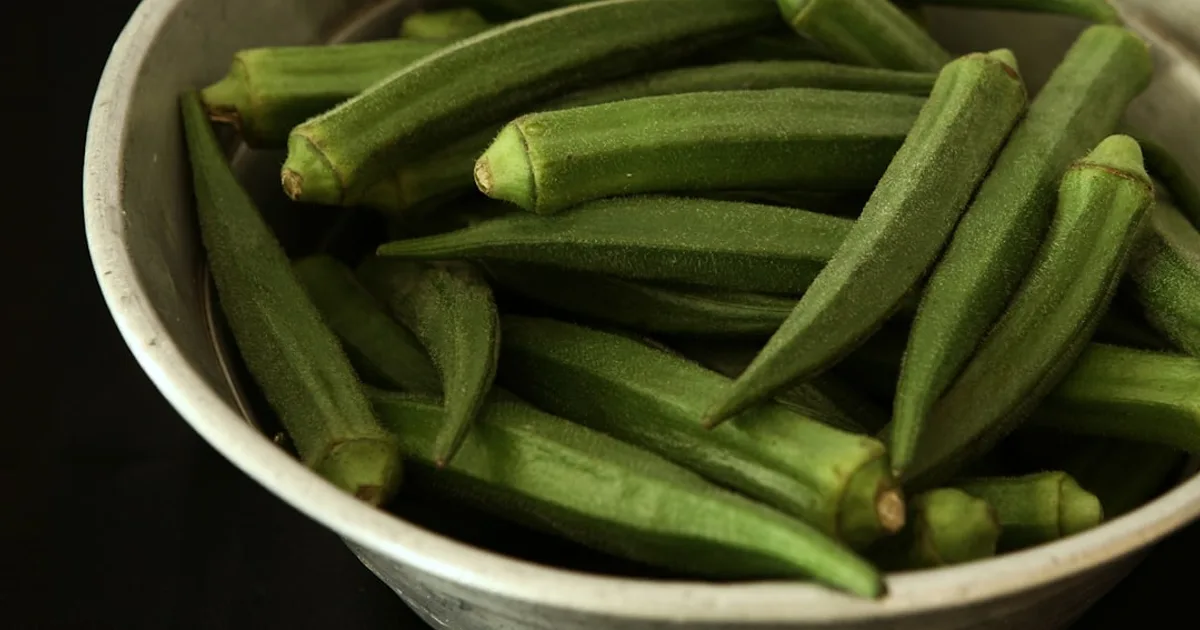
Okra (Abelmoschus esculentus) is not a forgiving crop. You can skip checking on your tomatoes for two or three days and nothing catastrophic happens. Miss okra for a day during peak season and the pods you were counting on are gone - woody, fibrous, and inedible. That’s not an exaggeration. A pod that was perfect at 2 inches on Monday morning will be a throwaway by Tuesday morning. This is the single most important thing to understand before you plant okra. At peak production in August heat, you check every plant every 24 hours. Not every two days. Every day.
If that schedule works for you, okra is one of the more rewarding crops you can grow. A $1.99 seed packet producing $10 to $32 worth of fresh pods is real. The math holds up. But the return depends entirely on whether you’re willing to show up daily.
What it actually is
Okra belongs to the mallow family (Malvaceae), in the same family as hibiscus and cotton. Native to northeast Africa, it was brought to the Americas via the transatlantic slave trade and became embedded in the food traditions of the American South. The plant grows 3-8 feet tall depending on variety, with large hibiscus-like flowers that open for a single day. Pods form within 24 hours of pollination and reach harvestable size in 4-5 days. In sustained heat, a single plant can produce dozens of pods over a season.
The pod itself is a seed capsule. Inside is a network of mucilaginous fiber - more on that in the cooking section - surrounding rows of seeds. You’re eating an immature seed capsule, which is why harvest timing matters so much. Once the capsule matures and the seeds harden, the pod walls go fibrous. There’s no recovering it.
The ROI case
A $1.99 seed packet contains enough seed for a 10-foot row. That row, in a good season in Zone 7 or warmer, will yield 5-8 lb of pods. Fresh okra retails at $2-4/lb at grocery stores; farmers markets in the South commonly run $3-5/lb (USDA AMS Specialty Crop Market News, 2023). Gross value from that single packet: $10-32 against $1.99 spent on seed.
The calculation assumes daily harvesting. Every pod you miss at the right size is value that disappears. A week of inconsistent harvesting can cut your actual yield by 30-40% and signals the plant to slow production - okra reduces pod output when mature pods are left on the plant, because biologically, it thinks it has done its job.
| Scenario | Yield | Price/lb | Gross Value | Seed Cost | Net Value |
|---|---|---|---|---|---|
| Conservative (Zone 6, short season) | 3 lb | $2.00 | $6.00 | $1.99 | $4.01 |
| Moderate (Zone 7, consistent harvest) | 5 lb | $2.50 | $12.50 | $1.99 | $10.51 |
| Strong (Zone 8+, full season) | 8 lb | $3.50 | $28.00 | $1.99 | $26.01 |
| Premium (farmers market, Burgundy variety) | 6 lb | $4.50 | $27.00 | $1.99 | $25.01 |
The ROI ratio is favorable in all scenarios. The limiting factor is geography and discipline, not economics.
Varieties worth knowing
Not all okra performs the same. The difference between 48 and 60 days to maturity matters in Zone 6 where the heat window is short. Here are the varieties with the most practical relevance for home gardeners:
| Variety | Type | Days to Maturity | Notes |
|---|---|---|---|
| Clemson Spineless | Standard green | 55 days | AAS winner 1939; most widely grown in the U.S.; reliable pod set, semi-upright growth to 4-5 ft |
| Annie Oakley II | Compact green | 48 days | Best option for short-season climates; productive in Zone 5-6 with indoor starts |
| Burgundy | Red-stemmed ornamental + edible | 60 days | AAS winner 1988; striking red pods and stems; pods turn green when cooked; commands premium at farmers markets |
| Jambalaya | Compact bush | 50 days | Stays under 4 feet; suitable for containers; good branching habit means more pods per square foot |
| Star of David | Heirloom | 55-60 days | Fat, heavily ribbed pods; harvest at 2 inches or it gets tough faster than standard varieties; interesting texture |
Clemson Spineless is the default for most gardeners and there’s a reason it has dominated home gardens since 1939 - it performs consistently across a wide range of conditions. If you’re in Zone 5 or 6 and want to hedge against a short season, Annie Oakley II is the better call. The 7-day head start matters when your frost comes in late September.
Burgundy earns its place not just as a visual novelty but as a market differentiator. If you sell at farmers markets, a basket of dark red okra pods stops people. The flavor is comparable to Clemson Spineless.
Heat requirements and planting timing
Okra needs soil temperatures above 65°F to germinate reliably (USDA ARS guidelines). Below that, seeds rot in the ground before sprouting. It produces best when soil and air temperatures stay in the 75-90°F range. This is not a crop that tolerates a cool summer.
In practical terms by zone:
- Zones 9-10: Direct sow February-March. Okra thrives here; the limiting factor is the summer heat ceiling, not the bottom.
- Zone 8: Direct sow April-May after last frost. No indoor starting needed in most cases.
- Zone 7: Direct sow mid-May when soil has warmed consistently. Starting indoors 3-4 weeks ahead can extend the season.
- Zones 5-6: Do not direct sow before early June. Soil in May is too cold. Start indoors 3-4 weeks before your target transplant date - this gets you 2-3 extra weeks of production at the end of the season that would otherwise be lost to frost. Use black plastic mulch to warm soil and accelerate establishment.
- Zones 3-4: Okra is a stretch. You can succeed with aggressive season extension (row covers, black plastic, south-facing beds against a wall), but expect reduced yield and choose Annie Oakley II or Jambalaya for the shortest possible days to maturity.
Soak seeds overnight before planting. Okra has a hard seed coat that slows germination; overnight soaking in room-temperature water cuts germination time from 10-14 days down to 5-7. Sow 1 inch deep, 6-9 inches apart, thin to 18-24 inches once established. Crowding reduces airflow and invites fungal issues.
Growing requirements
Full sun is non-negotiable. Eight hours minimum; more is better. Okra in partial shade grows tall and thin with minimal pod set. The plant is photosynthetically efficient in high heat partly because it can keep its stomata open in conditions that would stress other vegetables.
Soil pH of 6.0-7.0 suits okra well. It tolerates a range of soil types but does best in well-drained, moderately fertile ground. Waterlogged roots in hot, humid conditions cause root rot quickly - the same subtropical heat that okra loves also accelerates soil pathogen activity. Raised beds or slightly mounded rows in heavy clay help.
Water at 1 inch per week during establishment. Once established, okra handles drought better than most vegetables in your garden. It evolved in arid subtropical conditions. Reduce watering frequency as plants mature and focus on deep, infrequent irrigation rather than frequent shallow watering. Deep roots make drought-tolerant plants.
Side-dress with a balanced fertilizer (10-10-10) when plants reach 12 inches tall. Hold back on nitrogen after that - excess nitrogen drives foliage and delays pod production. Okra that is growing vigorously tall but setting few pods is often getting too much nitrogen.
The 24-hour window, explained
This bears repeating with more specificity. At air temperatures above 85°F - which is most of August in Zone 6 and above, and most of summer in Zone 7 and warmer - an okra pod grows faster than you expect. A pod that measures 1.5 inches in the morning can be 2.5 inches by evening. That’s still fine. That same pod at 24 hours can be 3-4 inches, still tender, still worth harvesting. At 36-48 hours in that same heat, the pod walls have begun to harden, the seeds are developing, and the texture shifts from tender to fibrous.
The snap test tells you where you are: take the pod tip and bend it. A tender pod snaps cleanly, the way a green bean does. A maturing pod bends. A woody pod just bends further without breaking. Once it bends, it’s heading toward inedible. Use it immediately or discard it - there’s no improvement from that point.
The second reason to harvest on schedule: pods left on the plant tell the plant it has successfully produced seed. Pod production slows. You’re not just losing one pod; you’re reducing the plant’s incentive to keep producing. Pull even the woody pods you’re discarding. Keep the plant thinking it needs to keep trying.
At the height of a hot August, some gardeners harvest twice a day - morning and evening. That’s not excessive; it’s appropriate to conditions.
What goes wrong
Corn earworm (Helicoverpa zea) bores into pods, leaving entry holes and frass. Pick affected pods immediately and discard. Bacillus thuringiensis var. kurstaki (Bt) applied at pod formation gives preventive control; it’s most effective on small larvae before they bore in.
Stink bugs - both the brown marmorated stink bug (Halyomorpha halys) and native Euschistus species - pierce pods and cause internal damage and discoloration. Row cover exclusion is the most practical control for home gardens. Most insecticidal options have limited effectiveness against adult stink bugs.
Root knot nematodes (Meloidogyne spp.) cause stunted growth and knotted root structures, particularly in warm, sandy soils in the Southeast. Resistant varieties exist; soil solarization before planting (clear plastic laid over moist soil for 4-6 weeks in full sun) reduces populations. This is worth doing in previously affected beds.
Fusarium wilt (Fusarium oxysporum f. sp. vasinfectum) causes wilting and yellowing that progresses to plant death. No treatment once active; use disease-free transplants, rotate crops, and choose resistant varieties. ‘Clemson Spineless’ has moderate resistance.
Powdery mildew appears on leaves late in the season in humid climates. It rarely affects pod production if the plant is otherwise healthy. Remove heavily affected leaves to improve airflow; potassium bicarbonate sprays slow spread.
A note on handling: even varieties marketed as “spineless” have fine trichomes on pods and stems that irritate sensitive skin. Some people react more strongly than others. Wear gloves during heavy harvests regardless of the label.
Managing the mucilage
Okra’s reputation for sliminess comes from mucilage - primarily a water-soluble fiber compound (mucin) concentrated in the pod’s interior. Mucilage is useful in gumbo, where it serves as a natural thickener. In other preparations it can be off-putting if you don’t know how to manage it.
The mechanism matters here. Mucin is activated by moisture and heat in combination. Water alone doesn’t fully release it; moist heat (steaming, boiling, braising) activates it quickly and maximizes sliminess. Dry heat deactivates it before moisture can fully activate it - this is why roasted, grilled, and fried okra doesn’t have the same texture problem.
Dry-heat methods that minimize slime:
- Roast whole pods at 400°F for 15-20 minutes. Toss with oil and salt. The pods caramelize at the cut ends and the interior stays tender without being slimy.
- Grill whole pods over high heat. Same principle - fast, dry heat.
- Fry in shallow oil. Cornmeal-dusted fried okra is a Southern staple precisely because frying solves the texture problem completely.
Pickling eliminates mucilage entirely. A standard dill brine - 1:1 water and vinegar, salt, garlic, dill - pickled okra has a firm, snappy texture with no sliminess. It’s also an excellent use for pods that are a day older than ideal but not yet woody.
For gumbo and stews where you want the thickening effect, embrace it. The mucilage is doing exactly what you want. Slice pods crosswise and add them to the pot; they’ll thicken the liquid as they cook.
Southern and Indian culinary context
Gumbo is the primary American application, and okra is not optional in traditional gumbo - it’s structural. The word “gumbo” itself is derived from ki ngombo, a Bantu word for okra. Using a roux as the only thickener without okra is a different dish.
Indian bhindi masala is arguably a more accessible entry point for gardeners who don’t make gumbo regularly. The dish is whole or halved okra pods stir-fried in oil with mustard seeds, onion, tomato, and spices (cumin, coriander, turmeric, chili). The high heat of the stir-fry manages the mucilage, and the result is a dry, spiced vegetable dish where okra reads as a legitimate, flavorful vegetable rather than a novelty. Both cuisines treat okra with respect. The American tendency to treat it as a fried curiosity misses most of what it can do.
Harvest and storage
Standard harvest size is 3-4 inches for most varieties. Know your variety: ‘Star of David’ should be harvested at 2 inches or it toughens faster than other types. ‘Perkins Long Pod’ can be picked at 5-6 inches. The snap test beats the ruler for in-field judgment.
Fresh okra keeps 2-3 days refrigerated. Do not store in a sealed bag - it needs airflow. Store loosely in a paper bag or uncovered container in the crisper.
For freezing: slice pods crosswise into 1/2-inch rounds and freeze without blanching on a sheet pan, then transfer to bags. Frozen okra works well in cooked applications - gumbo, soups, stews - but becomes mushy when thawed raw. Expect that and plan accordingly.
Pickling is the best preservation method if you want something usable as a standalone vegetable or condiment. Whole pickled okra pods retain good texture and the acidity of the brine complements most of what you’d pair them with.
Related crops: Sweet Pepper, Eggplant
Related reading: Best Crops by Zone - which heat-loving crops actually produce well in your hardiness zone
Growing Okra? Track your harvest value and break-even date in the Garden ROI app.
Get the App