
Purslane
Portulaca oleracea
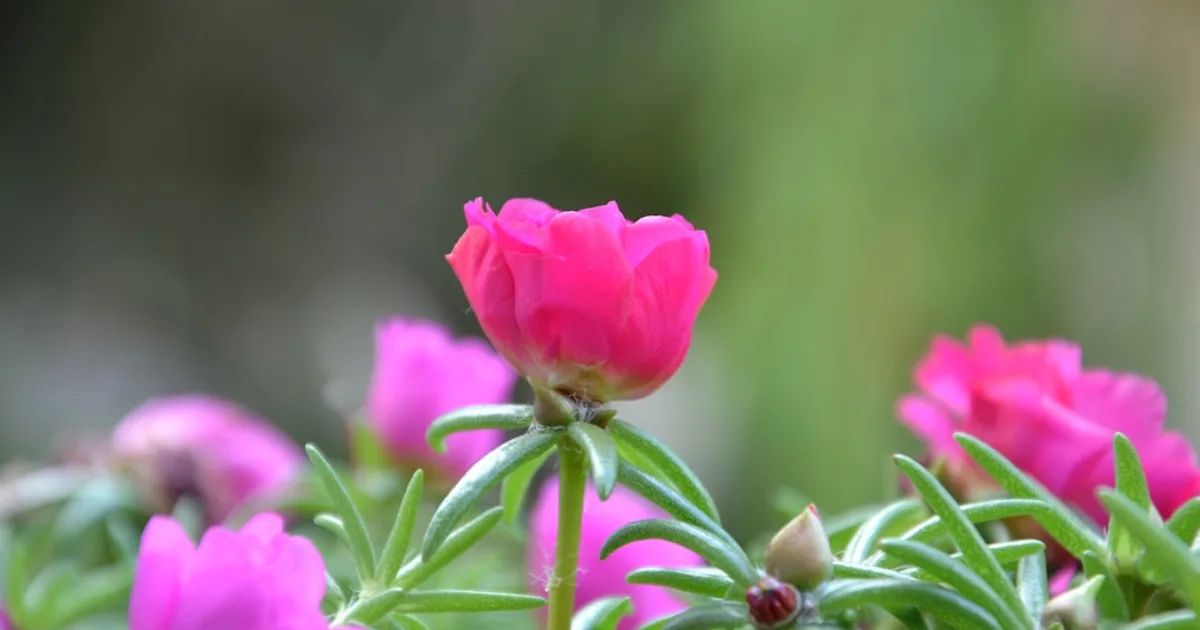
Purslane (Portulaca oleracea) has the highest omega-3 fatty acid content of any leafy green vegetable - roughly 300-400 mg per 100g serving, primarily as alpha-linolenic acid (ALA) (Simopoulos AP and Salem N, “Purslane: a terrestrial source of omega-3 fatty acids,” New England Journal of Medicine, 1986). That’s 5-7 times more than spinach. It grows in compacted, poor, dry soil where most vegetables fail. And it sells for $3-6 per pound at farmers markets where it appears at all (USDA AMS Specialty Crop Market News, 2023). The problem is that most gardeners spend significant effort killing it as a weed, which is a waste of both effort and an edible crop.
What it actually is
Purslane is a prostrate succulent annual native to North Africa and the Middle East, now naturalized throughout the temperate world. The species Portulaca oleracea is what you find growing uninvited in garden beds and sidewalk cracks - it’s the wild form. Cultivated varieties bred for larger leaves and upright growth (like ‘Goldgelber’ and ‘Gruner’ European varieties, or ‘Golden Purslane’) are more productive and more palatable than the wild form, which tends toward small, scattered leaves on prostrate stems.
The leaves and stems are the edible portion. The flavor is mild, slightly lemony and mucilaginous (similar to okra in texture when cooked, without the pronounced sliminess). The succulent quality comes from the water content and organic acids - primarily malic acid and oxalic acid, same as spinach. People who like arugula and mâche tend to like purslane. People expecting it to taste like lettuce are sometimes surprised by the texture.
The nutritional case: what the numbers actually show
The omega-3 claim is real but gets repeated without context. Here are the actual values from USDA FoodData Central (2023), comparing four leafy greens per 100g raw weight:
| Green | Omega-3 ALA (mg) | Vitamin C (mg) | Calcium (mg) | Iron (mg) |
|---|---|---|---|---|
| Purslane (Portulaca oleracea) | 350-400 | 21 | 65 | 1.99 |
| Kale (Brassica oleracea) | 180 | 93 | 135 | 1.47 |
| Spinach (Spinacia oleracea) | 138 | 28 | 99 | 2.71 |
| Arugula (Eruca vesicaria) | 160 | 15 | 160 | 1.46 |
Source: USDA FoodData Central, NDB entries for each species (2023).
Purslane’s omega-3 content leads leafy greens by roughly 2x over the next closest competitor. The vitamin C and calcium are unremarkable compared to kale. The iron is reasonable but spinach leads on that measure. The specific value of purslane is the omega-3 content - it’s not a general nutritional powerhouse, it’s unusually good at one thing. That’s the claim worth making.
The ROI case
A packet of cultivated purslane seed costs $2.49. In practice, if purslane already volunteers in your garden (which it does across most of the US), you can select the largest-leaved plants, let them set seed, and collect seed for future plantings at no cost. Wild purslane is edible - it just has smaller leaves and lower per-plant yield than cultivated varieties.
The nutritional premium - omega-3 content 2x higher than kale per 100g - drives farmers market demand. Buyers who understand the nutritional profile pay $5-6/lb readily.
Cultivated vs. Wild: The Yield Difference
The wild type (Portulaca oleracea var.) that volunteers in garden beds has prostrate stems, small leaves (0.25-0.5 inch), and a growth habit that stays close to the ground. It’s edible but harvesting it requires picking through it carefully for a modest return.
Cultivated varieties - ‘Goldgelber,’ ‘Gruner,’ ‘Golden Purslane’ - grow upright 8-12 inches tall with leaves 1-2 inches across. The difference in harvestable mass per square foot is roughly 3-5x in favor of cultivated types at equivalent spacing. (University of Vermont Center for Sustainable Agriculture specialty crop trial data, cited in ATTRA Purslane: Specialty Crop Profile, 2019.)
If wild purslane is already in your beds, the question is whether it’s worth seeding cultivated varieties on top. The answer depends on what you want to do with it. For salads and cooking, cultivated is worth the seed cost. For occasional use or curiosity, wild is fine and free. For farmers market sale, you need the cultivated form - the wild type doesn’t present well and doesn’t yield efficiently enough to be worth bringing to market.
Cutting Schedule and Cumulative Yield
A 4x4 foot bed, direct-sown after soil reaches 65°F and thinned to 6-inch spacing, holds roughly 16 plants. First harvest arrives 30-35 days after germination.
| Cutting | Timing (Zone 6) | Yield (4x4 bed) | Gross value at $4/lb |
|---|---|---|---|
| First | Day 30-35 (late June if sown June 1) | 0.5-1 lb | $2-4 |
| Second | 3-4 weeks later (mid-July) | 0.8-1.5 lb | $3.20-6 |
| Third | 3-4 weeks later (mid-August) | 0.8-1.5 lb | $3.20-6 |
| (optional fourth - before bolting) | Early September | 0.5-0.8 lb | $2-3.20 |
| Season total | 2.6-4.8 lb | $10.40-19.20 |
Source: Yield estimates from ATTRA Purslane: Specialty Crop Profile (2019); pricing from USDA AMS Specialty Crop Market News (2023).
A 4x4 bed costs $2.49 in seed and nothing in irrigation beyond rainfall. The season return of $10-19 from a crop that actually thrives on neglect is legitimate. The key is cutting before plants bolt - once flowering begins, leaf quality drops and the plant is putting energy into seed rather than foliage.
Growing requirements
Purslane is warm-season only. It does not germinate in cold soil - wait until soil temperature is consistently above 65°F. In zones 5-7, that means late May. Direct sow seeds on the soil surface in full sun; seeds are tiny and need light for germination. Thin to 6-inch spacing when seedlings emerge.
It thrives in the conditions that stress other crops: sandy, low-fertility, dry soil is fine. Soil pH 5.5-7.5 - it’s not particular. High fertility and consistent water produce large, lush leaves but are unnecessary. Purslane’s drought tolerance is genuine - established plants survive weeks without rain in most climates.
Do not add high-nitrogen fertilizer. Excessive nitrogen produces rank, bitter-tasting foliage.
What goes wrong
Slugs are the primary pest on seedlings - they find young purslane more palatable than established plants. Protect young plants with diatomaceous earth or slug traps.
Root rot from waterlogged soil kills purslane despite its general toughness. The one condition it doesn’t handle is standing water. If your garden bed drains poorly, mound the bed or plant elsewhere.
Competing weeds - a common problem when you intentionally sow what most gardeners consider a weed - is really about confusion at the seedling stage. Cultivated purslane germinates in a more uniform, dense stand than the scattered wild type. Mark your sown area clearly.
Bolting in late summer produces viable seed and is not a failure - it’s how the plant perpetuates. Harvest before plants bolt for best leaf quality, or allow bolting and collect seed for the following year.
Harvest and storage
Cut entire stems 2-3 inches above ground level when plants are 6-8 inches tall. The plant regrows from the remaining stem and root for additional cuttings. Alternatively, harvest individual leaves and stem tips as needed - the plant tolerates selective picking.
Store harvested purslane stems in a glass of cold water in the refrigerator, like fresh-cut flowers. It holds for 5-7 days this way. Don’t seal in a bag without water access - it wilts quickly.
Purslane wilts to about half its volume when cooked. The culinary uses are more varied than most gardeners realize:
Raw: Middle Eastern fattoush is purslane’s most traditional application - torn stems and leaves in a bread salad with tomato, cucumber, and sumac dressing. The slight crunch from the succulent stems holds up better than delicate lettuces. Also works raw in any green salad where a slightly mucilaginous texture is acceptable.
Cooked - Greek horta style: Blanch stems for 2 minutes, drain, dress with olive oil and fresh lemon juice. This is how wild purslane is eaten throughout Greece, Turkey, and the Eastern Mediterranean. The heat reduces bitterness slightly and the olive oil integrates the mild flavor.
Soup thickener: The mucilaginous quality - from polysaccharides in the cell walls - thickens soups and stews the same way okra does, without the pronounced okra flavor. Add to lentil soups or bean stews in the last 10 minutes of cooking. A cup of fresh purslane wilted into a pot of soup thickens the broth noticeably.
What doesn’t work: Long cooking. After 15-20 minutes, purslane disintegrates and the mucilaginous quality becomes slimy rather than pleasant. Treat it like spinach - brief contact with heat is the right approach.
Related crops: Arugula, Carrot, Spinach
Related reading: Beginner Homestead Crops - crops that produce in marginal conditions where higher-maintenance vegetables fail
Growing Purslane? Track your harvest value and break-even date in the Garden ROI app.
Get the App