
Arugula
Eruca vesicaria subsp. sativa
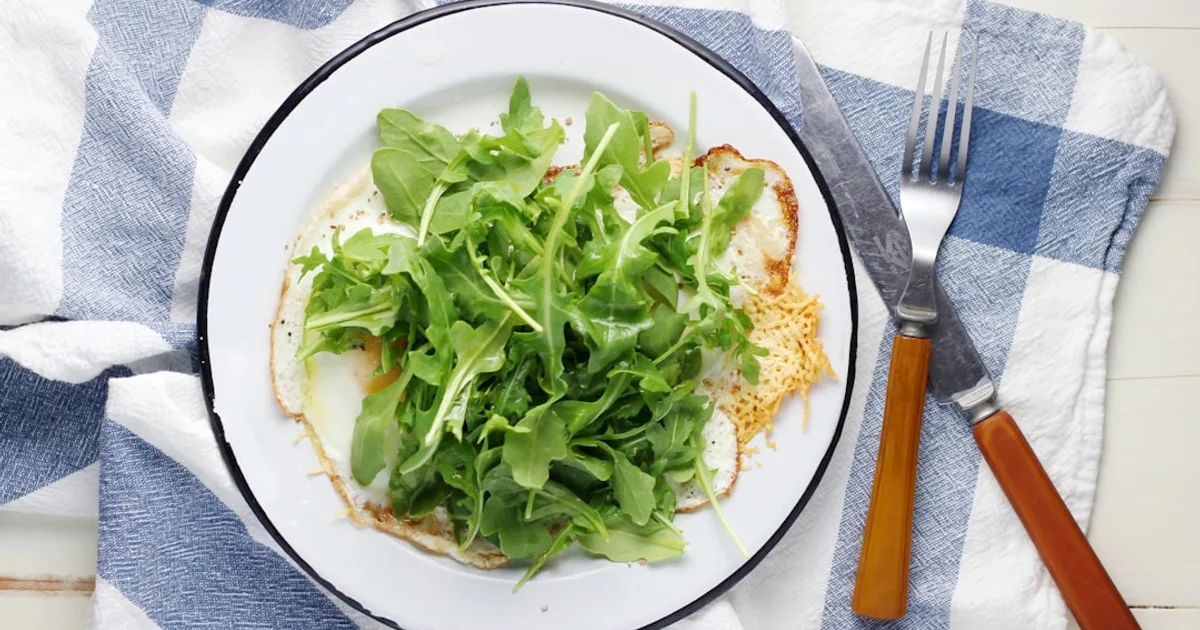
Arugula is the fastest-payback crop in a home garden. A single square foot of bed space seeded with arugula costs roughly $0.10 in seed. In 30 to 40 days, that square foot yields 0.25 to 0.5 pounds of baby greens. At $6 to $10 per pound retail (USDA Agricultural Marketing Service Specialty Crops Market News, 2023-2024 terminal market averages for packaged baby arugula), that’s $1.50 to $5.00 in recovered grocery cost from a single square foot in just over a month. No other food crop - not tomatoes, not peppers, not beans - approaches that payback speed. Tomatoes require 60 to 80 days before first fruit and heavy infrastructure; arugula requires a rake and some seed.
A $2.49 packet of arugula seed contains enough seed to harvest somewhere between 15 and 20 pounds of baby greens across a full season. At Whole Foods, baby arugula runs $8 to $10 per pound. Do that math and you’re looking at $120 to $200 in grocery value from a packet that costs less than a cup of coffee. No other salad green comes close on a per-dollar-of-seed basis. That’s the whole argument, and it’s a strong one - but only if you run successions correctly and understand when your arugula is producing its best leaves.
What you’re actually growing
Standard arugula (Eruca vesicaria subsp. sativa) is an annual brassica that goes by a half-dozen names depending on where you grew up: garden rocket, roquette, rucola, rughetta. The peppery, slightly bitter flavor comes from glucosinolates - the same class of sulfur-containing compounds that give mustard its bite and broccoli its smell. Glucosinolate concentration varies by variety, by growing conditions, and critically, by season.
What most American seed packets label as “arugula” or “roquette” is this annual type. But there’s a second species that shows up in high-end restaurants and specialty grocers, and it’s a different plant entirely.
Wild arugula (Diplotaxis tenuifolia) - sometimes sold as Sylvetta or perennial arugula - is a different genus. The leaves are more deeply lobed, almost like a smaller version of oak leaf lettuce. The flavor is more intense and complex than standard arugula - more peppery, with an almost nutty undertone. More importantly, D. tenuifolia is a perennial in zones 6 and warmer, meaning it regrows from its root system year after year. It bolt-resists much better than standard arugula in heat, though it grows more slowly. You’re looking at 40+ days to first harvest versus 21-28 days for fast standard varieties.
The practical comparison between the two types:
| Trait | Standard Arugula (E. vesicaria) | Wild Arugula (D. tenuifolia) |
|---|---|---|
| Type | Annual | Perennial (zones 6+) |
| Days to baby leaf | 21-28 | 40-50 |
| Flavor intensity | Moderate to peppery | Intense, complex, nutty |
| Bolt resistance | Low to moderate | High |
| Regrows from roots | No | Yes |
| Best variety for heat | Astro | Sylvetta |
| Leaf shape | Oval, rounded lobes | Deeply cut, oak-like |
| Typical retail price | $6-8/lb | $9-12/lb |
For ROI purposes, standard arugula wins on volume and speed. Wild arugula wins on flavor per leaf and perennial regrowth. Serious growers run both: standard arugula for succession harvests, wild arugula as a semi-permanent bed that you harvest lightly throughout the season.
Among standard varieties, Astro is the go-to for heat tolerance - it’s the variety most commonly recommended by university extension programs for extending the spring harvest window. Runway is another heat-tolerant option with slightly larger leaves. For pure speed and mild flavor, standard unselected roquette types from most seed companies will perform fine.
The ROI case, with actual numbers
Here’s where arugula separates itself from other high-value crops. The math requires thinking about it as a succession crop rather than a single planting.
A 10-square-foot bed - roughly 2 feet wide by 5 feet long - will yield 3 to 4 pounds of baby arugula per cut when the planting is full and growing well (University of California Cooperative Extension, Vegetable Research & Information Center yield data for salad greens). With cut-and-come-again harvesting, you get 2 to 3 cuts per planting before quality declines. That’s 6 to 12 pounds of arugula per 10-square-foot planting.
At $8/lb (mid-range for Whole Foods baby arugula pricing), a single 10-square-foot planting over its full life produces $48 to $96 in grocery value. At $2.49 for the seed packet, the seed cost barely registers against that return.
The reason to run successions isn’t yield per planting - it’s continuity. Any single planting has maybe a 4-to-6-week window of peak quality before heat triggers bolting in spring, or before cold hardens the leaves into bitterness in late fall. Staggered plantings keep you in fresh arugula for 10 to 14 weeks per season window rather than 4 to 6.
Full season value from one $2.49 packet (Zone 5-6):
A 2-square-foot row sowing yields approximately 0.6 to 0.8 pounds per cut (at the baby leaf stage), with 2 to 3 cuts before quality drops. Call it 1.5 pounds per sowing across its useful life. Eight to ten sowings across spring and fall gives you 12 to 15 pounds total. At $8/lb, that’s $96 to $120 in grocery value. The seed packet contains far more seed than you need for this - you’ll likely use half the packet and save the rest for next year.
The ROI ratio on arugula seed is somewhere between 40:1 and 50:1 at conservative grocery prices. Almost nothing else in the kitchen garden performs at that ratio.
Succession planting: Zone 5-6 calendar
The key discipline is treating arugula like a relay race, not a marathon. Plant a small section, let it come to size, harvest it, and already have the next one coming along. Each sowing covers a 2-square-foot section - a single row about 2 feet long and 12 inches wide. That’s enough for two to three serious salads per cut.
Spring window: March 1 through May 15
Arugula germinates at soil temperatures as low as 40°F and tolerates frost into the low-to-mid 20s°F once established. In Zone 5-6, direct sowing outdoors begins in late February under row cover, or March 1 unprotected in most years. The spring window closes when consistent daytime highs hit 80°F - in Zone 5-6, that’s typically mid-to-late May.
Fall window: August 15 through October 15
Soil temperatures in late August are warm enough for fast germination (5-7 days at 65-70°F soil temp), and the cooling air temperatures through September and October slow bolting and improve flavor. The fall window closes when hard frost (below 25°F) becomes regular, though row cover extends it another 2 to 3 weeks.
Zone 5-6 Succession Calendar
| Sowing # | Direct Seed Date | Expected First Cut | Notes |
|---|---|---|---|
| 1 | Mar 1 | Apr 1-7 | Under row cover; soil temp may be 38-42°F, germination slow |
| 2 | Mar 10 | Apr 10-14 | Row cover optional; last frost risk still present |
| 3 | Mar 20 | Apr 18-22 | Last frost typically Apr 15-30 in Zone 5; protect if needed |
| 4 | Apr 1 | Apr 29 - May 5 | Fastest spring germination; soil warming |
| 5 | Apr 10-15 | May 8-15 | Last spring sowing; bolting likely by June 1 |
| 6 | Aug 15 | Sep 10-15 | Fall restart; soil warm, germination fast |
| 7 | Aug 25 | Sep 18-22 | |
| 8 | Sep 5 | Oct 1-5 | Peak quality fall window begins |
| 9 | Sep 15 | Oct 10-15 | Harvest before hard frost; row cover extends |
| 10 | Sep 25 | Oct 20-25 | Row cover essential; may overwinter as small rosettes |
With this schedule, you have arugula available from early April through mid-May and again from mid-September through late October - roughly 12 to 14 weeks of active harvest across the season.
Zone 7+ winter production: the case for year-round arugula
If you’re in Zone 7 or warmer (average minimum winter temperatures above 0°F), arugula doesn’t have to be a spring and fall crop. It can be a near-year-round one.
Arugula survives light frosts without protection down to about 22 to 25°F. Under a single layer of floating row cover, it tolerates temperatures down to about 10 to 15°F. That covers most of winter in Zones 7 through 9. Below that, you need a low tunnel or cold frame. In Zones 9 and 10, arugula can grow through December, January, and February in open beds with no protection at all - the limiting factor shifts from cold to heat, and your summer gap becomes April through September rather than June through August.
Zone 7 year-round succession calendar:
| Sowing # | Direct Seed Date | Expected First Cut | Notes |
|---|---|---|---|
| 1 | Feb 15 | Mar 17-22 | Under row cover; last frost typically late Mar in Zone 7 |
| 2 | Mar 1 | Apr 1-5 | Row cover optional by late March |
| 3 | Mar 15 | Apr 14-18 | Last spring sowing before heat pressure builds |
| 4 | Apr 1 | May 1-5 | Bolt watch begins; harvest at 3 inches |
| --- | Apr 15 - Aug 1 | --- | Summer gap; direct seeding fails above 85°F soil temp |
| 5 | Aug 1 | Aug 28 - Sep 4 | Early fall restart; evenings cooling, germination still reliable |
| 6 | Aug 15 | Sep 12-17 | |
| 7 | Sep 1 | Sep 29 - Oct 5 | Peak fall quality |
| 8 | Sep 15 | Oct 13-18 | |
| 9 | Oct 1 | Oct 29 - Nov 4 | Row cover helpful as nights drop below 40°F |
| 10 | Oct 15 | Nov 12-17 | Row cover required; growth slows |
| 11 | Nov 1 | Dec 5-15 | Winter planting; very slow growth under cover |
| 12 | Jan 15 | Feb 20-28 | Late winter planting as days lengthen |
In the coldest months - December through February - growth slows because arugula’s optimal growth temperature is 45 to 65°F and short days limit photosynthesis. A November planting may take 5 to 6 weeks to reach harvest size instead of the usual 3 to 4. But the plants do survive, and they do produce. Eliot Coleman’s work on overwintering salad crops (Coleman, Four-Season Harvest, 1999) documents arugula as one of the hardiest candidates for cold-climate tunnel production precisely because it tolerates temperature swings and recovers quickly after freezes.
Wild arugula (Diplotaxis tenuifolia) is particularly suited to year-round Zone 7+ production. Because it’s perennial in Zone 6 and warmer, you can establish a permanent patch that comes back each spring from its root system. It grows more slowly than standard arugula - expect 45 to 60 days for a first cut rather than 28 to 35 - but once established, the regrowth is faster than starting from seed each time. A wild arugula patch in its second or third year can produce its first spring cut before standard arugula seedlings are even two inches tall.
Spring vs. fall flavor: they’re not the same crop
This is the thing most arugula guides skip, and it matters.
Spring arugula grown in warming soils with increasing day length is more peppery than fall arugula of the same variety, harvested from the same seed packet. The difference is real - some cooks who claim to dislike arugula have only ever eaten the spring version.
The mechanism is glucosinolate synthesis. Cool nights - consistently below 55°F - slow glucosinolate production. Arugula plants growing in September and October, sizing up through nights in the 40s, produce leaves with lower glucosinolate concentrations than the same plants would in April and May as temperatures climb. The result is milder, slightly sweeter flavor with the peppery bite present but not aggressive. This is the arugula that works in a simple salad with lemon and Parmesan. Spring arugula from the same bed in May, with leaves that have seen a week of 75°F afternoons, is sharper - better in a context where you want the bite, like on top of a pizza or in a grain bowl where the dressing is rich.
The arugula at Whole Foods for $8-10/lb is almost always fall-grown or greenhouse-grown - it’s been selected for mild flavor because that’s what sells in salad mixes. If you’ve ever bought a clamshell of baby arugula at a grocery store and thought “this is mild, almost sweet,” and then grown your own in May and thought “this is much more aggressive” - that’s the seasonal variation, not a variety difference.
For the most grocery-comparable product from your garden, prioritize your fall sowings (August 15 through September 15) and harvest them young, at 3 to 4 inches, before the plant develops more mature flavors.
Growing requirements
Direct seed only. Arugula does not transplant well - the tap root resents disturbance. Broadcast seed over prepared soil or sow in rows 6 inches apart, covering seeds barely (1/8 inch or less). Arugula seeds are small; a light rake-in is usually sufficient.
Germination occurs in 3 to 7 days at soil temperatures of 45 to 70°F. At 75°F, germination rates drop noticeably. Above 85°F, most seeds won’t germinate at all - which is why direct-seeding arugula for a summer planting doesn’t work in most of the US.
Spacing: thin to 4 inches apart for standard baby leaves, 6 inches for larger mature leaves. Crowded plants bolt faster and are more susceptible to downy mildew. In practice, most home gardeners scatter-sow more thickly and harvest the thinnings as microgreens in the first two weeks.
Soil pH of 6.0 to 7.0. Arugula is a light feeder - compost-amended soil at planting is sufficient for most spring and fall beds. Heavy nitrogen applications produce lush, fast growth but can hasten bolting and reduce the flavor concentration that makes arugula worth growing. Water consistently; drought stress is a direct trigger for premature bolting. One inch per week is the standard, more during hot spells.
Cut-and-come-again harvesting
Harvest at 3 to 5 inches for baby arugula; 6 to 8 inches for full-size leaves. Use scissors or a sharp knife to cut 1 inch above the soil line - leaving the growing point and lowest leaves intact. The plant regrows from the crown in 10 to 14 days under good conditions.
A few things to know about successive cuts from the same planting:
The first cut from any sowing is the best. The leaves are at peak tenderness, glucosinolate levels are at their lowest for that variety, and the plant hasn’t yet experienced any stress. Use these for salads where arugula is the featured ingredient.
The second cut is slightly more intense in flavor. Still excellent, appropriate for the same uses. Some people prefer it.
The third cut in spring, if you’re pushing into warming temperatures, may be too peppery for delicate applications. Use it cooked - arugula wilts beautifully into pasta, onto pizza, or into scrambled eggs, where the heat mellows the compounds and you’re left with a pleasant bitterness. Don’t throw away a third cut; change how you use it.
Fall plantings often only yield two cuts before frost limits further regrowth, which is part of why fall arugula tends to be milder - it never gets the chance to produce a coarser third or fourth cut.
What goes wrong
Bolting is the defining failure mode. A bolting plant sends up a central flower stalk, the leaf production slows or stops, and the remaining leaves become sharply peppery and often tough. Once bolting starts, it doesn’t reverse. Harvest everything you can immediately, then pull the plant.
The flowers are edible - mildly peppery, good scattered in a salad - and the shoot tips of a young bolt are actually a usable vegetable in their own right, like broccoli raab before the flowers fully open. A plant that has bolted isn’t dead weight; it’s just shifted into a different product category.
Here’s the move that costs nothing and pays dividends next year: let one plant per sowing complete its bolt and set seed. The seed pods dry down in 3 to 4 weeks from flowering. When the pods are brown and papery, give the plant a shake over your open hand - most home seed-savers don’t even bother to collect formally, they just let a bolted plant stand in place until it drops its seeds into the bed. The following spring, you’ll have volunteers emerging without any planting on your part. This is how arugula becomes effectively self-sustaining in a kitchen garden.
Prevention on the front end: plant on time, harvest on schedule (don’t let plants sit un-cut for three weeks), water consistently, and use Astro or another heat-tolerant variety for late-spring plantings. Arugula bolts fastest when it experiences drought stress followed by heat - the combination signals the plant that its window is closing and it needs to reproduce. Consistent soil moisture is the most reliable single bolt-prevention tool.
Flea beetles (Phyllotreta spp.) are the most common arugula pest. These are tiny black or striped beetles, 1/16 to 1/8 inch long, that chew small round holes in leaves until the foliage looks like it was perforated with a hole punch. Seedling-stage plants are most vulnerable; established plants outgrow the damage. Row cover is the most effective control - install it at seeding and leave it in place until plants are 3 to 4 inches tall, or through the entire harvest if beetle pressure is severe. Floating row cover also provides a few degrees of frost protection in early spring and late fall, making it doubly useful for arugula.
Flea beetles overwinter in soil and leaf litter. Clean beds thoroughly in fall and rotate arugula out of a section for one year to reduce populations.
Downy mildew (Peronospora parasitica on brassicas) shows as yellow patches on upper leaf surfaces with grayish-white sporulation on the undersides. It spreads in cool, humid conditions with poor air circulation - which describes a densely planted fall arugula bed after a wet September. Thin plantings to improve airflow. Avoid overhead irrigation in the evening. There’s no effective organic treatment once it takes hold; remove affected leaves and improve conditions.
Harvest and storage
Arugula wilts faster after harvest than almost any other salad green. Pick it in the morning when leaves are turgid. Rinse immediately in cold water, spin dry, and pack loosely in an airtight container with a paper towel to absorb moisture. Refrigerated this way, it holds 4 to 5 days. Do not wash and store wet.
This rapid wilting is part of why fresh-grown has a real quality advantage over store-bought, which has been in cold chain storage for anywhere from 3 to 10 days by the time you open the clamshell. Even a slightly wilted clamshell from the grocery store doesn’t compare to leaves cut 20 minutes ago from your back garden.
If you let a few late-season plants flower and go to seed, the seed pods dry down to small brown capsules in 3 to 4 weeks. Harvest when dry and papery, strip the seeds, and store in a sealed envelope in a cool dry place. Arugula self-saves easily. Next year’s seed is free.
Related crops: Lettuce, Spinach, Kale
Related reading: Salad Greens ROI - per-pound retail price data and full ROI comparison across arugula, lettuce, spinach, and mixed greens; Succession Planting Calendar - zone-by-zone sowing schedule for continuous harvest across all cool-season crops; Spring Garden Planning - timing cool-season crops by zone so arugula has the right weather window to produce; Organic Produce Cost Analysis - why pre-washed arugula carries a premium that home-grown replaces at near-zero marginal cost; Winter Garden Planning - arugula survives to 22°F, extends the season
Frequently Asked Questions
How long does arugula take to grow?
Arugula is one of the fastest crops in the garden - ready to cut in 28 to 45 days from seed. Baby leaves can be harvested in as little as 21 days.
How much does arugula yield?
A standard planting yields around 0.5 lbs per cutting. With successive cuts from the same plants, a 4-foot row can yield multiple pounds over a season.
Is growing arugula worth it financially?
Grocery arugula costs $8/lb or more. A $2.50 seed packet planted in a small bed can produce 3 or more cuttings. Plan two plantings - one in spring, one in fall - since it bolts in heat.
How do you store arugula?
Store arugula in the refrigerator wrapped in a damp paper towel inside a loose bag. Use within 3 to 5 days - it wilts quickly after cutting.
Growing Arugula? Track your harvest value and break-even date in the Garden ROI app.
Get the App