
Runner Bean
Phaseolus coccineus
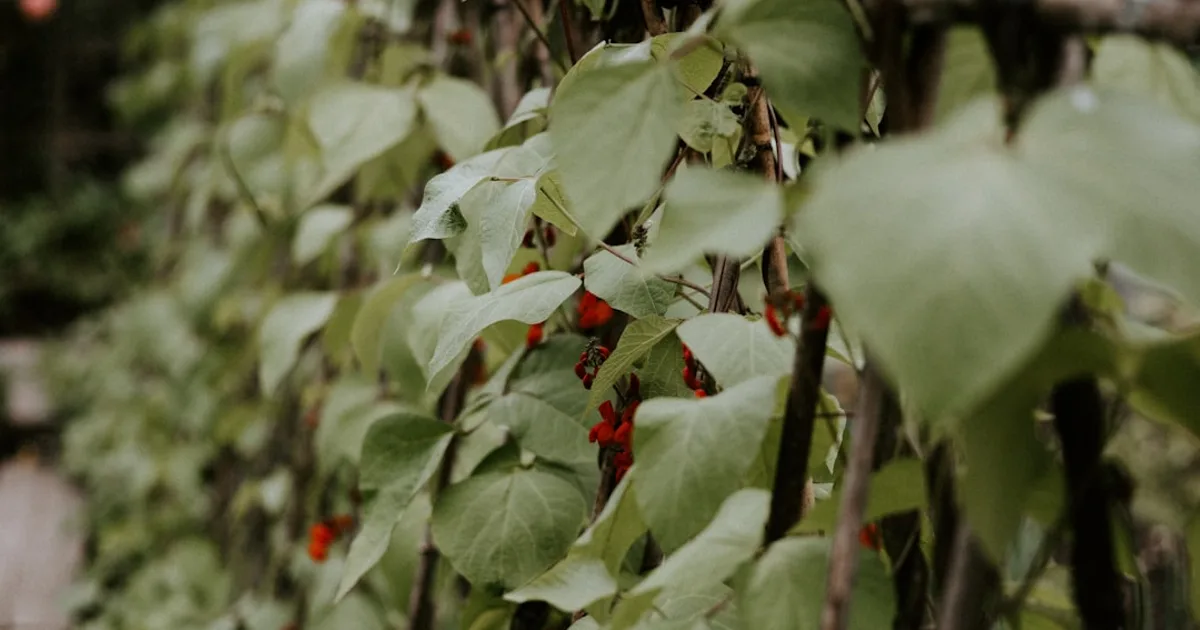
Runner beans are the climbing beans you see growing up trellises and fences in English kitchen gardens and cottage garden borders - they’re grown as vegetables, not ornamentals, but they flower so prolifically in scarlet that they double as a visual feature. The yield is substantial: a 10-foot row on a trellis produces 6-10 lb of pods over the season, which is 2-3x the yield you’d get from an equivalent row of bush snap beans.
Fresh runner beans don’t have great retail distribution in the US. In the UK, they’re a summer staple. Here, you’ll find them at farm stands and farmers markets in season at $2.50-4/lb. Growing your own is the most reliable way to have them.
What it actually is
Phaseolus coccineus is a perennial in frost-free climates (zones 9-11) but is grown as an annual in most of the US. It’s native to the mountains of Central America and is related to common beans (P. vulgaris) but is a distinct species. The distinguishing features: large seeds (often mottled purple-white), vigorous vining growth to 10-15 feet, and the characteristic scarlet flowers. Some white-flowered varieties exist (‘White Emergo’, ‘White Lady’), and bicolor types like ‘Painted Lady’ (pink-red and white).
Runner beans differ from standard snap beans in several practical ways:
| Characteristic | Runner bean (P. coccineus) | Bush snap bean (P. vulgaris) | Climbing snap bean (P. vulgaris) |
|---|---|---|---|
| Growth habit | Vine, 10-15 ft | Bush, 18-24 inches | Vine, 6-8 ft |
| Support needed | Heavy trellis, 8-10 ft | None | 6 ft pole or trellis |
| Pod size | Large, flat, 6-12 inches | Small, round, 3-6 inches | Varies |
| Harvest period | Extended; continuous over months | Short flush, 2-3 weeks | Extended |
| Total seasonal yield (10 ft row) | 6-10 lb | 2-4 lb | 4-6 lb |
| Seed size | Very large | Small to medium | Varies |
| Edible when mature/dried? | Yes (Borlotti-type use) | Yes (most varieties) | Yes |
| Cold tolerance | More cold-tolerant at root | Standard | Standard |
The extended harvest period is runner beans’ practical advantage. Unlike bush beans that produce a concentrated 2-3 week flush and are done, runner beans continue flowering and setting pods from mid-summer through fall frost if picked regularly. Regular picking is what sustains continuous production - pods left to mature on the vine suppress further flowering.
The ROI case
Runner beans deliver more yield per foot of row than nearly any other bean type, which is the core financial argument.
A 10-foot row on an 8-foot trellis:
| Metric | Runner bean (10 ft row) | Bush bean (10 ft row) |
|---|---|---|
| Seasonal yield | 6-10 lb | 2-4 lb |
| Weeks of harvest | 10-12 weeks | 2-4 weeks |
| Value @$3/lb | $18.00-30.00 | $6.00-12.00 |
| Seed cost (10 ft) | ~$1.50* | ~$0.75* |
| Trellis cost (amortized) | $1.00/year | N/A |
| Net per row | $15.50-27.50 | $5.25-11.25 |
*Estimated from $2.99 packet with approximately 25-30 seeds; 10 ft row uses ~15 seeds.
The trellis represents a fixed cost spread over multiple seasons. An 8-foot-tall trellis built from T-posts and jute twine ($8-12 materials) amortizes to $1-2 per year over 5-8 seasons. The runner bean’s yield advantage over bush beans more than covers this.
Dried seed value: runner bean seeds at maturity are large and meaty - similar in character to borlotti or cannellini beans. If you let a portion of the crop mature fully and dry on the vine, the seeds are usable as dried shell beans. Premium heirloom dried beans at specialty stores run $4-6/lb. A 10-foot row, allowed to mature fully rather than harvested young, produces 0.5-1.5 lb of dried seed.
Growing requirements
Runner beans are direct-sown after last frost - don’t transplant, as the taproot doesn’t like disturbance. Sow seeds 1-2 inches deep, 6 inches apart, at the base of a trellis, fence, or tepee structure. They need something to climb - smooth poles work, but rough string or twine is easier for the vines to grip.
Support: build the trellis before planting. Runner beans grow fast and need support within 2-3 weeks of emergence. They twine counterclockwise - they’ll find and wrap a string, bamboo cane, or rough-textured pole without assistance.
Height: plan for 10-15 feet of climbing height, or a trellis at least 7-8 feet tall. Lower trellises are workable but limit yield. A traditional tepee structure (4-6 poles tied at the top, spread 3-4 feet diameter at the base) uses less garden width while providing height.
Soil: moderate fertility, well-drained. Like all legumes, runner beans fix nitrogen from the atmosphere through root nodules (with Rhizobium bacteria), reducing their fertilizer needs versus non-legumes. Inoculate seed with legume inoculant at planting ($3-5 packet, treats many seeds) if beans haven’t been grown in that soil in the past 3 years. Light nitrogen at establishment, then no more - excess nitrogen produces lush vines with reduced bean production.
Pollination: runner beans are primarily insect-pollinated. Scarlet-flowered types attract hummingbirds, which are efficient pollinators. In cool, wet weather, or in areas with low pollinator populations, set may be reduced. The solution is to encourage pollinators: plant flowering herbs nearby, don’t use insecticides during flowering.
Heat: runner beans are more heat-sensitive than standard snap beans. In zones 7-9, flower drop in temperatures above 90°F can reduce set. This is temporary - the plant resumes flowering when temperatures moderate. Planting where plants get afternoon shade in hot climates reduces heat stress.
What goes wrong
Poor germination in cold soil - runner beans want soil above 60°F. Cold, wet spring soil causes seeds to rot instead of germinate. Wait until soil is reliably warm, or pre-germinate seeds on a damp paper towel at room temperature (they sprout in 2-5 days) before planting.
Mexican bean beetle (Epilachna varivestis) is the primary insect pest. It looks like a ladybug (rounded, orange-tan with black spots) but feeds on bean foliage rather than aphids. Larvae are yellowish with spines. Hand-pick adults and egg clusters (yellow ovals under leaves) or use insecticidal soap. Row cover until flowering prevents infestation but must be removed for pollination.
Bean mosaic virus causes mottled, distorted leaves and reduced yield. Spread by aphids. Control aphids to reduce transmission; remove and destroy infected plants.
Anthracnose (Colletotrichum lindemuthianum) causes dark, sunken lesions on pods. More common in wet, cool weather. Plant in well-drained soil with good air circulation; rotate beds.
Failure to flower in hot conditions is temporary. If the plant is healthy but no pods are forming in July-August heat, wait for cooler temperatures in late August and early September - production typically resumes and the fall flush can be substantial.
Harvest and use
Begin harvesting when pods reach 6-8 inches - they should feel full but not bulging. The seeds inside should be barely visible through the pod wall. Runner beans are best young; pods that have been allowed to develop large, swollen seeds are stringy and past their prime for fresh eating.
Pick every 3-4 days during peak production. This is not optional if you want continued production - pods left on the vine to mature signal the plant to stop producing more flowers.
Preparation: runner beans need to be strung (the fibrous string along the seam removed) before cooking. Run a vegetable peeler down both seams or snap the top and pull down along the length. This step is why runner beans never became the dominant snap bean in the US - the extra prep work reduces convenience.
After stringing, slice diagonally into 2-inch pieces. The traditional British preparation is boiled (heavily salted water, 5-7 minutes until just tender) and served buttered. The flat, wide pieces cook differently than round snap beans - more surface area means faster cooking.
Better preparations:
- Blanch 4 minutes, then sauté with butter, garlic, and summer savory (the traditional companion)
- Stir-fry with soy, ginger, and sesame oil - the flat shape holds sauce well
- Braised with olive oil, garlic, and tomato (Italian style) until fully tender
- Cold in salads with a sharp vinaigrette after blanching and shocking
Mature shell beans: let pods go to full maturity (seeds rattle inside dried pods), harvest, shell, and store dry. Use like borlotti beans - soups, stews, or simply simmered with olive oil and aromatics.
Related reading: Summer Savory - traditional companion herb; Corn - three sisters companion; Calendar - direct-sow timing by zone
Growing Runner Bean? Track your harvest value and break-even date in the Garden ROI app.
Get the App