
Corn
Zea mays
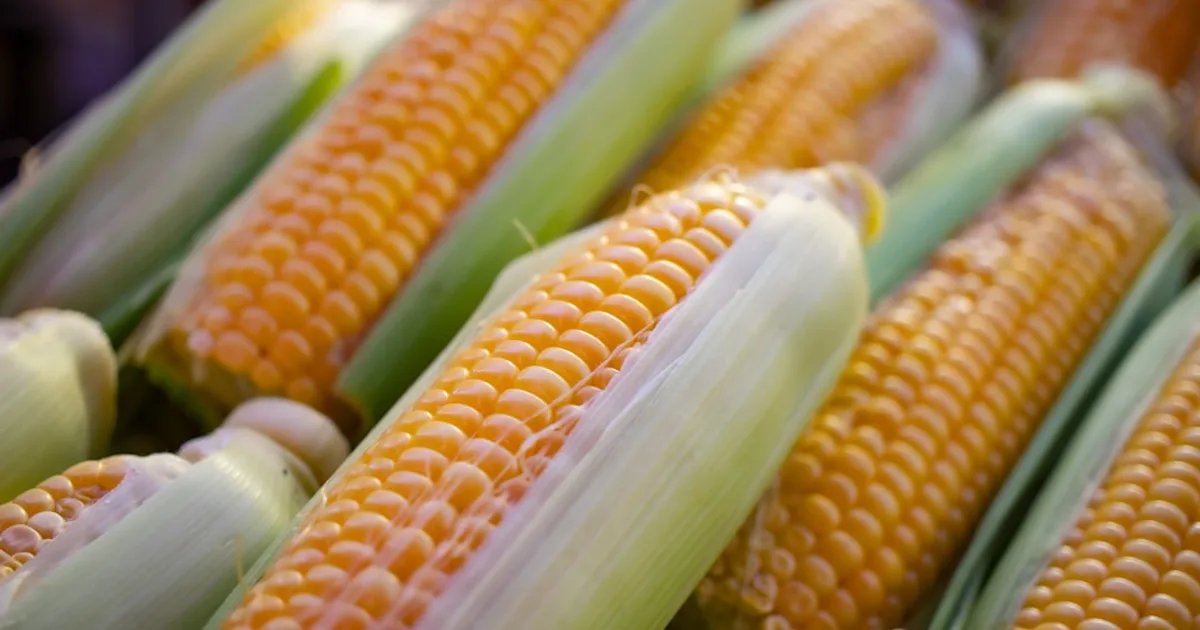
Corn (Zea mays) makes a decent argument on a per-ear basis. A seed that costs $0.06 grows into an ear that retails for $0.50–$1.00 at the farmers market or farm stand (USDA AMS National Retail Report, Fruits and Vegetables, 2023). The problem is space. Each stalk produces one to two ears and occupies a square foot for 70–90 days. Do that math before you plant a 4x8 raised bed with corn and realize you’ve traded $80 in bed infrastructure for 30 ears.
What you’re actually growing
Sweet corn is the standard home garden choice. Within that, three main types matter:
Standard sugary (su) types like ‘Golden Bantam’ are what your grandparents grew. They’re sweet when freshly picked but convert sugars to starch within hours of harvest. You cook them the same day, ideally within the hour.
Sugar-enhanced (se) types hold sweetness longer than standard types - 1 to 3 days refrigerated - without sacrificing the classic corn flavor. ‘Kandy Korn’ and ‘Bodacious’ are common se varieties.
Supersweet (sh2) types like ‘Illini Xtra Sweet’ retain sweetness for up to a week after harvest due to the shrunken-2 gene that slows sugar-to-starch conversion. They require isolation from other corn types (at least 300 feet or staggered timing) to prevent cross-pollination that produces starchy kernels.
Specialty types - heirloom flour corn, popcorn, ornamental - extend the value range but require longer seasons.
The ROI case
A $2.99 packet of sweet corn contains roughly 50–200 seeds depending on variety. At the standard in-row spacing of 9–12 inches with rows 30–36 inches apart (University of Illinois Extension, Sweet Corn, 2021), you’re planting about 1–2 stalks per square foot. A 100 square foot plot yields roughly 100–150 ears. At $0.75/ear average retail, that’s $75–$112 in grocery value.
The math looks reasonable until you compare it against crops that yield multiple pounds per square foot per season. Lettuce, kale, or green beans return 2–4 times the dollar value per square foot in the same timeframe. Corn’s value is in the experience of eating it fresh off the stalk and in the Three Sisters companion system. As a pure ROI crop, it’s mediocre.
Where corn improves its case: if you’re selling at market. Retail ears at $1.00 each in a high-demand urban market change the calculation. And if you grow popcorn or specialty flour corn, you’re looking at a product with 6–12 month shelf life that you can process and sell at $4–8/lb dried.
Per-square-foot ROI comparison - 100 sq ft, same season:
| Crop | Space use | Seasonal yield | Value per sq ft | Notes |
|---|---|---|---|---|
| Sweet corn | 1-2 stalks/sq ft | 100-150 ears × $0.75 = $75-112 | $0.75-1.12 | University of Illinois Extension corn yield data; USDA AMS retail |
| Pole green beans | 9 plants/sq ft (trellised) | ~50 lb | $2.50/lb = $125 | $1.25/sq ft; extends over 8-10 weeks |
| Kale (cut-and-come-again) | 1 plant/sq ft | ~1.5 lb/sq ft over season | $3/lb = $450 | $4.50/sq ft; 4-5 month harvest window |
| Cherry tomato (trellised) | 1 plant per 2 sq ft | ~10 lb/plant × 5 plants | $3/lb = $150 | $1.50/sq ft; highest labor investment |
| Lettuce (succession) | 4 plants/sq ft, 3 successions | ~1.5 lb/sq ft | $3.50/lb = $525 | $5.25/sq ft; requires succession management |
Corn’s $0.75-1.12/sq ft is the lowest on this list. The honest version of the corn argument is not ROI per square foot - it’s freshness you can’t buy and the Three Sisters efficiency (below). If you have abundant space and value the experience of fresh sweet corn, that’s a defensible choice. If you’re maximizing a small garden’s food production, corn is the wrong crop for the space.
Sweet corn type comparison:
| Type | Gene | Sugar retention | Post-harvest window | Cross-pollination risk | Examples |
|---|---|---|---|---|---|
| Standard sugary (su) | su | Converts fast - hours | Same day; cook within hours of picking | Low (if isolated from sh2) | Golden Bantam, Peaches and Cream |
| Sugar-enhanced (se) | se | Slower conversion | 1-3 days refrigerated | Low | Kandy Korn, Bodacious, Ambrosia |
| Supersweet (sh2) | sh2 | Very slow conversion | 5-7 days refrigerated | High - must isolate 300 ft or stagger timing | Illini Xtra Sweet, Silver Queen sh2 |
The sh2 isolation requirement is not optional. Cross-pollination between supersweet and standard/enhanced types produces starchy, poor-quality kernels in both. If you grow sh2 corn and your neighbor grows standard sweet corn within 300 feet, your harvest suffers. Either choose se corn (which doesn’t require isolation and holds sweetness 1-3 days), or commit to the timing management required for sh2.
The Three Sisters system
The traditional Haudenosaunee (Iroquois) planting system pairs corn with pole beans and summer squash or zucchini. Each plant plays a functional role: corn provides the trellis for pole beans; beans fix atmospheric nitrogen through root nodules hosting Rhizobium bacteria, adding 40-120 lb of nitrogen per acre per season (USDA ARS, Biological Nitrogen Fixation, 2020); squash canopy shades the soil surface, reducing weed germination and retaining moisture through the summer.
For the home garden, the Three Sisters works as follows: plant your 4x4 minimum corn block first. When corn is 6-8 inches tall, plant 2-3 pole bean seeds 3-4 inches from each stalk. When beans are established and beginning to climb, plant squash in the gaps between corn hills. Zucchini or summer squash is more practical in a small plot than winter squash, which sprawls aggressively.
The Three Sisters doesn’t increase corn yield in a single season, but it adds pole bean and squash yield to the same footprint - effectively turning one crop’s space into three. Approximate added value in a 100 sq ft Three Sisters planting: 25 lb of pole beans × $2.50/lb = $62 + 8-10 zucchini × $0.50 each = $4-5. Total additional value: approximately $65 over corn alone. This is the strongest ROI argument for growing corn in a small garden - not the corn yield itself, but the companion yield from the same space.
Growing requirements
Corn is wind-pollinated and must be planted in blocks rather than rows - minimum 4x4 block for reliable pollination (Penn State Extension, Corn in the Home Garden, 2019). A single row produces poorly-filled ears. The block configuration allows pollen shed from the tassels to fall onto the silks below. Each silk strand corresponds to one kernel. Missed pollination shows as missing kernels on the cob.
Soil pH of 6.0–6.8. Corn is a heavy nitrogen feeder - it’s not a coincidence that the Three Sisters system paired it with nitrogen-fixing beans. Work in 2–3 inches of compost before planting and side-dress with a high-nitrogen fertilizer (blood meal, ammonium sulfate, or 27-3-3 granular) when stalks reach knee height. A second side-dressing at waist height is standard commercial practice (Ohio State University Extension, Fertilizing Corn, AGF-514).
Soil temperature must be above 50°F for germination; 60–65°F is ideal. Direct sow after last frost date. Corn does not transplant well - its taproot resents disturbance.
Watering is not uniform across the season. The two critical windows are silking (when tassels shed pollen) and ear fill (2–3 weeks after silking). Water stress during silking prevents pollination; stress during ear fill produces shriveled kernels and poor yields. Outside those windows, corn is reasonably drought-tolerant for a vegetable (Purdue Extension, Water Management for Corn, AY-232).
What goes wrong
Corn earworm (Helicoverpa zea) is the most consistent pest across every growing region. Moths lay eggs on corn silks; larvae follow the silk down into the ear tip and feed on developing kernels. By the time you see the damage at harvest, the pest is already there. Control: apply a few drops of mineral oil directly into the silk channel 3–5 days after silks emerge. This suffocates eggs and small larvae without systemic pesticide in the ear. Timing matters - apply too early and you interfere with pollination.
European corn borer (Ostrinia nubilalis) bores into stalks and can snap stalks at the entry hole. Look for frass (sawdust-like droppings) at stalk nodes. Bt (Bacillus thuringiensis) applied when moths are active provides control; once larvae are inside the stalk, topical treatment is ineffective.
Smut (Ustilago maydis) produces the large silver-gray galls you’ve seen on infected ears. It’s a fungus that enters through wounds and infects developing kernels. The galls are edible and considered a delicacy (huitlacoche) in Mexican cooking - which reframes the problem if you’re interested. For conventional sweet corn, remove galls immediately and dispose in the trash to prevent spore spread. Don’t compost infected material.
Raccoons and deer are a more reliable problem than any insect in most suburban gardens. Raccoons pull ears off the stalk the night before you planned to harvest them. An electric fence wire set 6–8 inches from the ground is effective deterrence. There is no reliable non-electric fence that stops a motivated raccoon.
Harvest and storage
Ears are ready 18–24 days after silks emerge. Silks should be dark brown and dry; the ear should feel full when you squeeze it. Peel back the husk at the tip and press a thumbnail into a kernel - milky juice means it’s ready. Clear juice means underripe; no juice means overripe and starchy.
For standard and sugar-enhanced types, cook within hours of picking. Refrigerate if you must hold them, but flavor falls fast. Supersweet types hold a week under refrigeration.
Don’t plant next year’s corn in the same spot. Rotate to avoid soilborne smut and to let nitrogen-depleted soil recover. Planting a legume crop in the corn bed the following year restores some nitrogen.
Related crops: Green Bean, Acorn Squash
Related reading: Companion Planting Basics - what the evidence actually says about common pairings including the Three Sisters system; Is Corn Worth Growing? - space requirements versus return compared with high-value alternatives
Growing Corn? Track your harvest value and break-even date in the Garden ROI app.
Get the App