
Blueberry
Vaccinium corymbosum
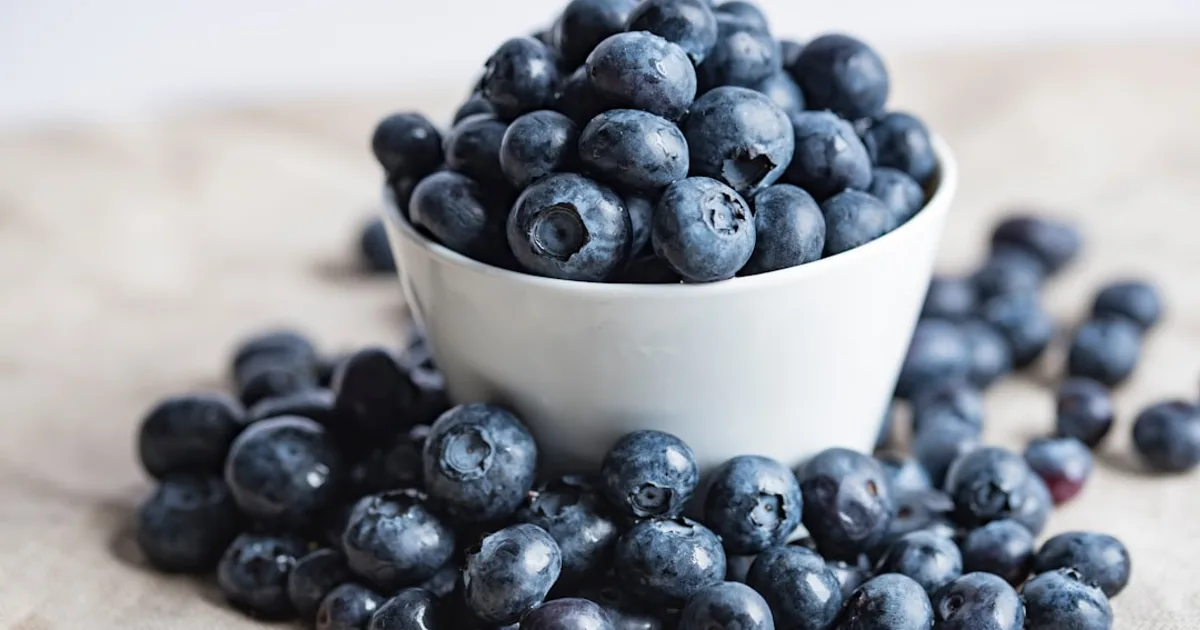
Blueberry (Vaccinium corymbosum) plants routinely live 20 to 30 years in home gardens, and a mature bush in good soil returns more in fresh fruit value than most annuals ever will. The catch is year one and year two. You won’t harvest much, and you shouldn’t try. The establishment period is the investment, and skipping it by harvesting too early is the most common reason blueberry plantings underperform.
What you’re working with
The highbush blueberry (V. corymbosum) is the standard for most of the country, with named cultivars developed by USDA breeding programs going back to the early 1900s. For northern growers (Zones 4–7), choose cultivars like ‘Bluecrop,’ ‘Duke,’ or ‘Patriot.’ Southern highbush types (‘Sunshine Blue,’ ‘O’Neal’) were bred for low-chill requirements and perform in Zones 7–10 where standard highbush won’t fruit properly without sufficient winter cold.
Rabbiteye blueberry (V. virgatum) is a third option for the Deep South - adapted to heat, drought-tolerant, and more alkaline-soil-tolerant than highbush, though it still needs acid soil compared to most crops.
For any type, plant at least two cultivars with overlapping bloom times. Blueberries are self-fruitful but produce more heavily with cross-pollination. Two plants set side by side will consistently outperform two of the same cultivar by 30 percent or more (Strik, Pacific Northwest Extension, PNW 215, 2021).
The ROI case
A single container blueberry plant runs $8–$15 at a garden center. Year one and two, expect little to no harvest - remove blooms in year one to direct energy to root establishment. Starting in year three, a well-managed highbush plant yields 5–10 lb per season. At retail, fresh blueberries averaged $5.00–$8.00/lb in 2023 for pints (USDA Agricultural Marketing Service, Market News, 2023). A mature 6-foot bush at 8 lb yield returns $40–$64 in fruit value annually.
After year three, annual input cost is essentially zero beyond mulch and occasional fertilizer. At a 20-year productive life, a $10 plant producing $45/year from year three delivers roughly $765 in cumulative value. The math works if you can get through the establishment period without giving up.
Growing requirements
Soil pH is where most blueberry plantings fail. The target range is pH 4.5–5.5 - more acidic than strawberries, more acidic than most vegetable beds, and more acidic than most unamended landscape soil in the Eastern US (Strik, OSU Extension, EM 8918). At pH 6.0 and above, blueberries develop iron chlorosis (yellowing leaves, stunted growth) because iron becomes unavailable for uptake at higher pH values.
Test your soil before planting. If pH is above 5.5, amend with elemental sulfur at rates specified in your soil test results and allow several months for the reaction to occur - sulfur doesn’t lower pH overnight. Acidifying fertilizers (ammonium sulfate) help maintain low pH long-term. Do not use wood ash or dolomitic limestone near blueberries; both raise pH.
Plant in full sun. Partial shade reduces fruit production and increases disease susceptibility. Space highbush types 4–6 feet apart. Mulch heavily - 4 inches of pine bark, wood chips, or pine needles - to conserve moisture, maintain soil acidity, and suppress weeds. Blueberries have shallow, fibrous roots that don’t compete well with weeds.
Fertilize with an acid-forming fertilizer (ammonium sulfate or products labeled for azaleas and rhododendrons). Apply in early spring as growth begins. Avoid fertilizing after mid-summer; late-season nitrogen pushes soft new growth that won’t harden before frost.
What goes wrong
Mummy berry (Monilinia vaccinii-corymbosi) is the most economically damaging blueberry disease in most regions. The fungus overwinters as mummified fruit on the ground, releases spores in spring to infect flowers, and causes berries to shrink to hard, gray-white mummies before harvest. Rake and remove mummified fruit from the ground in fall; rake out mulch, apply new mulch, and rake the ground under bushes in early spring before bloom. Fungicides applied at early bloom stage provide additional protection.
Spotted wing drosophila (Drosophila suzukii) arrived in North America around 2008 and is now the primary insect pest of soft-skinned fruits including blueberry in most US regions. Unlike common fruit flies that attack damaged or overripe fruit, D. suzukii females cut into sound, ripening fruit to lay eggs. Larvae cause internal softening. Management requires exclusion netting or regular insecticide applications beginning when fruit starts to color; spinosad-based products are effective and OMRI-listed.
Blueberry maggot (Rhagoletis mendax) is the eastern equivalent - adults lay eggs in ripening fruit, larvae infest berries. Yellow sticky traps near bushes monitor adult activity; treat when traps begin capturing flies.
Birds are persistent and will strip a bush before the fruit fully ripens. Bird netting is not optional if you have real avian pressure. Drape it over the entire bush and secure it at ground level.
Harvest and storage
Blueberries don’t ripen all at once, even within a single cluster. A fully ripe berry has uniform deep blue color and comes off with no resistance when you roll it gently between your fingers. Berries that require pulling are not ripe. Taste is the best test - a ripe highbush blueberry is sweet with mild tartness; underripe berries are noticeably tart and astringent.
Don’t wash berries until ready to use. The waxy bloom on the berry surface is a natural protective coating; washing removes it and accelerates deterioration. Refrigerated unwashed blueberries keep 10–14 days. For longer storage, freeze in a single layer on a sheet pan until firm, then bag. Frozen blueberries retain most of their nutritional value and are useful for most cooking applications.
pH establishment as the primary cost
The soil pH requirement is not a footnote - it is the single largest variable in whether a blueberry planting succeeds or fails, and it has real dollar costs that most planting guides understate.
Standard garden soil in most of the US runs pH 6.0-7.0. Blueberries require pH 4.5-5.5. That gap doesn’t close by itself, and it doesn’t close quickly. The tool for closing it is elemental sulfur, which soil bacteria convert to sulfuric acid over time, gradually lowering pH. Elemental sulfur runs $10-15 for a 6 lb bag, which covers roughly 100 square feet and will lower pH by approximately 1 unit under the right conditions. For a 2-unit drop (pH 7.0 to 5.0), expect two or more applications over multiple seasons and repeated soil testing to confirm the change is happening.
Sandy soils respond faster. Apply sulfur to sandy soil and retest in about 3 months - the microbial conversion happens relatively quickly when drainage is good and the soil isn’t waterlogged. Clay soils are a different story entirely. Amending clay to lower pH by even 1 unit can take 12-18 months because clay particles buffer against pH change and slow the conversion process. If you’re working with heavy clay, start amendment the fall before you plan to plant, and expect to test and re-amend the following spring.
The investment timeline, then, is: test pH in late summer or fall, apply elemental sulfur at the rate your test results indicate, wait, retest before spring planting, and adjust again if needed. Budgeting $30-60 for sulfur and soil testing across that preparation period is realistic. Do not shortcut this step by planting into unamended soil and hoping for the best - blueberries planted at pH 6.5 will show chlorosis within a season and produce little (Michigan State University Extension, Blueberry Culture in the Home Garden, E-1152).
Blueberries cannot share a bed with most vegetables
This is the most common beginner mistake with blueberries, and it’s worth stating plainly: pH 4.5-5.5 is toxic to most vegetables. At that acidity level, nutrient lockout occurs - phosphorus, calcium, and magnesium become chemically unavailable, and plants that prefer neutral pH will yellow, stall, and die.
Tomatoes, peppers, beans, carrots, brassicas - the standard garden roster - all prefer pH 6.0-7.0. You cannot grow them in the same bed, border, or raised bed as blueberries. The pH requirements are mutually exclusive.
Blueberries require their own dedicated acidic bed, physically separate from your main vegetable garden. This isn’t a preference. It’s a hard constraint of the chemistry. The companion plants listed for blueberries (strawberries tolerate slightly acidic soil; certain low-growing herbs are similarly adaptable) are exceptions, not a general license to interplant freely. When in doubt, keep blueberries isolated.
Variety guide by zone
Not every blueberry type will perform in every climate. Choosing the wrong type is a multi-year setback - you won’t know it failed until year two or three when yield doesn’t materialize. Match your selection to your hardiness zone before you buy.
| Variety Type | Zone Range | Harvest Season | Yield at Maturity | Key Characteristic |
|---|---|---|---|---|
| Northern highbush (Duke, Bluecray, Toro) | 4-7 | Late June - July | 8-20 lbs/plant | Standard highbush; most widely adapted in the north |
| Southern highbush (O’Neal, Sunshine Blue) | 7-9 | Early (May-June) | 6-12 lbs/plant | Low chilling requirement; bred for mild winters |
| Rabbiteye (Tifblue, Brightwell) | 7-9 | July - August | 20-25 lbs/plant | Heavy producers; must have two varieties for cross-pollination |
| Lowbush (V. angustifolium) | 3-6 | July - August | 1-3 lbs/plant | Low-growing; spreads via rhizomes; nearly permanent once established |
Northern highbush cultivars like Duke and Toro need 800-1,000 chill hours (hours below 45F) to break dormancy and fruit normally. Southern highbush types were bred down to 150-400 chill hours specifically for Zone 7-9 growers. Plant a northern highbush in Georgia and it will struggle to set fruit consistently. Plant a southern highbush in Minnesota and winter will kill it to the roots.
Rabbiteye varieties are the production workhorses of the Southeast - mature plants can yield 20-25 lbs per season, which puts them at the high end of the ROI table. The caveat is that rabbiteye varieties require cross-pollination from a second variety with overlapping bloom time. Two plants of Tifblue alone will underperform. Pair Tifblue with Brightwell or another compatible variety.
Lowbush blueberry (V. angustifolium) is native to the northeastern US and Canada and is essentially permanent once established - it spreads via underground rhizomes and fills in over time. Per-plant yield is low relative to highbush, but a lowbush patch maintained as a ground cover can persist and expand for decades with minimal input (USDA ARS Blueberry and Cranberry Research Lab; Michigan State University Extension; University of Maine Extension; University of Georgia Extension).
Establishment timeline and yield by year
Blueberries are a patience crop. The production curve is slow, front-loaded with cost, and back-loaded with return. Understanding that curve before you plant prevents the disappointment that causes most people to abandon the planting in year two.
| Year | Expected Yield | Notes | Estimated Input Cost |
|---|---|---|---|
| Year 1 | 0 lbs | Pinch all flowers - sacrifice first crop for root development | $8-15/plant for 3-4 plants, plus soil prep |
| Year 2 | 0.5-1 lb/plant | First small harvest; do not over-harvest | $0-5 |
| Year 3 | 2-4 lbs/plant | Yield begins to ramp | $0-5 |
| Year 4 | 4-8 lbs/plant | Approaching useful production level | $0-5 |
| Year 5+ | 8-20 lbs/plant | Full production for northern highbush; varies by type | $0-5 |
Plants live 20-50 years in suitable conditions. The front-end cost is the purchase price, the soil amendment, and the patience of the first two seasons when you are essentially farming roots rather than fruit. After year five, you have a producing asset that costs almost nothing to maintain (Michigan State University Extension).
Pinching flowers in year one is not optional. It feels counterintuitive to remove the first blooms, but root mass developed in year one directly determines the yield ceiling in years three through ten. A plant allowed to fruit in year one will produce less total fruit over its lifetime than a plant that had its first bloom removed.
10-year ROI
The numbers for blueberries are not impressive in years one through three. They are very impressive from year six onward.
Initial investment:
- 4 plants at $10-15 each: $40-60
- pH amendment (elemental sulfur, multiple applications): $30-60
- Mulch (pine bark or wood chips, initial application): $15-25
- Total initial investment: $85-145
Harvest value by phase:
| Phase | Annual Yield (4 plants) | Market Value at $5-8/lb | Notes |
|---|---|---|---|
| Years 1-2 | Negligible | $0-8 | Establishment; do not harvest heavily |
| Years 3-5 | 8-24 lbs total for the bed | $40-192 | Yield ramp; increasing each year |
| Years 6-10 | 32-60 lbs/yr | $160-480/yr | Full production; northern highbush at 8-15 lbs/plant |
Over a 10-year window, a 4-plant planting at full production returns $160-480 per year in fresh fruit value at retail price. The cumulative value from years 6-10 alone ($800-2,400) exceeds the initial investment by a factor of 6-17. The bed continues producing beyond year 10 with no replanting cost (USDA Agricultural Marketing Service, Market News, 2023; Michigan State University Extension, Blueberry Culture in the Home Garden, E-1152).
The math only holds if the soil pH is correct, the planting is isolated from the main vegetable garden, and the first-year flowers are removed. Those three conditions are the entire difference between a productive perennial planting and a decade of underperformance.
Related crops: Strawberry, Arugula
Related reading: Raised Bed Break-Even - calculating long-term ROI for perennial fruit crops; Perennial Garden Economy - the long-term economics of perennial fruit crops compared to annual vegetables
Frequently Asked Questions
How much do blueberries yield per bush?
A mature blueberry bush (3 to 4 years old) produces 5 to 10 lbs annually. First-year plants yield little; production peaks around year 4 to 6.
How long does it take for blueberry bushes to produce fruit?
New blueberry plants produce a small amount in years 2 to 3 and reach full production by year 4 to 6.
Is growing blueberries worth it financially?
Fresh blueberries average $5/lb at grocery stores. A mature bush yielding 5 or more lbs returns $25 or more annually against a one-time $8.99 plant cost. Payback typically occurs by year 3.
How do you store blueberries?
Refrigerate unwashed blueberries for up to 2 weeks. Freeze on a single-layer sheet tray for 2 hours before transferring to bags - frozen blueberries keep 12 months and retain their nutrition well.
Growing Blueberry? Track your harvest value and break-even date in the Garden ROI app.
Get the App