
Strawberry
Fragaria × ananassa
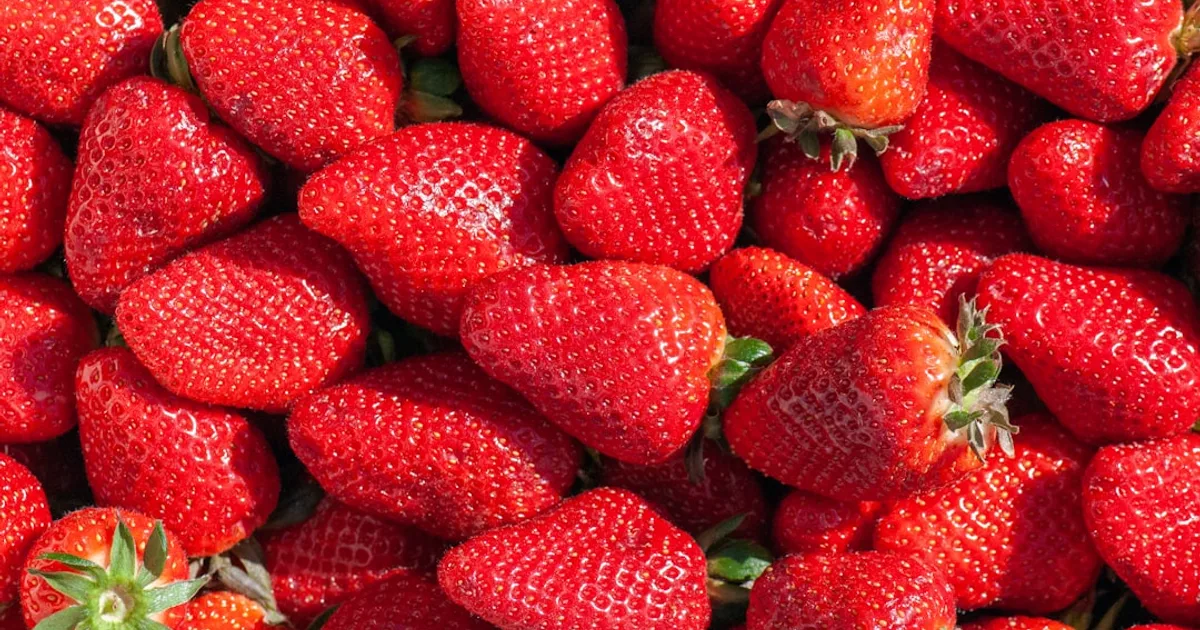
The cultivated strawberry (Fragaria × ananassa) is an octoploid hybrid that doesn’t exist in the wild - it was bred in 18th-century France from two American species, F. virginiana and F. chiloensis. What this history means practically is that modern garden strawberries are highly productive but also highly selected, with characteristics that respond well to deliberate management and poorly to neglect.
Strawberry economics work differently than annual crops. In year one, you’re building a root system, not harvesting a crop. With June-bearing types, most growers pinch all flowers for the first 6–8 weeks after planting to redirect energy into crown and root development. Year 1 actual harvest is minimal by design - you’re investing that season to load the plant for Year 2.
Year 2–3 is where the numbers work. Established June-bearing plants yield 1–2 lb per plant in their productive peak (OSU Extension, Strawberry Production in the Home Garden, HYG-1217-96; NCSU Extension, Small Fruit Production). Day-neutral types yield 0.5–1 lb/plant/season but produce continuously.
Fresh strawberries at retail run $3–$5/lb for conventional and $5–$8/lb for organic (USDA AMS). An 18-plant June-bearing bed at $20 in bare-root crowns, producing 1.5 lb/plant average in Year 2 at $4/lb, returns $108 against a $20 input. The Year 1 setup cost is a real cost - don’t pretend it isn’t - but the payback timeline is legitimate.
| Type | Year 1 harvest | Year 2-3 yield | Notes |
|---|---|---|---|
| June-bearing | Minimal - pinch flowers | 1–2 lb/plant | Concentrated 2–3 week harvest; best for preserving |
| Everbearing | Light spring crop | 0.75–1.25 lb/plant | Two crops (spring + fall); lower per-harvest yield |
| Day-neutral | Light harvest possible | 0.5–1 lb/plant/season | Continuous; best for containers; least photoperiod-dependent |
Which type to plant
The three categories differ in when and how much they produce, and the right choice depends on how you’ll use the harvest.
June-bearing types set a single large crop in early summer over a two to three week window. Peak production per plant is higher than the other types, and the concentrated harvest is what you want for jam-making or freezing. The trade-off is that June-bearing types have a relatively narrow harvest window and are essentially done for the year once it passes. These are also the type most sensitive to photoperiod - short days in fall trigger flower bud formation for the following spring.
Everbearing types produce two crops, one in spring and one in fall, with light production in between. Total season yield is lower than a well-established June-bearing bed but spread across more time, which suits fresh eating better than large-batch preserving.
Day-neutral types produce continuously from spring through fall, largely independent of day length. They’re the most productive for fresh eating through the season and work well in containers. Yield per individual plant is lower than June-bearing, but the season-long output is competitive.
Growing requirements
Plant bare-root crowns in early spring as soon as soil can be worked, or in fall in mild climates (Zones 7–10). Set crowns with the midpoint of the crown - the dividing line between the root mass and the leafy crown - exactly at soil level. Too deep and the crown rots; too shallow and the roots dry out. This detail is the one that most first-year strawberry plantings get wrong.
Space June-bearing and everbearing types 18 inches apart in rows 3 feet apart. Day-neutral types can be spaced 12 inches in the matted-row system or closer in containers. Strawberries need full sun; plants in partial shade produce less and are more susceptible to Botrytis fruit rot.
Soil pH of 5.5–6.5 is the target range - more acidic than most vegetables. Strawberries perform poorly above pH 6.5 and develop iron and manganese deficiency symptoms at higher pH. If your soil tests above 6.5, acidify with elemental sulfur well ahead of planting (Penn State Extension, Strawberry Production, 2020).
Strawberries are moderate to heavy feeders during fruit development. Apply a balanced fertilizer (10-10-10 or similar) at planting and again after harvest for June-bearing types. Don’t over-apply nitrogen - excess nitrogen promotes excessive runner production and vegetative growth at the expense of fruit set and increases susceptibility to Botrytis.
For the first season with June-bearing types: remove all flower buds for the first six to eight weeks after planting. This redirection of energy into root development translates directly into higher yields in year two. It’s counterintuitive to remove flowers from plants you want to harvest, but the second-year returns justify the patience.
Mulch heavily with straw (2–3 inches) after planting. Mulch keeps fruit off the soil, reduces fruit rot, retains moisture, and in colder climates protects crowns over winter. Plastic mulch is common in commercial production and works well at home; it eliminates most weed pressure and warms soil early.
Runners and bed renovation
Strawberry plants produce stolons (runners) that root and form daughter plants. Let runners root 6–8 inches from the mother plant to fill in the bed; remove runners beyond that to keep the bed from overcrowding. Crowded beds have reduced airflow, more disease pressure, and smaller fruit.
After three years, June-bearing plants typically show declining yield per plant. The standard recommendation is full bed replacement on a 3-year cycle. The economic advantage: runners from your existing plants root freely and can be transplanted at zero cost. A bed that cost $20 in bare-root crowns in Year 1 regenerates entirely from runners at $0 in Year 4. The runners carry the genetic characteristics of the parent plant and establish quickly with existing soil biology.
To renovate rather than replace: immediately after harvest, mow foliage to 1 inch above crowns, thin plants to 5–6 inches apart, fertilize with balanced granular fertilizer, and cultivate shallowly to reduce weed pressure. Renovated beds can produce well for 1–2 additional seasons before full replanting makes more sense than renovation.
What goes wrong
Gray mold (Botrytis cinerea) is the most common and damaging strawberry disease. It colonizes flowers and spreads to developing fruit, causing berries to rot on the plant. It thrives in cool, humid conditions with poor airflow. Remove infected fruit immediately - don’t compost it. Manage airflow by not overcrowding plants, and avoid overhead irrigation in the evenings. Preventive fungicide applications (at first flower and at petal fall) are standard in commercial production; at the home garden scale, cultural controls are usually sufficient.
Angular leaf spot (Xanthomonas fragariae) produces water-soaked, angular lesions on leaves that turn reddish-brown. It spreads in wet conditions; avoid overhead irrigation and handle plants when foliage is dry.
Strawberry weevil (Anthonomus signatus) is a small beetle whose larvae feed inside flower buds, causing them to drop without setting fruit. Damage often looks like the plant just isn’t setting fruit well. Row cover before bloom protects plants; remove it when flowers open for pollination.
Birds are usually the most persistent pest at harvest time. Netting is the most effective control; start it before fruit begins to color, because once birds discover the bed they’re persistent. Ground-level netting held up with stakes works; just make sure the mesh is fine enough to exclude starlings.
Slugs feed on ripe berries at night. Iron phosphate bait is effective and safe to use around food crops. Straw mulch, counterintuitively, can harbor slug populations - inspect the bed after rain.
Harvest and storage
Pick strawberries when fully red to the tip, with no white or green shoulders. Unlike tomatoes and many other fruits, strawberries do not continue to ripen after picking - the color and sugar content at harvest is what you get. Pick every two to three days at peak season to prevent overripe fruit from attracting pests and spreading Botrytis.
Handle gently. Strawberries bruise easily and bruised areas decay quickly. Leave the cap and a short stem on the berry until you’re ready to use it. Refrigerate as soon as possible after picking; don’t wash until ready to eat. Use within three to five days.
For longer storage, freeze whole or sliced on a baking sheet until firm, then transfer to bags. Frozen strawberries are excellent for smoothies, sauces, and jam, though they won’t hold their texture for fresh eating after thawing.
Companion note: Borage (Borago officinalis) attracts bumblebees and honeybees and is the classic companion for strawberries for this reason - strawberries require bee pollination, and borage in bloom near the bed increases pollinator visitation visibly. Do not plant strawberries adjacent to brassicas (cabbage, broccoli, kale, cauliflower) - both are heavy feeders that compete directly, and some extension guides note allelopathic interactions in close plantings.
Related crops: Raspberry, Blueberry, Borage
Related reading: Berry ROI Comparison - strawberry vs. raspberry vs. blueberry year-by-year return analysis; Raised Bed Break-Even - how to calculate whether a perennial crop pays off over its full productive life; Perennial Garden Economy - the multi-year ROI math for established perennial fruit plantings
Frequently Asked Questions
How much do strawberries yield per plant?
An established strawberry plant produces about 1.5 lbs in its first fruiting year. Second-year plants with runner fill-in can yield 2 to 3 lbs per plant.
How long do strawberries take to produce fruit?
June-bearing varieties produce one large crop 60 to 90 days after spring planting. Everbearing and day-neutral types produce lighter harvests from spring through fall.
Is growing strawberries worth it financially?
Grocery strawberries average $4.99/lb for conventional. At that price, each plant yields $7.50 in first-year value. Established beds multiply this as runners spread and production increases.
How do you store strawberries?
Refrigerate unwashed strawberries in a single layer on paper towels for 3 to 5 days. Wash just before eating. For large harvests, freeze whole hulled berries on a sheet tray before bagging.
Growing Strawberry? Track your harvest value and break-even date in the Garden ROI app.
Get the App