
Broccoli Rabe
Brassica rapa subsp. ruvo
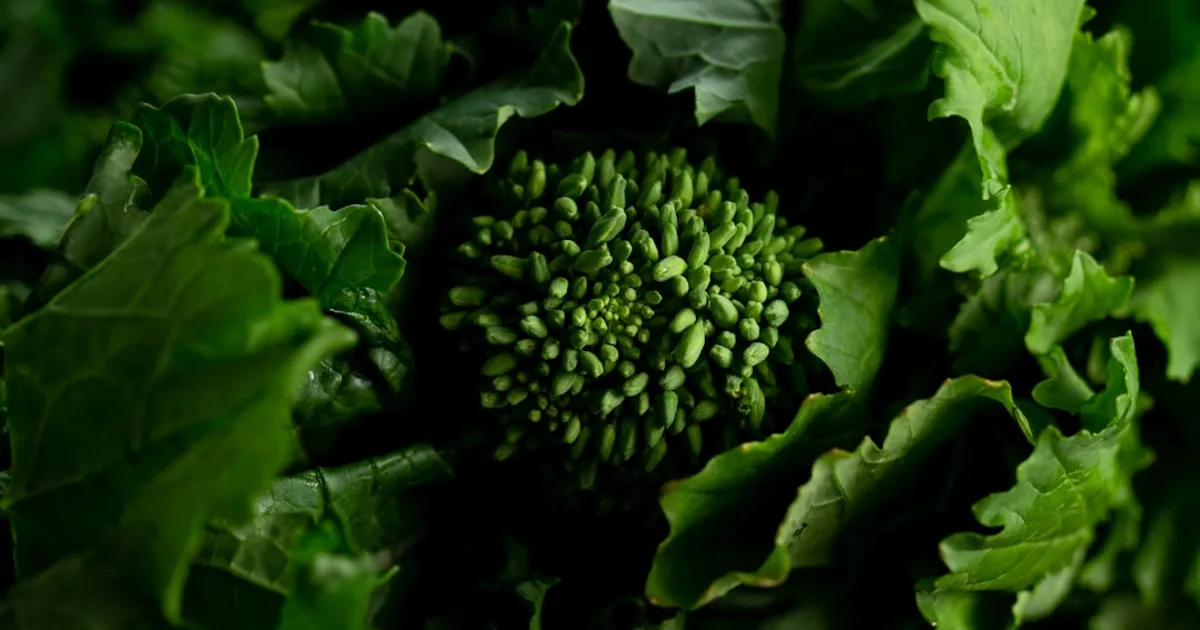
Broccoli rabe is not broccoli. It looks like broccoli’s scrawny cousin and shares the same family, but it’s botanically a closer relative of the turnip than of the heading broccoli you find in supermarket produce sections. Italians have been eating it for centuries as rapini - sauteed with garlic and olive oil, tossed with pasta, braised with sausage. American grocery stores sell it at $4-6 per bunch (roughly 0.75-1 lb), but it’s inconsistently stocked outside of cities with significant Italian communities.
It grows in 45-60 days, tolerates frost, and can be succession-planted in both spring and fall. The quick cycle and premium price make the per-square-foot return competitive with crops that take three times as long.
What it actually is
Brassica rapa subsp. ruvo belongs to the same species as turnips, bok choy, napa cabbage, and Chinese broccoli (gai lan). What sets it apart is that it’s grown for the immature flowering shoots - stems, leaves, and small florets harvested before the flowers open, not a heading form harvested for a dense head.
The flavor is assertively bitter with a pungent, slightly mustardy edge - nothing like mild-flavored heading broccoli. This is not a defect; it’s the point. The bitterness mellows with cooking, particularly with blanching, and the pungency is why it pairs well with fat (olive oil, sausage, pancetta) and sharp flavors (garlic, chili flake, lemon).
Distinguishing it from heading broccoli:
- No large central head - harvest is loose stems with small florets
- Leaves are part of the harvest; eat the whole shoot
- Smaller florets, more similar to sprouting broccoli or Chinese broccoli
- Matures 2-3 weeks faster than most broccoli varieties
- Significantly more bitter in flavor
- Direct-sow works well; no transplanting required
Cultivars:
| Cultivar | Days to maturity | Characteristics |
|---|---|---|
| Spring (60 Days) | 60 days | Standard; good for spring and fall |
| Novantina (90 Days) | 90 days | Later bolting; suited for fall/winter production in mild climates |
| Quarantina | 45-50 days | Very early; bolt-prone in warm conditions |
| Sorrento | 60-65 days | Italian standard; good flavor, moderate size |
For most home gardeners, a standard 60-day type works well across spring and fall seasons. The 90-day types are interesting for Zone 8+ fall/winter production where the longer slow-growth season in cool weather concentrates flavor.
The ROI case
The financial case for broccoli rabe is built on fast cycles and premium pricing. A 10-foot row yields 2-3 lb of harvestable greens. At $5/lb average retail:
| Planting | Yield | Value | Seed cost | Net per planting |
|---|---|---|---|---|
| Spring planting (April) | 2.0-3.0 lb | $10.00-15.00 | $0.62* | $9.38-14.38 |
| Fall planting (August) | 2.0-3.0 lb | $10.00-15.00 | $0.62* | $9.38-14.38 |
| Two-season annual total | 4.0-6.0 lb | $20.00-30.00 | $1.24 | $18.76-28.76 |
*Seed cost per planting based on $2.49 packet yielding 4 plantings at 10-foot rows each.
The 45-60 day cycle means you can plant before and after many other crops. In a 100 sq ft bed that would otherwise sit empty in early spring and again in late summer, two rounds of broccoli rabe return $18-28 with almost no work beyond seeding and watering.
Compare that with heading broccoli at the same square footage: heading broccoli takes 70-90 days, produces one head per plant (0.5-1 lb), and at $2-3/lb retail, a 10-foot row yields $5-8. Broccoli rabe wins on both speed and return per square foot.
Growing requirements
Broccoli rabe is a cool-season crop. It grows best with air temperatures in the 45-65°F range - spring and fall in most of the country. Heat triggers bolting, which is the plant putting energy into flowers instead of vegetative growth. Once the flowers open fully, the plant is past its prime for harvest.
Direct sowing: sow 1/4 inch deep, thinning to 4-6 inches apart. Germination is rapid at 60-70°F soil temperature - seedlings emerge in 5-7 days. In spring, sow as soon as soil can be worked, 4-6 weeks before last frost. In fall, count back 60-70 days from your first frost date.
Succession planting: every 2-3 weeks through spring (until daytime temps consistently exceed 65-70°F) and through fall (until hard frost). A 10-foot row every two weeks keeps a steady harvest going through the cool season.
Light: full sun, 6+ hours. Partial shade is workable but slows growth and may extend the time to harvest. More light = faster bolting in warm weather; choose the trade-off based on your spring timeline.
Water: consistent moisture prevents premature bolting. Drought stress accelerates bolting - keep soil evenly moist. Raised beds with drip irrigation are ideal for consistent cool-season production.
Soil: fertile, well-drained, pH 6.0-7.0. A nitrogen application (balanced fertilizer or side-dress with compost) at seeding supports rapid vegetative growth. Heavy nitrogen delays bolting slightly, which extends your harvest window.
What goes wrong
Bolting before harvest is the primary failure mode in spring plantings that encounter warm weather. Broccoli rabe bolts decisively when daytime temperatures consistently exceed 65-70°F - the plant shifts to reproductive mode within days. A spell of warm weather in May can render a spring planting past prime before you’ve harvested it.
Prevention: plant early and harvest young. Don’t wait for maximum stem size - harvest when florets are tight and not yet opening. At the first sign of yellow flowers, harvest everything usable immediately, even if the stems are smaller than you’d like.
Cabbage loopers (Trichoplusia ni) and imported cabbage worms (Pieris rapae) feed on foliage. Row cover over fall plantings prevents butterfly egg-laying. Hand-pick larvae or treat with Bt (Bacillus thuringiensis) when damage is light.
Aphids (cabbage aphid, Brevicoryne brassicae) cluster on tender new growth, particularly in cool, humid conditions. A strong stream of water knocks them off. Insecticidal soap spray works for persistent infestations.
Clubroot (Plasmodiophora brassicae) is a soil pathogen that causes galled, distorted roots and severely stunted plants. Infected soil is difficult to remediate. Rotate brassicas to a different bed each year - don’t grow any Brassica species in the same spot more than once every 3-4 years.
Harvest and use
Harvest when florets are tightly budded and before any flowers open - typically 45-55 days after seeding. Cut the main stem 4-6 inches below the top cluster. After removing the main stem, side shoots often continue to develop and can extend the harvest another week or two.
Harvest in the morning when stems are turgid. Once cut, broccoli rabe wilts quickly and loses quality - it has a shorter post-harvest life than heading broccoli. Use within 3-4 days of harvest; refrigerate unwashed in a plastic bag.
Preparing it: the key to broccoli rabe in the kitchen is a quick blanch in well-salted boiling water (60-90 seconds), then either shock in ice water or transfer directly to a hot pan. The blanching step tames the bitterness and makes it more versatile. Skipping blanching produces a more intensely bitter result that works in specific applications (pasta with sausage, where the bitterness is a feature) but can overwhelm in lighter preparations.
Core applications:
- Orecchiette with sausage and broccoli rabe: the canonical Italian-American pasta dish. Sausage fat coats the pasta; garlic, chili flake, and the broccoli’s bitterness provide the counterpoint.
- Sauteed with garlic and olive oil, as a side for sausage, grilled chicken, or pork chops.
- Pizza topping with fresh mozzarella and chili flake.
- Braised with white beans and broth for a simple Italian-style stew.
- Wilted into eggs: dice the stems, sauté with garlic, scramble eggs into the pan.
The leaves are fully edible and good. Don’t discard them. They cook faster than the stems; add them to the pan after the stems have had a minute’s head start.
Related reading: Crop Rotation Guide - rotating brassicas to prevent clubroot; Calendar - spring and fall direct-sow timing by zone
Growing Broccoli Rabe? Track your harvest value and break-even date in the Garden ROI app.
Get the App