
Cantaloupe
Cucumis melo var. cantalupensis
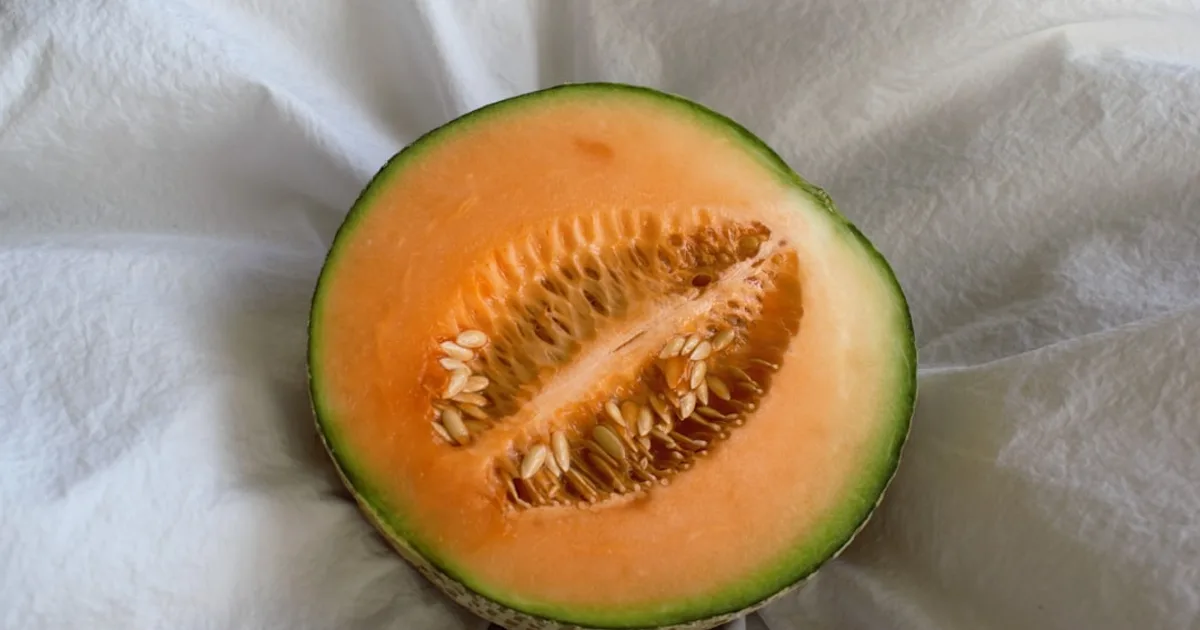
A supermarket cantaloupe is picked at 25 to 50 percent of its potential sugar content, gassed with ethylene, and shipped. What you buy at the grocery store is a transportation-tolerant facsimile of a fruit that, when vine-ripened, is a different food. The ROI case for growing cantaloupe isn’t just about saving money per pound - it’s that the fruit you can grow at home doesn’t exist in most grocery stores at any price.
What Brix actually means
Brix is a measure of dissolved sugar concentration in juice, expressed as a percentage. A refractometer measures it - you squeeze a drop of juice onto the lens, hold it up to light, and read a number off a scale. The instrument costs about $15.
Grocery-store cantaloupe averages 11 to 13 Brix (University of California Cooperative Extension, Melon Production in California, Publication 7213). That’s not bad. But high-Brix varieties grown at home and harvested at true ripeness routinely hit 16 to 18 Brix - 30 to 60 percent more dissolved sugar than what you bought last Tuesday at the supermarket. This isn’t a marginal difference. Side by side, an 18-Brix melon and a 12-Brix melon taste like different fruits. The high-Brix fruit has a depth of flavor that commercial production can’t reliably deliver because commercial growers must harvest early for shelf life.
Three things drive Brix: variety selection, vine-ripening, and water restriction during the final stage of ripening. Grocery supply chains compromise all three. You control all three.
The ROI case
A $2.49 seed packet of Hale’s Best Jumbo or Sugar Cube contains 20 to 30 seeds. You’ll likely plant 4 to 6 seeds and thin to 2 to 3 transplants. Under decent growing conditions - full sun, consistent irrigation, well-amended soil - each vine produces 2 to 4 melons averaging 4 to 6 lb each (Purdue Extension, Muskmelon/Cantaloupe, HO-214).
At retail, standard cantaloupe runs $0.50 to $1.00 per pound - call it $2 to $4 per melon. At a farmers market, specialty or heirloom varieties in good condition sell for $2 to $4 per pound, meaning a 5-pound Sugar Cube melon can fetch $10 to $20.
Run the numbers conservatively:
- 2 vines, 2 melons each, 5 lb average: 20 lb of fruit
- At $0.75/lb retail equivalent: $15 in fruit value from a $2.49 packet
Run them more honestly for specialty varieties:
- 2 vines, 3 melons each at 5 lb: 30 lb of fruit
- At $2.50/lb farmers market rate for heirloom varieties: $75 in market value from a $2.49 packet
The seed cost is not the constraint here. The constraints are space, season length, and the patience to grow a crop that takes 70 to 90 days and demands a lot from your garden footprint.
Be honest about space
This is where most discussions of cantaloupe gloss over the real calculation. Standard cantaloupe vines spread 4 to 6 feet in all directions. Each plant realistically needs 10 to 15 square feet of ground (OSU Extension, Growing Cantaloupes and Watermelons in the Home Garden, HYG-1604). A 4x8 raised bed - 32 square feet - fits exactly 2 plants with room to spare, but the vines will still climb over the edges and sprawl into adjacent paths.
Cantaloupe is not a crop for small, space-efficient kitchen gardens. It competes directly with 6 to 8 tomato plants, 4 zucchini hills, or a 30-square-foot lettuce succession for the same footprint. If you’re working with 100 square feet or less, cantaloupe is a bad trade. The yield per square foot is low compared to nearly everything else you could grow.
If you have in-ground beds, a larger garden, or the ability to let vines run into a lawn area or along a fence, the calculation changes. Vertical trellising with fabric slings to support the fruit works for small-fruited varieties and reduces footprint to about 4 to 6 square feet per plant. Standard melons - anything over 5 lb - are too heavy for reliable vertical production without substantial infrastructure.
The honest summary: cantaloupe is a large-garden or in-ground crop. If you have the space, it earns it. If you’re choosing between cantaloupe and three other crops in a tight garden, the other crops usually win on yield per square foot.
Variety selection
Not all cantaloupes are the same fruit. The variety table below shows the four most practical options for home gardens, separated by their intended use case and Brix potential.
| Variety | Days to Maturity | Typical Fruit Size | Brix Range | Notes |
|---|---|---|---|---|
| Hale’s Best Jumbo | 86 days | 5-6 lb | 14-16 Brix | Classic American muskmelon, excellent flavor, widely available seed |
| Athena | 75 days | 6-8 lb | 12-14 Brix | Commercial standard; disease-resistant, especially powdery mildew |
| Sugar Cube | 80 days | 4-5 lb | 16-18 Brix | Personal-size, highest Brix of common varieties, trellises well |
| Collective Farm Woman | 70 days | 1-3 lb | 13-15 Brix | Ukrainian heirloom; cream-colored flesh, short-season friendly |
Hale’s Best Jumbo is the standard by which most American gardeners judge cantaloupe. It’s been grown commercially and in home gardens since the 1920s, and for good reason - the flavor holds up. At 86 days it’s not the fastest, but the 14 to 16 Brix range is reliably achievable without particularly skilled growing.
Sugar Cube is the variety to grow if Brix is the objective. It’s small enough to eat in one or two sittings, handles vertical growing better than larger varieties, and at 16 to 18 Brix under good conditions it’s noticeably sweeter than anything in a supermarket.
Athena is what commercial growers use, and that tells you something useful: it produces reliably, resists powdery mildew better than most, and sets fruit consistently. It won’t hit the Brix ceiling that Sugar Cube does, but it’s the correct choice for humid climates where disease pressure is the variable most likely to cost you fruit.
Collective Farm Woman is an heirloom from Ukraine with cream-colored, apricot-tinted flesh. The flavor is floral and distinct from standard orange-flesh types. At 70 days, it’s one of the fastest maturing cantaloupes available - valuable in Zone 4 or 5 where the season is tight.
Growing requirements
Soil temperature must reach 65 to 70°F before direct seeding outdoors; transplants need at least 65°F to avoid cold-check stress (University of Illinois Extension, Watch Your Garden Grow: Cantaloupe, 2022). In Zones 4 and 5, start transplants indoors 3 to 4 weeks before last frost. Use 3-inch or 4-inch cells - cantaloupe roots dislike disturbance, and anything smaller forces premature transplanting that costs you two weeks of growth.
Full sun, 8 or more hours per day. Partial shade produces bland fruit with low Brix. This isn’t negotiable.
Soil pH 6.0 to 6.8. Amend generously with compost before planting. Cantaloupe is a moderate feeder - consistent fertility through the season matters more than heavy single applications. Side-dress with a balanced granular fertilizer (10-10-10 or similar) at first vine run and again at fruit set. Once fruit is sizing up, back off nitrogen and let the plant focus on sugar production.
Water 1 to 2 inches per week from transplant through active vine growth and fruit development. The water management strategy changes completely at one specific point: when the fruit approaches full size and you can see the skin beginning to net and shift from green toward tan, reduce irrigation sharply. Once a week or less. The mild drought stress at this stage pushes the plant to concentrate sugars in the fruit. A melon that gets consistent irrigation all the way through ripening will be larger and less sweet than one given a final restriction period. This is the single most effective thing a home grower can do to push Brix higher.
Plant spacing: 18 to 24 inches between transplants in rows 5 to 6 feet apart, or in hills with 2 to 3 plants per hill spaced 4 to 6 feet apart. Cantaloupe requires insect pollination. Male flowers appear first, often 10 to 14 days before female flowers (identifiable by the small immature melon at the base of the bloom). Don’t apply any pesticide during morning bloom hours when bees are working the flowers.
What goes wrong
Powdery mildew (Podosphaera xanthii) is the most predictable problem in late-season cantaloupe and it affects all cucurbits. White powdery coating appears on upper leaf surfaces, spreads quickly, and weakens the plant before fruit fully matures. Infected leaves don’t recover. Spacing vines for airflow helps. Apply a sulfur-based fungicide at the first sign - a few spots on lower leaves - not after the plant looks sick throughout. Athena and Aphrodite both carry documented resistance, which is why they’re the right choices for humid climates in the Southeast and mid-Atlantic.
Cucumber beetles - striped (Acalymma vittatum) and spotted (Diabrotica undecimpunctata howardi) - feed on vines and transmit bacterial wilt (Erwinia tracheiphila). A plant that wilts quickly on a warm day and doesn’t recover overnight is almost certainly infected. The confirmation test: cut a wilted stem near the base, press the two cut ends together briefly, then pull them apart slowly. Bacterial wilt forms stringy threads of bacterial slime between the cut surfaces. Once you see that, pull the plant. Row cover from transplant until first bloom cuts beetle exposure sharply. Remove the cover once flowers open.
Gummy stem blight (Stagonosporopsis cucurbitacearum) produces tan, water-soaked lesions on leaves and stems, sometimes with amber gummy ooze at stem infections. Rotate cantaloupes out of infected beds for at least two to three years.
Fruit cracking happens when vines get a sudden heavy irrigation after a dry period during the ripening stage. Consistent irrigation management prevents it.
Poor fruit set is almost always a pollination failure. If flowers are opening and dropping without forming fruit, check whether bees are present during morning hours. If your garden is in an area with low pollinator activity, hand-pollinate using a small paintbrush to transfer pollen from male to female flowers in the morning.
Knowing when to harvest: full slip
Cantaloupe has one of the most reliable harvest indicators of any melon. The term is “full slip.”
As a cantaloupe reaches full ripeness, the attachment point at the stem end - the abscission zone - breaks down. A fruit at full slip separates from the vine cleanly with light thumb pressure, or separates on its own. You are not harvesting it early and waiting for it to ripen on the counter. You are harvesting it at the moment of its maximum sugar content, and it will not improve afterward.
Supporting indicators you can read without touching the stem: the netting surface texture changes from green to tan or beige; the skin between the netting cords softens visually; the blossom end (opposite the stem) gives slightly under thumb pressure; on a warm day you can smell a ripe fruit from a foot away without cutting it.
What you should not rely on alone: color change, because it’s gradual and easy to misjudge; the calendar, because days-to-maturity is an average and your conditions will vary; softness at the blossom end in isolation, because overripe fruit also feels soft.
If the fruit requires any real pulling to separate from the vine, it isn’t ready. Check again in two days. A melon at half-slip - when it separates with some effort - is edible but will be noticeably less sweet than one given another 48 to 72 hours.
Once harvested, a vine-ripened cantaloupe keeps at room temperature for two to three days. Cut melon in the refrigerator, covered, lasts three to four days. Unlike winter squash or garlic, cantaloupe has no real storage life. Harvest it and eat it promptly. The flavor you waited 80 days for disappears quickly.
Measuring what you grew
If you want to verify the Brix of your harvest, a $15 handheld refractometer from any brewing supply or online retailer does the job. Squeeze a drop of juice from the center flesh onto the prism, close the cover, and read the scale. Anything above 14 is a good melon. Anything above 16 is a great one. If you’re consistently hitting 12 or below, look at your variety selection and your water restriction timing - those two variables account for most of the spread between commercial-grade and exceptional fruit.
Related crops: Radish, Watermelon
Related reading: How to Find Local Prices - how specialty variety prices at farmers markets change your ROI math
Growing Cantaloupe? Track your harvest value and break-even date in the Garden ROI app.
Get the App