
Watermelon
Citrullus lanatus
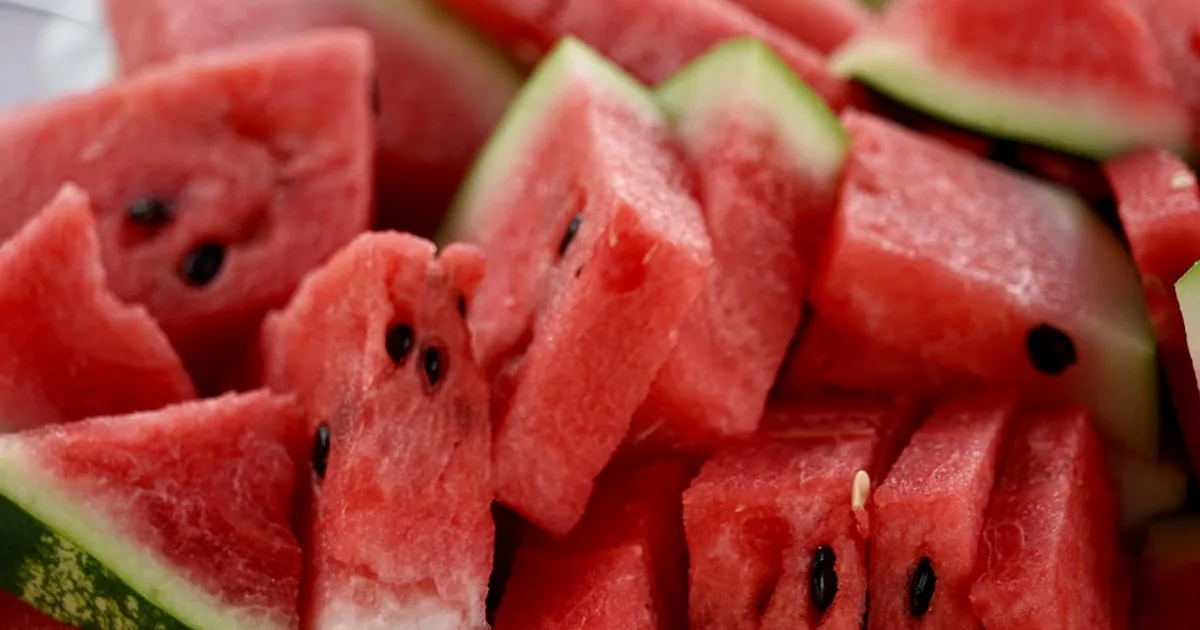
Watermelon (Citrullus lanatus) has one of the lowest dollar-per-pound returns in the garden. Retail price runs $0.25–$0.50 per pound (USDA ERS, Vegetables and Pulses Yearbook, 2023). A 15–20 pound melon costs $4–$10 at a grocery store. You grow it for 75–90 days, it takes up 20–30 square feet of prime garden real estate, and at the end you’ve replaced something you could have bought for seven bucks.
The honest ROI case for watermelon is not about price per pound. It’s about two things: vine-ripened flavor you cannot buy at a grocery store, and specialty varieties that grocery stores will never carry. If you want to replicate the commodity product on your shelf, grow something else. If you want a Moon and Stars heirloom that weighs 25 pounds and tastes like it was designed by someone who actually cared about flavor, you can’t buy that. You have to grow it.
The Real ROI: Specialty Varieties
At a farmers market, heirloom watermelons go for $1–$2 per pound. A 20-pound Charleston Grey at $1.50/lb is a $30 melon. A grocery store charges $7 for a seedless commodity bred to ship without bruising, not to taste like anything particular. Those are different products.
Heirloom and specialty varieties available to home gardeners include:
Moon and Stars (Citrullus lanatus ‘Moon and Stars’) - a pre-1900s heirloom with a dark green rind marked by yellow spots. Flesh is deep red, very sweet. Vines are large; fruits run 20–40 pounds. Not available in grocery stores because the rind is too soft to ship commercially.
Charleston Grey - developed by Charles Hall at the USDA in 1954, this was the dominant commercial variety for decades before the seedless melon took over. Long oblong shape, 20–35 pounds, extremely sweet flesh. Still grows exceptionally well in home gardens in the South and Mid-Atlantic (NC State Extension, Watermelon Production, AG-560).
Sugar Baby - developed in the 1950s, this is the icebox standard. 8–10 pounds, 75 days, compact enough to consider trellising. The flavor is good but not spectacular. Its real advantage is timing and space efficiency.
Orangeglo - orange-fleshed heirloom, 20–30 pounds, very high sugar content. The flavor difference from a grocery-store watermelon is immediately obvious. Farmers market price in urban areas: $1.50–$2.00/lb. You will not find this at a Kroger.
The math: two Orangeglo vines at farmers market value ($1.75/lb average, two melons per vine at 25 lb each) equals $175 in retail produce value. Seed cost for the season is under $5. Space cost is real - 40–50 square feet - but the value comparison shifts when you’re not comparing to commodity pricing.
Varieties and Space Requirements
Full-size watermelon vines need 20–30 square feet per plant. That’s not a raised bed - that’s a large chunk of a garden. Bush and compact varieties brought that footprint down to 6–10 square feet, which changes the calculation for most home gardens.
| Variety | Fruit Size | Vine Habit | Days to Maturity | Space Needed | Notes |
|---|---|---|---|---|---|
| Bush Sugar Baby | 6–8 lb | Compact bush | 75 days | 6–8 sq ft | Best space-efficiency; good for containers and small plots |
| Golden Midget | 3–5 lb | Short vine | 70 days | 6–8 sq ft | Rind turns yellow at full ripeness - built-in indicator |
| Minilee | 8–10 lb | Bush habit | 70 days | 8–10 sq ft | Earlier than most; good for Zone 5 with short summers |
| Bush Jubilee | 10–15 lb | Semi-compact | 80 days | 10–12 sq ft | Best flavor-to-space ratio in the bush category |
| Sugar Baby | 8–10 lb | Standard vine | 75 days | 15–20 sq ft | Classic icebox; trellis-compatible with sling support |
| Orangeglo | 20–30 lb | Full vine | 90 days | 20–30 sq ft | Heirloom; orange flesh; farmers market premium variety |
| Moon and Stars | 20–40 lb | Full vine | 95 days | 25–30 sq ft | Show variety; remarkable flavor; not for small gardens |
| Charleston Grey | 20–35 lb | Full vine | 85 days | 20–30 sq ft | USDA heirloom; exceptional sweetness; long keeping |
If your garden is under 200 square feet, the full-size vines are probably the wrong choice. Bush Sugar Baby or Golden Midget gives you a real watermelon harvest without surrendering a quarter of the garden to a single crop.
Growing Requirements
Watermelon demands heat - not just air temperature but soil temperature. Do not transplant or direct sow until soil temperature holds at 70°F or above (University of Georgia Cooperative Extension, Watermelon Production, B 1394). Below that threshold, seeds rot and transplants stall. The lost time is not recoverable. Use a cheap soil thermometer and actually check. The calendar date means less than the actual reading at 2-inch depth.
In Zone 5 and colder, start transplants indoors 3–4 weeks before your last frost date. Not earlier. Watermelon doesn’t sit well in small cells - a plant that’s been rootbound in a 72-cell tray for eight weeks will not perform like one that went in the ground at the right time. Use 3-inch or 4-inch pots, transplant when roots fill the container without circling, and harden off for a full week before transplanting.
Direct sow or transplant into hills: mounded sites 6–8 inches high, 2 plants per hill. Hills drain better around the crown, warm faster than flat soil, and concentrate your amendment work. Put 2 shovels of compost per hill. Watermelon is a heavy nitrogen feeder during vine growth; switch to a lower-nitrogen fertilizer once fruit sets or you’ll grow vines instead of melons.
Water 1–2 inches per week during vine growth and fruit set. Once fruit approaches full size and begins to show ripeness signs, cut water back sharply. A watermelon that’s getting excess irrigation in its last two weeks will have diluted sugar content. This is one of the most common reasons home-grown watermelons taste flat - the grower watered faithfully all season and didn’t ease off at the end.
Full sun, 8 or more hours. Not negotiable. Partial shade produces vines and bland fruit. If the spot gets afternoon shade, grow something else there.
Pollination
Watermelon requires bee pollination. The plant produces separate male and female flowers on the same vine, but the pollen has to move between them - watermelon is not self-pollinating. If bees are absent or suppressed (adjacent pesticide applications, bad weather during flowering), you get no fruit.
The sequence: male flowers appear first, typically 1–2 weeks before females. You can identify them by the absence of a tiny proto-melon at the base of the flower. Female flowers have a small round swelling behind the petals - that swelling becomes the fruit if pollination succeeds. A flower that gets pollinated swells and develops. One that doesn’t gets cut loose by the plant within a few days.
If your area has low bee activity - urban gardens especially - hand pollination is simple. In the morning when flowers are freshly open, transfer pollen from a male flower to the center of a female flower using a small paintbrush or just by pulling off the male flower petals and pressing the pollen-covered stamen directly to the pistil of the female. Do this before 10 a.m. when pollen is most viable (Purdue Extension, Watermelon Production, HO-190).
Don’t worry about the first round of male flowers that open and drop off. That’s normal. The females follow.
Trellising for Small Spaces
Compact and icebox varieties can be grown vertically on a trellis, which cuts the footprint from 15–20 square feet to a 4-foot-wide column. The catch: watermelons are heavy, and a 10-pound fruit will pull itself off the vine without support.
The solution is a melon hammock - a sling made from pantyhose, a mesh produce bag, or fabric net tied at both ends to the trellis. Each developing fruit gets its own sling. As the melon grows, the sling distributes the weight so the stem doesn’t bear it alone. Check the slings every few days and adjust as the fruit expands.
Varieties that work for vertical growing: Bush Sugar Baby, Golden Midget, Minilee, Sugar Baby. Do not try to trellis Moon and Stars or Charleston Grey - a 30-pound melon will defeat any reasonable sling system and take the trellis with it.
Trellis benefit beyond space: airflow. Vines on a trellis dry faster after rain and morning dew, which cuts powdery mildew pressure. Fruit stays off the ground, reducing contact rot and making it easier to monitor for ground-spot color change.
Ripeness: The Part Most People Get Wrong
Picking a watermelon at the right moment is harder than most crops. Cut it too early and the flesh is white, grainy, and flavorless. Wait too long and it’s mealy and fermented. There’s no second chance - the melon doesn’t ripen further once cut, and you can’t tell from the outside what’s happening inside without using the right indicators together.
There are four things to check, and you want all four pointing the same direction before you cut.
1. The tendril nearest the fruit is the most reliable single indicator. Find the tendril that attaches to the vine closest to the fruit stem - not a random nearby tendril, the one immediately adjacent. At ripeness, this tendril dries completely and turns brown. A green or partially green tendril means the melon is not ready, regardless of what anything else says. This indicator is consistent across varieties (UC Cooperative Extension, Watermelon, Publication 7245).
2. The ground spot is the patch of rind where the melon contacts the soil. In an unripe melon, this spot is white or greenish-white. As the melon ripens, it turns creamy yellow to deep yellow. The color change is driven by the absence of light and is a reliable proxy for overall ripeness. Pale yellow is close. Bright yellow is there.
3. The thump - knock on the melon with your knuckle and listen. An unripe melon sounds higher and more metallic. A ripe one sounds hollow and dull. This is the most subjective of the four indicators and the one new growers rely on too heavily. It’s confirming evidence, not primary evidence. A hollow thump from a melon with a green tendril is still an unripe melon.
4. Surface sheen - the skin of an unripe watermelon is slightly glossy. At ripeness, the surface goes dull and loses that sheen. This is subtle and harder to see on some varieties, but once you’ve noticed it a few times it becomes a useful secondary check.
All four together: dry brown tendril, creamy yellow ground spot, hollow thump, dull surface. That’s a ripe melon. Any three without the tendril and you’re probably cutting early. The tendril is the anchor.
One more thing: don’t harvest by calendar. Days-to-maturity figures on seed packets are averages under good conditions. A cool season pushes maturity out. A hot one pulls it in. Check the indicators, not the date.
What Goes Wrong
Cucumber beetles (Acalymma vittatum, striped, and Diabrotica undecimpunctata, spotted) are the primary pest. The beetles themselves do leaf and flower damage. The more serious problem is bacterial wilt (Erwinia tracheiphila), which the beetles carry and inoculate into the plant through feeding wounds. Bacterial wilt moves systemically and kills the plant within weeks. There is no treatment. Row cover applied at transplant and removed at first flower for pollination reduces beetle pressure. Reflective mulch deters adults. Kaolin clay applied preventively before beetle emergence creates a physical barrier that the beetles avoid.
Powdery mildew (Podosphaera xanthii) shows as white powdery patches on leaves, typically late in the season. It reduces photosynthesis during the final push to ripeness. Space vines for airflow; this is one reason trellising pays off. Sulfur-based fungicides control early infections. Resistant cultivars exist - ‘Crimson Sweet’ carries partial resistance.
Anthracnose (Colletotrichum orbiculare) causes water-soaked lesions on leaves and dark sunken spots on fruit. It spreads by rain splash. Avoid overhead irrigation on established plants; drip irrigation reduces spread. Rotate cucurbits - watermelon, cucumber, squash, cantaloupe - out of an infected area for at least 3 years.
Blossom-end rot - calcium deficiency at the blossom end - affects watermelon the same way it affects tomatoes. The cause is usually inconsistent watering, not absent calcium. The plant can’t move calcium without consistent moisture. Mulch heavily and maintain even soil moisture through fruit development.
Flat flavor is the most common disappointment and usually has one of two causes: the melon was cut early (green tendril is the tell after the fact - the stem end smells faintly fermented in an overripe melon, not in an underripe one), or the plant received too much water in the final 2 weeks. There is no fix for either once the melon is off the vine.
Harvest and Storage
Cut the melon, don’t pull it. Use a knife or pruners to cut the stem, leaving 2 inches of stem attached. A pulled stem tears the rind and opens an entry point for rot.
An uncut melon stores at room temperature for 1–2 weeks or refrigerated for 2–3 weeks. Cut watermelon keeps refrigerated for 3–4 days, covered tightly. Sugar content and texture degrade faster once cut and exposed to air.
If you have more melons than you can use fresh, they don’t freeze well whole. The flesh can be cubed, frozen on a sheet pan, and transferred to bags - the texture changes to mushy but it works for smoothies and agua fresca.
Related crops: Radish, Cantaloupe
Related reading: How to Measure Yield - tracking actual per-vine output to validate your spacing decisions
Growing Watermelon? Track your harvest value and break-even date in the Garden ROI app.
Get the App