
Cardoon
Cynara cardunculus var. altilis
Cardoon is the plant that artichoke was bred from, and in most US cities you cannot buy it. When specialty Italian markets in New York, Chicago, or San Francisco stock it - which is not often - it runs $4-8/lb. The ROI case for growing it is partly economic and partly a matter of access: this is a vegetable with centuries of serious culinary tradition behind it, and outside of a garden, most American cooks simply can’t get it.
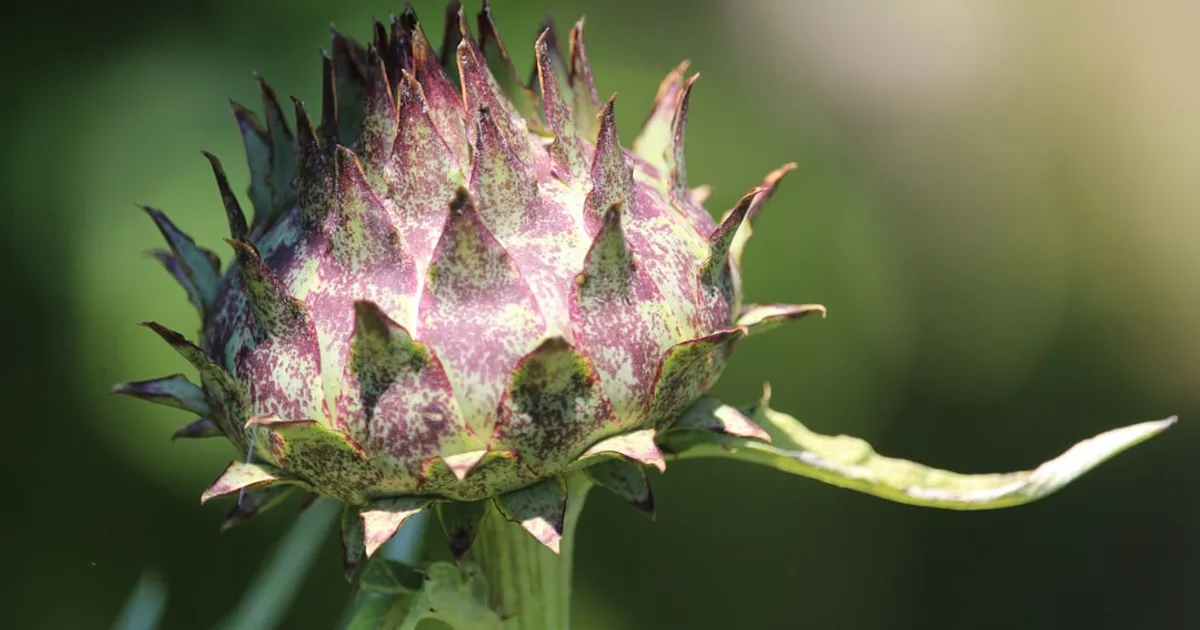
The plant itself is architecturally impressive in a way that the artichoke isn’t quite. Cardoon (Cynara cardunculus var. altilis) reaches 5-6 feet tall and 4 feet wide, with large, silvery-gray lobed leaves that have a more pronounced thorny edge than artichoke. If you let it flower, it produces lavender-blue thistle heads - ornamental enough that it sometimes shows up in designed gardens for that reason alone. But you’re growing it for the stalks, which means the flower buds come off before they develop, and the leaves get wrapped in burlap for the final month before harvest.
What it actually is
The artichoke (Cynara cardunculus var. scolymus) and cardoon are two cultivated varieties of the same species (Cynara cardunculus). They are not the same plant, and the relationship between them is often misstated. The artichoke was selected over centuries for large, edible flower buds. Cardoon was selected separately for its edible leaf stalks and midribs. Same wild ancestor, two separate domestication paths running in parallel across the Mediterranean for roughly 2,000 years.
Young plants of both varieties look nearly identical. The differences become clear as the season progresses: cardoon puts most of its energy into producing a large vegetative structure rather than into developing flower buds. The stalks get thicker, the plant taller, and the overall habit more like a shrub than a perennial vegetable. In Zones 8-10, established cardoon is perennial and builds into a substantial multi-year plant. A ten-year-old cardoon crown in a mild California or Mediterranean climate can be 6 feet across.
What you eat is not the flower bud - that’s the artichoke. You eat the inner leaf stalks and midribs of cardoon, and only after blanching. The outer stalks of a cardoon plant are tough and intensely bitter and go in the compost. The inner stalks, after the blanching process etiolates them and breaks down phenolic compounds, are pale, tender, and carry a flavor that crosses artichoke heart with celery - mildly bitter in a way that’s pleasant rather than harsh, with an earthy, slightly vegetal quality that makes them remarkable in cream sauces, braises, and the traditional preparations described below.
The Blanching Step - The Central Skill
Blanching cardoon is not optional. An unblanched cardoon stalk is intensely bitter and essentially inedible - the phenolic compounds that cause the bitterness are the plant’s default state. What blanching does is deny the stalks light for 3-4 weeks, stopping chlorophyll production and triggering the breakdown of bitter compounds through a process called etiolation. The stalks pale from green to cream or white, the texture softens slightly, and the bitterness drops to a level that works culinarily.
The technique is straightforward once you’ve done it once:
About 3-4 weeks before your intended harvest date - which should be at or just before the first frost for peak tenderness - gather the leaves of the plant loosely into a column shape and tie them together. You’re not crushing the plant; you’re gathering it so the inner stalks are bundled together and can be wrapped.
Wrap the bundled plant with burlap, heavy brown paper, or corrugated cardboard. The goal is to exclude light from the stalks and midribs. A few layers of material are sufficient - you don’t need a completely lightproof wrap, just enough to reduce light to near-zero. Secure the wrap with twine. Leave the top of the plant somewhat open for air circulation; completely sealing the plant in plastic promotes botrytis.
Leave the wrap in place for 3-4 weeks. In that time, the inner stalks will pale from green to cream-yellow and the bitterness will diminish.
Harvest by cutting the entire plant at the base. Peel away the outer wrapper, discard the tough outer stalks, and work toward the inner stalks - these are the product. Trim away the thorny leaf edges with kitchen shears before cooking.
If you’ve blanched properly, the inner stalks will be pale, slightly flexible, and smell faintly of artichoke. If they’re still green throughout, they needed more time or better light exclusion.
The ROI Case
The challenge with cardoon’s economics is that there’s almost no US market comparator - you can’t walk into a typical grocery store and buy cardoon at any price. When it does appear at specialty Italian importers or high-end produce markets, the price runs $4-8/lb, and $6/lb is a reasonable midpoint for calculation.
| Scenario | Yield | Price/lb | Gross Value | Seed Cost | Net Return | ROI Multiple |
|---|---|---|---|---|---|---|
| Conservative | 2 lb | $4.00 | $8.00 | $3.49 | $4.51 | 2.3x |
| Base case | 3 lb | $6.00 | $18.00 | $3.49 | $14.51 | 5.2x |
| Strong | 4 lb | $8.00 | $32.00 | $3.49 | $28.51 | 9.2x |
The base case is a 5.2x return on seed investment. In terms of per-pound retail replacement value, that’s a reasonable expectation for a properly grown and blanched plant in a single growing season.
The more honest ROI framing for most growers is this: cardoon produces something that you cannot reliably buy. If you want to cook bagna cauda with fresh cardoon stalks the way it’s made in Piedmont, or make the traditional Lyonnaise Christmas Eve gratin, you either grow it yourself or you make do with an inferior substitute - usually celery, which is not the same dish.
Historical and Culinary Context
Cardoon has been cultivated in the Mediterranean since antiquity. Roman writers including Pliny the Elder documented it as a garden vegetable of some importance. It appears consistently in English, French, and Italian kitchen garden literature through the 17th and 18th centuries - John Evelyn’s Acetaria: A Discourse of Sallets (1699) includes it, and French and Italian cookbooks of the period treat it as an ordinary market vegetable. The decline came in the 19th and 20th centuries as food supply systems standardized on a smaller set of vegetables that held up to industrial distribution. Cardoon, which requires blanching before harvest and doesn’t hold well after cutting, didn’t survive that selection process.
What persists is a set of traditional dishes, concentrated in Piedmont and the Lyon region of France, that are still made with cardoon specifically:
Bagna cauda is the classic cardoon preparation. The dish is Piedmontese in origin - a warm anchovy and garlic sauce (bagna cauda translates literally as “warm bath”) made from anchovies, garlic, butter, and olive oil, served at the table in a small pot over a flame, with cardoon stalks and other raw vegetables for dipping. The slight bitterness and artichoke quality of cardoon is the specific match for the rich, pungent sauce. Celery, the typical substitute when cardoon isn’t available, is edible but noticeably thinner in flavor.
Gratin de cardon is the traditional Christmas Eve first course in Lyon and parts of Piedmont - blanched cardoon stalks in a cheese and cream sauce, baked until browned. It’s a dish with a specific date on the calendar and enough regional importance that Lyon cooking teachers still treat cardoon as a seasonal essential. The sauce carries the dish, but the cardoon’s texture and flavor are what make it a gratin rather than just a cheese casserole.
Moroccan tagine with cardoon is a less-documented but well-established tradition across North Africa - cardoon cooked with chickpeas, preserved lemon, olives, and spices. The slightly bitter, dense-textured stalks work in long braise applications where they absorb flavor without falling apart.
The relative obscurity of cardoon in US cuisine is a supply chain artifact and nothing more. The vegetable is good, the culinary tradition behind it is legitimate, and the reason you can’t buy it is purely logistical.
Growing Requirements
Start seeds indoors 8-10 weeks before your last frost date. Cardoon seeds germinate readily at 65-75°F, typically in 10-14 days. Sow 2-3 seeds per cell and thin to one. Grow under lights with consistent warmth; seedlings can get leggy quickly if light is inadequate.
Transplant after last frost when soil has warmed above 60°F. Cardoon is frost-sensitive as a transplant, even though mature plants tolerate light frost. Don’t rush the transplant date.
Space plants 3-4 feet apart. This is not a suggestion - cardoon gets large and needs the space for air circulation and for the blanching wrap to work properly. A single plant in a prominent garden location, given space to develop fully, is a reasonable use of the space because the ornamental value is real.
Cardoon is a heavy feeder. Work 4-6 inches of compost into the planting bed before transplanting and side-dress with a balanced fertilizer (10-10-10) monthly through midsummer. The plant is building a large vegetative structure over 120-150 days; it needs consistent nitrogen throughout.
Water 1-1.5 inches per week. Inconsistent moisture doesn’t affect the stalks as much as some other crops, but drought stress during the main growth period produces a tougher stalk.
Zone differences: In Zones 8-10, cardoon is perennial. Leave the crown in place after harvest, cut back the old foliage, and mulch lightly. The plant will push new growth in spring and establish itself as a substantial permanent feature. Second and third year plants are more productive than first-year plants. In Zones 5-7, treat as an annual - the long season limits your planning window, which is why the 8-week indoor start is non-negotiable in northern climates. Zone 7 growers may see root survival through mild winters with heavy mulching over the crown.
Variety
Commercially available cardoon varieties are less differentiated than artichoke varieties in the US market. ‘Gigante di Romagna’ - large-stalked, Italian origin, reliably productive - is the most commonly available named variety domestically. Baker Creek Heirloom Seeds and Seed Savers Exchange both carry it. Spanish and French regional varieties exist, but sourcing them in the US requires specialist importers.
For most growers, ‘Gigante di Romagna’ is the practical choice. It produces large, thick inner stalks that are easier to work with after blanching, and it performs well across a range of climates.
What Goes Wrong
Aphids - the same Aphis species complex that attacks artichoke - concentrate on new growth and the developing inner stalks. A strong stream of water handles early infestations. Insecticidal soap for heavier pressure. The relationship with artichoke pests is direct: cardoon and artichoke are the same species, and their pests don’t distinguish between them.
Artichoke plume moth (Platyptilia carduidactyla) tunnels into stalks. Look for frass near entry points. Remove and destroy affected stalks promptly. Spinosad applied in early spring when adults are active works as a preventive. If you grow artichokes in the same garden, monitor both crops - infestation in one typically appears in the other.
Botrytis (Botrytis cinerea) on the blanched stalks is the risk specific to the blanching step. When you wrap the plant, you’re creating a moist, dark environment that Botrytis likes. Maintain some airflow at the top of the wrap rather than sealing the plant entirely. If you see gray fuzzy growth when you unwrap, cut away affected tissue and check the remaining stalks - limited botrytis on outer stalks doesn’t necessarily mean the inner stalks are compromised.
Insufficient bitterness reduction after blanching: if the stalks are still quite bitter after 3-4 weeks of blanching, either the wrap wasn’t excluding enough light or the weather was too warm. Blanching works best in cool fall temperatures; in warm conditions, the etiolation process is slower. Extend the blanching period by a week and check again.
Bolting before harvest in short-season climates: cardoon requires 120-150 days from transplant. In Zone 5, last frost is often mid-May, putting your transplant date at late May and your harvest window in late September to October - a tight fit. Starting seeds on the early end of the indoor window (10 weeks before last frost) and transplanting as soon as frost risk passes gives the crop its best chance. In Zone 4, cardoon as an annual is marginal; the season is borderline too short for reliable stalk development and blanching.
Harvest and Storage
Cut the entire plant at the base after the blanching period is complete - typically 3-4 weeks after wrapping, timed to coincide with or just precede the first frost. Frost on an unblanched plant is a problem; frost on a properly wrapped and blanched plant is fine and may improve tenderness slightly.
Remove the outer wrapper. Peel away the tough, green outer stalks and discard them. The inner stalks - typically 8-12 of them in a well-grown plant - should be pale cream to yellow-white, semi-flexible, and faintly aromatic. Trim the thorny margins off the leaves using kitchen shears or a sharp knife; the thorns are small but real. Cut stalks into workable lengths for your intended use.
Fresh blanched cardoon keeps 5-7 days refrigerated wrapped in a damp cloth. It does not keep longer than that at good quality - use it within the week. Blanching and then briefly cooking (parboiling until just tender, then cooling) followed by freezing extends storage to several months, though the texture softens somewhat after thawing. For the gratin preparation, texture after thawing is acceptable. For the bagna cauda preparation - where raw texture is part of the point - use fresh.
Before cooking: most preparations call for dropping peeled cardoon stalks into acidulated water (water with lemon juice) as you cut them. Like artichoke hearts, cut cardoon oxidizes and browns on exposure to air. A bowl of water with the juice of half a lemon holds cut stalks without discoloration until you’re ready to cook.
Related crops: Artichoke, Fennel
Related reading: Value Per Square Foot - which vegetables pay most for the space they take
Growing Cardoon? Track your harvest value and break-even date in the Garden ROI app.
Get the App