
Celtuce
Lactuca sativa var. angustana
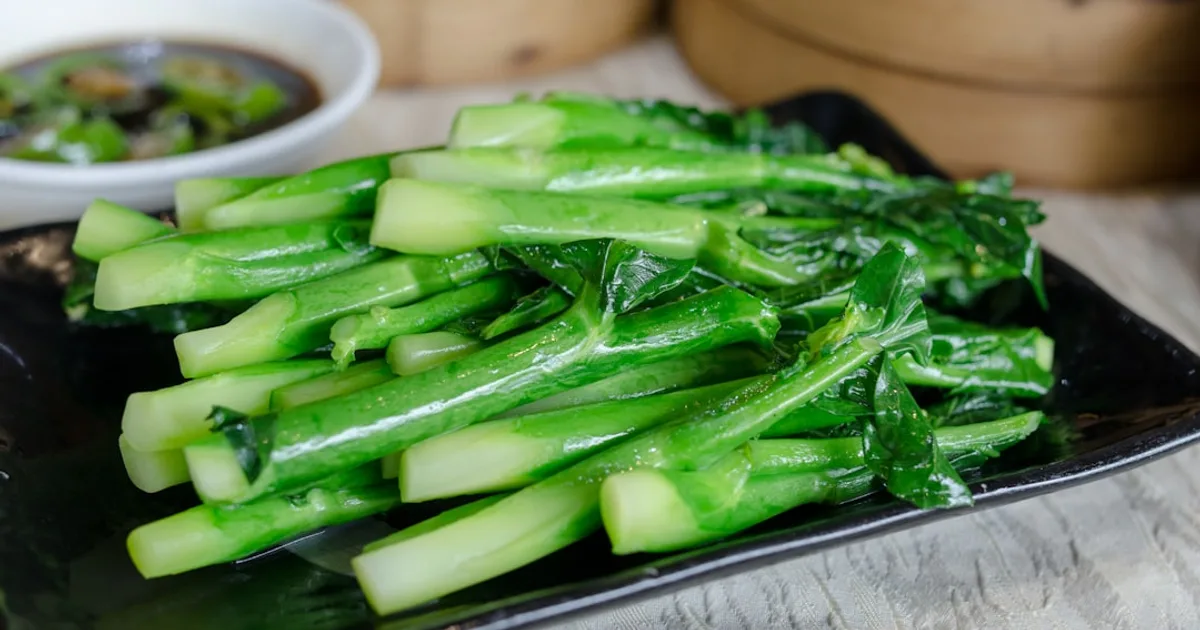
Celtuce has two crops in one plant: the leaves of a lettuce and the fleshy stem of something that doesn’t have a Western equivalent. The stem - 8-12 inches long, thumb-thick to wrist-thick depending on the variety - is the primary harvest. Peeled, it tastes like a cucumber that ran into an artichoke heart, mild and slightly nutty, with a crisp texture that holds up to stir-frying in a way lettuce never could. The young leaves are edible too, with the slightly bitter flavor of romaine outer leaves.
At Chinese and Vietnamese grocery stores, fresh celtuce runs $3-5/lb when you can find it. Outside cities with significant Chinese communities, it’s not commercially available - which means growing your own is the only access point for most cooks.
What it actually is
Lactuca sativa var. angustana is the same species as head lettuce, butterhead, and romaine - just selected over centuries in China for a thick, elongated stem rather than dense leaf formation. The name comes from a portmanteau of “celery” and “lettuce” coined by American seedsmen in the early 20th century, though the vegetable itself has been cultivated in China for at least 2,000 years. In Chinese cooking it’s called wosun (莴笋) or woju.
The plant grows 18-24 inches tall with a central stem that gradually thickens as the plant matures. The lower half of the stem is the harvest; the upper portion carries leaves. Like all lettuce, it’s cool-season by inclination - it tolerates light frost and bolts in heat. Compared to heading lettuce, celtuce is somewhat more bolt-resistant because the plant’s energy goes into stem development rather than forming a dense head, giving you a wider harvest window before the flavor turns bitter.
Two basic types are grown:
| Type | Stem character | Leaf character | Use |
|---|---|---|---|
| Green stem | Pale green, milder | Green, less bitter | Stir-fry, fresh sliced |
| Purple stem | Darker flesh, slightly nutty | Reddish-purple, more decorative | Same as green; visual contrast |
Both types grow and taste essentially the same; the purple variety is more ornamental. Most seeds sold in the US are green-stem types.
The ROI case
Celtuce produces two crops simultaneously: stem weight plus usable leaf weight. At 2 lb per plant for the stem harvest, a modest planting delivers real produce per square foot.
| Planting | Plants | Stem yield | Leaf yield | Combined value @$4/lb | Seed cost | Net |
|---|---|---|---|---|---|---|
| 5 plants | 5 | 6-8 lb | 1-2 lb | $28-40 | $1.25* | $26.75-38.75 |
| 10 plants | 10 | 12-16 lb | 2-4 lb | $56-80 | $2.49 | $53.51-77.51 |
*Estimated from $2.49 packet at approximately 2 plants per dollar.
The math looks good, but celtuce’s real value is culinary access. There is no substitute for the stem texture in Chinese cooking - jicama comes closest but has a different flavor and doesn’t cook the same way.
Growing requirements
Season: celtuce is a cool-season crop. Direct sow or transplant outdoors 4-6 weeks before last frost in spring, or start in late summer for fall harvest. The optimal growing temperature is 60-65°F. Above 75°F consistently, plants bolt; below 28°F, they sustain frost damage.
Starting indoors: for spring planting in zones 5-6, starting seeds indoors 4-6 weeks early gives the plants enough time to develop thick stems before summer heat arrives. Sow 1/4 inch deep; germination at 60-70°F in 7-14 days. Transplant at 4-6 true leaves, spacing 8-12 inches apart.
Direct sowing: works well in zones 7-9 for fall planting. Sow 1/4 inch deep; thin to 8-12 inches. Succession-sow every 3-4 weeks in fall for extended harvest.
Soil: consistent moisture is critical for tender stems. Drought stress causes the stem to become pithy and fibrous rather than crisp. Well-amended soil with consistent irrigation. Avoid hardpan or compacted soil that limits stem development.
Fertilizing: moderate feeder. Side-dress with balanced fertilizer when plants are 8-10 inches tall. Excess nitrogen produces leafy growth at the expense of stem development; don’t over-fertilize.
Harvest timing: harvest when the stem is 3/4 to 1 inch in diameter at the base and the plant is 15-20 inches tall. Don’t wait for the plant to bolt - once flower buds form at the crown, the stem becomes bitter and pithy. The harvest window is 2-3 weeks from ideal size to bolt; check plants every 3-4 days.
What goes wrong
Pithiness: the most common disappointment. A pithy stem - hollow or cottony in the center - results from either harvesting too late (the plant was past peak) or from heat and drought stress during growth. Harvest promptly when the stem reaches full size; keep soil consistently moist.
Premature bolting: happens in hot weather or if plants were stressed. In zones 5-6, spring-planted celtuce often bolts before the stem is fully developed if planted too late. Plant early enough that the bulk of stem development happens in cool weather. Fall planting avoids this problem in most zones.
Tipburn: browning at leaf margins, identical to tipburn in head lettuce. Caused by calcium deficiency due to inconsistent watering rather than actual calcium shortage in the soil. Even moisture prevents it.
Aphid colonies: lettuce aphids (Nasonovia ribisnigri) colonize the growing tip and undersides of leaves. Knock off with water spray; insecticidal soap for heavy infestations. Root aphids are harder to control - if plants wilt despite adequate water, check the roots.
Harvest and use
Cut the plant at the base. Remove all leaves (save the young inner leaves for salad). Peel the stem with a vegetable peeler, removing the thin outer skin - you can feel when you’ve hit the tender interior because the resistance changes. The pale, translucent green interior is what you want. Don’t peel too conservatively; the outer layer is fibrous and slightly bitter, and leaving it produces a less pleasant result.
Storage: unpeeled stems keep 1-2 weeks refrigerated. Peeled stems stored upright in a container of cold water, refrigerated, keep for up to 10 days - the water prevents browning and keeps the texture crisp, the same approach used for storing asparagus or peeled celery. Change the water every 2-3 days. Cut into the sizes you need just before cooking, as exposed cut surfaces brown faster than the whole peeled stem.
The flavor is distinctly mild - cucumber-ish, slightly nutty, with a faint bitterness that dissipates with brief cooking. The texture is the point: it holds crunch even after 3-5 minutes in a hot wok, unlike most greens.
Core preparations:
-
Stir-fried celtuce with garlic and sesame: thin-sliced or julienned celtuce stem, stir-fried on high heat 2-3 minutes with garlic, a splash of light soy sauce, and sesame oil at the end. The stems stay crisp. One of the most common Chinese preparations for wosun - simple enough that the vegetable’s flavor reads clearly.
-
Cold-dressed celtuce (涼拌萵筍): julienned peeled stem, blanched 1 minute in boiling water, cooled under cold water, dressed with sesame paste or chili oil, Sichuan pepper, vinegar, and garlic. A standard Sichuan cold appetizer. The cooling step can be skipped for a fully raw version; the texture is crunchier raw.
-
Braised with pork or mushrooms: sliced celtuce added to a braising liquid in the last 10-15 minutes - it absorbs the cooking liquid while retaining some texture. Works with red-braised pork (hong shao rou) or mushroom braises. The stem takes on the color and flavor of the braising liquid.
-
Pickled celtuce: julienned stem, salted and pressed to draw out moisture (30 minutes), rinsed, then dressed with rice vinegar, sugar, garlic, and chili. Keeps 3-4 days refrigerated. A quick pickle that amplifies the cucumber quality.
-
Leaf use: young inner leaves are edible as salad greens. Use the same way you’d use romaine - they’re more assertive than butterhead but less bitter than the outer leaves. Outer leaves are best cooked briefly in stir-fries or soups.
The Dual-Harvest Advantage
Most greens are single-crop plants. You grow lettuce for lettuce. You grow spinach for spinach. Celtuce is different: the same plant gives you useful leaf harvests through most of its growing period and then a substantial stem harvest at maturity. You’re not giving up one to get the other.
In practice: from the time plants are 6-8 inches tall, you can strip outer leaves every 7-10 days. These are good as salad greens, stir-fry greens, or soup greens. As the plant develops, the stem fills out. At 60-80 days from transplant (depending on conditions), the stem is ready. At that point you harvest the whole plant - stem and remaining leaves together.
That harvest structure gives you a rolling supply of leafy greens through a 3-4 week window, followed by a concentrated stem harvest. Space occupied by 10 celtuce plants is working harder than the same space in pure head lettuce, where you harvest everything in one cut with no interim harvest.
Specialty Market Value
Outside US cities with substantial Chinese or Vietnamese communities, celtuce is essentially unavailable fresh. Asian grocery stores in those cities carry it in season for $3-5/lb; mainstream supermarkets don’t stock it at all. Chinese restaurants that feature Sichuan and Cantonese cuisine use celtuce stems as a menu ingredient in cold appetizers and braised dishes - and those restaurants often buy from farmers if a local source is available.
At farmers markets, celtuce sells on curiosity and novelty as much as anything. Display it with a sample of peeled stem alongside the whole plants - the pale, translucent interior and mild flavor win over buyers who’ve never seen it. Price at $4-5/lb for whole plants (by stem weight) or $6-8/lb for pre-peeled stems. The labor of peeling is real enough to justify the premium, and pre-peeled stems have a specific appeal for restaurant buyers who value prep-reduced product.
Seed saving is simple: allow one or two plants to bolt fully and set seed. Celtuce seeds are the same type as lettuce seeds - small, light, and produced in quantity. One bolted plant produces several hundred viable seeds. Let the seed heads dry on the plant, then cut and thresh into a bag. Store dry at room temperature; viability runs 3-5 years.
Related reading: Daikon - fellow cool-season Asian root vegetable; Mizuna - Asian salad green with similar cool-season growing window
Growing Celtuce? Track your harvest value and break-even date in the Garden ROI app.
Get the App