
Daikon
Raphanus sativus var. longipinnatus
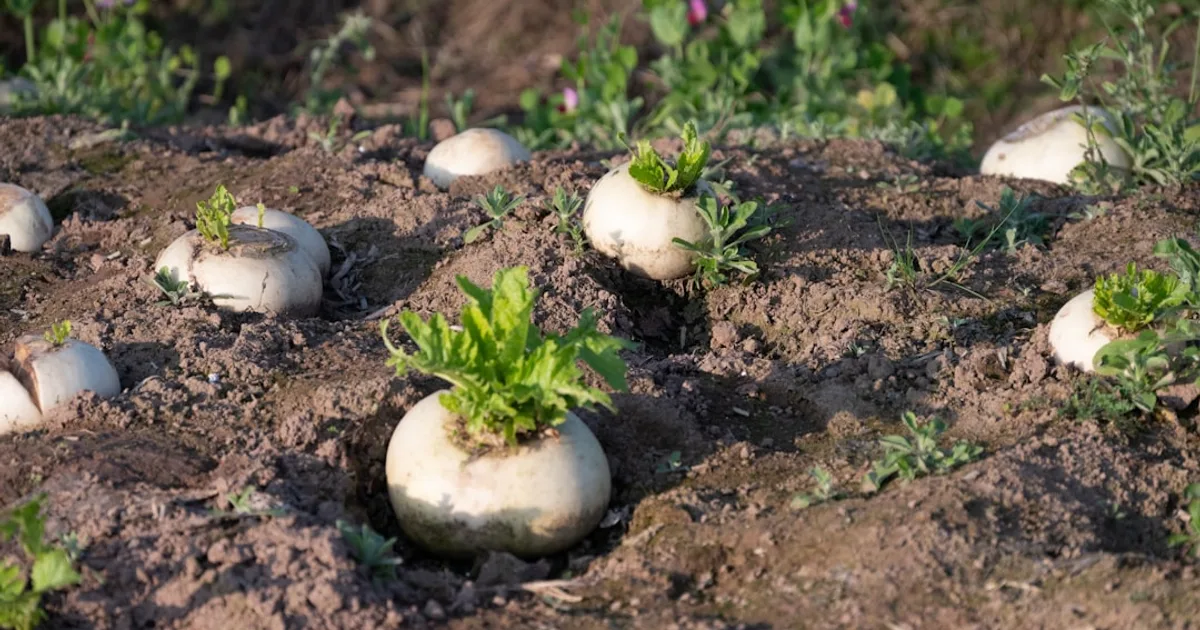
Daikon is not a big radish. The comparison is superficially accurate - same genus, same basic growing requirements - but daikon’s culinary role is completely different. It appears in Japanese pickles, Korean kimchi, Vietnamese braised dishes, Chinese soups, and Indian chutneys in ways that a standard European radish never does. The roots run 8-18 inches long, weigh 1-3 lb each, and have a milder, sweeter, slightly peppery flavor that mellows further with cooking. At Asian markets they run $1.50-3/lb; at Korean or Japanese grocery stores, they’re easy to find. At a mainstream US grocery store, you’re usually out of luck.
The plant is also a legitimate soil improvement tool. Daikon’s deep taproot penetrates and fractures hardpan and compacted subsoil - gardeners use it as a tillage radish, tilling it under at the end of the season rather than harvesting. This dual function (edible and agronomic) makes it one of the more useful crops to work into a garden rotation regardless of whether you’re growing for the kitchen.
What It Actually Is
Raphanus sativus var. longipinnatus is a cultivated variety of the common radish, selected over centuries in East and Southeast Asia for large, mild roots rather than the small, pungent European types. “Longipinnatus” (long-feathered) refers to the root form.
Above-ground growth is substantial - 18-24 inches of ferny leaves - which makes daikon a visual presence in the garden. The leaves are edible (mild radish-green flavor; good sautéed or in soups) and the seed pods, harvested young and green, are crisp and peppery eaten raw or pickled.
Key cultivars:
| Variety | Root length | Root shape | Days | Notes |
|---|---|---|---|---|
| Miyashige | 16-20 in | Long, cylindrical | 55-65 | Classic Japanese type; excellent for pickling |
| April Cross | 18-24 in | Long, cylindrical | 60-65 | Standard Japanese type; slow-bolt; widely available |
| Minowase | 18-24 in | Long, tapered | 50-60 | Mild flavor; most widely planted for home use |
| KN-Bravo | 14-18 in | Cylindrical | 45-55 | Purple-red exterior with white flesh; shorter season |
| Shunkyo Semi-Long | 8-12 in | Shorter, thicker | 45-50 | Faster; good for tight spaces; fits zone 5 spring windows |
| Watermelon Radish (Xinlimei) | 4-6 in | Round | 50-60 | Pink interior; striking when sliced; milder than long types |
‘Miyashige’ and ‘April Cross’ are the most widely grown for kitchen use in Japan; ‘Minowase’ is the standard home-garden choice in the US. ‘KN-Bravo’ is notable for its purple-red skin, which adds visual interest in sliced preparations; its shorter season suits zone 5-6 fall windows.
The ROI Case
Daikon’s value combines high per-square-foot yield with market access. A single root provides multiple meals; in areas without Asian grocery stores, fresh daikon simply doesn’t exist commercially.
Specialty market pricing: $1.50-3.00/lb (USDA Agricultural Marketing Service ethnic vegetable pricing; Asian grocery store retail in US urban markets).
| Planting | Row footage | Plants | Yield | Value @$2/lb | Seed cost | Net |
|---|---|---|---|---|---|---|
| 10 ft row | 10 ft | 10-12 | 12-20 lb | $24-40 | $0.83* | $23.17-39.17 |
| 20 ft row | 20 ft | 20-24 | 24-40 lb | $48-80 | $1.66* | $46.34-78.34 |
*Estimated from $2.49 packet.
The yield numbers are high per row foot because each daikon root is 1-3 lb. A 10-foot row producing 12 roots averaging 1.5 lb each yields 18 lb - from a small space in about 60 days. Compare to carrots, which might yield 4-6 lb from the same row in twice the time.
Greens as dual harvest: the above-ground foliage is also edible. Young leaves (harvested at 6-8 inches) are mild and good raw in salads. Mature leaves are better cooked - sautéed in sesame oil, added to miso soup, or braised with garlic. Don’t discard the tops; they add $0.50-1/lb equivalent value as a separate vegetable.
Zone Fit
Zones 3-5: spring-only crop with some fall potential. Direct sow in early spring 4-6 weeks before last frost for spring production; sow in mid-August for fall production harvested before hard freeze. In zone 5, the fall window is tight - daikon needs 60-70 days from sowing to harvest, which means August sowing finishes in October. Spring sowing is often more reliable in the coldest zones.
Zones 6-7: two-season production. Spring sowing February-April; fall sowing July-September. Fall daikon in zones 6-7 is typically larger and better-flavored than spring daikon because roots develop in cooling temperatures without bolt pressure. A September-sown daikon harvested in November in zone 7 is often the best of the year.
Zones 8-9: fall through early spring production. Sow in October-November for winter harvest; sow in late January-February for spring harvest. The summer months (May-September) are too hot for daikon production in zone 8-9. In mild-winter zone 9 (coastal California), daikon can grow year-round with summer avoided.
Zone 10+: cool-season window only (November-February). The plant needs consistent temperatures below 75°F for root development; sustained heat above this triggers bolting before the root develops.
Soil Improvement Value
Daikon’s agronomic value extends beyond the kitchen. The root penetrates 12-18 inches into the soil, breaking up compacted subsoil layers that most other vegetable roots can’t reach. This is why daikon and its close relative ‘Tillage Radish’ are used as cover crops in agricultural systems to break hardpan and improve drainage.
In home garden applications: growing daikon in a compacted area before planting other deep-rooted vegetables (carrots, parsnips, beets) opens the soil structure in ways that tilling alone doesn’t achieve. Till in the daikon tops and roots at season end or let them winterkill in place; the decaying roots leave channels for earthworms and subsequent crop roots.
The greens and roots, when tilled under, add organic matter and break up the soil simultaneously - a legitimate two-for-one function for beds where compaction is a problem.
Growing Requirements
Season: cool-season crop that bolts in heat. The productive window matches other cool-season root crops: 4-6 weeks before last spring frost; 8-10 weeks before first fall frost. Fall plantings typically produce larger, better-quality roots because roots develop as temperatures cool.
Direct sowing only: do not transplant. Daikon must be direct-seeded in its final location - transplanting causes forked, misshaped roots. Sow 1/2 inch deep, 6 inches apart in rows 12 inches apart. Germination at 50-65°F in 3-7 days. Thin promptly to the final spacing; crowded daikon produces small roots.
Soil preparation: loose, deeply tilled (12-18 inches) soil produces straight roots. Compacted soil, rocks, or hardpan cause forking and stunted roots. In heavy clay gardens, build raised beds or amend with compost to the full depth of the expected root. This depth requirement distinguishes daikon from standard radishes and is the primary reason for root quality problems.
Watering: consistent moisture throughout root development. Irregular watering (wet-dry cycles) causes cracking and hollow centers. Consistent drip irrigation or mulching to maintain soil moisture is especially important during August-September fall sowings in warmer zones.
Fertilizing: moderate feeder. Generous compost at planting is sufficient. Avoid excess nitrogen, which promotes leaf growth at the expense of root development. Phosphorus and potassium support root size; a balanced fertilizer (not nitrogen-heavy) applied once at mid-growth is appropriate.
What Goes Wrong
Forked or branched roots: caused by soil obstacles - rocks, hard clods, compaction, or undecomposed organic matter in the root zone. Prevention: deeply tilled, fine-textured soil through the full root depth. Nothing to do after the fact except prevent it next planting.
Bolting before root development: heat triggers bolting, diverting energy from root enlargement to flowering. Once bolted, the root becomes pithy and harsh-tasting. Prevention: plant spring daikon early enough that main root development occurs in cool weather; choose slow-bolt varieties (‘April Cross’) for spring plantings; grow in a spot with afternoon shade in spring.
Cabbage root maggot (Delia radicum): the main insect pest. Larvae tunnel into the root, creating visible channels and reducing quality. Adult flies lay eggs in the soil at the base of plants. Row cover applied at sowing and kept on through thinning is the most effective organic prevention - it excludes the egg-laying adult fly. Wood ash or diatomaceous earth applied around the base of plants deters egg-laying. No effective organic treatment once larvae are inside the root; prevention is the only strategy.
Hollow roots: internal browning or hollowness from irregular watering or boron deficiency. Consistent irrigation prevents most hollow root issues. Boron deficiency is rare but correctable: borax at very low rates (1 teaspoon per 100 square feet) dissolved in water and applied to soil.
Flea beetles on seedlings: small shothole damage on leaves. Row cover prevents. Rarely impacts root development.
Preservation
Fresh storage: daikon keeps 1-2 weeks at room temperature; 4-6 weeks refrigerated wrapped in a damp cloth. Leave roots in the ground through cool fall weather (with mulch cover for frost protection) and harvest as needed - in-ground storage is the most practical approach when soil isn’t freezing.
Lacto-fermented preparations: the primary Asian preservation method and the one that produces the most distinctive flavors. Fermentation converts daikon into a fundamentally different ingredient.
Kkakdugi (Korean cubed daikon kimchi): cut daikon into 3/4-inch cubes, salt for 30-60 minutes to draw moisture, rinse, then mix with gochugaru (Korean chili powder), garlic, ginger, fish sauce or soy sauce, scallion, and a small amount of sugar. Pack into a jar and ferment at room temperature for 1-2 days, pressing down daily to keep daikon submerged in its brine. Then refrigerate. The flavor continues developing over 2-3 weeks. Keeps 3-4 months refrigerated. Sharper and crunchier than napa cabbage kimchi.
Dongchimi (Korean radish water kimchi): a mild, clear-brined radish kimchi central to Korean winter food. Slice daikon into thick half-moons, salt lightly, then pack in a jar with sliced scallion, ginger, garlic, and a few green chilies. Cover completely with lightly salted water (2-3% salt brine). Ferment at cool room temperature (60-65°F is ideal) for 3-5 days. The resulting brine is a light, refreshing, slightly carbonated drink - the brine is often served alongside the radish. Keeps 2-3 months refrigerated.
Quick rice vinegar pickle: daikon cut into thin matchsticks or rounds, packed in a jar with rice vinegar, sugar, salt, and optional turmeric for color. Ready in 2-4 hours; the bright yellow pickled daikon served alongside Vietnamese banh mi sandwiches. Keeps 2-3 weeks refrigerated.
Frozen daikon: not recommended for raw preparations (texture becomes soft and watery after thawing) but acceptable when the intended use involves cooking in liquid (soups, braises). Blanch briefly, cool, freeze. Use directly from frozen in braised dishes.
Kitchen Applications
Grated daikon (daikon oroshi): the essential condiment. Finely grate raw daikon on a box grater, squeeze out most of the liquid, and serve the white mound alongside grilled fish, fried tofu, agedashi tofu, or soba noodles. The mound wilts and weeps liquid as it sits; that’s normal. The mild peppery freshness cuts through rich or fried foods without the intensity of fresh horseradish. A squeeze of yuzu or lemon and a dash of soy sauce converts it into a dipping sauce component.
Simmered daikon (furofuki daikon / oden): cut daikon into 2-3 inch rounds; score a shallow cross on each cut face; simmer in dashi broth for 30-45 minutes until tender and translucent. The daikon absorbs the broth flavor and becomes silky-soft throughout. Serve with miso sauce, yuzu kosho, or simply with the broth. A winter preparation in Japanese home cooking.
Pickled daikon (tsukemono): the category of Japanese quick pickles using salt or brine. Thin-sliced daikon salted with rice bran (nukaduke) or simple salt produces the standard table pickle. These are the small portions served with every Japanese meal to cleanse the palate.
Daikon kimchi (kkakdugi): see Preservation section above. The cubed format holds its crunch better through fermentation than thinly sliced preparations; the texture contrast is the point.
Vietnamese braised daikon: daikon cut into 2-inch chunks simmered with pork belly in caramelized fish sauce and coconut water. The daikon takes on deep amber color and silky texture from the braise; it becomes as much the point of the dish as the pork. Serve over rice.
Daikon in Indian cooking: raw daikon is grated into mooli paratha (stuffed flatbread); sautéed into mooli subzi with mustard seeds, turmeric, and chili; used raw in salads with lime and chili. The milder flavor of daikon compared to European radishes makes it more versatile in cooked applications.
Related crops: Radish - small European type, same genus, different culinary role; Turnip - fellow cool-season root with some overlapping cooked uses
Related reading: Succession Planting Calendar - timing daikon sowings for fall harvest in cool-season windows
Growing Daikon? Track your harvest value and break-even date in the Garden ROI app.
Get the App