
Chives
Allium schoenoprasum
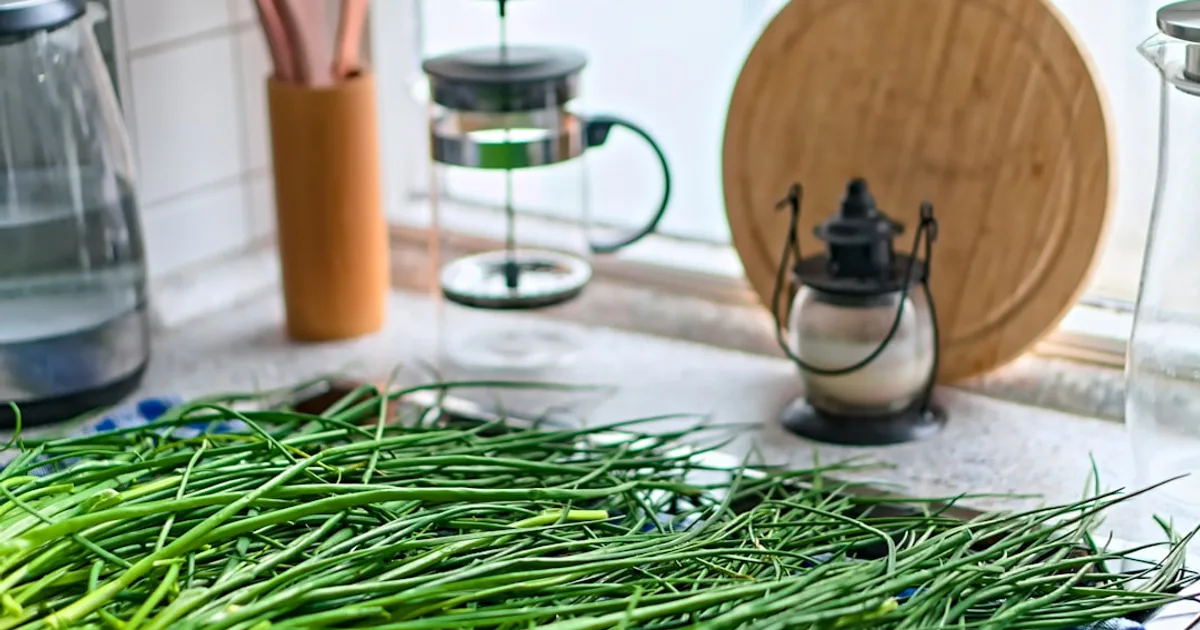
Chives (Allium schoenoprasum) are the lowest-maintenance perennial herb most gardens can accommodate. Plant them once, divide them every three years, and you’ll have free plants indefinitely. The clump that starts as a dozen seedlings becomes a dense 12-inch mound by year three - at which point you split it into three or four divisions, replant one, give the rest away. Your initial $2.49 seed cost is a one-time expense.
What you’re actually growing
Allium schoenoprasum is the smallest cultivated member of the allium genus - smaller than onion (A. cepa), leek (A. ampeloprasum), and garlic (A. sativum). It forms dense clumps of hollow, cylindrical leaves 10-15 inches tall with a mild onion flavor. The flavor compounds are primarily propyl and methyl sulfides, less pungent than onion or garlic but distinctly allium.
Garlic chives (A. tuberosum) are a closely related species with flat leaves, white flowers, and a mild garlic flavor. They’re a different plant from regular chives - heavier flavor, different growth habit, and more cold-tolerant. If you want the classic mild onion flavor, grow A. schoenoprasum. If you want garlic flavor in a thin leaf form, A. tuberosum is its own useful crop.
| Feature | Regular chives (A. schoenoprasum) | Garlic chives (A. tuberosum) |
|---|---|---|
| Leaf shape | Round, hollow | Flat, solid |
| Flavor | Mild onion | Mild garlic |
| Flower color/timing | Purple, late spring (May-June) | White, late summer (August-September) |
| Culinary use | Eggs, baked potato, cream cheese, sour cream, garnish | Stir-fry, dumplings, Korean jeon pancakes, Chinese jiuicai dishes |
| Cold hardiness | Zone 3 | Zone 3-4 |
| Self-seeding | Moderate | Aggressive - deadhead before seeds set unless you want a lot of plants |
| Height | 10-15 inches | 12-18 inches |
Both species are perennial, both produce edible flowers, and both divide for free propagation. Regular chives are the right choice for Western culinary use (garnish, compound butter, dairy applications). Garlic chives are specifically what you want for East Asian cooking where the flat garlic-chive is an ingredient, not a garnish.
The purple globe-shaped flowers of regular chives that bloom in late spring are edible and mild-flavored - useful as a garnish and attractive. Deadhead spent flowers if you don’t want the plant to self-sow aggressively, or let a few go and get volunteers.
The ROI case
Fresh chives at retail run $2.00-$4.00 per small bunch, typically 0.5-1 oz - roughly $5.00-$10.00/lb based on USDA AMS specialty herb price data. Your 0.25 lb seasonal yield at $8.00/lb average returns $2.00 in grocery value per season from one clump. That’s not exciting math in year one.
The compounding is the argument. A well-managed clump produces for 5-10 years with a single division every few years. The propagation is free - you’re splitting an existing root ball, not buying seeds or transplants. If you maintain three clumps (easily done from one original purchase), your seasonal production triples for zero additional cost.
Chive blossoms at farmers markets sell for $0.50-$1.00 per stem in spring, and specialty food buyers will pay premium for edible flowers. If you’re selling at market, the flowers are worth more per stem than the leaves are per pound.
The 5-year compounding scenario - starting with 3 plants from one $2.49 packet:
| Year | Plants | Fresh harvest (0.08 lb/plant) | Value at $8/lb | Free divisions from this year | Cumulative value |
|---|---|---|---|---|---|
| Year 1 | 3 | 0.24 lb | ~$1.92 | 0 (establishing) | $1.92 |
| Year 2 | 3 | 0.50 lb total | ~$4.00 | 3 (first division ready) | $5.92 |
| Year 3 | 3-6 | 0.75-1.0 lb total | ~$6.00-8.00 | 3-6 more if desired | ~$12-14 |
| Year 4 | 3-6 | ~1.0 lb | ~$8.00 | maintain or divide again | ~$20-22 |
| Year 5 | 3-6 | ~1.0 lb | ~$8.00 | maintain or divide again | ~$28-30 |
Cumulative 5-year value from $2.49: approximately $28-30, not counting the edible flowers. This assumes keeping 3-6 clumps and maintaining them with regular harvest and periodic division. The divisions given away are free plants to neighbors or for planting elsewhere - those represent additional value not captured in the table.
Growing requirements
Chive seeds germinate in 10-14 days at 60-70°F. They can be direct seeded in spring or fall, or started indoors 8-10 weeks before the last frost. Thin to 6 inches apart, or plant in clumps of 6-8 seeds at 12-inch spacing - chives naturally grow in clumps and don’t need to be separated to individual plants.
Soil pH of 6.0-7.0. Chives are not demanding feeders. A moderate amount of compost worked into the bed at planting is adequate for the first few years. As the clump matures and divides, the fresh soil worked in during division provides the fertility reset the plant needs.
Full sun is ideal; 4-6 hours of direct sun is the workable minimum. In partial shade, growth is somewhat slower and flavor slightly milder, but the plants survive and produce. They’re one of the few useful herbs that tolerate the partial shade conditions on the north side of a fence or under a tree canopy.
Cut plants back to 2-3 inches after the first flush of growth in spring and again in midsummer. This stimulates new tender growth. In fall, allow the foliage to die back naturally - cutting back too late in the season can reduce cold hardiness. Chives are cold-hardy to zone 3.
What goes wrong
Thrips (Thrips tabaci, Frankliniella occidentalis) are the most common pest, causing silver streaking and distorted growth on leaves. Reflective mulch early in the season confuses adults; spinosad sprays are effective for established infestations. Thrip pressure is most common in hot, dry conditions.
Downy mildew (Peronospora destructor) causes pale streaking and white sporulation on leaf surfaces in cool, wet conditions. Remove affected leaves; improve air circulation. This is the same pathogen that affects onions and is most problematic in wet springs.
Pink root (Phoma terrestris) causes pink discoloration of roots and eventual plant decline. It’s a soilborne pathogen that persists for years. Crop rotation prevents buildup, but since chives are perennial and typically stay in one spot, this is more of a risk than for annual alliums. If you see persistent plant decline with pink-stained roots, move the planting to a new bed.
White rot (Sclerotium cepivorum) - the same pathogen that affects garlic - occasionally infects chives. Prevention is the only management: plant in disease-free soil and don’t move soil from infected areas.
Harvest and storage
Cut leaves 2-3 inches above the soil, leaving enough foliage to maintain photosynthesis. The plant will regrow from the base. Harvest as needed throughout the growing season - chives respond well to frequent cutting and will produce continuously.
For edible flowers, harvest just as the blooms open fully. Use immediately; flowers wilt within a few hours of cutting.
Fresh chives don’t store well. They’ll keep wrapped in a damp paper towel in the refrigerator for 5-7 days. For longer storage, chop and freeze in ice cube trays with water or butter. Dried chives lose most of their flavor - freezing is the only worthwhile preservation method.
Culinary applications
The most important thing to know about cooking with chives is that they don’t tolerate heat. Cook them and you get a limp, sulfur-flavored mess with none of the fresh onion character that makes them worth growing. They go in at the end or not at all.
Heat sensitivity: add chives as a finish. To scrambled eggs - off heat, just before plating. To baked potatoes - on top of the sour cream, not baked into anything. To compound butter - mixed in raw. To soups - floated on top at the bowl. The volatile sulfide compounds that give chives their flavor volatilize rapidly above 140°F.
Classic applications for regular chives: the snipped fresh garnish on a baked potato is the obvious one, but the more useful applications are in dairy: chive cream cheese (4 oz cream cheese + 2 tbsp snipped chives + salt), chive sour cream for tacos or pierogies, chive butter for steak or corn (4 tbsp softened butter + 1 tbsp snipped chives + salt). Chive vinaigrette: replace the shallot in a standard French dressing with a tablespoon of snipped chives - milder and better with delicate greens.
Garlic chive applications: Korean pajeon (scallion pancake) can substitute garlic chives for a slightly different flavor. Chinese dumpling filling: garlic chives + egg + shiitake mushroom is a classic vegetarian dumpling filling. Stir-fry garnish: add a handful of cut garlic chives in the last 30 seconds of any stir-fry. They wilt slightly and retain flavor at stir-fry temperatures if the exposure is brief.
Edible flowers: the purple chive blossoms are mildly onion-flavored and hold their shape as a garnish. Pull individual florets from the globe and scatter over salads, eggs, cold soups, or compound butters. The full globe can be floated in a clear soup as a visual element. Flavor is milder than the leaves and fades quickly after picking.
Related reading: Beginner Homestead Crops - which perennial herbs offer the best long-term return for first-time growers; Organic Produce Cost Analysis - why fresh herbs sit in the highest-premium tier between home-grown and retail organic prices; Herb Garden ROI - the 8 highest-value culinary herbs compared; First Garden: 10 Best Crops - chives as the perennial starter herb
Frequently Asked Questions
Is chives a perennial?
Yes. Chives are cold-hardy perennials (zones 3 to 9) that re-emerge from the base each spring. A single planting can last 10 or more years when divided periodically. The initial $2.49 seed cost is a one-time expense.
How and when should I divide chives?
Divide every 3 to 4 years in early spring or fall when the clump becomes crowded. Dig the entire clump, split into sections of 6 to 10 bulbs each, and replant at the original spacing. This maintains vigor and gives you free new plants to expand or share.
Are chive flowers edible?
Yes. The purple-pink flowers have a mild onion flavor. Use them fresh in salads, as garnishes, or steep in white vinegar to make chive flower vinegar. Remove spent flower heads promptly to prevent aggressive self-seeding in the garden.
Growing Chives? Track your harvest value and break-even date in the Garden ROI app.
Get the App