
Chestnut
Castanea spp.
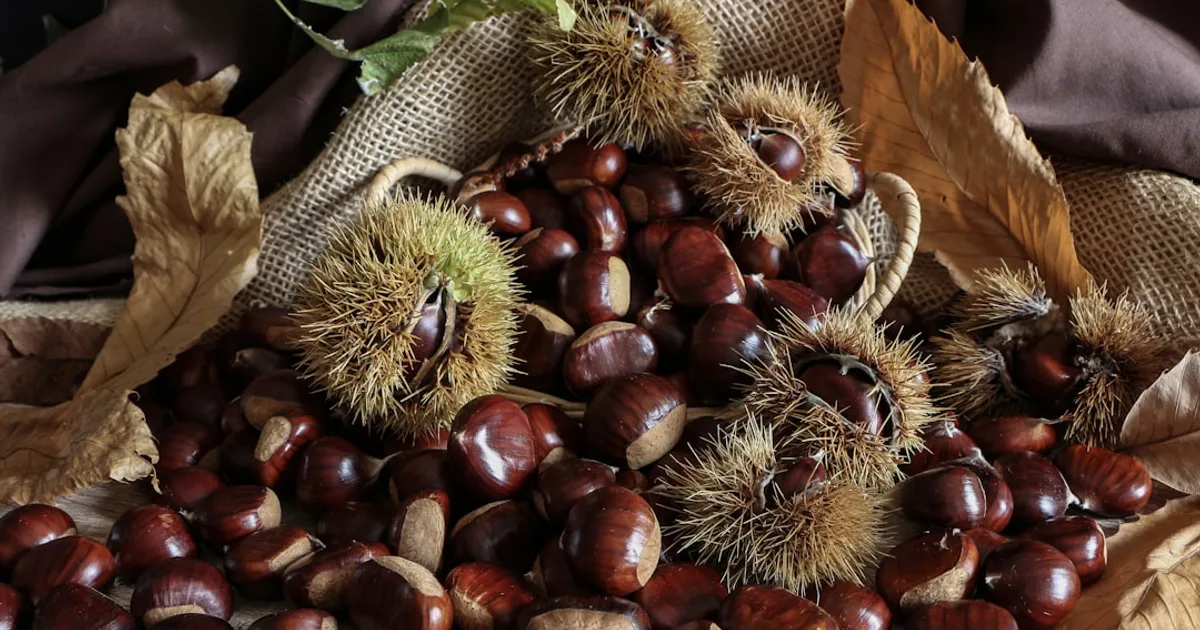
In 1904, a mycologist at the Bronx Zoo noticed something wrong with the American chestnut trees on the grounds. Within four decades, an estimated 3 to 4 billion trees were dead - functionally every Castanea dentata in eastern North America, from Maine to Mississippi. The cause was chestnut blight (Cryphonectria parasitica), a fungal pathogen introduced on Japanese chestnut nursery stock imported to New York. The American chestnut had never encountered it and had no resistance. The pathogen kills the above-ground portion of infected trees by girdling the bark; infected trees die back to the root crown, sometimes resprout, and die again. No other tree species in North American history has been eliminated so completely, so fast.
This matters to anyone thinking about planting a chestnut today because the species picture is defined by that history. The American chestnut (C. dentata) you’d plant is not the same tree that once dominated the Appalachians. What you can buy and grow is primarily Castanea mollissima (Chinese chestnut), Castanea crenata (Japanese chestnut), or hybrid cultivars - most notably the Dunstan Chestnut program from Chestnut Hill Outdoors - bred specifically for blight resistance, American nut flavor, and production in US climates.
The American Chestnut Foundation (acf.org) has been breeding backcross hybrids since 1983, working toward a tree that is 15/16 American chestnut with introduced Chinese blight resistance genes. Their restoration varieties - including ‘Sleeping Giant’ - are available in limited quantities. They are not the same as the commercial Dunstan or Chinese cultivars that most nurseries sell. If you want production, buy Dunstan or a named C. mollissima selection. If you want to participate in restoration work, look at TACF’s regional chapter programs.
The ROI case
Chestnuts at grocery stores in fall run $3-6/lb fresh. Farmers market pricing in the northeast and Pacific northwest reaches $5-8/lb for local, freshly harvested nuts. The $4/lb figure used here is conservative; USDA AMS retail data for shell-on chestnuts in October-November 2023 showed an average of $3.80-5.20/lb at conventional grocery. If you’re near a farmers market with any foot traffic, $5-6/lb is realistic for clean, fresh-fallen nuts.
The honest picture on chestnut ROI is that this is a 20-year investment, not a 3-year one. Trees don’t produce commercially viable crops until year 5-7. A mature tree in years 13 and beyond yields 50-100+ lbs per year from a single tree. Two trees - the minimum for cross-pollination - at $29.99 each is a $59.98 initial investment. By year 20, those two trees should be producing $400-800+ in retail-equivalent value annually from a planting cost of under $60.
| Period | Yield per 2-tree planting | Value @ $4/lb | Notes |
|---|---|---|---|
| Years 1-3 | 0 lb | $0 | Establishment; root development |
| Years 4-5 | 5-10 lb | $20-40 | First light crops; erratic |
| Years 6-8 | 10-25 lb | $40-100 | Production building |
| Years 9-12 | 25-50 lb | $100-200 | Consistent adult production |
| Year 13+ | 50-100+ lb | $200-400+ | Mature production; peaks at 20-30 years |
Source: Chestnut Hill Outdoors production data; University of Missouri Center for Agroforestry chestnut production guides.
Cumulative value estimate at year 10: Adding midpoint values across the production table - $0 for years 1-3, $30 for years 4-5 (two years at $15 avg), $70 for years 6-8 (three years at ~$23 avg), and $150 for years 9-10 (two years at $75 avg) - yields roughly $250 cumulative value against a $59.98 starting investment. You’re past break-even on tree cost by year 8-9, depending on actual production.
Cumulative value estimate at year 20: Years 11-20 at $150-300/year average (conservative for two trees that aren’t yet at peak) adds $1,500-3,000 to the year-10 cumulative. Total cumulative value at year 20 comes to roughly $1,750-3,250 from a $59.98 investment in trees. Annual maintenance costs (mulch, occasional fertilizer, weevil management at harvest) are low - under $20/year once established.
The break-even on initial tree cost is around year 7-9 under realistic conditions. Every year after that is pure return on a tree that will keep producing for 30-50 years.
The cross-pollination requirement
Chestnuts are not reliably self-fertile. Plant a single chestnut tree and you’ll get catkins in abundance and next to nothing in the way of burrs. You need two different cultivars within 40-50 feet of each other.
The mechanism: like other members of the beech family, chestnuts are monoecious - male (catkins) and female (receptive structures) flowers are on the same tree, but they don’t always mature simultaneously on a single tree. The male catkins may shed pollen before or after the female structures on the same plant are receptive. This protandry or protogyny varies by cultivar and year. Two different cultivars with slightly different timing windows ensure that at least one tree’s catkins are shedding when the other’s female structures are receptive.
This is not optional if you want a crop. Budget for two trees from the start. The $59.98 investment for two Dunstan bare-root trees is the real baseline cost, not $29.99.
One practical note: if you have a neighbor with a chestnut tree within 200 feet, you may be able to rely on that for cross-pollination, but it’s not consistent enough to depend on. Plant two. The cross-pollinated planting consistently outproduces a single-tree planting by an order of magnitude in trials from the University of Missouri Center for Agroforestry.
Species and variety guide
The variety question is the most important decision you’ll make with chestnuts - more important than site selection in most cases.
| Variety | Background | Nut size | Flavor | Zones | Source |
|---|---|---|---|---|---|
| Dunstan Chestnut | American × Chinese hybrid; Robert Dunstan 1950s | Large | Sweet, low tannin; best fresh flavor of the group | 5-9 | Chestnut Hill Outdoors |
| ’Colossal’ | American × European hybrid | Very large | Mild, sweet | 5-9 | Burnt Ridge Nursery |
| ’Peach’ | C. mollissima selection | Small-medium | Reliable producer; good flavor | 4-8 | Various |
| ’Sleeping Giant’ | TACF backcross hybrid | Medium | American flavor profile | 5-7 | American Chestnut Foundation chapters |
The Dunstan Chestnut deserves particular explanation. In the 1950s, Dr. Robert Dunstan, a North Carolina plant breeder, located a surviving American chestnut in Salem, Ohio that appeared to carry partial blight resistance. He crossed it with C. mollissima (Chinese chestnut). The resulting trees - sold today through Chestnut Hill Outdoors under the Dunstan Chestnut name - carry Chinese blight resistance but retain American chestnut’s eating quality: larger and sweeter than most pure Chinese varieties, with the lower tannin content that makes fresh roasting appealing. This is the variety most commonly recommended for home production in the eastern US and it’s what most discussions of “blight-resistant chestnuts” mean in a commercial nursery context.
‘Colossal’ is the nut you want for roasting whole because of its size. It’s an American-European hybrid and produces the largest nut of any commonly available cultivar. It’s better suited to the western US (Pacific Northwest, parts of California) than the humid East.
For pure Chinese chestnut selections like ‘Peach’, the advantage is cold hardiness extending to zone 4 and consistent production even in marginal climates. The tradeoff is smaller nut size and slightly more tannic, less sweet flavor than Dunstan hybrids.
Planting requirements
Chestnuts are acidic-soil specialists. Target pH 5.0-6.5. They will not thrive in alkaline or calcareous soils - even neutral pH (7.0) causes enough iron chlorosis to reduce production. If your native soil is alkaline, chestnuts are probably not the right tree for your site. Do a soil test before planting, not after. Texas A&M AgriLife Extension notes that pH adjustment with sulfur takes 12-18 months to take full effect on established plantings; applying it before planting gives the trees a better start.
Drainage is non-negotiable. Chestnuts will not tolerate waterlogged soil or even prolonged soil saturation. They are susceptible to Phytophthora root and crown rot in poorly drained sites. Choose a gentle slope or elevated site. If your best site has any drainage concern, plant on a raised berm - pull soil up 8-10 inches in a 3-foot diameter circle around each planting site. This costs nothing extra and may be the difference between a tree that thrives and one that dies in year two.
Zone and chill hours: C. mollissima and Dunstan hybrids perform in zones 4-8 (Dunstan hybrids in zones 5-9 per Chestnut Hill Outdoors production data). Chestnuts require 400+ chill hours below 45°F - this limits them in the Deep South and southern California coastal areas. In the northern plains where zone 4 winters are severe, C. mollissima selections generally outperform the hybrids.
Space trees 20-30 feet apart minimum. The 40-50 foot cross-pollination radius means your two trees can be adjacent - you don’t need to spread them across the property. Plant them 25-30 feet apart and both the spacing and cross-pollination requirements are satisfied.
What goes wrong
Chestnut blight (Cryphonectria parasitica): Chinese chestnuts and Dunstan hybrids are not immune to blight - they’re tolerant. Cankers appear but typically remain localized rather than girdling and killing the tree. You may see orange-red fungal structures on the bark of infected areas. Monitor for sunken, discolored bark cankers and remove infected wood when found. The disease rarely kills tolerant varieties outright, but heavy infections can reduce production.
Chestnut weevil (Curculio elephas and C. sayi): this is the most economically significant pest for home producers. Female weevils lay eggs in developing nuts through the burr in late summer. Larvae develop inside the nut, feeding on the flesh, and exit through a small hole in the shell after harvest. You can’t see the larvae at harvest - the nut looks intact. If you skip treatment, a significant fraction of your stored harvest will contain larvae.
The treatment is hot water. Submerge harvested nuts in water heated to exactly 49°C / 120°F and hold for 20 minutes. This temperature kills weevil eggs and larvae without cooking the nut or damaging germination viability if you’re saving for planting. A candy thermometer and a large pot on a propane burner is the standard home setup. Cool the treated nuts in cold water immediately after treatment, dry thoroughly, and refrigerate. This is a firm part of the post-harvest workflow - not optional if your area has weevil pressure, which in most of the eastern US it does. Source: North Carolina State Extension, chestnut production guides.
Phytophthora root rot in poorly drained sites: as noted above, site selection prevents this. There’s no practical treatment once established. Choose your site correctly at the start.
Deer browse: chestnuts are highly attractive to deer in the first 3-4 years before the trees develop enough bark thickness to shrug off browsing. Tube guards or wire cages around young trees aren’t optional in deer-pressure areas. Plan for it.
Harvest and storage
Chestnuts signal ripeness by falling out of their burrs. The burr - the spiny outer casing - opens on its own at maturity. Unlike walnuts and pecans, you do not pick chestnuts from the tree. You collect them from the ground, ideally daily during the fall harvest window (typically October into November, depending on region and variety). Chestnuts that sit on wet ground for more than a day or two begin to mold; harvest frequency matters.
Use leather gloves when handling burrs. The spines are dense and sharp. Step on the burr to open it if needed, then pick the nuts out.
The storage issue: this is where chestnuts fundamentally differ from every other tree nut in common cultivation. Almonds, walnuts, pecans, and hazelnuts are oil-based nuts. They’re low moisture, shelf-stable at room temperature for weeks or months, and dry out slowly. Chestnuts are starch-based. At harvest, a chestnut contains 50-60% moisture and roughly 40-45% carbohydrate, with very little fat. This is the nutritional profile of a grain or a potato, not a conventional nut.
That moisture content means chestnuts must be refrigerated immediately after harvest and hot-water treatment. At room temperature, they begin to mold within a week. Refrigerated at 32-40°F in a paper bag or mesh bag that allows some air circulation, they keep 1-3 months. Frozen after drying slightly, they keep up to a year with minimal quality loss.
The practical implication: don’t harvest 50 lbs of chestnuts and leave them in a basket on your counter for two weeks while you figure out what to do with them. They’ll be moldy. Have your refrigerator space (or chest freezer) ready before harvest begins.
Curing: freshly harvested chestnuts have high starch content that converts slowly to sugar over the first 2-3 weeks in cold storage. Nuts stored at 34-38°F for 2-3 weeks before eating are noticeably sweeter than nuts eaten immediately after harvest. This cold-curing process (similar in principle to cold-sweetening in parsnips) is worth doing.
Culinary use
The starch-vs-oil distinction is worth dwelling on because it determines how chestnuts cook and what they’re used for. Every other commonly grown tree nut - almond, walnut, pecan, hazelnut, pistachio - is primarily fat and protein. Chestnuts are roughly 80% carbohydrate with 2-3% fat. They behave like a starchy vegetable or grain in cooking.
Roasted chestnuts: score an X through the flat side of each nut with a sharp knife before roasting. This prevents the nut from exploding as steam builds inside and makes peeling the shell and inner skin after roasting easier. Roast in a 400-425°F oven for 20-25 minutes, or in a dry cast iron pan over medium-high heat shaking constantly, until the scored cuts peel back and the flesh is tender. Peel while hot - the shell and papery inner skin remove easily when warm and become difficult when cool.
Chestnut flour: dried chestnuts ground to flour. Lower gluten potential than wheat; used for pasta (Italian pappardelle di castagne), pancakes, polenta, and as a wheat substitute in quick breads. Chestnut flour is a significant commercial product in Corsica, southern France, and northern Italy, where chestnut forests historically provided a grain-equivalent food source for upland communities.
Chestnut stuffing: roasted and peeled chestnuts roughly chopped and added to bread stuffing with sage, onion, and celery. A traditional preparation in both French and American cooking; chestnuts provide a starchy, earthy backbone that distinguishes the stuffing from a purely bread-based preparation.
Mont Blanc: classic French dessert of sweetened chestnut puree (crème de marrons) extruded through a ricer to form a tangle of “threads” over whipped cream. Uses a lot of chestnuts - roughly 1 lb of fresh nuts for four servings. If you have a productive season and good storage, it’s the highest-value preparation per pound of raw nut.
Marrons glacés: chestnuts candied whole in sugar syrup over several days. High labor, high output quality. Whole marrons glacés sell for $1.50-3.00 per individual nut at specialty shops. If you’re selecting varieties for this preparation, you want large, intact nuts with minimal fragmentation - ‘Colossal’ or Dunstan selections over smaller Chinese types.
The bottom line on culinary use: chestnuts don’t fit into the mental category of “put them in a bowl and eat them as a snack” the way almonds or walnuts do. They need cooking, and they need to be treated as a starchy ingredient rather than a fat-rich snack nut. That’s not a limitation - it’s the thing that makes them useful in a range of preparations where conventional nuts don’t belong.
Related reading: Fruit Tree Payback Timeline - when perennial crops cover their cost
Growing Chestnut? Track your harvest value and break-even date in the Garden ROI app.
Get the App