
Chrysanthemum Greens
Glebionis coronaria
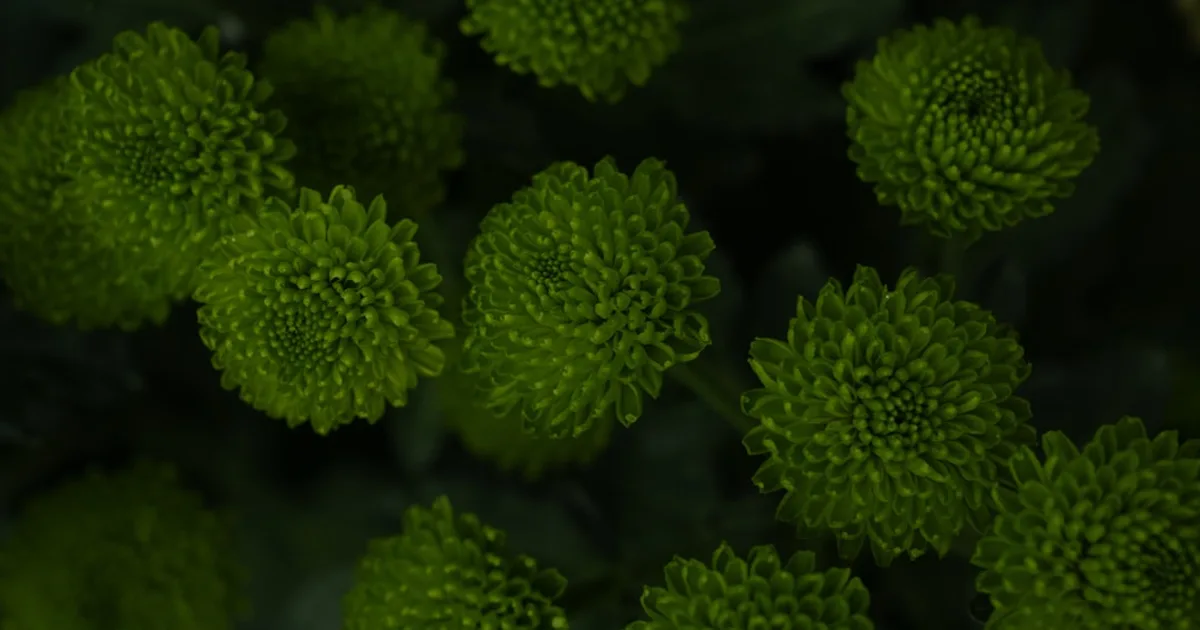
Shungiku gets ignored at most seed racks because it doesn’t look like a money crop. One $2.49 packet, a thin yield number per plant, no grocery store recognition. Run the succession math, though, and the picture changes. You can pull 3.5 to 5 pounds of fresh greens per season from a single packet across five plantings - and at Asian markets where they sell for $4-6/lb when they’re even available, the actual value argument isn’t the cost savings. It’s that outside major metro Asian markets, fresh shungiku is simply not for sale.
What it actually is
Glebionis coronaria is an annual in the daisy family (Asteraceae), native to the Mediterranean basin. The plant reached East Asia through trade routes and has been cultivated there for cooking for centuries - the association with Japan and China is cultural, not geographic. The leaves are lobed and aromatic; if you let the plant bolt, it produces yellow or white daisy flowers.
The name is a recent change. Glebionis coronaria was classified as Chrysanthemum coronarium until Bremer (1994) split the genus based on morphological and molecular evidence, confirmed in the Angiosperm Phylogeny Group’s APG IV framework. The genus name Glebionis references “fertile soil” - reflecting the plant’s Mediterranean origin habitat. This reclassification matters practically because the plant shares a common name with two unrelated genera that you do not eat: Leucanthemum (Shasta daisy) and the ornamental florist chrysanthemum, Chrysanthemum x morifolium. If you’re sourcing seed, confirm the scientific name. Seed sold as “chrysanthemum” without further identification could be anything.
Two growth forms exist in cultivation:
- Small-leaf type (hoso-ba): narrow, deeply divided leaves; strongly aromatic and pungent; the type most associated with Japanese cooking and nabe.
- Large-leaf type (ohaba): broader, less divided leaves; milder flavor; preferred in Chinese stir-fry and soup applications.
Both grow identically in the garden. Flavor intensity and leaf form are the only real differences.
Variety comparison
Named varieties are inconsistently labeled in the US market. Most suppliers sell by type rather than cultivar name. These are the varieties with reliable US availability:
| Variety | Type | Leaf form | Flavor | Days to harvest | US source |
|---|---|---|---|---|---|
| Chopsticks | Small-leaf (hoso-ba) | Narrow, deeply cut | Pungent, assertive | 35-40 | Kitazawa Seed Co. |
| Japanese Greens Mix | Small-leaf (hoso-ba) | Narrow, mixed | Pungent | 35-40 | Kitazawa Seed Co. |
| Crown Daisy | Large-leaf (ohaba) | Broad, lightly lobed | Mild, herbal | 45-55 | Johnny’s Selected Seeds |
| Broad-leaf Shungiku | Large-leaf (ohaba) | Broad, rounded | Mild | 50-55 | Kitazawa Seed Co. |
| Shungiku (standard) | Small-leaf (hoso-ba) | Narrow | Pungent | 40-50 | Johnny’s Selected Seeds |
For hot pot and sukiyaki, the small-leaf types are traditional - the stronger aromatic character holds up in simmering broth. For stir-fry or if you’re new to the flavor and want something more approachable, start with Crown Daisy or Broad-leaf Shungiku. Kitazawa Seed Company (Oakland, CA) carries the most complete selection of both types in the US market and is the primary source for Asian vegetable varieties not available elsewhere.
The ROI case
The per-plant frontmatter numbers - 0.75 lb at $5/lb - produce $3.75 gross from a single planting against a $2.49 packet cost. That’s a weak case on its own. The real case is succession yield across a cool season from one packet.
A standard $2.49 packet contains enough seed for roughly 8-10 plantings of a 3-foot row (direct-sow at approximately 15-20 seeds per foot, thinned to 6 inches). In practice you won’t use the whole packet in a single season unless you’re planting aggressively. Here’s what a realistic two-season schedule looks like in Zone 5-6, where the cool windows are defined:
| Season | Plantings | Row length each | Estimated yield | Value @$5/lb | Seed used (est.) |
|---|---|---|---|---|---|
| Spring (March-April) | 3 | 3 ft | 0.6-0.9 lb each / 1.8-2.7 lb total | $9.00-13.50 | ~1/3 packet |
| Fall (late Aug-Sept) | 2 | 3 ft | 0.6-0.9 lb each / 1.2-1.8 lb total | $6.00-9.00 | ~1/4 packet |
| Annual total | 5 | - | 3.0-4.5 lb | $15.00-22.50 | ~60% of packet |
That leaves seed for a second season. Effective per-season seed cost: around $1.25-1.50 if you carry the packet two years. Net return against that input: $13.50-21.00.
The availability gap matters more than the math. Chrysanthemum greens appear regularly at Asian grocery stores in cities with significant Japanese or Chinese populations - H Mart, 99 Ranch, Mitsuwa, local independent Asian markets. Outside those areas, fresh shungiku is simply not available at any price. If you live in a mid-size city without a well-stocked Asian grocery store, the value of growing your own isn’t discount pricing. It’s access to an ingredient you otherwise can’t get fresh.
Growing requirements
Soil: pH 6.0-7.0. Moderately fertile; doesn’t require heavy amendment. Good drainage is more important than fertility. Amend heavy clay soil with compost before sowing.
Temperature and germination: optimal germination at 60-65°F soil temperature, 7-10 days. At soil temperatures above 70°F, germination rate drops noticeably - this is a practical problem for late-spring direct sowings when daytime soil temps are climbing. For fall plantings, soil in the 60s is the target. Seed sown in August heat often germinates poorly; water the bed repeatedly for a few days before sowing to cool the soil, or wait until the first cool spell.
Light: 5-7 hours daily. Full sun accelerates growth and slightly intensifies flavor. Partial shade extends the harvest window in spring by slowing the temperature response that triggers bolting.
Succession interval: every 2-3 weeks through cool weather. Don’t try to time multiple large plantings - keep them small and staggered. A 3-foot row per sowing is plenty for most households; you can harvest the whole row at once and have 0.6-0.9 lb to use or store.
Fall planting timing by zone:
- Zone 5: sow late August through September 1. First frost typically arrives mid-October, giving 40-50 days of growing time.
- Zone 6: sow through September 15. Fall window extends 2-3 weeks longer than Zone 5.
- Zone 7-8: sow through October. Plants can overwinter under row cover; treat as a cool-season crop that bridges fall into early winter.
- Zone 9-10: fall through winter growing crop. Sow October-January; plants tolerate light frost.
Container growing: chrysanthemum greens work in containers for baby-leaf harvest. Shallow containers (6-8 inches depth) are sufficient - the root system doesn’t go deep when you’re harvesting young. Broadcast seed into a pot or window box, thin lightly, and cut at 3-4 inches for baby leaf. This works on a balcony or rooftop where in-ground space is unavailable.
Direct sowing: 1/4 inch deep, broadcast or in rows, thin to 4-6 inches for full-size plants. For baby leaf harvest, thinning is optional - denser plantings are fine when you’re cutting the whole thing at 3-4 inches.
Harvest method
Two approaches, each with trade-offs:
Whole-plant harvest: cut at the base when plants reach 6-8 inches. This is faster and simpler; one clean harvest per planting. Better for succession systems where you’re replacing the row with a new sowing anyway.
Cut-and-come-again: cut the main shoot 2-3 inches above soil level. Side shoots develop and provide 1-2 additional harvests before the plant bolts. Better for extending a single planting when you want smaller amounts over a longer period. The second and third harvests have more variable flavor - slightly more pungent as the plant matures.
Harvest in the morning after the dew has dried. Chrysanthemum greens wilt faster than most greens. Refrigerate wrapped in a damp paper towel inside a plastic bag; use within 2-3 days. They don’t hold the way chard or kale does.
Bolting management
Spring plantings bolt quickly once heat arrives. Temperatures in the low 80s trigger rapid bolting - the window between “ready to harvest” and “flowering” can be 4-5 days during a warm spell. The conventional advice is to harvest early and often, which is correct.
What’s less obvious is the photoperiod component. Glebionis coronaria responds to both temperature and daylength - specifically, it tends toward flowering under the long days and warming temperatures of late spring. Fall plantings face shortening days and cooling temperatures simultaneously, which means the bolting trigger isn’t being pulled from both directions at once. Fall-planted chrysanthemum greens often hold in the harvest window longer than spring plants, which is counterintuitive. A fall sowing in Zone 6 made September 1 may give you 35-40 days of harvestable growth before hard frost ends the season, while a spring sowing made March 15 might give you only 25-30 days before bolting. (University of Kentucky Cooperative Extension cool-season vegetable production guides note this temperature-photoperiod interaction for several Asteraceae crops.)
Once a plant sends up a flower stalk, the leaves on that stalk become bitter and fibrous. Leaves lower on the plant remain usable briefly, but the eating quality declines fast. Don’t wait.
What goes wrong
Bolting before adequate size: the most common failure in spring plantings. Sow 4-6 weeks before last frost, earlier than feels right, and plan to harvest young. Better to cut slightly small plants than to lose the whole planting to a warm week.
Flavor surprise: gardeners expecting something like spinach or lettuce will encounter a strongly herbal, almost medicinal flavor in raw mature leaves. This is not a defect; it’s the point of the plant. The flavor moderates with cooking. Young leaves under 3 inches are mild enough for salads when mixed with milder greens - use them as an accent, not as the base.
Poor germination in warm soil: see the germination temperature note above. If you’re getting spotty stands in a fall planting, check soil temp. Above 70°F, germination rate drops. Cool the bed or wait for a cooler window.
Damping off: in cool, wet conditions, seedlings can rot at the soil line. Improve drainage, thin promptly to improve air circulation. Don’t overwater young seedlings in cold weather.
Kitchen use
The flavor comes from two primary aromatic compounds: 1,8-cineole (eucalyptol) - the same compound prominent in eucalyptus and rosemary - combined with chrysanthemyl acetate, which is characteristic of chrysanthemum flowers generally. This combination produces the herbal, slightly medicinal quality that distinguishes shungiku from any other cooking green. Cooking drives off the most volatile fractions; this is why braised or briefly simmered shungiku is noticeably milder than raw leaves from the same plant. It’s not just heat softening bitterness - it’s actual compound volatilization.
Japanese hot pot (nabe/sukiyaki): add leaves to simmering broth in the last 1-2 minutes. They wilt in seconds; the aromatic quality contributes to the broth itself. Standard in mizutaki, yosenabe, and sukiyaki. This is the classic application for small-leaf types.
Stir-fried (Chinese style): high heat, 2-3 minutes, garlic, a splash of soy sauce. The leaves wilt almost immediately at high heat. Serve right away - they don’t hold after cooking. The herbal quality complements pork and tofu well.
Ohitashi-style with sesame: blanch 1 minute, shock in ice water, squeeze out water firmly, dress with toasted sesame oil, soy sauce, and toasted sesame seeds. Standard Japanese preparation; works with both leaf types.
In ramen and udon: add raw leaves to hot soup bowls at service. The heat of the broth wilts them gently without fully cooking them, which preserves more of the aromatic character than simmering does.
Raw in salads: young leaves under 3 inches work as an accent in mixed salads. Use sparingly - the flavor is assertive and will overpower mild lettuces if you use too much. Think of it like arugula: a component, not a base.
Preservation: chrysanthemum greens don’t dry well. The aromatic compounds that make them valuable are volatile, and drying drives them off. Fresh is best; refrigerated life is 2-3 days. For longer storage: blanch 30 seconds, shock in ice water, squeeze out all moisture, portion into small amounts, and freeze. Frozen shungiku works fine in hot pot and soups - you lose the option of eating it raw, but the cooked applications hold up.
Companion planting
The frontmatter companions - radish, spinach, and lettuce - are all cool-season crops with non-overlapping root zones. Chrysanthemum greens put down a relatively shallow taproot; lettuce and spinach are even shallower; radish occupies the upper 4-6 inches of soil. None of them compete for the same resources at the same depth.
The practical case for radish is timing-based. Radish matures in 25-30 days. Planted alongside chrysanthemum greens, radish reaches harvest 10-15 days before the greens are ready. Once you pull the radishes, the space opens up for the chrysanthemum greens to spread slightly and fill in. The radish tops also provide incidental partial shade during the establishment period, which marginally slows soil warming and can reduce early bolting pressure on spring chrysanthemum plantings.
Spinach and lettuce are straightforward cool-season companions: same water requirements, same light tolerance, compatible timing. Interplanting a row of chrysanthemum greens with a row of lettuce uses the space efficiently and produces a harvest window that covers both crops simultaneously.
Related crops: Chinese Broccoli - fellow Asian market green with similar cultural requirements; Tatsoi - cool-season Asian green companion
Growing Chrysanthemum Greens? Track your harvest value and break-even date in the Garden ROI app.
Get the App