
Chinese Broccoli
Brassica oleracea var. alboglabra
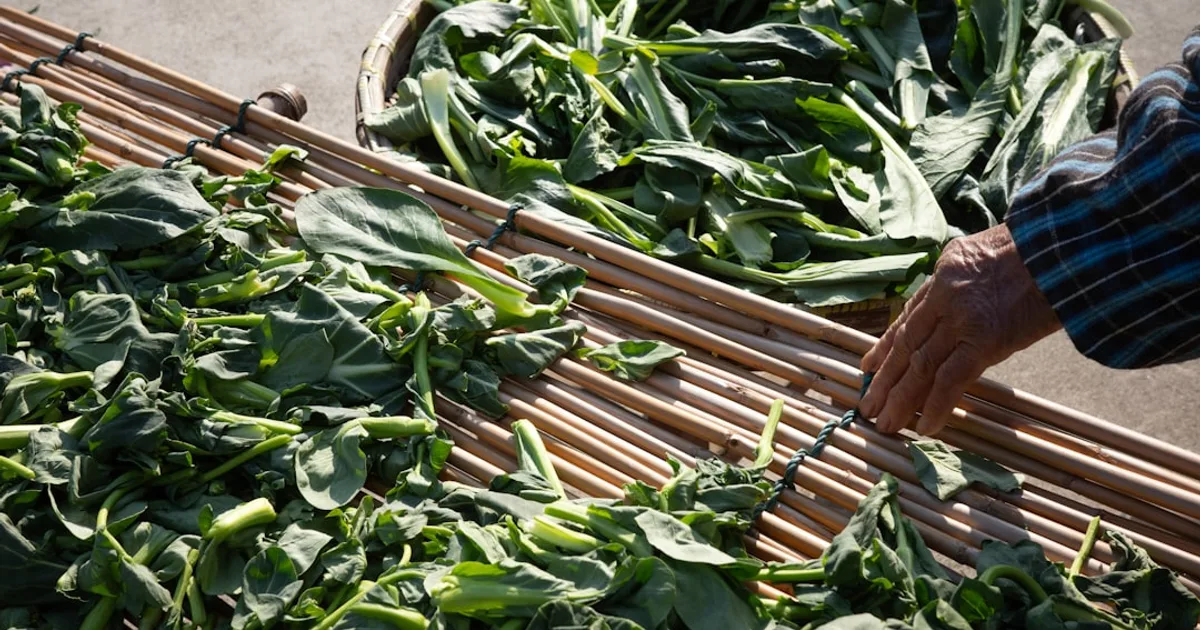
Gai lan is what happens when you select broccoli for thick, tender stems and small florets instead of a dense central head. You eat the whole plant - stems, leaves, and the small white flowers - at a stage when everything is tender and before the buds have fully opened. It’s a standard item at Chinese restaurants, usually steamed or stir-fried with oyster sauce and garlic. At Asian grocery stores it runs $3-5/lb. At a regular grocery store, you probably won’t find it.
The plant is fast. In cool weather, direct-seeded gai lan is harvest-ready in 45-55 days. It produces cut-and-come-again harvests before bolting, and succession planting every 3 weeks through spring and fall keeps a steady supply.
What It Actually Is
Brassica oleracea var. alboglabra is the same species as broccoli, cabbage, kale, and Brussels sprouts - a cultivated variety selected for its thick stems and small florets rather than a heading form. “Gai lan” is the Cantonese name; “kai lan” is Mandarin; “Chinese kale” appears in some English-language agricultural literature.
The stem is the prize, not the head. Unlike broccoli where you’re waiting for a dense green head to form, gai lan’s harvest is a 6-10 inch stem with attached leaves and a small, loose cluster of white or pale yellow buds. The stem at the right harvest stage is thick, tender, and snaps cleanly.
| Characteristic | Chinese Broccoli (gai lan) | Heading Broccoli | Broccoli Rabe (rapini) |
|---|---|---|---|
| Harvest part | Stem, leaves, small florets | Dense central head | Loose stems, leaves, florets |
| Flower color | White (standard); yellow (some types) | Green (before opening) | Yellow |
| Bitterness | Mild, slightly sweet | Mild | Assertive |
| Stem thickness | The main appeal | Moderate | Thin |
| Days to harvest | 45-60 | 70-90 | 45-60 |
| Succession suitable | Yes | Less so | Yes |
Cultivars
Not all gai lan is the same. Variety selection affects stem thickness, heat tolerance, and bolt timing:
| Variety | Stem thickness | Days to harvest | Heat/bolt tolerance | Notes |
|---|---|---|---|---|
| Standard (unlabeled) | Medium | 50-60 | Moderate | Most seed packets; reliable all-purpose |
| Crispy Blue | Thick, fleshy | 55-65 | Better | More pronounced crunch; popular in Cantonese cooking |
| Kaiho | Thin-medium | 45-55 | Better than standard | Earlier; extended harvest window before bolt |
| Green Lance | Medium | 50 | Good | Compact; good for container or small-space succession |
| Tender Green | Medium | 45 | Moderate | Very fast; thinner stems; good for baby gai lan |
‘Crispy Blue’ is worth seeking out if you’re growing primarily for stir-fry applications - the thicker stems have better texture after high-heat cooking. Standard unlabeled gai lan seed is adequate for general use.
The ROI Case
Gai lan’s value case is speed and succession. A 10-foot row produces 1.0-1.5 lb across 2-3 cuts in a 45-60 day window. With succession planting every 3 weeks, the supply continues through the cool season.
| Season | Successions | Yield | Value @$4/lb | Seed cost | Net |
|---|---|---|---|---|---|
| Spring (3 successions) | 3 × 10-ft row | 3.0-4.5 lb | $12.00-18.00 | $1.87* | $10.13-16.13 |
| Fall (2 successions) | 2 × 10-ft row | 2.0-3.0 lb | $8.00-12.00 | $1.25* | $6.75-10.75 |
| Annual total | 5 successions | 5.0-7.5 lb | $20.00-30.00 | $3.12 | $16.88-26.88 |
*Estimated from $2.49 packet yielding 4-5 plantings.
The scarcity premium is real. Gai lan at a Chinese restaurant costs $12-16 for a side dish. Growing your own gives access to a vegetable otherwise unavailable to most US home cooks outside of Asian-community grocery stores.
Zone Fit
Zones 3-5: spring and fall crop only. Direct sow in early spring 4-6 weeks before last frost; succession through late April. Resume in August for fall plantings harvested through October. The season is compressed but productive.
Zones 6-7: the standard two-season approach. Spring succession March through May; fall succession August through October. Total productive window: 14-16 weeks annually across two seasons.
Zones 7-9: year-round production is possible with careful timing. In Zone 8-9, plant October through February for winter harvests - gai lan tolerates frost to about 25°F and grows slowly through mild winters. Summer (June-September) is the dead zone in all zones due to heat-triggered bolting. Zone 9 gardeners can sometimes grow through January-April without a break.
Zone 10+: gai lan struggles in consistently warm climates. The cool-season requirement for quality stem development is not met year-round; it can be grown in winter (November-February) with careful timing.
Growing Requirements
Direct sowing: sow seeds 1/4 inch deep, thin to 4-6 inches apart. Germination at 60-70°F takes 5-7 days. Gai lan tolerates moderate frost (down to 28°F) on established plants - start early in spring.
Indoor starts: possible but not necessary. If starting indoors, start 3-4 weeks before setting out; gai lan grows fast and older transplants establish less well than younger ones. Direct seeding is simpler for this crop.
Succession planting: every 2-3 weeks through the cool seasons. Each 10-foot succession row takes 45-60 days to first harvest and yields 2-3 cuts over 4-6 weeks before bolting. Three overlapping spring successions create 6-8 weeks of continuous supply.
Soil: pH 6.0-7.0; moderate fertility; consistent moisture. Same requirements as heading broccoli - gai lan’s faster cycle means less exposure to soil stress events, making it more forgiving than broccoli in imperfect soil conditions.
Heat ceiling: bolts when daytime temperatures consistently exceed 75-80°F. In most of the US, the spring window closes by late May to early June. Plantings started after June 1 in Zone 6-7 bolt before reaching good size.
Water: 1-1.5 inches per week; consistent moisture is more important during stem elongation (the 2-week period before harvest) than earlier in establishment.
What Goes Wrong
Imported cabbageworm (Pieris rapae): the white butterfly that lays single yellow eggs on brassica leaves; larvae are green caterpillars that chew leaf tissue from the outside inward. Check leaf undersides weekly; hand-pick larvae, or apply Bacillus thuringiensis var. kurstaki (Bt) spray when larvae are small. Row cover from germination prevents adult butterfly access entirely and is the most effective organic management approach.
Aphids: Brevicoryne brassicae (cabbage aphid) and Myzus persicae (green peach aphid) both colonize brassicas. Waxy, powdery-looking colonies on growing tips; the cabbage aphid has a distinctive grayish-blue color. Knock off with water spray for light infestations; insecticidal soap for heavier pressure. Parasitic wasps provide useful biocontrol in unsprayed gardens.
Bolting before reaching harvest size: warm spells in spring trigger bolting in young plants. Prevention: plant early enough that main harvest occurs before sustained warm weather; harvest promptly when stems reach size.
Tough stems: result from harvesting too late. The stem should snap cleanly, not bend. If stems bend, they’re past peak and will be fibrous in the kitchen.
Clubroot (Plasmodiophora brassicae): gai lan is susceptible. Rotate brassicas on a 3-4 year cycle; raise soil pH above 7.0 with agricultural lime if clubroot is present.
Harvest Trigger
The specific harvest window distinguishes gai lan from other brassicas. Harvest when 30-40% of the flower buds on the cluster have opened. At this stage, the stem is at peak tenderness and flavor - sweet, mild, with the characteristic gai lan quality. If you wait until all buds are open, the flavor becomes more bitter and the stems lose tenderness. If you harvest with zero open buds (all still closed), you lose flavor development.
The 30-40% open-bud guideline is used by commercial Chinese vegetable producers and is the same trigger point referenced in UC Cooperative Extension vegetable production guides. Apply it consistently and quality improves noticeably.
Cut the main stem at the base; side shoots develop and produce secondary harvests. Check plants every 3-4 days during the main harvest period. Secondary stems reach harvest size in 7-10 days.
Preservation
Fresh: 3-4 days refrigerated, wrapped in a damp cloth. Gai lan wilts relatively fast after cutting; use promptly.
Blanch and freeze: the correct approach for surplus. The stems and leaves have different texture after freezing - stems remain reasonably firm; leaves become softer. Both are suitable for stir-fry and soup applications after freezing.
Blanch process: trim stems; cut into 2-3 inch sections; blanch 2-3 minutes in boiling water; transfer to ice water for 3 minutes; drain thoroughly; freeze flat on baking sheets, then bag. Keeps 10-12 months (USDA NCHFP, Freezing Vegetables, 2023). Not suitable for fresh salad applications after freezing, but fine for stir-fry, soup, and congee.
Drying: not suitable. The high moisture content and delicate flavor compounds don’t survive drying with useful results.
Kitchen Applications
The key technique note: stems and leaves cook at different rates. For stir-fry, add the stems first and cook 1-2 minutes before adding the leaves; the stems need the extra time to reach full tenderness while the leaves wilt in 30-60 seconds. In restaurant preparations, stems are sometimes blanched separately before stir-frying so both elements reach peak texture simultaneously.
Steamed with oyster sauce: the canonical Cantonese preparation. Steam whole stems 3-4 minutes until just tender through. Drizzle with oyster sauce, toasted sesame oil, and fried garlic slices. Serve alongside rice. This preparation works because gai lan’s mild flavor supports the richer oyster sauce without competing.
Stir-fried with garlic and ginger: high heat, 2-3 minutes. Stems first, 1-2 minutes; leaves added, 30 seconds; finish with minced garlic and ginger, soy sauce, a few drops of sesame oil. Classic home-kitchen preparation.
Blanched with soy-ginger dressing: blanch 2 minutes, shock in ice water, dry. Dress with soy sauce, rice vinegar, grated ginger, sesame oil, and toasted sesame seeds. Serve room temperature or chilled.
In congee: whole stems added to Cantonese-style rice porridge in the last 5 minutes of cooking. The stems soften into the congee; the leaves wilt fully. Classic with a fried egg on top.
As rapini substitute: gai lan works in any preparation that calls for broccoli rabe/rapini - pasta with sausage, pizza topping, braised with garlic and chili. The flavor is milder and sweeter than rapini; reduce or eliminate any added sweetener in recipes that compensate for rapini’s bitterness.
Related crops: Broccoli Rabe - similar fast brassica, more bitter flavor; Bok Choy - fellow Asian brassica for cool seasons; Broccoli - closely related heading type with longer maturity
Related reading: Succession Planting Calendar - zone-specific cool-season sowing intervals; Spring Garden Planning - timing brassica successions around frost dates
Growing Chinese Broccoli? Track your harvest value and break-even date in the Garden ROI app.
Get the App