
Fava Bean
Vicia faba
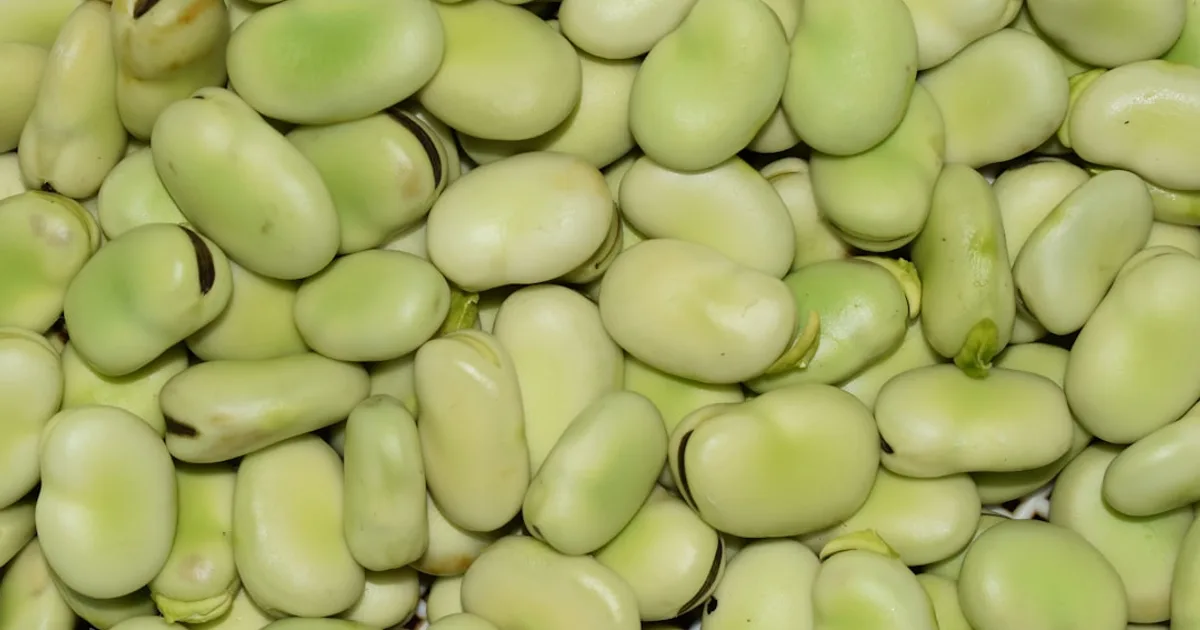
Fava beans (Vicia faba) have been in cultivation for roughly 10,000 years - longer than most of the vegetables in your garden combined. The ancient Egyptians built a civilization on ful medames. Roman legionaries ate them. None of that history makes favas easy to grow in most of the United States, but it does suggest that when you find a way to make them work, you’re onto something worth knowing.
The problem with favas in North America is schedule. They hate summer heat. Temperatures above 80°F during pod fill cause flower abortion and poor pod set, which means the entire growing window - from sowing to harvest - has to fit inside the cool season. In most of the country, that window is narrower than gardeners expect. But in zones 7 and warmer, a fall planting overwintered as small plants produces the earliest spring vegetable you can grow. And in zones 4-6, an early spring direct sow ahead of the last frost gives you a June harvest from ground that would otherwise be sitting empty. Work the schedule right and favas fill dead time on the calendar with a crop that retails for $4-8 per pound when you can find it at all.
What it actually is
Fava bean is a member of the Fabaceae family but belongs to a different genus (Vicia) than common beans (Phaseolus vulgaris) or soybeans (Glycine max). That distinction matters for inoculation: the correct rhizobium for favas is Rhizobium leguminosarum bv. viciae, which is the same strain used for peas and vetches. Do not use soybean or common bean inoculant - you won’t get nodule formation and you’ll lose the nitrogen-fixation benefit.
Plants grow 2-5 feet tall with thick, upright, square-sectioned stems. They do not vine or twine. Tall varieties in windy locations benefit from a simple stake-and-twine support. Pods are 4-8 inches long, thick-walled, and padded inside with a white, spongy lining that protects the beans during development. Each pod contains 4-6 beans. The beans are large - bigger than a lima - flat, and covered in a tough pale outer seed coat.
Variety selection determines what you’re actually growing for. ‘Windsor’ (also sold as ‘Broad Windsor’) is the standard large-seeded English type and the most widely available in US seed catalogs - it’s the fresh shell type, harvested green at 75-80 days. ‘Aquadulce Claudia’ is a long-pod Spanish variety suited to fall planting and overwintering; it’s more cold-tolerant than Windsor types and also used for dried bean production. For dried storage specifically, the larger-seeded ‘Sweet Lorane’ and ‘Bell Beans’ (a smaller-seeded California type) work well. If nitrogen fixation and green manure are your primary goal rather than food, smaller-seeded types like ‘Ianto’s Return’ give you more root biomass per plant and higher seeding rates per dollar spent on seed.
The ROI case
A $3.49 seed packet plants a 10-foot row at the standard spacing of one seed every 6 inches - that’s 20 seeds with some left over. Under reasonable conditions, a well-managed 10-foot row of Windsor favas yields 3-5 pounds of shelled fresh beans. Call it 4 pounds as a mid-range estimate for a first-year grower with decent soil.
Fresh shelled fava beans retail at $4-8 per pound at specialty grocers and farmers markets when they appear at all, which in most US markets is a narrow window in April-May. Call it $6/lb as a mid-point. Four pounds of fresh favas at $6/lb equals $24 of retail value from a $3.49 packet. That’s a 6x return on seed cost before accounting for your labor and water - a solid ROI, comparable to snap peas and better than most root vegetables.
The catch is that fresh favas are perishable and labor-intensive to prepare. Neither of those things changes the math, but they’re part of the honest picture.
Dried favas are a different calculation. For dried storage, you need to let the pods go to brown and papery at 95-110 days rather than harvesting green. Dried fava beans retail at $1.50-3.00 per pound. At 4 lbs of dried yield from a 10-foot row (dried beans weigh less than fresh shelled, but you lose no weight to moisture during cooking the same way), that’s $6-12 in retail value - still positive, but the fresh math is more compelling if you actually want to eat them as a spring vegetable. Dried favas make sense if you grow a longer row specifically for pantry stock, since they store without a freezer and last 1-2 years in a cool dry location.
Nitrogen-fixation as secondary return: Oregon State University Extension (Extension Catalog EM 8676) cites fava bean nitrogen fixation at 150-200 lb N per acre under good conditions with proper inoculation. Scaled to a home garden, a 10-foot row doesn’t produce a lot of nitrogen in absolute terms, but the soil-improvement effect compounds over multiple seasons if you chop the plants and incorporate them rather than pulling and composting them. The nitrogen fixed by favas stays in the soil where you need it for the next crop. If you’re growing favas in a rotation ahead of heavy feeders like corn or brassicas, that’s a real and measurable input reduction.
Planting windows by zone
The planting schedule is where most US gardeners go wrong with favas. There are two distinct strategies depending on where you live.
Zone 5-7, spring planting. Direct sow 4-6 weeks before your last frost date - favas are frost-hardy to about 25°F as established seedlings and can handle a light freeze as small plants. In Zone 6, that typically means March planting for a June harvest before summer heat arrives. Do not try to extend this into July. When daytime temperatures consistently hit 80°F, the crop is effectively done whether or not you’ve harvested it.
Zone 7+, fall planting. Sow in October-November. Plants overwinter as small rosettes and resume growth in late winter, flowering in February-March and producing pods for harvest in April-May. This is the earliest spring harvest you can get from a vegetable - before asparagus, before peas, before anything else. Zone 8-9 growers can run favas as a full winter annual with a January-March harvest window if fall planting is done by November.
The fall-planted approach produces a noticeably better crop in mild-winter climates because the plants have a longer vegetative period before pod fill, which means bigger plants, more pods, and better yields. If you’re in Zone 7 or warmer and you’ve been spring-planting favas, switch to fall. It’s a different crop.
Zones 3-4. Spring planting is the only option, and the window is tight. Sow as soon as the ground is workable - even if there’s still snow risk - and expect to harvest in June before your short summer heats up. The frost tolerance of the seedlings is your advantage here; use it.
Growing requirements
Sow seeds 1-2 inches deep, one seed every 4-6 inches, in rows 18-24 inches apart. Favas germinate in soil temperatures of 45-75°F, which is colder than almost any other vegetable - they’ll sprout in soil that would stall peas. Germination takes 7-14 days at 50°F, faster in warmer soil.
Inoculate seeds before sowing with a fava-specific Rhizobium leguminosarum inoculant. Most seed suppliers carry it; Peaceful Valley Farm Supply and Johnny’s Selected Seeds both stock it. The inoculant costs $5-8 and treats multiple seasons’ worth of seed. Without inoculation in soil that hasn’t grown favas or peas recently, you will get a noticeably worse plant and no nitrogen fixation benefit. Wet the seeds slightly before dusting them with the dry inoculant powder, and sow the same day.
Soil pH of 6.0-7.0. Favas are not heavy feeders and do better without nitrogen fertilization - added nitrogen before the plant establishes root nodules suppresses the fixation process. Apply phosphorus and potassium if your soil is deficient, but hold the nitrogen amendments for the next crop after you incorporate the fava residue. Average fertility is exactly right.
Water at 1 inch per week. Fall-planted crops in most of the US get most of their water from rain and require minimal supplemental irrigation until spring. Spring-planted crops need consistent moisture during pod fill in May and June - drought stress at that stage directly reduces yield.
Pinch out the growing tip after 4-5 sets of pods have formed. This does two things: it concentrates the plant’s energy into filling the pods it already has rather than continuing to produce new flowers, and it removes the primary target of black bean aphid (Aphis fabae). Aphids attack the tender growing tips first and in large numbers. Removing the tip before populations build is the most effective cultural control available.
What goes wrong
Black bean aphid (Aphis fabae) is the most common and most serious pest of favas in most growing regions. The colonies can be visually alarming - hundreds of small black aphids clustered on the stem tips. Pinching the tip (see above) removes the preferred feeding site. Natural predators - ladybeetles, syrphid fly larvae, parasitic wasps - provide significant suppression once they arrive; avoid broad-spectrum insecticide applications that kill beneficials. A strong water spray knocks aphids off stems if populations are moderate. If you wait until the infestation is established on the whole plant, you’ve waited too long.
Chocolate spot (Botrytia fabae) causes brown oval lesions on leaves and pods, most damaging in wet cool conditions. Adequate plant spacing for airflow is the best preventive measure. Remove infected tissue promptly. Copper-based fungicides (copper sulfate or copper hydroxide) slow spread; they don’t reverse damage already done. In a wet spring, expect some chocolate spot regardless of what you do - it rarely kills plants but reduces pod quality on severely infected plants.
Broad bean rust (Uromyces viciae-fabae) produces orange-brown powdery pustules on leaves and stems, most common in warm humid conditions in the latter part of the season. Crop rotation - don’t plant favas in the same bed two years running - reduces the overwintering inoculum in the soil. Sulfur fungicide applied preventively can slow development.
Favism. A small percentage of people - primarily of Mediterranean, Middle Eastern, or African ancestry - have G6PD deficiency (glucose-6-phosphate dehydrogenase deficiency), a genetic enzyme condition that makes them sensitive to compounds in fava beans. Consumption can trigger hemolytic anemia in affected individuals. This is not a common problem but it is serious. If you or someone in your household has G6PD deficiency or if there’s a family history of unexplained reactions to fava beans, consult a physician before eating them.
The double-shelling question
Fresh fava beans require two rounds of shelling, and this is the reason they cost $6-8 per pound at specialty stores when they’re available at all. Understanding the process up front helps you decide whether fresh favas fit your kitchen.
The first shell: split the pod along the seam and pop the beans out. This is the same as shelling peas - about 5-10 minutes per pound of pods.
The second shell: this is the part most Americans don’t know about. Mature fava beans (roughly over 1 inch in diameter) have a tough, pale green outer seed coat that is edible but bitter and chewy when left on. To remove it, blanch the shelled beans in boiling water for 1-2 minutes, transfer to an ice bath, then pinch one end of each bean - the skin slips off cleanly to reveal the bright, smooth, intensely green interior bean. That interior bean is a completely different eating experience than the unskinned bean: sweeter, more tender, without any bitterness.
Budget 30-45 minutes per pound of shelled favas for the double-shelling process when working with mature beans. This is not a fast job. It’s the right job for a Saturday afternoon when you’re watching something, or for getting a kid to help, but it’s honest work. The result is worth it for the right dish.
Young favas - pods harvested when beans are under 1 inch - don’t need the second shell. The skin is thin and tender enough to eat whole. This is the fastest path from garden to plate with favas: harvest young, shell once, cook whole. The trade-off is lower yield per plant because you’re harvesting early.
Fresh versus dried: two different crops
A single fava planting can produce two completely different pantry items depending on when you harvest.
Fresh favas (harvest green at 75-80 days for Windsor types): a spring delicacy with a narrow season. Retail availability in the US is limited even in major cities - a few weeks at specialty stores and farmers markets in April and May, then gone until next year. The flavor is grassy and sweet with a hint of bitterness that disappears with proper preparation. Fresh shelled favas keep 3-4 days refrigerated. Blanch and freeze - 3-4 minutes in boiling water, ice bath, freeze flat in bags - and they hold well for 10-12 months.
Dried favas (harvest at 95-110 days when pods are brown and papery): a pantry staple with 1-2 year shelf life at room temperature. The dried bean rehydrates for long-cooked preparations and has a completely different flavor profile than fresh - earthy, dense, well-suited to slow cooking. No freezer needed. The ROI is lower per pound at retail prices, but the storage flexibility has real value if you’re building a working pantry rather than cooking fresh.
‘Aquadulce Claudia’ is the variety to grow if dried favas are your goal; it has thinner seed coats on the dried bean (important for cooking evenness) and good fall cold tolerance. Windsor types work for drying but were developed for fresh use.
Mediterranean culinary tradition
Ful medames - whole dried fava beans slow-cooked with olive oil, lemon, and cumin - is the national dish of Egypt and has been eaten in the Nile Valley for 5,000 years. Street vendors sell it for breakfast throughout Egypt and the Levant. The name comes from the Arabic for “submerged beans,” referring to the clay pot cooking method. It is as old as recorded agriculture.
Roman fresh favas served with guanciale (cured pork cheek) - fave al guanciale - is a spring dish still made in Rome when the favas appear in late April. The English broad bean tradition pairs fresh favas with bacon, which is the same idea expressed differently. All three traditions use the fresh bean as a seasonal spring event, not a year-round ingredient. That seasonal scarcity is exactly why the retail price is what it is.
These applications are not trends. They are the reason favas survived 10,000 years of agricultural history while other crops came and went.
Harvest and storage
For fresh shell use: harvest when pods are well filled and beans inside feel firm but pods are still green. For young beans (under 1 inch), harvest earlier and skip the second shell. For full-size beans, harvest at maximum pod fill before pods begin to yellow. Blanch and peel as described above.
For dried storage: leave pods on the plant until they turn brown and papery - 95-110 days from sowing. Pull the whole plant or cut pods individually. Dry in a single layer in a warm, well-ventilated location for 1-2 weeks until beans rattle in the pod. Shell and store in an airtight container in a cool, dry location. Check for moisture before sealing; any condensation inside the container means the beans need more drying time.
For green manure: cut plants at ground level with a hoe rather than pulling them - this leaves the nitrogen-rich root nodules in the soil. Chop the above-ground material and incorporate it into the top 6 inches of soil. In 2-4 weeks, the plant material breaks down and releases the fixed nitrogen where the next crop can use it. This is the correct way to close the nitrogen loop; removing the plants by composting them elsewhere forfeits the soil improvement value at the bed level.
Related crops: Garden Pea, Arugula
Related reading: Cover Crops 101 - how fava beans and other legumes work as nitrogen-fixing cover crops with an edible bonus
Growing Fava Bean? Track your harvest value and break-even date in the Garden ROI app.
Get the App