
Garden Pea
Pisum sativum
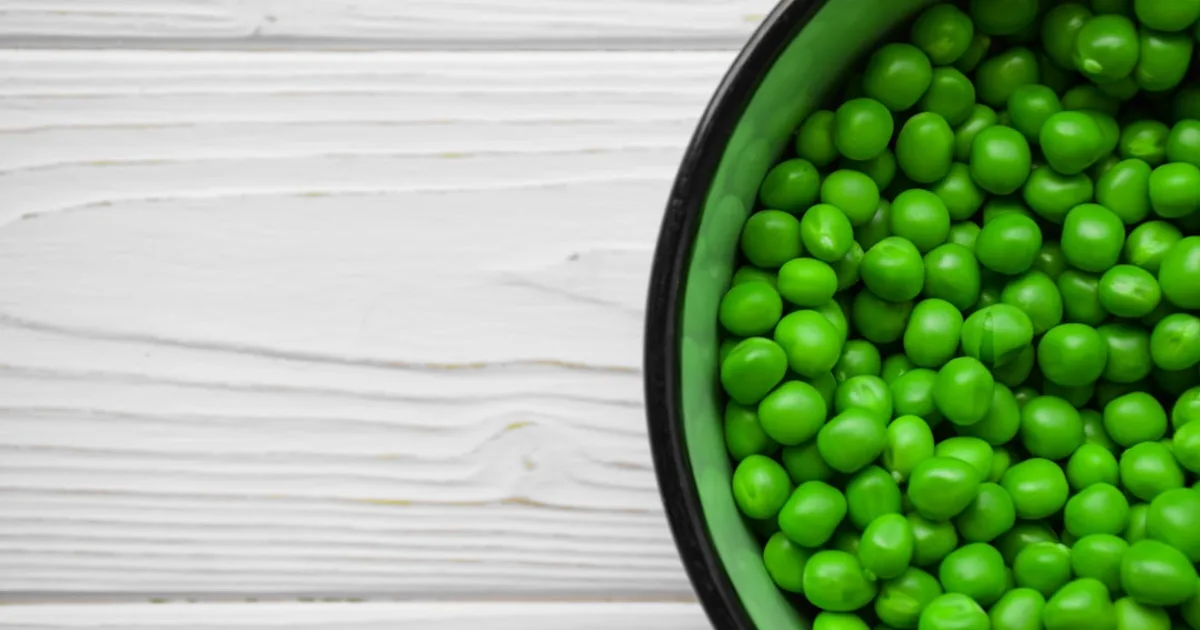
Garden peas (Pisum sativum) operate on a different calendar than most vegetable crops. You plant them before the last frost - not after - and you’re harvesting before the summer heat arrives to end them. In Zones 5 through 7, that means seeding in March or early April and pulling the plants by July. The window is real but it’s short, which is exactly why succession planting matters more for peas than for almost anything else in the spring garden.
The reward for getting the timing right is a crop that’s expensive at retail and categorically better fresh than anything in a grocery store. Fresh shell peas lose around 50% of their sugar content within 24 hours of harvest as enzymes convert sucars to starch (Phelps, HortScience, 1966). What you buy in a bag has been refrigerated in transit for days. What you pick and eat within an hour doesn’t compare to that product - it’s a different vegetable.
Types: shell, snap, and snow
Shell peas (English peas, garden peas) are grown for the seed inside the pod. The pod itself is fibrous and not eaten. These are the classic garden pea - ‘Wando,’ ‘Green Arrow,’ ‘Lincoln.’ They have the sweetest flavor and highest starch-to-sugar ratio at peak ripeness. Also the highest effort, since you’re shelling.
Snap peas are the result of a genetic mutation that leaves the pod wall non-fibrous and edible. ‘Sugar Snap’ - introduced in 1979 by the late Dr. Calvin Lamborn and released by Burpee - was the original and remains one of the most productive types. The whole pod is eaten when pods are filled out but still crisp. Snap peas are the easiest fresh-eating pea for a home garden.
Snow peas are harvested before the seeds fill out - flat pods eaten whole. They’re the type used in stir-fry. The harvest window is shorter (pods must be picked young) and they don’t hold as long after picking.
For a first-year pea planting, snap peas are the forgiving choice. If you’re growing for freezing or want traditional shell peas, ‘Wando’ is heat-tolerant and holds quality a few days longer than most shell varieties, which extends the harvest window.
The ROI case
At $3.00/lb and 3 lb per 10-foot row (a conservative estimate for shell peas; snap peas in the same space will return 4 to 5 lb), the grocery value of one short row is modest in dollar terms. Peas aren’t a high-value crop. The case for growing them is quality, not ROI: fresh-picked snap peas at peak sweetness aren’t available for purchase at any price. And the seed investment is low - a $2.50 packet direct-seeded at 2-inch spacing fills a 15-foot row.
Growing requirements
Peas are cold-tolerant and frost-hardy. You can seed them 4 to 6 weeks before your last frost date, once soil temperature reaches 40°F. Germination is faster at higher soil temps - expect 6 to 10 days at 55°F vs. 3 to 5 days at 65°F - but 40°F is workable (University of Minnesota Extension, Growing Peas in Minnesota, 2020). The plants will withstand temperatures down to about 28°F once they’ve germinated and leafed out.
Don’t delay the planting date trying to warm up the soil. The key limiting factor is heat at the other end - once daytime temperatures push above 85°F, pea quality drops sharply and plants start to fail. If you plant late, you lose those weeks of production at the end of the season. Err early.
Direct seed only. Peas have a taproot that doesn’t transplant well. Seed 1 to 1.5 inches deep, 2 to 3 inches apart. Inoculate seeds with Rhizobium leguminosarum before planting if you haven’t grown legumes in that bed in the past three or four years. The inoculant is inexpensive (under $5 for enough to treat several seasons of plantings) and increases nitrogen fixation, which improves yield and reduces fertilizer need. Untreated peas in uncolonized soil may simply not fix nitrogen.
Tall varieties (Sugar Snap runs 6 feet, ‘Alderman’ grows to 5 feet) need a trellis. Netting, horizontal strings on posts, or a simple cattle panel section works. Bush varieties (‘Little Marvel’ at 18 inches) don’t need support but produce in a shorter window. If you’re succession planting, bush types are easier to manage.
Soil pH of 6.0 to 7.5 - peas are more pH-tolerant than most vegetables. Rhizobium nodule formation is less effective below 6.0. Light feeders otherwise; a modest compost amendment at planting is sufficient. Don’t add nitrogen fertilizer - it discourages nodule formation and adds input cost for no yield benefit.
Succession planting: This is the single most important management decision for peas. A standard approach: seed the first planting as early as soil permits, then seed a second batch 2 to 3 weeks later. You extend the harvest window from 7 to 10 days (for a single planting at peak production) to 3 to 4 weeks. A third succession is worth attempting in cooler climates; in Zone 6 and above, the heat usually terminates them before the third planting reaches peak production.
Fall peas are underused. In zones 5-7, count backward 8-10 weeks from the first expected fall frost date and seed another crop. The fall crop experiences the reverse problem of spring - you start in heat and finish in cold, rather than the other way around. Germination and early growth can be difficult in August heat, but once temperatures drop in September, fall peas grow quickly and produce excellent quality. Varieties with powdery mildew resistance matter more for fall production than spring, because the disease pressure extends longer into the season.
Varieties by type:
| Type | Variety | Days | Vine height | Notes |
|---|---|---|---|---|
| Shell | Little Marvel | 63 | 18 inches | Bush type; no trellis needed |
| Shell | Green Arrow | 68 | 24-28 inches | Semi-dwarf; heavy producer |
| Shell | Wando | 68 | 30 inches | Heat-tolerant; holds quality longer |
| Snap | Sugar Ann | 52 | 24 inches | Early bush snap pea; good for short seasons |
| Snap | Sugar Snap | 70 | 5-6 feet | Classic; needs strong trellis; best flavor |
| Snow | Oregon Sugar Pod | 68 | 3-4 feet | Disease-resistant; good fall variety |
What goes wrong
Powdery mildew (Erysiphe pisi) is the most common disease problem, showing as white powdery patches on leaves, stems, and pods. It arrives as the season warms and humidity rises, which often coincides with the end of the pea season anyway. Resistant varieties (‘Oregon Sugar Pod,’ ‘Maestro’) are the practical solution. Fungicide applications slow progression but the plants are usually near the end of their productive life when mildew peaks.
Enation mosaic virus is transmitted by aphids and causes distorted, puckered leaves and blistering on pods. There’s no treatment. The virus is common in the Pacific Northwest and can be severe in some years. Resistant varieties (‘Cascadia,’ ‘Oregon Sugar Pod II’) are available and strongly recommended if you garden in that region.
Root rot complexes (Fusarium oxysporum f.sp. pisi, Aphanomyces euteiches) cause yellowing, stunting, and collapsed root systems. Favored by wet, poorly drained soil. Rotate peas out of affected beds for three to four years. Raised beds with good drainage largely prevent root rot issues.
Pea weevil (Bruchus pisorum) is a beetle whose larvae develop inside pea seeds, damaging them before harvest. It’s mostly a problem for dry seed production rather than fresh eating, but infested seeds have small exit holes. Row cover from germination prevents adult beetles from laying eggs on flowers.
Aphids (Acyrthosiphon pisum - the pea aphid) can build large colonies on new growth, transmitting viruses and reducing yields. A hard water spray removes most colonies; insecticidal soap controls heavier infestations.
Harvest and storage
Nitrogen fixation and end-of-season management: when you pull pea plants at the end of the season, don’t pull the roots. Cut the vines off at soil level and compost the tops. Leave the root system in the ground. The roots carry active Rhizobium nodules - small white or pink growths that contain bacteria that converted atmospheric nitrogen into plant-available form throughout the growing season. Those nodules break down in the soil over the following weeks, releasing their fixed nitrogen into the soil around them. What’s left behind is measurably more nitrogen than what was there when you planted, available to the next crop. It’s not a large amount, but it’s real and it costs you nothing - the root system does it automatically as part of normal legume biology.
Shell peas are ready when pods are full and rounded but before they start to turn yellow or wrinkle. The 24-hour sugar conversion is real - pick and use immediately or cool rapidly to 32°F. Blanch and freeze within 2 hours of harvest for best quality.
Snap peas are ready when the pod walls feel crisp and the seeds inside are visible but not fully developed - the pea should still snap cleanly. They hold better after harvest than shell peas but still lose sweetness within 24 to 48 hours at room temperature. Refrigerate in a perforated bag.
Snow peas are picked flat, before seeds develop at all. This is a daily harvest once pods start forming - a missed day turns snow peas into something between a shell pea and a snap pea.
Seed saving: the easiest seed saving you’ll do in the garden. Peas are self-pollinating, which means varieties breed true without isolation. Let a few pods from the most vigorous plants fully mature and dry on the vine. The pods turn yellow-tan and papery; the seeds inside rattle slightly when you shake them. Pull the whole plant, hang it upside down in a dry location for another week, then shell the pods. The seeds are large and easy to handle. Stored in a paper envelope in a cool, dry place, pea seeds remain viable for 3-4 years. You already know how to shell peas - saving seed is just shelling a few extra pods.
Related crops: Lettuce, Green Bean
Related reading: Spring Garden Planning - timing cool-season crops around frost dates and soil temperature so you don’t lose the early-spring window; Freezing vs. Canning - why freezing is the right method for peas and what yield you need to make it worthwhile
Frequently Asked Questions
How long do garden peas take to grow?
Garden peas take 55 to 70 days from direct sowing to harvest. They are cool-season crops - plant in early spring 4 to 6 weeks before last frost, or plant in late summer for a fall harvest.
How much do garden peas yield?
A 10-foot row of peas yields about 3 lbs of shelled peas. For sugar snap or snow peas, yield is higher because you eat the entire pod.
Is growing garden peas worth it financially?
Grocery fresh peas average $3/lb. A $2.50 seed packet can fill a 20-foot row yielding 5 to 6 lbs. The bigger value is freshness: homegrown peas lose sugar within hours of harvest.
How do you store garden peas?
Fresh peas are best used the day of harvest. If storing, refrigerate unshelled for 1 to 2 days. Blanch and freeze immediately for the best frozen quality - sugar converts to starch within hours.
Growing Garden Pea? Track your harvest value and break-even date in the Garden ROI app.
Get the App