
Ground Cherry
Physalis pruinosa
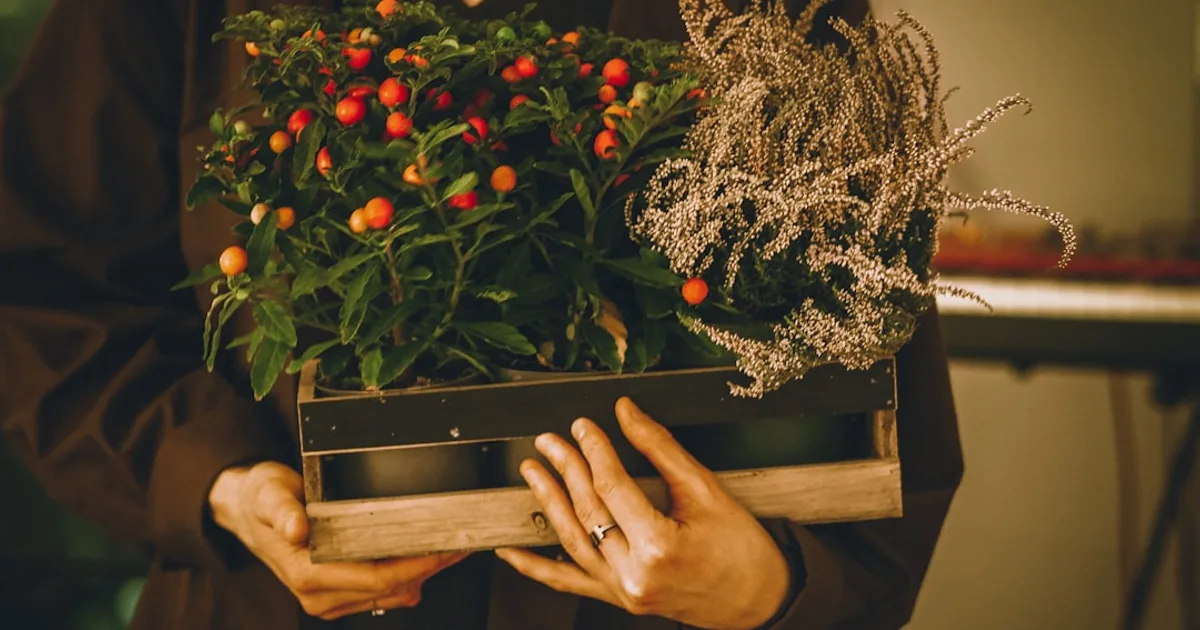
Ground cherry (Physalis pruinosa) sells for $5-8/lb at farmers markets and is nearly impossible to find in grocery stores (USDA AMS Specialty Crop Market News, 2023). That supply gap is the ROI case. Grow it, show up with husked ground cherries at a farmers market table, and you will answer “what are these?” questions all morning.
What you’re actually growing
Ground cherry is a close relative of tomatillo (Physalis philadelphica) - both carry their fruit inside a papery husk, and both are in the nightshade family (Solanaceae) alongside tomato and pepper. The difference is flavor and size. Ground cherry fruit is 0.5-0.75 inches across and runs sweet-tart with tropical and vanilla undertones when fully ripe. The husk turns tan and papery at maturity; the fruit inside goes from green to golden yellow. When the fruit is ready, it drops to the ground - hence the name.
The most common market variety is ‘Aunt Molly’s,’ a Polish heirloom with good flavor and reliable yield. ‘Goldie’ and ‘Cossack Pineapple’ are also well-regarded. Growth habit resembles a sprawling indeterminate tomato: plants reach 18-24 inches tall but spread to 3-4 feet wide without support.
The ROI case
A $2.99 seed packet contains 25-50 seeds. Start seeds indoors 6-8 weeks before last frost, same timing as tomatoes. Each plant produces 200-300 fruits over the season, weighing out to 1.5-3 lb per plant (Cornell Cooperative Extension, Specialty Vegetable Crops, 2022). At $6/lb average retail and $5-8/lb at direct markets (USDA AMS, 2023), one well-managed plant returns $9-24 in gross value. Your seed cost per plant is around $0.10-0.15 at typical packet germination rates.
The advantage over tomatillo is that ground cherry fruits mature to exactly one serving size - no chopping, no mess. That convenience is part of why they command a premium at market. Buyers who taste one usually come back.
Cultivar ROI Comparison
Not all ground cherry varieties perform identically. These three are the most commonly grown and trialed:
| Variety | Days to maturity | Approx. yield/plant | Best use | Notes |
|---|---|---|---|---|
| Aunt Molly’s | 70-75 days | 2-3 lb | Fresh, market, preserves | Most widely available; consistent performer; Polish heirloom |
| Goldie | 75-80 days | 1.5-2.5 lb | Fresh eating, farmers market premium | Higher sugar content; flavor superior to Aunt Molly’s; prices at market 15-20% higher |
| Cossack Pineapple | 65-70 days | 1-2 lb | Fresh eating | Largest individual fruit; fewer fruits per plant; earlier maturity useful in short seasons |
Sources: Johnny’s Selected Seeds variety trial data; Cornell Cooperative Extension Specialty Vegetable Crops Guide (2022).
At current market prices of $5-8/lb (USDA AMS, 2023), Goldie’s flavor premium can justify a higher price point per pint at market. Aunt Molly’s sheer productivity usually wins on total return. Cossack Pineapple is the pick if your season is short - it starts bearing before the other two.
Succession planting for extended harvest
A single indoor sowing in late April (Zone 5-6) produces transplants ready to go out after last frost in late May, with first harvest arriving mid-August. The productive window from first fruit to frost is roughly 6-8 weeks.
A second sowing in late May - kept under lights indoors until mid-June transplant date - extends harvest into October. The second wave starts bearing 2-3 weeks after the first planting finishes its main flush, giving you near-continuous harvest from mid-August through hard frost rather than one concentrated 3-4 week period.
For a 4x8 bed with room for 6-8 plants, run two sowings of 3-4 plants each. Label them by sow date. The first group gives you mid-August to early September; the second carries through to October. Total output from both groups in a favorable season: 10-18 lb from 8 plants. At $6/lb, that’s $60-108 from a bed that cost roughly $6 in seeds.
The late-May sowing has to be started indoors even in Zone 7 - you need the 6-8 week indoor period regardless of outdoor frost date, because the plants need to reach transplant size before outdoor heat makes establishment difficult. Don’t direct sow ground cherries hoping they’ll self-start; germination soil temperature must be above 65°F and consistent germination requires indoor conditions.
Growing requirements
Ground cherry tolerates a wider temperature range than tomato but shares the same hardiness constraints: it’s frost-sensitive and needs soil temps above 60°F to grow well. Start seeds indoors like tomatoes - 6-8 weeks before transplant date, in a sunny window or under lights, bottom heat optional but helpful.
Transplant spacing 18-24 inches in rows 36 inches apart. The plants get wide. If space is tight, a single tomato cage per plant keeps the sprawl manageable and keeps fruit off the soil.
Soil pH 6.0-7.0. Ground cherries are less fussy about fertility than tomatoes. Compost at planting and one mid-season side-dress with a balanced fertilizer is usually sufficient. Excess nitrogen, as with tomatoes, pushes foliage growth and delays fruiting.
Drought tolerance once established is better than tomato. Still, consistent moisture through fruit set prevents the fruit drop and misshapen development that uneven watering causes.
What goes wrong
Colorado potato beetle (Leptinotarsa decemlineata) feeds on all solanaceous crops including ground cherry. Yellow egg masses on the undersides of leaves hatch into orange-red larvae that defoliate plants quickly. Hand-pick eggs and larvae daily during the first flush. Spinosad or neem applied at larval stage provides organic control; Bt does not work on beetle larvae.
Aphids cluster on new growth in dense colonies. Knock them off with water. Insecticidal soap covers heavier infestations. Ground cherries are less prone to aphid pressure than pepper but more prone than tomatillo in most situations.
Flea beetles (Epitrix spp.) leave small shothole damage on leaves. Damage is mostly cosmetic at low population. Row cover at transplant in high-pressure areas keeps populations down.
Fruit that stays on the ground after dropping will germinate the following spring. This is often welcomed as a self-seeding population, but if you’re in a managed bed, clear fallen fruit weekly.
Harvest and storage
The husk turning from green to tan and the fruit dropping to the ground are your two harvest cues. You can pick husked fruit directly off the plant when the husk has turned fully tan and papery, or collect dropped fruit from a clean ground cloth. Check daily during peak season.
Ground cherries keep surprisingly well in their husks - 2-3 weeks at room temperature, 3-4 weeks refrigerated. The husk acts as natural packaging. Dehusked fruit should be used within a week.
For cooking: raw in salsas and fruit salads, cooked into jam (the pectin content is reasonable), or dried.
Preservation: drying, jam, and salsa
Drying: Ground cherries dry well in a food dehydrator at 115°F for 8-10 hours until leathery but not brittle. The flavor concentrates into something close to a golden raisin with a slight floral note. Dried ground cherries at specialty food stores sell for $12-18/lb (USDA AMS Specialty Crop Market News, 2023). A 5 lb fresh harvest dehydrates to roughly 1 lb dried (80% moisture lost) - so 5 lb at $6/lb fresh becomes 1 lb at an equivalent $12-18/lb dried value.
Jam: Ground cherries contain enough natural pectin to produce a good jam set without added pectin, though the set is softer than high-pectin fruits. A standard home canning formula: 4 cups dehusked ground cherries (roughly 1.5 lb), 2 cups sugar, 2 tablespoons lemon juice. Simmer to gel stage (220°F at sea level). Water-bath process half-pint jars for 10 minutes. Use only tested and approved canning recipes from the USDA Complete Guide to Home Canning or the National Center for Home Food Preservation (NCHFP.uga.edu) - ground cherry preserves are a low-acid food and proportions matter for safety. Specialty ground cherry jam at farmers markets and food boutiques: $8-12 per half-pint.
Salsa: Ground cherries can substitute for tomatillo in salsa verde - the flavor is sweeter and less sharp, which some households prefer. Use tested tomatillo salsa recipes from NCHFP as a baseline; the same pH and acidity guidelines apply. Process with the standard salsa water-bath protocol.
A 4-plant succession bed producing 12 lb of fresh ground cherries over the season could yield: 4 lb fresh (eaten or gifted), 4 lb dried (0.8 lb dried product), 4 lb jammed (approximately 6 half-pint jars). The preserved portion - dried and jam combined - represents $20-30 in home food value at specialty retail comparables, on top of the fresh eating value.
Related crops: Tomatillo, Tomato
Related reading: How to Find Local Prices - checking your actual farmers market premiums before you plan what to grow
Growing Ground Cherry? Track your harvest value and break-even date in the Garden ROI app.
Get the App