
Tomato
Solanum lycopersicum
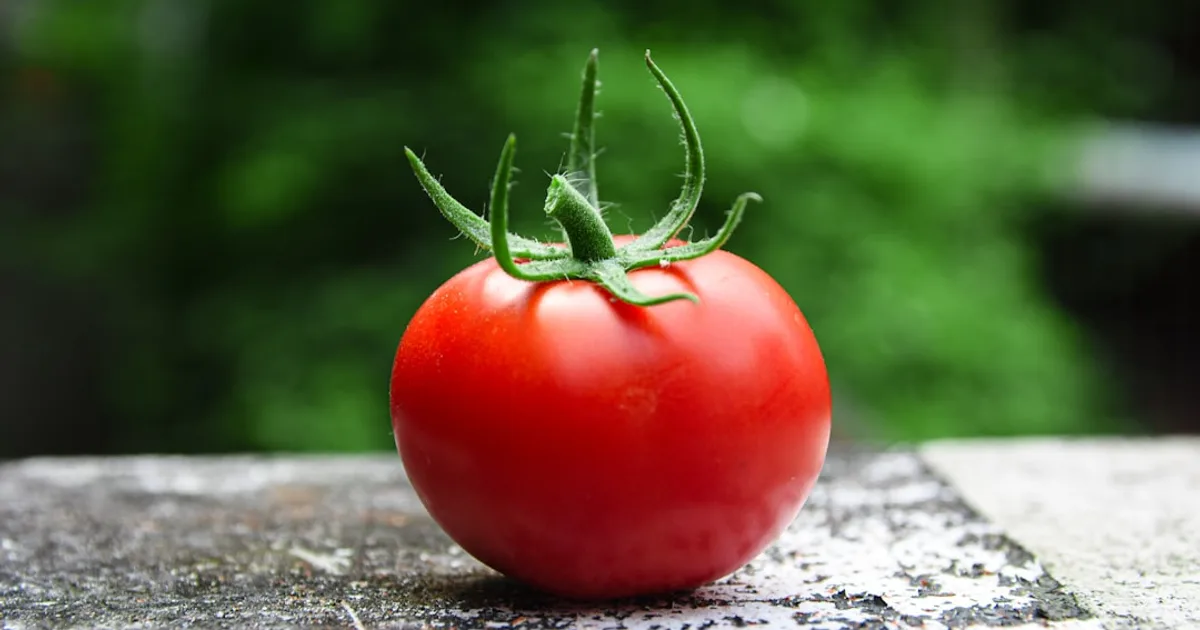
Tomato (Solanum lycopersicum) is the most-grown home garden crop in the United States, and the ROI case is strong enough that it barely needs arguing. One well-tended indeterminate plant can produce 10–20 pounds of fruit over a season. At farmers market prices for heirlooms, that’s $40–$160 from a single plant that started as a $0.25 seed. Even at ordinary grocery store prices for slicers, you’re looking at $18–$36. The seed packet paid for itself by the second harvest.
But “grow a tomato” hides a dozen decisions that shape your actual outcome. The most important one happens before you buy seeds.
Determinate vs. Indeterminate: Why It Matters
Every tomato cultivar is one or the other, and this distinction affects stake size, pruning strategy, harvest timing, and whether the crop is worth canning.
Determinate (bush) types are genetically programmed to stop growing at a fixed height - usually 3–4 feet. They set most of their flower clusters within a short window, all the fruit ripens close together, and then the plant is essentially done. Yield per plant runs 10–15 lb (Penn State Extension, Tomato Production, 2022). Roma, Celebrity, Rutgers, and Marglobe are all determinate. This concentrated harvest is the feature, not a limitation. If you’re canning 12 quarts of crushed tomatoes in August, you want 40 pounds arriving in two weeks, not trickling in over three months.
Indeterminate types keep growing and setting new flower clusters from the time they’re established until frost kills them. The vine doesn’t stop. Given a long season and proper support, an indeterminate plant can reach 6–8 feet and yield 15–25 lb or more. Brandywine, San Marzano, Sun Gold, Cherokee Purple, and most heirloom slicers are indeterminate. These are the fresh-eating plants - you pick through the whole summer, never all at once.
The practical consequences:
- Determinates need a tomato cage or a single stake. Indeterminates need a substantial trellis, a sturdy wooden stake driven 18 inches into the ground, or a heavy-gauge wire cylinder at least 5 feet tall. A flimsy wire cage will tip over under the weight of an indeterminate in mid-August.
- Determinate plants generally don’t need suckering. Indeterminate plants benefit enormously from it (more on this below).
- If you’re planning a canning batch, plant determinates. If you want tomatoes for salads from July through October, plant indeterminates.
You can grow both in the same bed. Most experienced growers do.
The ROI Numbers
A $2.99–$3.99 seed packet contains 25–50 seeds. If you start 8 seeds indoors, transplant 5, and lose one to a late frost, you’re growing 4 plants at roughly $0.25–$0.40 each in seed cost. A $2–$4 transplant from a nursery puts your per-plant input at the high end but bypasses the indoor starting equipment.
Yield and retail price vary by tomato type. Yield figures from Cornell Cooperative Extension, Home Vegetable Gardening in New York, 2021; prices from USDA AMS.
| Type | Yield per plant | Retail price | Notes |
|---|---|---|---|
| Slicing (beefsteak, Better Boy) | 10–15 lb | $1.50–$2.50/lb | USDA ERS all-fresh average: $1.78/lb |
| Paste (Roma, San Marzano) | 8–12 lb | $1.00–$2.00/lb | Lower fresh price; value realized through canning and sauce |
| Cherry/grape (Sun Gold, Sweet 100) | 3–5 lb | $3–$6/lb | Highest retail $/lb; best case for fresh eating season-long |
| Heirloom slicer (Brandywine, Cherokee Purple) | 10–15 lb | $4–$8/lb | Farmers market pricing; lower disease tolerance trade-off |
For cherry tomatoes specifically, see Cherry Tomato for variety-level detail, Brix comparisons, and container-growing considerations. This page covers the slicing and paste types in depth.
One indeterminate plant producing 15 lb over a season returns:
- At $1.78/lb (USDA ERS average): $26.70
- At $3/lb (mid-range slicer): $45.00
- At $5/lb (heirloom farmers market): $75.00
Against a seed cost of $0.25–$0.40 per plant plus maybe $0.50 in transplant soil and fertilizer, even the conservative case is a 20:1 return on input costs. The limiting factor isn’t money - it’s the 6 square feet of bed space and 15 minutes a week of management.
Full packet math: A $3.50 packet with 30 viable seeds, started at 6 per container and transplanted as 5 plants, producing a conservative 10 lb each at $2.50/lb (mid-range slicer), returns $125 from a $3.50 investment. That’s not a theoretical best case - it’s what happens when you water consistently and don’t let hornworms run for two weeks undetected.
Growing Requirements
Tomatoes are warm-season annuals in all USDA zones and are best adapted to Zones 5–11. The limiting factor isn’t your winter minimum - it’s your frost-free window against your variety’s days to maturity. Zone 5–6 growers get 150–180 frost-free days, enough for any variety. Zone 4 growers work with 120–140 days - enough for most standard varieties but tight for late-season heirlooms over 80 days; choose 60–75 day short-season varieties like Siletz, Early Girl, or Glacier. Zone 3 growers need varieties that finish in 60 days or under and must start transplants 8–10 weeks before last frost indoors.
Soil temperature matters more than air temperature at transplant time. A 72°F afternoon with 52°F soil is still wrong. Tomato roots stall below 60°F, and stressed transplants struggle to establish before heat sets in. The target is 65–75°F soil temperature (UC Cooperative Extension, Tomato Culture, ANR Publication 8017). A $10 soil thermometer saves you from planting two weeks too early and watching your transplants sulk.
Set transplants deep - bury the stem up to the lowest set of true leaves. Tomatoes develop adventitious roots from buried stem tissue (Cornell Cooperative Extension, Home Vegetable Gardening in New York, 2021). A 6-inch transplant buried to its top 2 inches of leaves becomes a plant with a 4-inch root system plus roots along 4 inches of stem. That’s a stronger anchor and better drought tolerance from the start.
Soil pH: 6.0–6.8, with 6.2–6.8 as the practical target (Penn State Extension; OSU Extension, Soil Testing for Home Gardeners, HYG-1132). Below 6.0, phosphorus uptake suffers and manganese can reach phytotoxic levels. Above 6.8, iron and zinc availability drops.
Fertilize with 2–3 inches of compost worked into the bed before planting. Side-dress with a balanced formula (10-10-10) every 4 weeks during vegetative growth. Once flower clusters open, back off the nitrogen and shift to a lower-N, higher-P and K formula. Excess nitrogen at fruit set pushes foliage and delays fruit development.
Pruning and Suckering
This is where most home gardeners leave yield on the table.
An indeterminate tomato produces “suckers” - new vegetative shoots that emerge from the junction where a leaf branch meets the main stem. Left alone, each sucker becomes a second main stem, which develops its own suckers, and within 6 weeks you have a plant that looks like it’s trying to become a shrub. The foliage is dense, airflow is poor, and the plant is spreading its energy across dozens of developing fruit clusters instead of concentrating it.
Removing suckers redirects that energy. Fewer active growing tips means the plant can size and ripen the fruit it has rather than starting new ones. It also opens the canopy, which reduces humidity at the leaf surface and cuts disease pressure.
Single-stem training: Remove every sucker as it appears. The plant grows as one central vine, is easier to stake, has maximum airflow, and produces fewer but larger fruit. This is the commercial greenhouse method. It requires vigilance - check plants twice a week. A sucker left to reach 6 inches before removal sets the plant back more than one pinched at 1–2 inches.
Two-stem training: Remove all suckers except the first one immediately below the lowest flower cluster. That sucker becomes a second main stem, which you stake and manage like the first. Two-stem training roughly doubles yield compared to single-stem while keeping the plant manageable. Most experienced home growers land here.
No suckering (bush training): Appropriate for determinate varieties. Determinates set their growth genetically; removing suckers on a determinate plant just reduces total yield without the management benefits that apply to indeterminates. Let determinates grow naturally into their cage.
Remove suckers cleanly, either with clean pruning snips or by snapping them off by hand when they’re small (under 2 inches). Don’t tear. Open wounds invite disease. If you’re working across multiple plants, wipe snips with isopropyl alcohol between plants to avoid spreading any viral infections.
Blossom End Rot
The bottom of the tomato turns brown and leathery. It looks like the fruit rotted from the inside out. Gardeners reach for calcium sprays. Usually, the spray doesn’t fix it.
Blossom end rot is a calcium deficiency in the developing fruit - but the cause is almost never a lack of calcium in the soil. Most garden soils have adequate calcium. The cause is inconsistent watering.
Here’s the mechanism: calcium moves through a tomato plant via the transpiration stream. It travels with water from root to stem to leaf to fruit. When soil moisture swings - heavy rain, then a week of drought, then another heavy rain - the water supply to developing fruit is interrupted. Calcium uptake stalls. The cells at the blossom end, which are the fastest-growing and most calcium-dependent, don’t get what they need and collapse. The result is that black leathery patch (Penn State Extension, Blossom End Rot of Tomatoes and Peppers, 2020).
Foliar calcium sprays provide minimal correction because the problem is in the plumbing, not the calcium inventory. You can spray all season and still see blossom end rot if your watering is inconsistent.
Prevention is straightforward:
- Water on a consistent schedule. Drip irrigation or a soaker hose makes this easier than hand-watering, which tends to be uneven.
- Mulch 2–3 inches deep around plants to buffer soil moisture between waterings. This single step reduces blossom end rot more reliably than any spray product.
- Avoid over-fertilizing with nitrogen. Heavy nitrogen pushes vegetative growth fast, which increases the plant’s total calcium demand at a rate that uptake can’t always match.
The affected fruit is not salvageable - cut off the rotted end and use what’s left, or compost it. The rest of the harvest on that plant will be fine once you stabilize watering.
Early Blight vs. Late Blight
These two diseases share one word in their common names and almost nothing else. Confusing them leads to wrong management decisions. Late blight left untreated can destroy an entire plant in 3–5 days.
Early blight (Alternaria solani) is a fungal disease. It shows up as brown lesions with concentric rings - like a target pattern - on the lower, older leaves first, then works upward. In mild cases it’s mostly cosmetic. The plant keeps producing fruit even with heavy early blight defoliation in the lower canopy. Management: remove affected leaves promptly, keep them out of the compost, don’t overhead water, and space plants for airflow. Copper-based fungicide applied preventively helps slow spread; it won’t reverse existing infection. Rotate tomatoes out of that bed for 2–3 years because the fungus overwinters in soil and plant debris (Cornell Cooperative Extension, Tomato Diseases, 2021).
Late blight (Phytophthora infestans) is an oomycete - technically closer to algae than to true fungi, which is why fungicide timing and selection matter more than with Alternaria. This is the same pathogen that destroyed the Irish potato crop in the 1840s. In tomatoes, it produces pale green to grayish, water-soaked lesions on leaves and stems that turn brown-black fast. Under cool, wet conditions (60–70°F nights, high humidity, overcast days), it can spread from a few lesions to complete plant collapse in 3–5 days. There is a white fuzzy sporulation visible on leaf undersides under humid conditions - that’s not something you see with early blight.
There is no cure once late blight is established in a plant. Your options:
- If you catch it early and the infection is limited to a few leaves: remove those leaves immediately, bag them, and dispose in the trash. Do not compost. Apply a copper-based fungicide to the remaining plant and all nearby plants as a barrier treatment.
- If the infection has reached the stem or more than 20% of the canopy: pull the plant. Bag it. Trash it. Do not compost. Leaving it standing infects neighboring plants and puts spores into the soil.
Preventive copper spray at 7–10 day intervals during cool, wet weather is the main management tool for late blight in the home garden. Resistant cultivars - ‘Mountain Magic,’ ‘Defiant PhR,’ ‘Legend,’ ‘Jasper’ - are worth planting if late blight pressure is consistent in your region. They won’t eliminate infection risk but they slow it.
The short version: early blight starts at the bottom and moves up slowly. Late blight spreads fast in cool wet weather, produces water-soaked lesions, and can kill a plant in less than a week. Different responses required.
Septoria leaf spot (Septoria lycopersici) is the third common fungal disease and frequently misidentified as early blight. Lesions start as small water-soaked spots that develop tan or gray centers with dark borders and a faint yellow halo - smaller and more uniform than early blight’s target rings. Septoria typically appears mid-season on older lower leaves and moves upward under wet conditions, causing heavy defoliation. Management parallels early blight: remove affected leaves, avoid overhead watering, apply copper-based fungicide preventively, and rotate the bed for 2–3 years. For a full integrated approach to tomato diseases and insect pests, see Integrated Pest Management.
Variety Guide by Use
| Variety | Type | Days | Habit | Notes |
|---|---|---|---|---|
| Brandywine | Slicer/heirloom | 80 | Indeterminate | Exceptional flavor; large irregular fruit; susceptible to cracking |
| Mortgage Lifter | Beefsteak/heirloom | 80 | Indeterminate | 1–2 lb fruit; meaty texture; low acidity |
| Celebrity | Slicer | 70 | Determinate | VFN disease-resistant; reliable in humid climates |
| Rutgers | Slicer | 73 | Determinate | Classic processing variety; good flavor; handles heat |
| San Marzano | Paste | 85 | Indeterminate | Low moisture, meaty walls; the standard for sauce and canning |
| Roma | Paste | 75 | Determinate | Smaller than San Marzano; concentrated harvest good for batch canning |
| Sun Gold | Cherry | 65 | Indeterminate | Orange; among the highest Brix of any cherry type; productive |
| Sweet 100 | Cherry | 65 | Indeterminate | Red; very high yield; good for snacking and salads |
| Cherokee Purple | Slicer/heirloom | 80 | Indeterminate | Dusky-rose color; complex flavor; crack-prone in wet weather |
| Mountain Magic | Slicer | 66 | Indeterminate | Late blight tolerant; good fresh flavor; reliable in disease-pressure zones |
VFN resistance notation: V = Verticillium wilt, F = Fusarium wilt, N = root-knot nematodes. Celebrity’s resistance package is one reason it’s recommended so consistently by extension services in the humid Southeast and Mid-Atlantic.
The Canning Math
Paste tomatoes have a different economic logic than fresh-eating varieties, and it’s worth working through the numbers.
Fresh tomatoes are mostly water. The ratio of raw tomatoes to finished canned product runs roughly 6–8 lb of fresh tomatoes per quart of crushed canned tomatoes, depending on variety water content (USDA Complete Guide to Home Canning, Agriculture Information Bulletin 539, 2015). Paste varieties - Roma, San Marzano, Amish Paste - are at the 6 lb end because their flesh is denser. Standard slicers are at the 8 lb end.
If your household uses 3 quarts of canned crushed tomatoes per month in pasta sauce, soups, and braises, that’s 36 quarts per year. At 7 lb per quart average, you need 252 lb of fresh tomatoes to cover your annual supply. That sounds like a lot. A 4-plant row of San Marzano, managed well, can produce 60–80 lb - enough for 8–12 quarts of crushed tomatoes.
To cover your full annual supply from the garden, you’d need 14–18 San Marzano plants in a season with good production. That’s realistic for a dedicated canning gardener with a 20-foot row. More practically: 6–8 plants produces enough for 12–16 quarts, which covers roughly one-third to one-half of your annual pasta sauce. The rest you buy.
The value calculation: store-brand canned crushed tomatoes run $1.50–$2.50 per 28-oz can (roughly 0.875 quart). A quart of home-canned crushed tomatoes costs you $0 in grocery value, plus roughly $0.35 in canning supplies (lids, citric acid or lemon juice for acidification) and the cost of fuel to run the water bath canner. Call it $0.50 per quart in hard costs against a $1.75–$2.25 grocery equivalent. Not a dramatic savings on a per-quart basis.
The real value of canning tomatoes is that you know exactly what’s in them - no added salt, no citric acid if you prefer it plain, and the variety you actually chose. A quart of home-canned San Marzano from plants you grew tastes different from the generic store-brand can. Whether that’s worth the effort is a personal calculation, not a financial one.
Acidification is not optional. Tomatoes fall close to the 4.6 pH threshold for safe water bath canning. Always add bottled lemon juice (2 tablespoons per quart) or citric acid (1/2 teaspoon per quart) to ensure safe acidity regardless of tomato variety. This is the USDA recommendation and not something to work around (USDA Complete Guide to Home Canning, 2015).
Harvest and Storage
Pick when the fruit is fully colored and gives slightly under gentle pressure at the shoulder - not the blossom end, which softens last. Tomatoes continue to ripen off the vine through ethylene production, so pulling slightly underripe fruit in advance of a predicted storm or frost is fine.
Do not refrigerate whole uncut tomatoes. Temperatures below 55°F break down cell wall structure and volatile flavor compounds, particularly the C6 aldehydes and alcohols responsible for that characteristic tomato aroma (Maul et al., Postharvest Biology and Technology, 2000). A refrigerated tomato that looked fine when you put it in will be mealy and bland when you pull it out three days later. Store stem-side down on the counter, out of direct sun, and use within 5–7 days.
Refrigerate only cut tomatoes, and use them within 1–2 days.
At the end of the season, when frost is coming, pull any fruit that has started to show color - even a blush of pink on one side is enough. These will ripen fully indoors on the counter. Fully green tomatoes won’t ripen satisfactorily; don’t bother. Slightly green ones with any color showing will surprise you.
Other Pests
Hornworms (Manduca quinquemaculata, tomato hornworm; M. sexta, tobacco hornworm) are the 3–4 inch green caterpillars that can defoliate a plant branch by branch and are hard to spot against green stems in daylight. Check plants twice a week. Hand-pick. Bacillus thuringiensis var. kurstaki (Bt) applied to foliage kills larvae after ingestion; it’s organic-approved and doesn’t affect beneficial insects. Hornworms with white rice-grain protrusions on their backs are parasitized by braconid wasps (Cotesia congregata) - leave those plants alone. The wasps will finish the caterpillar and move on to others.
Aphids cluster on new growth and the undersides of leaves. A hard blast of water removes most colonies. Insecticidal soap applied in the evening handles heavier infestations without leaf scorch. Aphid populations spike in spring and again in late summer; a healthy mid-season plant often outgrows light aphid pressure without intervention.
Stinkbugs (Halyomorpha halys, brown marmorated stink bug, in the eastern US) pierce fruit skin to feed, leaving corky discolored patches under the surface. Hand-pick adults into soapy water. Row cover works as a physical barrier during fruit set but needs to come off once flowering starts to allow pollination.
Disease Resistance Codes: What VFN and VFFNTA Mean
When you pick up a seed packet or a nursery transplant tag, you’ll often see a string of letters after the variety name - “Celebrity VFFNTA” or “Better Boy VFN.” These abbreviations are a shorthand disease resistance rating, and they matter more than most growers realize, especially in the humid eastern U.S. where soil-borne pathogens are common.
Here is what each letter stands for:
| Code | Full Name | Pathogen | Notes |
|---|---|---|---|
| V | Verticillium wilt | Verticillium dahliae | Soil-borne fungus; yellowing and wilt from lower leaves up; worse in cool, wet soils |
| F | Fusarium wilt | Fusarium oxysporum f.sp. lycopersici race 1 | Soil-borne fungus; internal stem browning; common in warm southeastern soils |
| FF | Fusarium wilt races 1 and 2 | F. oxysporum races 1 and 2 | Extended resistance; race 2 more prevalent in Florida and Gulf Coast |
| N | Root-knot nematode | Meloidogyne spp. | Soil-borne; causes galling on roots; most severe in sandy soils with warm winters |
| T | Tobacco mosaic virus | TMV | Viral; mosaic leaf pattern and stunting; spreads by contact and tools |
| A | Alternaria stem canker | Alternaria alternata f.sp. lycopersici | Fungal; brown sunken cankers at stem base; different from early blight |
Resistance is not immunity. A variety rated “V” will slow the progression of Verticillium wilt and often produce a viable crop even in infested soil; it won’t stay symptom-free in heavily infested ground. In a new garden with no history of tomato disease, these codes matter less. In a bed where you’ve grown tomatoes for years, or in ground with naturally high nematode pressure (Florida, Gulf Coast, the Southeast generally), a cultivar’s resistance package can be the difference between a crop and a total loss. The land-grant extension recommendation for growers in the Mid-Atlantic and Southeast is consistently to plant V and F rated varieties as a baseline (Cooperative Extension, University of Maryland, Vegetable Diseases, HG69, 2021; Penn State Extension, Tomato Production for the Home Garden, 2022).
Cultivar Resistance Profiles
| Cultivar | Type | Resistance Codes | Habit | Notes |
|---|---|---|---|---|
| Celebrity | Slicer | VFFNTA | Determinate | The most complete resistance package of any widely available home garden variety; recommended by nearly every eastern extension service for disease pressure areas |
| Better Boy | Slicer | VFN | Indeterminate | Long-season producer; good resistance for the common soil-borne trio; no TMV or Alternaria rating |
| Sun Gold | Cherry | None listed | Indeterminate | No formal resistance codes; outstanding flavor and productivity; use in lower-pressure sites or with good rotation |
| Cherokee Purple | Slicer/heirloom | None | Indeterminate | No disease resistance; susceptible to cracking and blight; grows best in drier climates (Pacific Northwest, Intermountain West) or with strict management |
| Roma | Paste | VF | Determinate | Covers the core soil-borne fungi; no nematode resistance; good for beds with some Fusarium history |
| San Marzano | Paste | None (traditional) | Indeterminate | True Neapolitan San Marzano has no coded resistance; commercial hybrids labeled “San Marzano type” sometimes carry VF; check the specific seed lot |
If you’re starting a new bed, any of these will work. If your soil has a history of tomato production, move toward Celebrity or Better Boy in the resistance column. If you’re in a confirmed nematode zone (sandy soil, Zone 7b or warmer), the N rating is not optional - it’s the one trait that separates a functional crop from one that stalls at knee height and never sizes fruit. For more on diagnosing disease by leaf symptoms, see Tomato Leaf Problems.
Zone Transplant and Harvest Timing
The single number on the seed packet - “days to maturity” - is measured from the date you set a 6-week-old transplant into the ground, not from seed germination. An 80-day tomato takes 80 days in the garden after transplant day. Add 6 weeks of indoor starting time to get your true seed-to-harvest window.
The table below uses last-spring-frost and first-fall-frost averages from NOAA Climate Normals 1991-2020, matched to typical USDA hardiness zone ranges. Exact dates vary by location - use your county’s local NOAA data or your state’s extension service frost date lookup to dial in your site. These are regional averages, not guarantees.
| Zone | Last Spring Frost | Transplant Window | First Harvest | First Fall Frost | Notes |
|---|---|---|---|---|---|
| 3 | June 1-15 | June 10-20 | Late Aug (65-day varieties only) | Sept 1-15 | Frost-free window: ~90-100 days. Short-season varieties (Siletz, Early Girl, Glacier) required. Start transplants 8-10 weeks indoors before last frost. |
| 4 | May 15-31 | May 20 - June 5 | Late July - Aug | Oct 1-15 | Frost-free: 120-140 days. Adequate for most 75-day varieties. Tight for 80+ day heirlooms; choose short-season options or use row cover at end of season. |
| 5 | May 1-15 | May 5-20 | Late July | Oct 15 - Nov 1 | Frost-free: 150-170 days. Comfortable for any standard variety through 80 days. |
| 6 | Apr 15 - May 1 | Apr 20 - May 5 | Mid-July | Oct 15 - Nov 1 | Frost-free: 170-190 days. Full range of varieties; consistent production through September. |
| 7 | Apr 1-15 | Apr 5-20 | Early July | Nov 1-15 | Frost-free: 190-210 days. Two successions possible in some microclimates (spring and fall planting). |
| 8 | Mar 1-31 | Mar 10 - Apr 1 | Late June | Nov 15 - Dec 1 | Frost-free: 220-240 days. Spring planting standard; summer heat (90°F+ sustained) can cause blossom drop July-Aug; fall planting (August transplant) avoids peak heat. |
| 9 | Feb 1-28 | Feb 15 - Mar 10 | Late May - June | Dec 1-15 | Two full seasons typical: spring (transplant Feb-Mar) and fall (transplant Aug-Sept). Summer heat makes July-August a rest period. |
| 10 | Frost-free or near | Jan-Mar; Aug-Sept | May (spring); Nov (fall) | Dec or frost-free | Near year-round production in coastal areas. Sustained heat (95°F+) is the limiting factor in summer, not frost. Fall season often the most productive. |
A few notes that don’t fit in a table:
Zone 4-5 growers: if you’re going for an 80-day heirloom like Brandywine, start transplants 8 weeks indoors, not the standard 6. The extra two weeks of indoor growth gives you a larger transplant that establishes faster and cuts two weeks off your in-ground window.
Zone 7-8 growers: blossom drop during sustained heat above 90°F (day) or 75°F (night) is a real production limiter (UC Cooperative Extension, Tomato Culture, ANR 8017). Blossoms abort when night temperatures stay above 75°F because pollen tube elongation is disrupted. This isn’t a disease or a management failure - it’s the plant’s response to heat. Production resumes when temperatures moderate. Heat-tolerant varieties like Heatmaster, Solar Fire, and Costoluto Genovese handle these windows better than standard slicers.
For blossom end rot prevention across all zones, which becomes more common during the uneven watering that often follows transplant stress, see Blossom End Rot.
End-of-Season Green Tomatoes
The date frost shows up on your forecast doesn’t have to mean the end of the harvest. How you handle the last three weeks of the season determines whether you get another 10-20 pounds of tomatoes or watch them freeze on the vine.
When to pull the vines: If a frost below 32°F is predicted and the plants have set fruit at various stages of ripeness, pull the vines on the day before the frost, not after. A frost-damaged tomato is worthless - it collapses, develops off-flavors, and won’t ripen indoors. A green tomato pulled 24 hours before frost can ripen on your counter. Watch for a hard freeze (28°F or below) specifically - a light frost at 31°F on a calm night may spare the fruit if you cover plants, but a 28°F freeze will kill both vines and fruit.
Ripening green tomatoes off-vine: The ethylene-driven ripening process continues after harvest. What the fruit needs is warmth and darkness, not sunlight. The common advice to “put them in a sunny window” is wrong - light has no role in post-harvest ripening and heat from direct sun can cause uneven ripening or scalding. Store green tomatoes at 55-70°F in a single layer, not touching, in a dark or low-light location. A basement shelf or a drawer works. Check every 2-3 days and move any showing color to the counter for final ripening.
Temperature matters: fruit stored at 55°F ripens slowly over 3-4 weeks. Fruit stored at 68-70°F ripens in 1-2 weeks. Below 50°F, the ripening process stalls and the tomato is likely to rot before it colors fully (USDA Complete Guide to Home Canning, Agriculture Information Bulletin 539, 2015, Section 3; Maul et al., Postharvest Biology and Technology, 2000). Don’t refrigerate green tomatoes.
Which varieties finish best indoors: Not all tomatoes ripen well off the vine. The varieties that handle end-of-season ripening best are the ones that have already begun the ripening process - fruit that has reached “mature green” stage (full size, seeds fully developed, internal gel formed) rather than immature green (small, hard, seeds not yet formed).
| Variety | Off-vine ripening quality | Notes |
|---|---|---|
| Roma | Good | Paste varieties have denser flesh and fewer quality issues ripening indoors |
| Celebrity | Good | Consistent ripener; flavor holds reasonably well |
| Better Boy | Good | Standard slicer; ripens well if picked at mature green |
| Rutgers | Good | Dense, less water-prone than heirlooms; holds texture |
| Brandywine | Fair | Large fruit ripens unevenly indoors; texture can be mealy at room temp |
| Cherokee Purple | Fair | Heirloom cell structure breaks down more quickly off-vine; use within a week of color change |
| San Marzano | Good | Dense paste flesh; handles extended counter ripening well |
| Sun Gold | Poor | Cherry tomatoes ripen fast and collapse quickly; eat within days of color change |
The rule of thumb: paste and determinate varieties finish better off the vine than large heirlooms. Heirlooms like Brandywine and Cherokee Purple are worth pulling and ripening indoors if you’re facing a hard freeze, but expect lower quality than vine-ripened fruit.
Fully green, immature tomatoes - small and white-green inside with underdeveloped seeds - won’t ripen satisfactorily indoors regardless of variety. If the interior gel hasn’t formed, the fruit can’t complete the ripening biochemistry. These are candidates for green tomato salsa, fried green tomatoes, or pickling, not for countertop ripening. The visual test: cut one open. If the seed cavities look like a ripe tomato’s interior (gel-filled, seeds clearly developed), the remaining uncut fruit will ripen. If it looks like a dense white interior with immature seeds, it won’t.
For integrated management of tomato diseases that can affect your end-of-season fruit, see Tomato Training Guide for late-season staking adjustments that keep fruit off the ground as plants decline.
Related crops: Basil, Cucumber, Cherry Tomato
Related reading: Tomato Training Guide - staking, caging, and suckering method comparison; Garlic ROI Analysis - how garlic compares to tomatoes as a high-value bed crop; Companion Planting Basics - what the evidence actually says about common pairings; Harvest Glut Triage - what to do when tomatoes come in all at once; Dehydrator ROI - semi-dried tomatoes from garden gluts; Tomato Leaf Problems - diagnosing yellowing, spots, and curl by cause; Aphid Management - identification and control on high-value crops; Root Rot Prevention - drainage and watering practices that stop fungal root failure; Pest ID and Treatment Thresholds - when to treat and when to ignore; Nutrient Deficiency Guide - reading deficiency symptoms from leaf color and pattern
Companion planting note: The tomato-basil pairing is one of the most cited in home gardening. Volatile compounds from basil (linalool, eugenol) have shown repellent effects on Spodoptera species and aphids in controlled laboratory studies (Hummelbrunner & Isman, Journal of Chemical Ecology, 2001). Field-scale evidence for measurable yield benefit is limited. Plant basil near tomatoes if you want fresh basil; the potential pest-deterrent effect is a bonus, not a guarantee.
Also: The Financial Case for Canning - how to convert a mid-summer tomato surplus into shelf-stable tomatoes that represent much of the crop’s annual ROI
Frequently Asked Questions
How much does a tomato plant yield?
A single tomato plant typically produces around 10 lbs per season. Indeterminate varieties continue fruiting until frost; determinate types ripen most fruit over 2 to 3 weeks.
How long do tomatoes take to grow?
Tomatoes take 60 to 85 days from transplant to first harvest. Cherry tomatoes mature at the shorter end; large slicers like beefsteak take up to 85 days.
Is growing tomatoes worth it financially?
A single plant yielding 10 lbs at $1.78/lb returns about $17.80 in harvest value against a $3.50 transplant cost - over 5x return before water and fertilizer costs.
How do you store fresh tomatoes?
Store tomatoes at room temperature, stem-side down, away from sunlight. Refrigeration causes mealy texture. Freeze, can, or dehydrate large harvests for extended storage.
Growing Tomato? Track your harvest value and break-even date in the Garden ROI app.
Get the App