
Horseradish
Armoracia rusticana
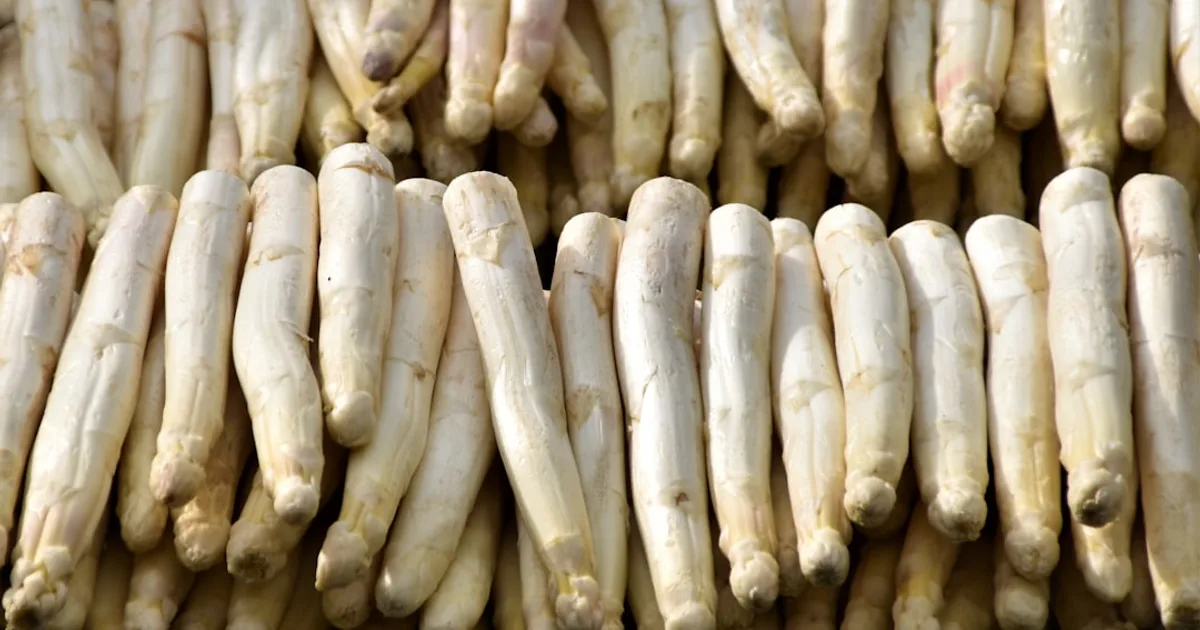
Plant horseradish in the wrong spot and you’ll spend the next decade managing it. This is not a warning against growing it - it’s the actual financial argument for it. Horseradish is so vigorous and so persistent that a single crown planted in a designated bed provides free root indefinitely, requiring almost no inputs after establishment. The problem is containment, not productivity.
Prepared horseradish at retail runs $4-6 for a 6-oz jar, which is $10-16/lb equivalent. Fresh horseradish root at specialty markets and farm stands goes for $3-6/lb. The flavor difference between a fresh-grated root from the garden and a jar that’s been on the store shelf for three months is the difference between a vivid, sinus-clearing condiment and a mildly pungent paste. Freshness matters here more than for most crops.
What it actually is
Armoracia rusticana is a perennial member of the mustard family (Brassicaceae) native to southeastern Europe and western Asia, grown for its large, starchy taproot. The plant reaches 2-3 feet tall with long, coarse, dark green leaves. In its second year and beyond, it produces small white flowers, though the primary ornamental value is nil - this is a utilitarian plant.
The heat and flavor of horseradish come from allyl isothiocyanate, a volatile compound released when the root cells are damaged - grating, cutting, or chewing. The precursor compound (sinigrin) is stable; it only converts to the volatile, tear-inducing isothiocyanate upon cell rupture. This is why freshly grated horseradish is sharply pungent and prepared horseradish in a sealed jar is milder after the volatile compounds escape.
Commercial prepared horseradish is preserved with vinegar, which slows but doesn’t stop the loss of heat. Fresh-grated horseradish added to a dish just before serving is more intense than the prepared kind. Horseradish stored at cold temperatures retains heat longer; warm temperatures accelerate the loss.
Cultivars worth knowing:
| Cultivar | Characteristics | Best use |
|---|---|---|
| Maliner Kren (common horseradish) | Most widely available, broad leaves, productive | General purpose, most reliable |
| Big Top Western | Large roots, smooth-skinned, mild flavor | Commercial preference, good for grating |
| Bohemian (improved variety) | Long, smooth roots, lower fiber content | Table use, fresh grating |
| Variegated (ornamental) | Leaves splashed cream and green | Ornamental beds with bonus harvest |
Most gardeners work with whatever unnamed horseradish root is available at the local nursery or through mail order. Named cultivars are available from specialty herb and vegetable nurseries.
The ROI case
Horseradish is a perennial that asks for a one-time investment. A single crown piece ($4.99) planted in spring yields harvestable roots in late fall of the same year - typically 1-2 lb from a first-year planting. In subsequent years, without any additional input, the same bed produces 2-4 lb per harvest annually.
The persistent nature of horseradish is both the challenge and the compounding asset: every year you ignore it, the crown gets larger and production increases. If you need to thin or divide the bed (recommended every 2-3 years to maintain root quality), you create new planting stock for free or to give away.
| Year | Input cost | Harvest (lb) | Value (@$5/lb) | Cumulative net |
|---|---|---|---|---|
| 1 | $4.99 | 1.5 lb | $7.50 | $2.51 |
| 2 | $0 | 2.5 lb | $12.50 | $15.01 |
| 3 | $0 | 3.0 lb | $15.00 | $30.01 |
| 4 | $0 | 3.5 lb | $17.50 | $47.51 |
| 5 | $0 | 3.5 lb | $17.50 | $65.01 |
That $4.99 investment returns roughly $65 in fresh root value over five years from a single planting - before accounting for the value of preparing your own sauce rather than buying jars.
20-year value calculation: Horseradish in a well-managed bed produces 3-4 lb per year once established. At $4/lb (conservative fresh root value - prepared sauce equivalent is higher), a mature bed returns $12-16 per year. Over 20 years from a single $4.99 crown investment: $240-320 in fresh root value. Net of the original investment: $235-315. If you value it against the prepared horseradish equivalent ($10-16 per 6-oz jar, roughly $27-43/lb), the 20-year return from one crown exceeds $800. One planting is permanent; the plant outlives most garden structures.
One jar of prepared horseradish made from a single large root (roughly 1 lb of fresh root + 2 tbsp white vinegar + pinch salt, grated in a food processor) provides the equivalent of $10-16 of retail product. The quality is superior.
Growing requirements
Location: Choose the site carefully because horseradish will occupy it for a long time. A dedicated corner of the garden, a raised bed, or a container works best. Full sun produces the most vigorous plants and largest roots; partial shade (4-6 hours sun) is workable but reduces yield. Avoid areas where spread would be problematic.
Soil: Deep, loose, well-drained soil allows roots to develop to their full length - 12-18 inches for mature roots. Rocky or compacted soil produces stunted, forked roots. Raised beds with 12-18 inches of loose soil are ideal for root quality. Target pH 6.0-7.0.
Planting: Plant crown pieces (pencil-thick root sections, 4-8 inches long) in early spring as soon as soil can be worked, or in fall. Plant at a 45-degree angle with the top end 2 inches below the soil surface. This angled planting produces straighter, longer roots than vertical planting. Space 18-24 inches apart if planting multiple crowns.
Feeding: Horseradish isn’t a heavy feeder compared to many vegetables. An application of balanced fertilizer in spring when growth resumes, and again mid-summer, is sufficient. Excess nitrogen produces lush top growth at the expense of root development - don’t overdo it.
Containment: If growing in-ground, install a physical barrier - a bottomless 5-gallon bucket sunk in the ground, or a 12-inch-deep metal or plastic edging strip around the bed. Crown pieces left in the soil when harvesting will produce new plants the following year. This is fine in a designated bed; it’s a management problem in a mixed vegetable garden. Any piece of root smaller than your thumb, left in disturbed soil during harvest or tilling, will produce a new plant with no help from you. If you dig the bed to transplant something else and scatter a few horseradish root fragments in the process, expect horseradish plants appearing across that garden area for the next 2-3 seasons. Contain first; regret avoidance later.
Propagation from Root Divisions
Horseradish propagates exclusively from root divisions - it doesn’t produce viable seed in most temperate growing conditions. This makes it one of the easiest perennial crops to multiply for free.
The propagation method is the harvest itself. When you dig in fall, you’ll find the main taproot (which you’ll process) plus numerous pencil-thick side roots 4-10 inches long branching from the crown. These side roots are your planting stock. Select 4-8 inch sections with visible growth nodes (small bumps on the root surface), cut cleanly, and store upright in barely moist sand or sawdust at 35-40°F over winter. Plant them in early spring at a 45-degree angle, 2 inches below the surface.
One established plant yields 5-10 division pieces per fall harvest. Each piece becomes a new productive plant by the following fall. If you want to expand your planting, give divisions away, or simply replace a plant that was misplanted, you generate the starting material for free every year. This connects horseradish to the broader propagation category covered in herb propagation from cuttings - same principle, zero ongoing seed cost after establishment.
What goes wrong
Root fork or branching is the primary quality issue, usually from rocks, compacted subsoil, or soil that dried out during active root development. Forked roots are fully edible but harder to peel and less impressive at harvest. Prevention: deep, loose, consistently moist (not wet) soil.
Cercospora leaf spot (Cercospora armoraciae) causes tan, water-soaked spots on leaves that enlarge and coalesce. It’s primarily cosmetic - it doesn’t affect root development in home gardens. Remove severely affected leaves and avoid overhead watering to slow spread.
Harlequin bug (Murgantia histrionica) and imported cabbage worm (Pieris rapae) occasionally feed on leaves in regions where they’re common. Hand-pick or use row cover during establishment. Severe defoliation can reduce root yield.
Stunted growth typically means shallow soil or competition from tree roots. Horseradish planted near trees or shrubs with aggressive root systems performs poorly. It needs deep, unobstructed soil.
Spreading beyond the bed is the most common management problem. Harvest thoroughly each fall to remove as much root as possible from the growing area. Any piece of root left in the soil can sprout a new plant. In established beds, a thorough fall harvest and replanting only the crowns you want is the way to maintain control.
Harvest and use
Harvest in fall after frost has killed back the tops - typically October-November in most zones. Cold temperatures convert some of the root’s starches to sugars and improve flavor; roots dug in late fall after 2-3 frosts are better-tasting than summer-dug roots.
Dig with a garden fork, working 12-18 inches down to get the full length of the main root. For fall harvest, remove all root pieces you can find. Set aside pencil-thick side roots 4-8 inches long for replanting in spring; process the rest immediately or store.
Fresh roots stored in the refrigerator (wrapped in plastic, not washed) keep 3-4 weeks. For longer storage, process into prepared horseradish: peel, cut into chunks, process in a food processor with white vinegar (2 tablespoons per cup of grated root), and a pinch of salt. The vinegar stops the enzymatic conversion that drives heat loss. Process outdoors or with exhaust running - grating horseradish in an enclosed space produces quantities of volatile isothiocyanate sufficient to clear a room.
Timing the grind: for maximum heat, grind fresh root and use immediately without vinegar - peak heat is within the first 3 minutes. Adding vinegar immediately after grinding preserves whatever heat level you have at that moment. Waiting to add vinegar allows the enzyme reaction to continue and produces a milder result. Commercial “hot” horseradish is made by allowing grated root to sit before vinegar addition; commercial “mild” has vinegar added quickly.
Culinary applications: prepared horseradish is the classic accompaniment to prime rib and beef tenderloin. It’s the horseradish in a Bloody Mary, the sharpness in cocktail sauce, the bite in a remoulade. Less obvious uses: stir a tablespoon into mashed potatoes (horseradish mash works well with roast beef or corned beef), combine with beets for traditional European beet-horseradish relish (chrein), or make compound butter with fresh horseradish and parsley to finish steaks.
Related reading: Potato - traditional companion; Herb Preservation Guide - processing and storing root crops; Wasabi - fellow Brassicaceae root crop with similar heat compounds
Growing Horseradish? Track your harvest value and break-even date in the Garden ROI app.
Get the App