
Wasabi
Eutrema japonicum
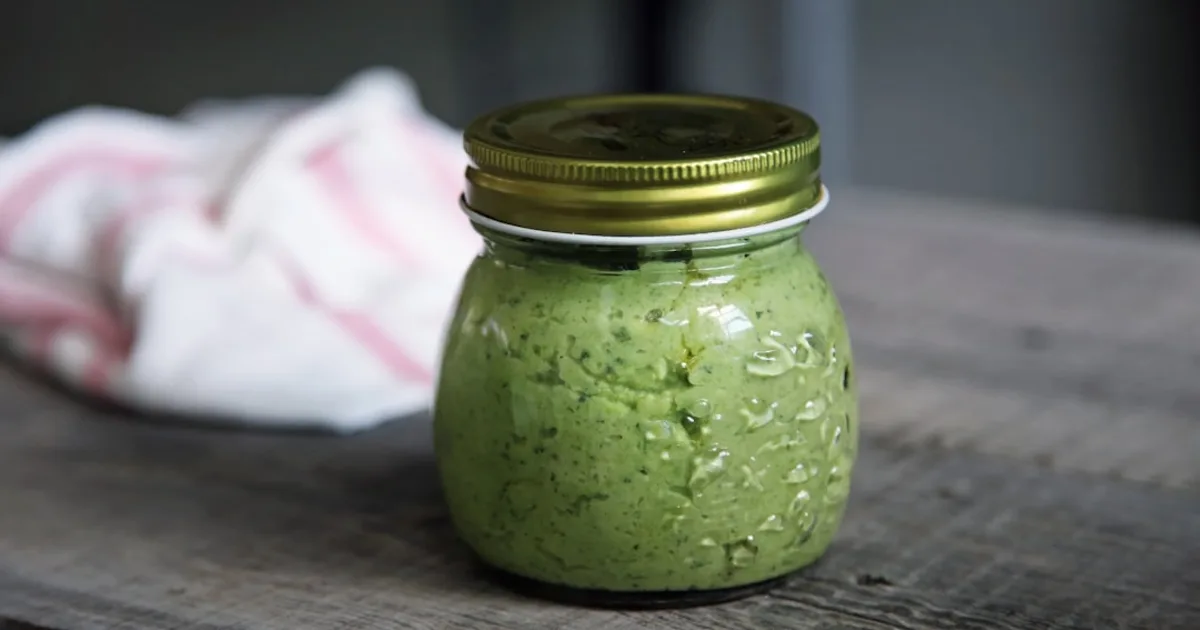
Fresh wasabi rhizome retails for $70-160 per pound in the United States - the most expensive culinary ingredient by weight in the American fresh produce market. The reason it costs that much is the same reason you should think carefully before attempting to grow it: wasabi takes 18-24 months to produce a rhizome of real size. Not 18-24 weeks. A year and a half to two years of specific, unrelenting conditions before you get anything harvestable. If that number makes you reconsider, that’s appropriate. This is not a crop you grow for quick returns or casual experimentation.
The ROI math is honest but thin. A $12.99 plant plus 18 months of attention plus the specific conditions described below yields approximately 0.25 lb of rhizome at $100-160/lb retail value - roughly $25-40 of product. You are not going to get rich growing wasabi. What you are going to get, if you pull it off, is one of the rarest food experiences available to a home grower in North America.
What it actually is
Eutrema japonicum (formerly classified as Wasabia japonica) is a member of the Brassicaceae family - the same family as arugula, watercress, and horseradish (USDA PLANTS Database; USDA NRCS, 2023). It is a direct botanical relative of all three. This taxonomy matters practically: the flavor chemistry is similar, the companion planting logic follows the same pest-confusion principles, and many of the environmental stresses that affect brassicas affect wasabi.
The plant grows close to the ground with large, heart-shaped leaves on long petioles. It looks nothing like the small green cone of paste you’ve seen at sushi restaurants. Mature plants reach 12-18 inches tall. The leaves and petioles are edible throughout the growing cycle - peppery and mildly wasabi-flavored, usable in salads or as a garnish.
The harvested part is not a root. It is a rhizome - a modified stem that grows above or just below the soil surface. This is an important distinction. The rhizome is the knobbly, pale green cylinder that gets grated at high-end Japanese restaurants. True Eutrema japonicum rhizome is almost never available to retail consumers in the United States outside of high-end Japanese restaurants and a handful of specialty produce markets in major cities. What is sold as “wasabi” in tubes, packets, and most restaurant condiment cups is dyed horseradish paste mixed with mustard powder. The labeling is legal; the resemblance to actual wasabi is minimal.
Why it costs what it costs
Wasabi evolved in the streamside environments of Japanese mountain forests - a specific habitat called sawa (mountain stream). Commercial cultivation in Japan is done in channels of continuously flowing cold spring water, maintaining near-constant temperature, high humidity, and consistent clean moisture. The plant developed every one of its demanding requirements in an environment that no ordinary garden replicates.
The core parameters are narrow:
- Temperature: 50-70°F optimal for active growth. Above 80°F the plant goes into heat stress. Above 90°F it dies. This is not a matter of degree - it is a hard ceiling that eliminates most of the United States from consideration for in-ground outdoor growing.
- Light: 50-70% shade. Dappled light under a deciduous canopy works. Any significant direct sun in summer will burn the plant and, over time, kill it.
- Water: constant moisture without waterlogging. The roots and rhizome rot in standing water, yet the plant cannot tolerate drying out. This contradiction - wet but never soggy, always moist but never flooded - is the single most technically demanding aspect of wasabi culture.
- Humidity: high ambient humidity. The Pacific Northwest’s year-round humidity is a genuine advantage; dry climates require active intervention.
- Water quality: wasabi prefers clean, cool water with low dissolved solids. Hard water or highly chlorinated municipal water is not ideal. Rainwater or filtered water is preferred for irrigation.
The difficulty of replicating these conditions simultaneously and consistently for 18-24 months is precisely why fresh wasabi costs what it does. A single summer heat wave that pushes temperatures above 85°F for a week can kill or severely set back plants that were 12 months into their growing cycle.
The 15-minute flavor window
When you grate a fresh wasabi rhizome, the heat and flavor don’t exist yet. They’re created by an enzymatic reaction triggered by cell wall disruption: the enzyme myrosinase acts on glucosinolate precursors (specifically sinigrin and related compounds) to produce volatile isothiocyanates - the compounds responsible for wasabi’s characteristic sharp, aromatic heat. This is the same reaction that produces heat in mustard and horseradish, but the specific isothiocyanates in Eutrema japonicum produce a different, more volatile, more nasal heat than the allyl isothiocyanates dominant in horseradish.
The reaction peaks at 5-10 minutes after grating. By 15-20 minutes, the volatile compounds have dissipated. By 30 minutes, you have something that tastes like mild horseradish with a green color. This is why restaurant-quality fresh wasabi cannot be replicated by any packaged product - the volatility is the point. Grating at the table on a sharkskin oroshigane grater immediately before eating is the traditional practice precisely because the clock starts when the cells are broken.
This also means you cannot make wasabi ahead. Grate what you need, use it within 10 minutes, grate again if you want more. Any product sold in a tube, jar, or packet cannot contain the real flavor - the chemistry won’t allow it.
Growing by region
The continental United States divides into roughly four categories for wasabi:
Pacific Northwest (USDA Hardiness Zones 8-9, west of the Cascades): This is the most viable region for in-ground wasabi growing in North America. Seattle and Portland area gardeners have genuine structural advantages: cool summers with rare extended heat above 85°F, year-round humidity, mild winters, and reliable rainfall. A shaded north-facing garden bed with good drainage and consistent irrigation can support wasabi plants through a full 18-24 month cycle without extraordinary effort. Pacific Coast Wasabi, a commercial producer in Washington State, has demonstrated that Pacific Northwest conditions are sufficiently close to sawa environments to support production at real scale. This is the benchmark for what’s possible.
Appalachian highlands and upper Midwest cool valleys: Possible in the right microclimates - shaded valley sites with cool summer temperatures, high humidity, and spring-fed water sources. These are narrow windows. A sheltered spot in western North Carolina or northern Vermont that stays below 80°F through most of the summer, with natural moisture, can support wasabi. Most of the Appalachian region is marginal; success depends heavily on the specific site.
Midwest and Mid-Atlantic, zones 5-7: Difficult in-ground without significant infrastructure. Summer temperatures regularly exceed the 80°F threshold. Container growing with shade cloth, misting systems, and the ability to move plants to cooler locations during heat waves is the realistic approach. This is a significant investment in time and infrastructure for a 0.25 lb harvest.
Hot and dry climates (zones 9-10 inland, the Southwest, most of the Southeast): In-ground growing is not realistic. Indoor growing in climate-controlled space with misting, grow lights calibrated for low light levels, and consistent cool temperatures is theoretically possible - but the infrastructure cost would far exceed any return from the harvest. The honest answer here is that this isn’t your crop.
Growing requirements in detail
Starting material: Start from plants or offsets (pups produced by established plants), not seeds. Seeds require cold stratification, germinate poorly and slowly, and add another year to an already long timeline. Mail-order plants from Pacific Coast Wasabi (Washington State) are the most reliable source for US growers. Expect to pay $12-18 per plant. One plant per square foot is the typical spacing.
Soil: Loose, highly organic, pH 6.0-7.0. Wasabi is not a heavy feeder but requires excellent aeration and drainage despite wanting consistent moisture. A mix of high-quality compost, perlite, and fine-textured bark or coir provides the structure the rhizome needs to develop. Avoid clay-heavy soils; they waterlog too easily.
Watering system: Drip irrigation or a wicking system that delivers consistent, low-volume moisture is preferred over overhead watering. Wet foliage invites fungal issues. The goal is soil that is uniformly moist at the root zone, never dry, never saturated.
Shade management: Outdoors, 50-70% shade cloth or a position under deciduous trees that provides dappled light. Avoid south-facing beds. North-facing slopes or sites shaded by structures on the east and west that still receive diffuse sky light work well. The plant needs some light to photosynthesize, but direct summer sun will overheat it even if air temperatures are acceptable.
Winter: In zones 8-9, wasabi is root-hardy and will slow growth but survive mild winters. In zones 6-7, container plants should be brought into an unheated but frost-free space (45-55°F is ideal - a cold garage, shed, or unheated greenhouse). The plant goes semi-dormant but should not freeze.
Fertilizing: Light feeding with a balanced, low-nitrogen fertilizer. Excess nitrogen pushes leaf growth at the expense of rhizome development. A diluted fish emulsion or balanced organic fertilizer at quarter-strength every 4-6 weeks through the growing season is sufficient.
After harvest
The plant does not die when you harvest the main rhizome. Wasabi produces sideshoots called kokanme during its growing cycle. These can be potted up and grown on as new plants, providing free propagation material after your first successful harvest. A productive plant in good conditions may produce 2-4 pups per growing cycle.
The leaves and petioles are edible throughout the 18-24 month growing period and do not require waiting for the rhizome. Use them fresh in salads, as a garnish, or pickled. The flavor is peppery and noticeably wasabi-adjacent - not as intense as the rhizome, but distinct and usable. If you’re 12 months into growing a wasabi plant with nothing to show yet, the leaves at least give you something to cook with.
After harvesting the main rhizome, leave the plant in place. Side-shoot production accelerates after the main rhizome is removed, and the remaining root structure can support new rhizome development. Some commercial growers harvest selectively - taking a portion of the rhizome while leaving the rest to continue growing.
What goes wrong
Phytophthora crown rot is the primary disease threat. Caused by Phytophthora spp., it produces brown, water-soaked lesions at the crown that kill the plant. Hot, waterlogged conditions are the trigger. Prevention: drainage, cool temperatures, and avoiding overhead irrigation. Once crown rot is established in a plant, the plant is lost.
Powdery mildew appears counterintuitively when conditions are too dry - wasabi’s high humidity requirement is partly defensive. Mildew appears as white powder on leaves, typically in summer when humidity drops. Increase irrigation frequency and mist the foliage in the morning (not evening - wet foliage overnight promotes other fungal problems). Sulfur-based fungicides are effective but use them sparingly; wasabi is sensitive to phytotoxicity.
Slugs target new growth and emerging pups. This is a particular problem in the Pacific Northwest, where slug pressure is already high. Iron phosphate baits (Sluggo and equivalents) are safe around edible plants and effective. Copper barrier tape around the container or bed provides physical deterrence.
Heat stress is the most common and most fatal problem for growers outside the Pacific Northwest. A single week of temperatures above 85-90°F can cause irreversible damage to a plant that was months away from harvest. Shade cloth provides partial protection. If you know a heat wave is coming, move container plants to a cooler location - an air-conditioned garage or basement for the duration. For in-ground plants, add extra shade layers and increase irrigation frequency.
Nutrient burn or deficiency: Wasabi is sensitive to salts. If using fertilizer, dilute to quarter-strength or less. Yellowing leaves with green veins suggest iron chlorosis, often from pH drift above 7.0 - test and correct soil pH before adding iron supplements.
| Problem | Cause | Prevention | Response |
|---|---|---|---|
| Crown rot (Phytophthora) | Waterlogged soil, heat | Drainage, cool temps | Remove plant; no cure once established |
| Powdery mildew | Low humidity, dry conditions | Maintain humidity | Sulfur fungicide, increase moisture |
| Heat stress / death | Temps above 85-90°F | Shade, siting, container mobility | Shade cloth; move containers during heat waves |
| Slug damage | High slug pressure | Iron phosphate bait, copper barrier | Bait around base; inspect at night |
| Slow rhizome development | Low light, excess nitrogen | Limit nitrogen, maintain shade | Adjust feeding; accept the timeline |
The honest summary
Wasabi is technically possible in home gardens. “Technically possible” is not the same as “broadly recommended.”
If you are in the Pacific Northwest - west of the Cascades, zones 8-9, with a shaded garden bed, good soil drainage, and consistent summer temperatures below 80°F - you have a real shot at this. The conditions that make that region pleasant for humans also make it the closest analog to Japanese mountain stream environments available in the United States. A Pacific Northwest grower willing to manage irrigation carefully and protect plants during the occasional heat event can expect success.
If you are in a zone 6-7 cool highland area with a specific microclimate - shaded, moist, rarely hot - it is worth attempting in a container that you can manage and move.
If you are in inland zone 9, the Midwest, the Southeast, or the Southwest, the summer heat is the obstacle that no amount of shade cloth fully overcomes. Indoor growing is the only realistic option, and the infrastructure investment makes the economics worse than they already are.
The plant itself is not fragile in cool, moist conditions. It grows steadily and without much drama when the fundamentals are met. The challenge is maintaining those fundamentals for 18 months without a break. One bad summer is enough to lose a plant that was three-quarters of the way to harvest.
Price that risk honestly against the $25-40 of fresh rhizome at the end of it. For most growers, the value is the experience of growing something rare and learning what real wasabi tastes like. The 15-minute window after grating is worth understanding firsthand. Whether it’s worth 18 months of careful cultivation is a question only you can answer for your climate and your garden.
Related crops: Arugula, Watercress
Related reading: Herb Garden ROI - value comparison for specialty herbs; Wasabi ROI Analysis - the case for rhizome-to-table production and whether the effort justifies the retail replacement value
Growing Wasabi? Track your harvest value and break-even date in the Garden ROI app.
Get the App