
Jerusalem Artichoke
Helianthus tuberosus
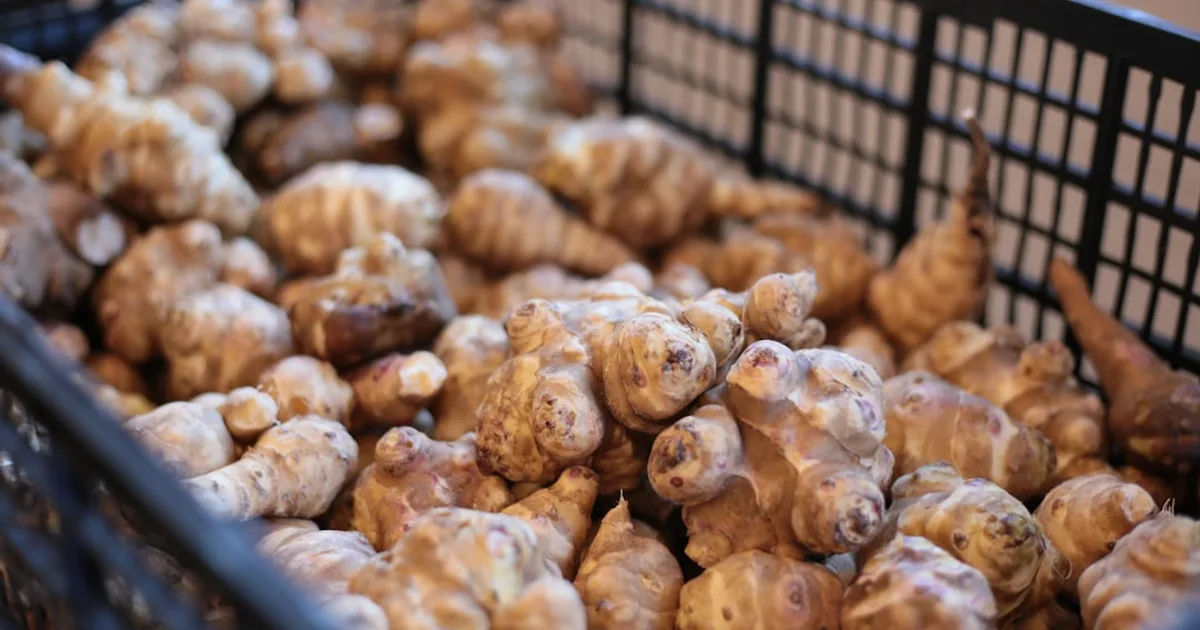
Jerusalem artichoke (Helianthus tuberosus) - also called sunchoke - will produce more food per square foot than almost any other perennial vegetable you can plant. A single tuber planted in spring returns 5-10 lbs of harvestable tubers per 4 square feet by fall, requires almost no maintenance once established, and does this every year indefinitely. The flip side: this plant spreads aggressively through underground tubers, and once established in an open bed it is extremely difficult to fully remove. Every tuber fragment left in soil re-sprouts. Understand this before you plant.
Containment first - read this before anything else
This is not a mild caution buried in the fine print. Jerusalem artichoke has the same containment requirements as mint, and you should approach it the same way.
Plant an uncontained sunchoke in a standard garden bed and you will spend the next three years finding it where you did not put it. The tubers spread outward 2-4 feet per year through the soil. Any piece of tuber larger than a thumbnail left behind at harvest produces a full plant the following spring. Digging them out completely - especially from established plantings - is genuinely difficult because the tubers break apart easily and fragments go deep.
You have three workable options:
Option 1: Dedicated no-escape bed with physical barriers. Install solid root barriers (not the thin plastic edging sold for lawn borders - actual 60 mil HDPE barrier, 18-24 inches deep) on all sides of the planting area before you put anything in the ground. Root barrier sold for bamboo control works well and is widely available. The barrier must form a complete enclosure with no gaps at corners. This is the most maintenance-friendly approach for a production planting.
Option 2: Buried container. Sink a large container (30-gallon or larger fabric pot, or a hard-sided container with drain holes) directly into the ground to the rim. Plant into the container. The roots can’t escape, harvesting is easier, and you get all the production benefits. Same approach used for mint. Yield per plant drops slightly compared to open ground because root expansion is limited, but you get 4-6 lb per container per year with zero spread risk.
Option 3: Remote corner of the property where spread doesn’t matter. If you have a fence line, a ditch bank, an area between buildings, or any spot where aggressive perennial expansion is not a problem, plant it there and let it do what it does. Harvest what you want each fall. It will naturalize completely and ask nothing of you. This is the lowest-effort option if you have the space.
There is no option four. Don’t plant sunchokes in a standard vegetable bed without one of these containment strategies in place unless you are prepared to live with the consequences.
What it actually is
Jerusalem artichoke is a native North American perennial sunflower, unrelated to globe artichoke (Cynara scolymus) and not from Jerusalem. The name likely derives from girasole, Italian for sunflower. It belongs to Asteraceae (the daisy family), grows 6-10 feet tall with yellow sunflower-like blooms in late summer, and is winter-hardy in USDA Zones 3-9. The edible portion is the knobby underground tuber - mild, nutty, crunchy when raw, soft when cooked, tasting somewhere between a water chestnut and a very mild potato.
The tuber stores carbohydrates primarily as inulin (a fructooligosaccharide, also called a fructan) rather than starch. This is the defining nutritional characteristic of the plant, and it comes with a consequence covered fully in the next section.
The inulin situation - be honest with yourself
Inulin is not digested in the small intestine. Human digestive enzymes don’t break it down. It passes intact to the large intestine, where colonic bacteria ferment it - producing gas as a byproduct. This is not a myth, not an exaggeration, and not something that only affects sensitive people. It affects most people who eat Jerusalem artichokes in any quantity, which is why the plant has earned the nickname “fartichoke.” The phenomenon is documented in nutritional literature going back decades (Niness, 1999, in Oligosaccharides in Food and Agriculture).
The practical effects: bloating, flatulence, and in some people significant gastrointestinal discomfort. The magnitude depends on dose and individual gut microbiome composition. Cooking reduces but does not eliminate the effect - heat breaks down some of the inulin chains but doesn’t convert them to a fully digestible form. Roasting softens the impact somewhat more than boiling. Pickling in acid slows fermentation and may reduce symptoms more than cooking does.
The strategy for eating them without suffering: start small. Two to three ounces of cooked sunchoke is a reasonable first portion. Wait and see. Some people tolerate larger amounts after their gut microbiome adapts over repeated exposure across several weeks. Some people never fully adapt. If you’re serving them to guests, warn people first. Don’t eat a full serving the night before anything important.
For lower-symptom cooking: roast them at high heat until well-done, or make a soup and strain out the fiber. Thinner slices roasted longer give the gut less intact inulin to work with than large chunks. Raw sunchokes eaten in any quantity will cause the most intense reaction in most people.
Inulin does have legitimate prebiotic benefits - it feeds beneficial Bifidobacterium species in the gut. If you’re eating for gut health, small regular doses are a reasonable strategy. Just go in knowing what you’re getting into.
The ROI case
Fresh sunchokes retail at $3-6/lb at specialty grocers - Whole Foods, food co-ops, upscale independent markets - and are largely absent from standard supermarket produce sections outside coastal metro areas. If you’re not near one of those stores, you may not be able to find them at all locally.
Seed tubers cost $8-15/lb from specialty seed suppliers (Territorial Seed, Fedco, Johnny’s Selected Seeds). A pound of seed tubers typically contains 6-10 tubers and plants a 4-6 foot row. You only buy seed tubers once. After year one, your own harvest supplies all the seed stock you’ll ever need.
The math over time:
| Year | Input cost | Yield (4 sq ft) | Retail value at $4/lb | Net return |
|---|---|---|---|---|
| 1 | $8-12 (tubers) | 4-6 lb | $16-24 | $4-16 |
| 2 | $0 | 6-10 lb | $24-40 | $24-40 |
| 3+ | $0 | 7-10 lb | $28-40 | $28-40 |
Year one is modest because the planting is establishing. By year two, with no additional investment, a 4-square-foot planting returns $24-40 in retail-equivalent produce per year, indefinitely. That’s a better three-year return than almost any other perennial vegetable you can name, and the ongoing cost is essentially zero.
The caveat: the retail value is only real if you will actually eat them. Given the digestive effects, some households find they can only consume a pound or two per week comfortably. Size the planting to what you’ll actually use, not to maximum possible yield.
Variety comparison
| Variety | Skin character | Tuber shape | Season notes | Best for |
|---|---|---|---|---|
| Stampede | Rough, tan | Knobby | Earliest production; good for Zones 4-5 with short seasons | Short-season gardens |
| Fuseau | Smooth, tan | Elongated, cylindrical | French heirloom; easiest to peel | Cooking; roasting |
| Red Fuseau | Smooth, red-purple | Elongated | Same smooth character as Fuseau; slightly later | Roasting; visual appeal |
| Clearwater | Rough, tan | Large, round | High yield; larger individual tubers | Bulk production |
For most people growing for the first time, Fuseau is the right starting variety. The smooth elongated shape makes washing and peeling practical, which matters because the knobby heirloom types take real time to clean. Stampede is the right choice if you garden in Zone 4-5 and need early maturity. Clearwater makes sense if volume is the priority and you don’t mind the rough skin.
Growing requirements
Plant tubers in spring after last frost when soil temperature reaches 50°F or above. Plant 3-4 inches deep, 12-18 inches apart in rows. For maximum yield, space rows 3 feet apart and allow the stand to fill in over two seasons. Organic grocery-store tubers work as seed stock if you can’t source named varieties - they’re usually a generic commercial selection, but they’ll produce fine.
Soil pH of 5.8-7.0 is the target range. Jerusalem artichoke tolerates poor fertility, acidic soil, clay, and drought better than almost any other garden crop - which is directly related to why it spreads so aggressively in varied conditions. Rich, loose soil with good drainage produces the largest, cleanest tubers. Heavy wet clay produces small, malformed tubers and increases rot risk during storage.
Full sun produces the best tuber development. In partial shade (3-5 hours of direct sun), the plants grow taller and floppier but yield drops. In shade under 3 hours, tuber yield is poor enough to be not worth growing.
Plants reach 6-10 feet at maturity and cast significant shade - plant on the north side of adjacent beds or in a standalone location. Tall plantings benefit from staking or a wind break behind them in exposed sites.
Water at 1 inch per week until establishment (4-6 weeks). After that, supplemental irrigation is rarely needed except during extended dry spells. Overwatering in clay soils encourages crown rot.
No fertilizer is needed in most soils. Jerusalem artichoke will produce on depleted ground. If you’re growing in exhausted soil or in containers, a balanced fertilizer (10-10-10 at planting, or a side-dressing of compost mid-season) helps. Don’t over-fertilize with nitrogen - you’ll get excessive above-ground growth and reduced tuber formation.
Frost sweetening and harvest timing
Don’t harvest before the first hard frost. This is not optional if you want good-tasting sunchokes.
The mechanism is the same as with parsnips and salsify: cold temperatures trigger the plant to begin converting stored inulin to fructose (a simple sugar) as a cold-tolerance response. The result is a noticeably sweeter, more complex flavor compared to tubers harvested before frost. The difference is significant enough that pre-frost sunchokes taste almost bland by comparison.
The practical harvest window runs from after the first hard frost through late fall, and extends into winter and early spring in most climates. You can leave tubers in the ground all winter and harvest as needed - they keep better in cold soil than in refrigerator storage. In Zone 5 and south, dig all winter when the ground isn’t frozen solid. In Zone 4 and north, harvest the bulk of the crop in fall before the ground freezes too deeply for digging, and store remainder in damp sand or sawdust at 33-40°F.
Once dug, sunchokes deteriorate faster than potatoes. The skin is thin and they lose moisture and firmness quickly at room temperature. Use within a week if storing at room temperature, or refrigerate in a perforated bag for 2-3 weeks.
What goes wrong
Sclerotinia white mold (Sclerotinia sclerotiorum) is the most serious disease to watch for, affecting stems in wet, cool conditions. It appears as cottony white mycelium at the base of stems. Remove affected plants and don’t compost them. Improve air circulation by not letting the stand get overcrowded.
Aphids - specifically the sunflower aphid (Aphis helianthi) - colonize stems and the undersides of leaves. Natural predators (ladybugs, parasitic wasps) usually manage populations adequately if you’re not spraying broad-spectrum insecticides nearby. For heavy infestations, insecticidal soap applied directly to colonies is effective.
Slug damage to emerging shoots in wet spring weather. Iron phosphate bait (Sluggo, Escar-Go) scattered around the planting area is effective and low-risk to birds and mammals.
Tuber rot in storage happens when tubers are stored in conditions that are too warm, too dry, or too wet. Aim for just above freezing (33-40°F) in barely moist medium. Inspect stored tubers monthly and remove any soft ones.
Failure to establish in year one sometimes happens with grocery-store tubers that were cold-stored too long or treated to prevent sprouting. Organic tubers are more reliable. If a planted tuber shows no growth by 6 weeks after your last frost date, dig it up and check - if it’s rotted, replant with a fresh tuber.
Culinary uses
Raw: slice thin and use in salads where you want a crunchy, nutty element similar to water chestnut or jicama. Young tubers harvested early (before full maturity) have the mildest flavor and best crunch. Thin slices reduce the dose per bite, which also helps with the digestive effects.
Roasted: scrub clean (smooth-skinned varieties like Fuseau can be left unpeeled), halve or quarter, toss with olive oil and salt, roast at 425°F until golden and tender - 30-40 minutes depending on size. Peeling rough-skinned types is tedious and mostly unnecessary for roasting; scrubbing is enough.
Soup: peel, simmer in stock until completely soft, then puree and strain. Straining removes the majority of the fibrous material and reduces the inulin load relative to eating the whole tuber. A Jerusalem artichoke soup - pureed smooth with a little cream and chives - is one of the good things you can do with this crop.
Pickled: slice 1/4 inch thick and quick-pickle in cider vinegar brine (2 parts vinegar, 1 part water, sugar, salt). Acid inhibits the fermentation reaction that causes gas, making pickled sunchokes more tolerable for many people than cooked ones. They keep 2-3 weeks refrigerated and work well on charcuterie boards or alongside rich meats.
Avoid mashing them like potatoes - the inulin doesn’t behave like starch, and the texture is gummy and unpleasant. Roasting and pureeing-then-straining are the two preparations that work best.
Related crops: Garlic, Arugula
Related reading: First Three Years ROI - how perennial crops like sunchokes compound in value when calculated over multiple seasons
Growing Jerusalem Artichoke? Track your harvest value and break-even date in the Garden ROI app.
Get the App