
Leek
Allium ampeloprasum
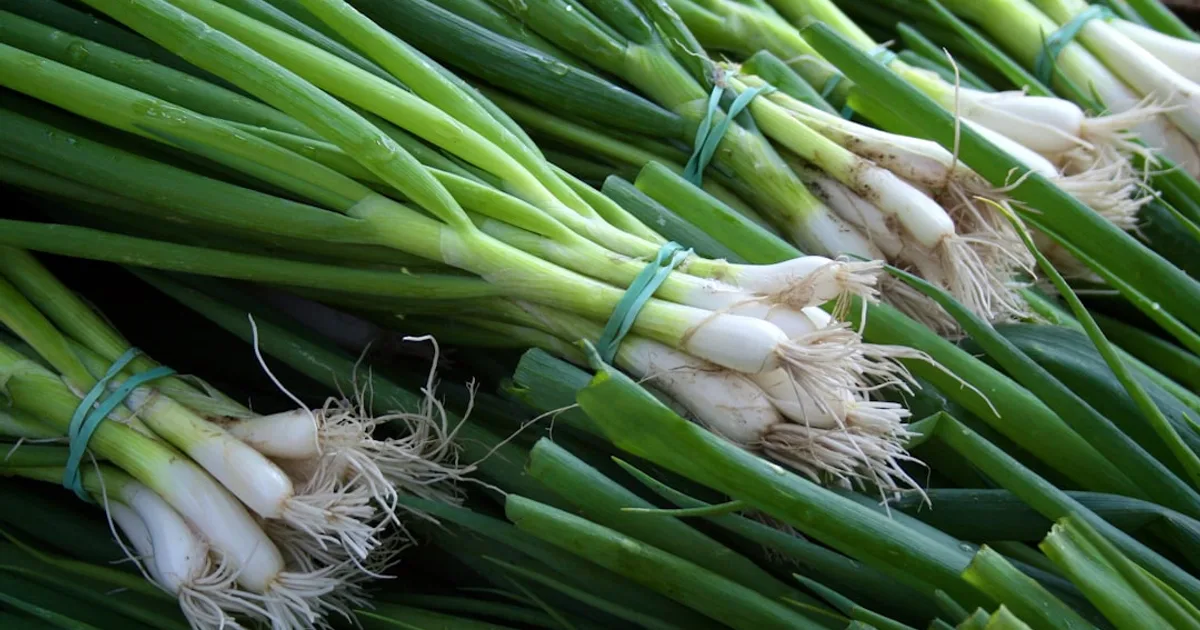
Leeks (Allium ampeloprasum) are one of those crops where timing is the whole ROI story. You’re not growing them to compete with summer tomatoes or beans. You’re growing them to have something fresh and valuable in October, November, and December - or through February with the right variety - when your beds are otherwise empty and grocery stores are charging $2-3 per leek. A single $2.99 packet of seed can return 5 lbs of leeks at $3-5/lb retail. That’s $15-25 in produce from less than $3 in seed.
At fall farmers markets, bunched leeks from cold-hardy varieties regularly sell at $4-6/bunch. Grocery stores stock them heavily in fall and winter at $2-3 per leek. You can’t fake that kind of market timing with most crops. Leeks give it to you for free, just by being what they are.
What you’re actually growing
Allium ampeloprasum sits in the same genus as garlic and wild chives, though it’s more closely related to the wild Mediterranean leek than to common bulb onion (Allium cepa). The edible part is not a bulb. It’s the elongated shank - the white and pale-green lower portion - formed when the lower plant is excluded from light. No light exclusion, no white shank. That’s the whole technique, and it goes by the name earthing up.
The dark green flag leaves at the top are edible but tougher. Some cooks use them for stock. The mild, sweet flavor of the shank is what sets leeks apart from other alliums - they cook down to something almost buttery, without the sharp bite of onion.
Variety selection by season
This is the decision that determines whether your leeks are a fall crop or a winter crop. Choose wrong and you either get great leeks that winter-kills before you finish eating them, or you plant a summer type hoping for January harvest and it rots in December.
| Variety | Type | Days to Maturity | Cold Hardiness | Notes |
|---|---|---|---|---|
| King Richard | Early | 75 days | Marginal below 20°F | Long, slender shank; excellent flavor; not for overwintering in Zone 6 and colder |
| Lincoln | Mid-season | 90 days | To about 15°F | Good all-around variety; thicker shank than King Richard; reliable fall harvest |
| Tadorna | Late/winter | 120 days | To 5-10°F | Blue-green flag leaves; thick shank; holds well in the ground through late fall |
| Bandit | Overwintering | 130 days | To -10°F | The standard for northern overwintering; survives Zone 5-6 winters without protection when established |
King Richard is excellent if your goal is fall harvest - September through October. It produces fast and the flavor is superb. But plant it expecting February leeks in Zone 5 and you’ll be disappointed. Bandit is the opposite: slow, thick, and nearly indestructible once it’s established. If you want to harvest leeks in January by walking out to the garden and digging them from frozen ground, plant Bandit.
Tadorna splits the difference reasonably well. The blue-green flag leaves are easy to spot in the garden in winter, which is a small practical benefit when you’re hunting for rows under mulch in November.
The ROI math
A $2.99 packet contains enough seed to plant 50-75 transplants, depending on germination rate and how many you want. At 6-inch spacing in a 4-foot bed, a 12-foot row holds 24 plants. A well-grown leek in decent soil averages 0.2-0.3 lb per plant at harvest.
| Scenario | Plants | Yield (lb) | Price/lb | Gross Value | Seed Cost | Net Value |
|---|---|---|---|---|---|---|
| Conservative | 20 plants | 4 lb | $3.00 | $12.00 | $2.99 | $9.01 |
| Realistic | 25 plants | 5 lb | $3.50 | $17.50 | $2.99 | $14.51 |
| Fall market timing | 25 plants | 5 lb | $5.00 | $25.00 | $2.99 | $22.01 |
The fall market timing scenario is real. If you’re harvesting Bandit or Tadorna in October and November when local leeks are scarce, farmers market pricing is routinely $5/lb or higher. That’s the upside case.
The input costs beyond seed are minimal. You need compost worked in before transplanting and a side-dressing of balanced fertilizer mid-season. Time investment is front-loaded at transplanting and earthing up. After that, leeks are low maintenance.
Starting plants
Leeks are almost always started indoors. Direct seeding in the garden is possible but slow - leek seedlings are thin and grass-like and don’t compete well with weeds in their first weeks. Starting indoors 10-12 weeks before your last frost date gives you transplants at pencil width, which is the target size for setting out.
Sow seeds 1/4 inch deep in a flat or cell trays. Germination takes 7-14 days at 65-70°F. The seedlings look like chive seedlings - thin, dark green, upright. They grow slowly for the first three to four weeks. Don’t rush them. Once they’re 3-4 inches tall, pot on to give each seedling room. You want to avoid overcrowding that promotes damping off (Botrytis spp. and Pythium spp.).
Transplant to the garden after frost risk is past, when seedlings are pencil-width. Thinner is fine - leeks establish well even when small. Thicker is fine too, they just need a slightly larger hole. Soil temperature should be above 50°F for good root establishment.
If you want to skip the indoor start, leeks can be started in an outdoor seedbed and transplanted when they reach pencil width, usually 6-8 weeks later. This is common in commercial production in mild climates but adds time in northern gardens.
Earthing up: the technique that makes leeks
The white shank you’re after doesn’t appear on its own. It forms when soil - or any light-blocking material - is mounded against the lower plant as it grows. This is earthing up, and it’s the central skill in growing leeks.
Without earthing up, you get a short white section at the base and a long, dark-green, fibrous upper shank. That’s still edible. But the mild, tender white shank that makes leeks worth growing - and worth the premium price - comes from consistent hilling.
There are two practical approaches.
Trench planting: Before transplanting, dig a trench 6 inches deep and 6 inches wide. Set transplants in the trench at 6-inch spacing. Backfill loosely with 2 inches of soil - just enough to cover the roots. As plants grow through the season, gradually fill the trench in 2-3 inch increments, pulling soil from the sides toward the shanks. The goal is to keep the lower 4-6 inches of the shank buried at all times. By harvest, the trench is filled and the shank has developed its full white length underground.
Progressive hilling: If you didn’t plant in a trench, you can earth up after the fact. Once transplants are 8-10 inches tall, mound 2-3 inches of loose soil against the base of the shanks. Repeat every 2-3 weeks through mid-summer. Use your hands or a hoe to pull soil from the bed’s alleyways toward the row. Don’t bury the leaves - you’re hilling the shank, not the plant.
Either method works. The trench approach is tidier and keeps the bed surface level. Progressive hilling is more forgiving if you didn’t plan ahead. The key in both cases is keeping light off the lower shank as the plant grows - not just burying it deep at planting time and forgetting it.
Soil that works into the shank during hilling is the main source of grit in leeks. This is why cleaning leeks takes longer than cleaning most vegetables. Slice them lengthwise and rinse between the layers under cold water. It’s annoying but expected.
Growing requirements
Soil pH of 6.0-7.0. Leeks are moderate-to-heavy feeders and respond well to soil that has had compost worked in before planting - 2-3 inches of finished compost tilled in to 8-10 inches. A side-dressing of balanced fertilizer (10-10-10 at 1 lb per 25 feet of row, or equivalent organic) when plants are 6-8 inches tall supports shank development through summer.
Water consistently at 1 to 1.5 inches per week. This is one of the few crops where irrigation regularity matters as much as total volume. Irregular watering - dry spells followed by heavy rain or irrigation - causes the shank to split internally along the layers. Split shanks are still edible but gritty, difficult to clean, and shorter-lived in storage. If you’re in a region with inconsistent summer rainfall, drip irrigation or soaker hoses under mulch make leeks easier.
Full sun, 6+ hours. In partial shade, plants develop thinner shanks and take longer to size up.
What goes wrong
Leek rust (Puccinia allii) causes orange-yellow powdery pustules on leaves. It’s cosmetically alarming but usually doesn’t affect shank quality below the leaf break. Remove severely affected leaves, improve air circulation by thinning the row if plants are crowded, and continue. Chemical treatment isn’t necessary in home gardens.
Onion thrips (Thrips tabaci) leave silver streaking on the flag leaves and reduce plant vigor at high populations. At low to moderate pressure, plants outgrow the damage. At high pressure, spinosad sprays are effective. Reflective mulch early in the season confuses thrips adults navigating by light. This is the primary pest of commercial leek production (University of Minnesota Extension).
Botrytis leaf blight (Botrytis squamosa) shows up as pale oval lesions on leaves in cool, wet springs. It’s rarely fatal to established plants. Remove affected tissue and improve air circulation. Extended wet weather in May and June is the trigger.
Allium leaf miner (Phytomyza gymnostoma) is worth knowing about if you’re in the Northeast. This invasive fly established in the US in the mid-2010s and is now present throughout much of the Northeast as of 2024. The adult female lays eggs in leek foliage. Larvae mine through the leaves and can enter the shank, which causes structural damage that’s hard to see until you’re cleaning leeks in the kitchen. Row cover installed at transplanting and kept in place through the fly’s peak adult periods (spring and fall) prevents egg-laying. It’s one of those pests that doesn’t announce itself until the damage is done - if you’re in an affected region, row cover is cheap insurance.
Overwintering value
This is the whole point of cold-hardy varieties. Bandit, Tadorna, and similar overwintering types don’t just survive cold - they’re still actively holding quality through December and into March in Zone 5 and 6. You can walk out to the garden in January, pull back the straw mulch, and dig leeks from partially frozen soil. The shank doesn’t degrade in the cold the way storage vegetables can degrade in a root cellar. It holds in the ground.
That has real value because there are almost no other fresh alliums available in that window. Garlic is cured and stored. Onions are bulbs in a crate. Scallions at the grocery store have been shipped from somewhere warm. The leek in your garden in February is local, fresh, and scarce at retail - which is why $4-6/bunch at late-season markets isn’t an outlier.
To keep the ground workable, mulch the row heavily before hard frost - 4-6 inches of straw over the row. This slows the freeze and allows you to get a garden fork into the soil even after surface temperatures are well below freezing. Remove mulch between harvest events and replace it. The plants don’t need protection from the cold itself. They need protection from freeze-thaw cycling that heaves them out of the ground, and from losing access to them under a frozen soil surface.
Harvest
Harvest when shanks reach 1-1.5 inches in diameter. Use a garden fork to loosen the surrounding soil before pulling - the root system is extensive and the shank can break if you pull straight up without loosening. Work progressively from largest to smallest plants, which extends your harvest window by several weeks. You don’t need to harvest the whole row at once.
For overwintered plants, you can harvest through the mulch from October through March as long as the soil is workable. In a hard freeze, wait for a thaw cycle. The plant will be fine.
Once harvested, trim the dark green tops and root base. Leeks store in the refrigerator for 2-3 weeks, or in a cool basement with roots slightly moist for 4-6 weeks. The green tops go in the stock pot. Don’t throw them out.
Related crops: Garlic, Arugula
Related reading: Beginner Homestead Crops - which vegetables provide fresh produce during the hardest part of the shoulder season
Growing Leek? Track your harvest value and break-even date in the Garden ROI app.
Get the App