
Persimmon
Diospyros virginiana
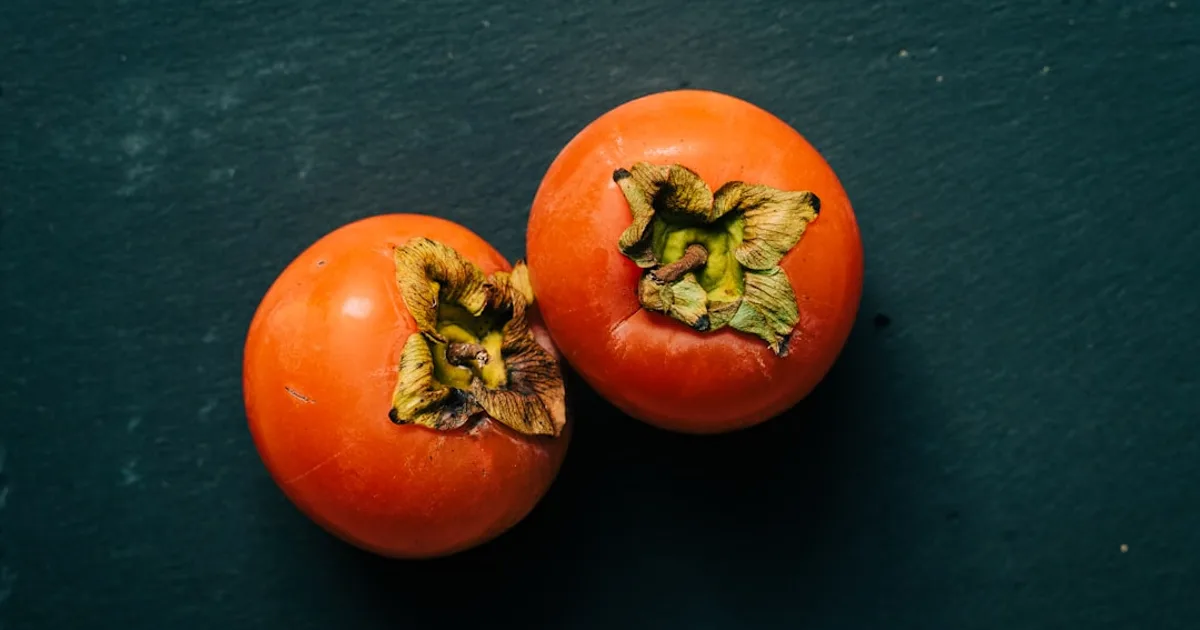
Persimmons are among the most underplanted fruit trees in American home gardens, which is strange given that one of the two main species is native. Diospyros virginiana - the American persimmon - grows wild from Connecticut to Florida to Kansas, produces fruit reliably in zones 4-9, tolerates drought and poor soil, has essentially no serious pest or disease problems, and fruits at $4-8/lb at specialty markets and farmers markets in the fall. A mature tree produces 20-40 lb of fruit.
The asterisk is the tannins. Astringent persimmons - which includes most of the American type and some Asian cultivars - are mouth-puckeringly inedible until fully ripe, which means fully soft and usually frost-touched. There are also non-astringent Asian cultivars that can be eaten firm. Knowing which type you’re growing changes how you harvest.
What it actually is
Two species dominate the home garden and market:
American persimmon (Diospyros virginiana): native to eastern North America. Small to medium fruit (1-2 oz), orange to reddish-purple at full ripeness. Astringent until fully ripe - usually after first frost softens the fruit. Very cold-hardy (zones 4-9). Self-fertile but produces better with cross-pollination. Improved named cultivars exist with larger fruit than wild specimens:
- ‘Meader’: one of the most widely planted named American persimmons; reliably self-fertile; large fruit for the species; selected by Edward Meader of New Hampshire in the 1940s
- ‘Early Golden’: earlier ripening (September-October rather than October-November); sweeter than most American types; good choice for zones 4-5 where a short season limits late-ripening varieties
- ‘Prok’: prolific producer, consistent yield; slightly tart compared to ‘Meader’ and ‘Early Golden’
- ‘Szukis’: selected for large fruit size; good flavor when fully ripe
Asian/Japanese persimmon (Diospyros kaki): the large, tomato-shaped orange persimmon sold at grocery stores. Fruit 6-18 oz, often marketed as “Fuyu” (non-astringent) or “Hachiya” (astringent). Zones 7-10 primarily; some cultivars hardy to zone 6 with protection.
| Type | Species | Zones | Fruit size | Astringency | Harvest timing |
|---|---|---|---|---|---|
| American | D. virginiana | 4-9 | Small (1-2 oz) | Astringent until fully ripe | Oct-Nov after frost |
| Hachiya (Asian) | D. kaki | 7-10 | Large (8-12 oz) | Astringent until very soft | Oct-Nov |
| Fuyu (Asian) | D. kaki | 7-10 | Large (6-8 oz) | Non-astringent | Oct-Nov; eat firm |
| American hybrids (‘Nikita’s Gift’, ‘Rosseyanka’) | D. virginiana × kaki | 5-9 | Medium-large (3-5 oz) | Semi-astringent | Oct-Nov |
The astringency question: tannins in astringent persimmons break down through natural ripening (called bletting), through ethylene gas exposure, or through freezing. An astringent Hachiya persimmon that is still firm will turn your mouth inside out. The same persimmon a week later, when it’s soft as pudding, is sweet and rich. Fuyu persimmons can be eaten crisp, like apples, because they lack functional tannins.
The ROI case
American persimmon trees are long-lived (50-100+ years) and increase yield for decades. A 10-year ROI calculation barely captures the return on a tree that will still be producing when your grandchildren are gardening.
| Year | Yield estimate | Value @$5/lb | Cumulative value | Tree cost | Cumulative net |
|---|---|---|---|---|---|
| 1-2 | 0 | $0 | $0 | -$24.99 | -$24.99 |
| 3 | 2 lb | $10 | $10 | - | -$14.99 |
| 4 | 8 lb | $40 | $50 | - | $25.01 |
| 5 | 15 lb | $75 | $125 | - | $100.01 |
| 7 | 25 lb | $125 | $325 (est.) | - | $300.01 |
| 10 | 30 lb | $150 | $625 (est.) | - | $600.01 |
The Asian persimmon (Fuyu) matures faster - first real harvest often at year 3-4 - and the fruit is larger, which affects processing efficiency.
Growing requirements
American persimmon is among the easiest native fruit trees to establish. It grows on almost any soil, tolerates periods of drought or waterlogging that would kill other stone fruits, and has no real pest pressure in most of the US. The main requirements: full sun (at least 6 hours), and patience during the 2-3 year establishment period.
Asian persimmon needs better drainage, full sun (8+ hours), and slightly better soil fertility. It’s less forgiving of cold than the American type but still manageable in zone 7 with good site selection.
Pollination: American persimmon trees are typically dioecious - separate male and female trees - in wild populations. Improved named varieties are often self-fruitful or parthenocarpic (fruit without pollination). When buying named cultivars, confirm whether a pollinator tree is needed. Asian persimmons are generally self-fruitful.
Rootstock: American persimmons are often sold grafted on seedling rootstock of the same species. Seedling-grown American persimmons have deep, difficult-to-transplant taproots - buy balled-and-burlapped or container-grown trees rather than bare-root, and plant carefully.
The taproot issue: American persimmons produce deep taproots quickly. This is why they’re drought-tolerant - and why established trees are nearly impossible to transplant. Plant in the permanent location from the start.
What goes wrong
Astringent fruit picked too early is almost a guaranteed first-year mistake with American persimmons. If you’ve never grown them, you’ll pick one that looks ripe (full orange color, starting to soften) and immediately regret it. The astringency is unlike anything else - a sensation of chalk and fur coating your mouth. Wait until after first frost, when the fruit is fully soft and yielding. Or pick at full color and allow to ripen indoors until completely soft.
Deer pressure: deer love persimmons. This is partly a selling point (food-plot use) and partly a problem for home gardens. Tree guards or temporary fencing protect young trees during establishment.
Persimmon psyllid (Trioza diospyri) on American persimmons causes leaf curl and gall formation. Rarely fatal; primarily cosmetic. No treatment usually needed.
Crown gall (Agrobacterium tumefaciens) causes woody tumor-like growths at the base. Avoid injuring the crown during cultivation. No cure; infected trees should be removed to prevent soil contamination.
Asian persimmon in marginal zones: sudden cold snaps in November after a warm fall can kill partially dormant wood. A late fall with a sudden hard freeze is more damaging than a cold winter with gradual hardening. Site on a north or west-facing slope to delay fall dormancy.
Harvest and use
American persimmon: harvest after first frost (October-November depending on zone), when the fruit is fully orange to reddish-purple and very soft. The fruit should feel like a water balloon. Pick by hand; any resistance means it’s not ready. Freeze and thaw cycles break down tannins - fruits that fall after frost are often the sweetest.
Fuyu (non-astringent Asian): harvest at full orange color when still firm. Eat fresh like an apple, or allow to soften for a different texture.
Hachiya (astringent Asian): harvest at full color; ripen further at room temperature until the flesh is completely soft. A fully ripe Hachiya looks almost overripe - the skin may be translucent or slightly wrinkled.
Core preparations:
-
Eaten fresh (Fuyu): slice and eat. The crunchy texture and honey-like sweetness are the appeal. Add to salads with arugula, blue cheese, and candied walnuts.
-
Persimmon pudding: traditional Indiana and Ozarks preparation using American persimmon pulp. Ripe pulp pressed through a colander to remove skins and seeds, then baked into a dense, spiced pudding. The classic American persimmon preparation - distinct from any other dessert.
-
Dried persimmons (hoshigaki): traditional Japanese method of drying Hachiya persimmons, and one of the highest-value processing options available to home growers. The process: peel Hachiya persimmons while still firm, leaving the stem and a short section of branch attached. Tie twine to the branch stub and hang the fruit in a cool, dry location with good airflow - a garage, covered porch, or unheated room works. After 1 week, begin massaging each fruit gently for 30-60 seconds every 2-3 days. The massage breaks down the interior gel structure and distributes moisture evenly, preventing a hard outer crust from forming while the inside remains wet. After 4-6 weeks, the fruit shrinks, the exterior firms, and white powdery sugar crystals bloom to the surface. That white bloom is pure fructose. The finished hoshigaki is dense, intensely sweet, and nothing like commercially dried fruit. At Japanese grocery stores and specialty food shops, artisan hoshigaki sells for $3-6 per individual fruit - more than the fresh fruit’s retail value. A mature Hachiya tree producing 40 lb of fruit can yield 20+ lb of hoshigaki (roughly 50% weight loss in drying) - a project that takes patience but no inputs beyond time.
-
Persimmon bread: like banana bread but richer. Ripe Hachiya or American persimmon pulp, warm spices, walnuts or pecans.
-
Persimmon jam/preserves: standard jam process with ripe pulp, sugar, and lemon juice. High sugar content in ripe persimmons means less added sugar needed than most fruit.
Market Value
Persimmons occupy a specific market niche: a fall fruit that most American consumers either love deeply or have never tasted, with essentially no fresh competition from other locally grown fruit in October and November.
Fuyu persimmons at specialty grocers and Whole Foods-type markets run $1.50-3.00 each, or $2-4/lb, during peak season (October-December). Hachiya persimmons, because they require more handling knowledge and have a shorter usable window once ripe, sell for similar per-fruit prices but less consistently. At California farmers markets (the primary domestic growing region for Asian persimmons), Fuyu and Hachiya sell for $2-4 each and $3-5/lb is realistic for premium-looking fruit. Smaller American persimmons can’t command the same per-fruit price but sell by the pound ($4-6/lb) to buyers who know them, often at a premium over store persimmons because they’re local and tree-ripe.
The most direct financial argument for persimmon is the 10-year and 20-year tree economics. A single mature ‘Fuyu’ or ‘Hachiya’ tree at 30-40 lb of production, priced at $3.50/lb, generates $105-140 per season. The upfront investment of $25-40 for a grafted tree is recovered in the fourth or fifth year and the tree keeps producing, potentially for 50+ years, with no replanting costs. The American persimmon is similarly long-lived and adds the dimension of a tree that is ornamental - brilliant orange fall color, attractive bark, persistent fruit after leaf drop.
Related reading: Pawpaw - another native American fruit with similar growing conditions; Mulberry - fellow underutilized native fruit tree; Fruit Tree Payback Timeline - when each tree covers its cost
Growing Persimmon? Track your harvest value and break-even date in the Garden ROI app.
Get the App