
Quinoa
Chenopodium quinoa
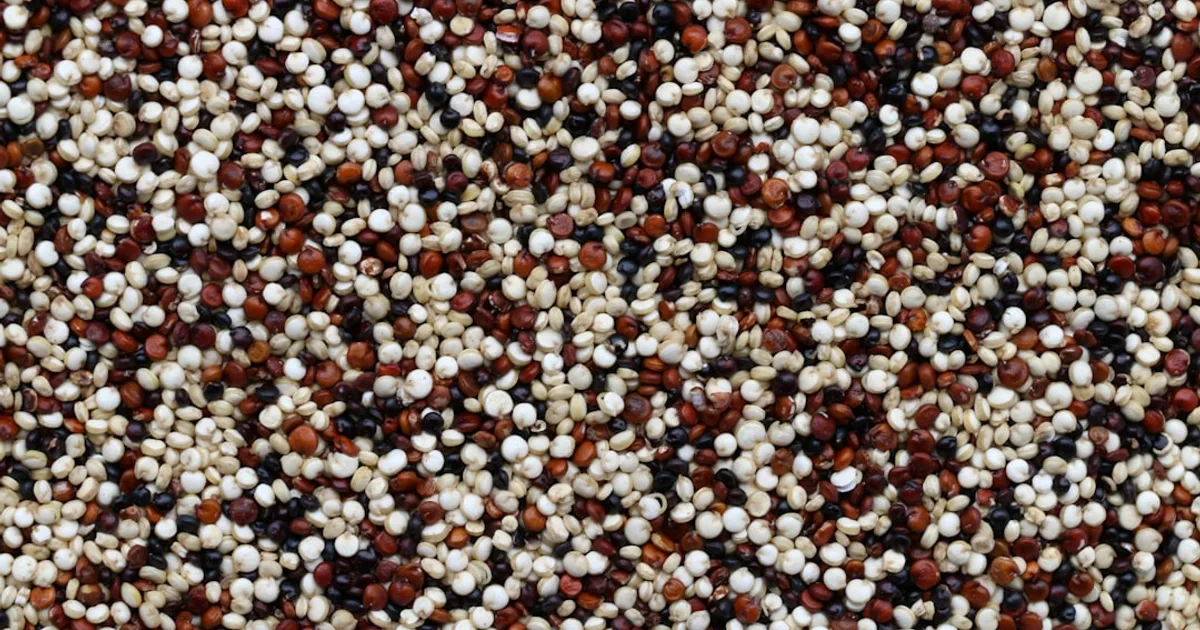
Quinoa is both easier and harder to grow at home than most gardeners expect. Easier: it’s a cool-season plant that tolerates drought, poor soil, and light frost - low-maintenance once established. Harder: the timing window is narrow, the seed heads must be dried and processed before eating, and saponin washing (bitter compound removal) is required for most varieties. At $6-10/lb for organic quinoa in grocery stores, the economics work, but the yield at home garden scale is modest - expect 1-2 lb per 10-foot row.
Climate honesty first: quinoa requires a dry period during seed maturation. The seed heads must dry on the plant before harvest. In the Pacific Northwest, humid Gulf Coast, and most of the eastern US with wet late summers and falls, the seed heads mold on the plant before they dry. This is not a timing problem that careful scheduling solves - it’s a precipitation and humidity problem. Gardens in these regions can grow quinoa successfully only in unusually dry years or with covered growing structures. Where quinoa works without these complications: the high plains of Colorado and New Mexico, California’s Central Valley and coastal regions with summer drought, the Mountain West’s semi-arid zones, and any location with reliably dry weather in the 90-120 days from planting to harvest. Gardeners in the eastern US should treat quinoa as an experiment rather than a staple crop.
The strongest argument for growing it is variety: dozens of quinoa cultivars exist with different flavors, colors, and growing periods that commercial markets never offer. Red, black, purple, and bicolor quinoas that taste different from standard beige grocery store quinoa are available through seed companies.
What it actually is
Chenopodium quinoa is a flowering plant in the amaranth family (Amaranthaceae), native to the Andean highlands of Peru and Bolivia, where it has been cultivated for over 5,000 years (Jacobsen, Advances in Agronomy, 2003). It grows 3-7 feet tall with broad, diamond-shaped leaves and large seed heads that can be white, red, black, purple, or multicolored depending on variety.
Technically quinoa is a pseudocereal - it’s not a grass (true grain family), but the seeds are used like grain and have a similar nutritional profile: 14-18% protein by dry weight, complete amino acid profile including lysine, and substantial iron and magnesium.
Saponins: most quinoa varieties have saponins - bitter, soapy compounds - coating the seeds. Commercial quinoa is mechanically polished and pre-washed to remove saponins before sale. Homegrown quinoa requires washing in a fine-mesh strainer under running water until the rinse runs clear (2-3 minutes of vigorous rubbing and rinsing). Low-saponin varieties (‘Cherry Vanilla’, ‘Brightest Brilliant Rainbow’) skip this step.
Key varieties for home gardens:
| Variety | Color | Days | Notes |
|---|---|---|---|
| Cherry Vanilla | Red-cream bicolor | 90-100 | Low saponin; excellent fresh eating; widely available |
| Brightest Brilliant Rainbow | Red/orange/yellow mixed | 100-120 | Ornamental and edible; low saponin |
| Quinoa de Chile | Cream/beige | 100-110 | Short-day adapted; performs well in South |
| Colorado Rainbow | Mixed colors | 90-100 | Short-season variety; good for zones 4-6 |
| Colorado 407 | Cream-tan | 90-100 | Early-maturing; bred for high-altitude Colorado conditions; good mildew resistance |
| Temuco | Black | 100-120 | Strong flavor; Chilean origin |
The ROI case
Quinoa’s yield at home garden scale is realistic but modest. The space-to-yield ratio is lower than most vegetables, but the per-pound value at retail is high.
| Planting | Row footage | Plants | Yield | Value @$7/lb | Seed cost | Net |
|---|---|---|---|---|---|---|
| Single 10 ft row | 10 ft | 10-15 | 1.0-2.0 lb | $7-14 | $0.75* | $6.25-13.25 |
| Three 10 ft rows | 30 ft | 30-45 | 3.0-6.0 lb | $21-42 | $2.25* | $18.75-39.75 |
*Estimated from $2.99 packet.
The primary value is variety access: growing red, black, or bicolor quinoas that aren’t available commercially, at food quality that exceeds commercial quinoa (which is typically months old at purchase).
Growing requirements
Temperature timing is the critical factor. Quinoa is a cool-season plant that cannot tolerate high heat during flowering or seed fill. Above 95°F (35°C), the pollen becomes non-viable and seed set fails. This creates a specific timing challenge in most of the US: either harvest is complete before mid-summer heat, or planting is delayed until late summer for fall harvest.
- Spring planting (zones 4-7): direct sow 4-6 weeks before last frost (quinoa tolerates light frost to 28°F). Target seed fill and harvest in June-July before peak summer heat.
- Fall planting (zones 6-10): plant in August so maturity falls in October-November when temperatures drop.
- Year-round (zones 9-10 coastal): Mediterranean climates with mild summers allow nearly year-round production.
Direct sowing: 1/4 inch deep, broadcast or in rows thinned to 8-12 inches. Germination at 55-65°F in 3-5 days. Quinoa germinates quickly and establishes fast.
Soil: adaptable. Tolerates poor soils, slightly alkaline pH (up to 8.0), and dry conditions. The plant is native to high-altitude Andean conditions - well-drained, not particularly fertile, cool. It doesn’t need rich garden soil to perform.
Water: light once established. More drought-tolerant than most vegetable crops. Overwatering causes more problems (root rot, lodging) than underwatering after establishment.
Height management: some quinoa varieties reach 6-7 feet. In windy locations, they may lodge (fall over) under the weight of the seed head. Staking or growing in a sheltered location prevents this.
What goes wrong
Heat during flowering is the primary failure point. If quinoa is flowering in July temperatures above 90°F, expect poor seed set and low yield. Time planting to avoid peak summer heat. This means in most of the eastern US, spring quinoa must be planted early enough to flower and set seed by early June before the heat hits - which is tight. Fall planting (August in most zones) targets October flowering when temperatures are cooling, and is often more successful than spring planting in warm-summer climates.
Seed head mold from humidity (the eastern problem in detail): even if you time planting correctly and avoid heat during flowering, the eastern US fall is often wet. Quinoa seed heads take 3-4 weeks of dry-down to reach harvestable moisture after the seeds are physiologically mature. A stretch of rainy fall weather during this period - common in zones 5-7 east of the Rockies - leads to fusarium and other mold species colonizing the seed heads. The seeds look fine from a distance but taste musty when cooked. The only solution is to cut seed heads early and dry them indoors under controlled conditions, or to grow in a region where fall dry-down is reliable.
Aphids cluster heavily on quinoa, particularly on the seed heads. The plant can tolerate moderate aphid pressure; spray with insecticidal soap if population is high enough to damage developing seeds. Native predatory insects (lady beetles, parasitic wasps) colonize quinoa plants and provide some biological control.
Leaf miners leave winding white trails in leaves. Cosmetic; rarely affects seed production. No treatment needed.
Seed head mold in wet conditions during maturation. If your fall weather is wet when the seed heads are drying, fungal issues can develop. Harvest when seeds are firm and seed heads begin to dry, then dry further indoors if necessary.
Identifying harvest timing: quinoa is ready to harvest when the seed heads feel dry and papery, individual seeds are hard when bitten, and leaves on the stem are mostly yellowed. A rough test: strip a small amount of seeds by running your hand up a seed head; if they come off easily and are fully formed, it’s harvest time.
Harvest and use
Cut the seed heads when mature, leaving 6-12 inches of stem for handling. Spread on a tarp or screen in a warm, dry, ventilated location to finish drying for 1-2 weeks. The seeds should be completely dry before threshing.
Threshing small batches: several methods work at home scale. The simplest is rubbing dried seed heads between your palms over a bucket - the seeds fall free and the papery chaff stays in your hands. A second method: place dried seed heads in a pillowcase and run through a front-loading washing machine on the delicate spin cycle (no water). The mechanical action strips seeds from heads efficiently. Shake seeds out of the pillowcase bottom when done. A third method: lay seed heads on a tarp and walk on them gently, then gather the tarp corners to pile everything and shake/roll seeds to the center. Each method works; the pillowcase is the most efficient for batches over 2-3 lbs.
Winnow by pouring seeds from one container to another in a breeze - even a fan set on low - allowing lighter chaff to blow away while seeds drop into the lower container. Repeat until seeds are mostly clean.
Washing (for most varieties): rinse thoroughly in a fine-mesh strainer under running water, rubbing the seeds vigorously, until the rinse water runs clear. Drain and spread to dry before cooking or storing.
Cooking: 1 cup quinoa + 2 cups water, bring to boil, reduce heat, simmer 15 minutes covered, rest 5 minutes off heat, fluff with fork. The seeds should be cooked through with the characteristic white spiral germ visible.
Core preparations:
-
Quinoa as a grain base (bowl, salad): the dominant commercial use - cooked quinoa as the base for grain bowls, protein salads, and sides in place of rice. Homegrown red or black quinoa has more complex flavor than commercial beige.
-
Quinoa pilaf: toast dry quinoa in butter 2-3 minutes, add broth and vegetables, cook covered. The nuttier flavor of toasted quinoa is excellent.
-
Quinoa porridge (atole de quinua): traditional Andean breakfast. Simmer ground or whole quinoa in milk or water with cinnamon, sugar, and vanilla. Dense and nutritious.
Storage: cleaned, dry quinoa stores at room temperature for 2-3 years in airtight containers. Vacuum-sealed jars or mylar bags with oxygen absorbers extend this to 5+ years. Store away from light, heat, and moisture. Homegrown quinoa stored this way constitutes a genuine grain reserve - 5 lbs of properly stored quinoa represents dozens of meals. At $7/lb retail equivalent, that’s real pantry value from one garden season.
Related reading: Amaranth - fellow Andean pseudocereal with similar growing culture and grain processing requirements; Corn - grain crop companion; Harvest and Storage Planning - matching grain production to long-term pantry capacity
Growing Quinoa? Track your harvest value and break-even date in the Garden ROI app.
Get the App