
Saffron
Crocus sativus
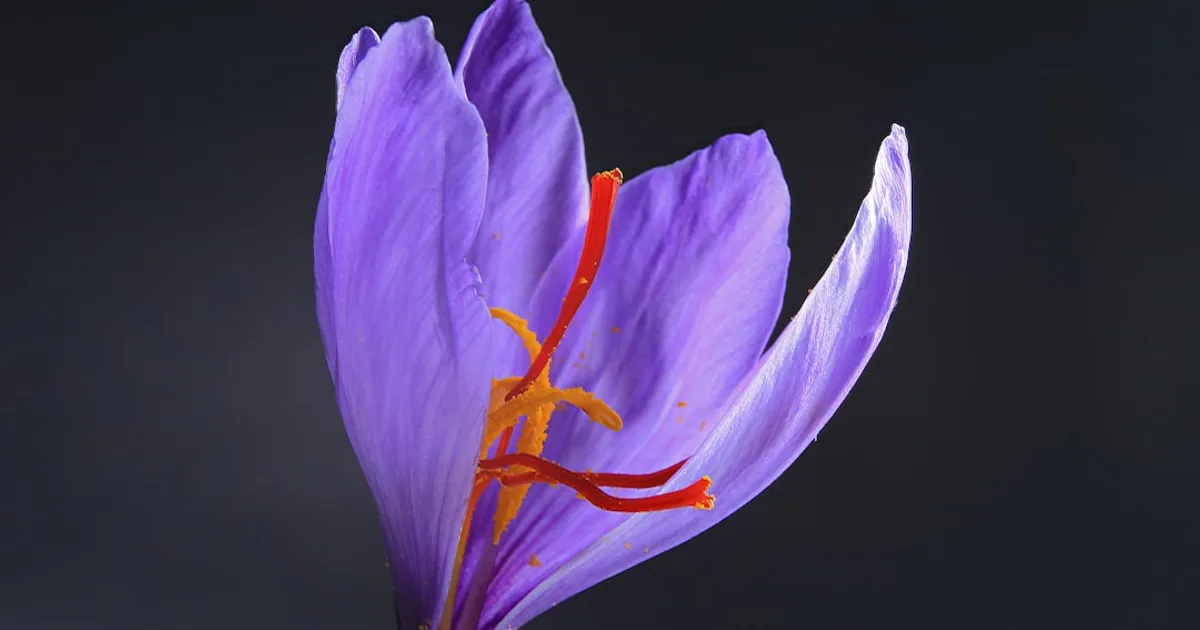
Saffron is the world’s most expensive spice by weight - $5,000 to $10,000 per pound dried, depending on grade and origin. That number sounds like an abstraction until you do the backyard math: 100 saffron crocus corms planted in a 4-square-foot patch produce roughly 0.5 grams of dried threads in the first fall. That’s $15-20 worth of grocery-store saffron from a $25 investment. Not spectacular year one. But the corms multiply underground. By year three, those 100 corms become 400-500. By year five you have more saffron than you can use and enough extra corms to start a second bed or give away as gifts.
The harvest is also absurd to describe: you pick the flowers in the morning when they open, pull out the three red stigmas from each one with tweezers or fingernails, and dry them. That’s it. One person can harvest 100 flowers in 20 minutes. The bottleneck isn’t labor or skill - it’s having enough corms.
What it actually is
Crocus sativus is a sterile triploid species that cannot reproduce from seed - it exists entirely through human cultivation of its corms. It’s in the iris family (Iridaceae), native to the eastern Mediterranean and Central Asia, and has been cultivated for at least 3,500 years. The spice comes specifically from the three red stigmas of the female flower; the yellow stamens and purple petals are discarded.
The plant blooms in fall (October-November in zones 6-8), which is unusual for a garden crop and means saffron occupies a planting window that nothing else uses. The foliage emerges with or just after the flowers, grows through winter, and dies back in late spring. The corm spends summer dormant underground.
Saffron corms are not the same as regular crocus corms sold at garden centers in fall - the spring-blooming Dutch crocuses (C. vernus, C. tommasinianus) look similar but don’t produce saffron. C. sativus requires a hot, dry summer dormancy for proper bloom; in humid climates you may need to dig and store the corms over summer.
Color and grade: commercial saffron is graded by ISO standards based on crocin (color) content. Home-grown saffron from fresh-picked threads is typically higher quality than supermarket saffron, which can be old, adulterated, or a different species entirely (fake “saffron” made from safflower or dyed fibers is common in cheap products).
The ROI case
The year-one math is modest. The multi-year math is where saffron earns its place.
| Year | Corms | Flowers | Dried saffron | Value @$300/oz | Corm cost | Cumulative net |
|---|---|---|---|---|---|---|
| 1 | 100 | 80-100 | ~0.5g | $5.25 | -$24.99 | -$19.74 |
| 2 | 200-300 | 180-250 | ~1.2g | $12.60 | - | -$7.14 |
| 3 | 400-600 | 350-500 | ~2.5g | $26.25 | - | $19.11 |
| 5 | 800-1,200 | 700-1,000 | ~5g | $52.50 | - | $71.61 |
| 7 | 1,500-2,000+ | 1,200-1,800 | ~9g | $94.50 | - | $166.11 |
$300/oz ($10.50/gram) is a conservative specialty retail price. Premium saffron runs $15-20/gram. Supermarket price is lower but the comparison is apples to oranges for quality.
The corm multiplication rate - roughly 2-3x per year under good conditions - is the compounding mechanism. The bed that costs $25 to plant in year one doesn’t need any additional investment; it just gets larger.
Selling saffron: fresh-dried home-grown saffron commands premium prices at farmers markets and through direct sales. Buyers who’ve used good saffron don’t go back to grocery store product.
Growing requirements
Corm planting: plant in fall, 2-4 inches deep, 3-4 inches apart, with the pointed end up. In zones 6-9, plant September through October - they need a cold period to initiate bloom. In zone 5, plant as early as late August. Corms planted too late won’t bloom that year but will establish and bloom the following fall.
Summer dormancy: this is the requirement that eliminates saffron from wet climates without management. C. sativus corms evolved in dry-summer Mediterranean climates. Wet summers cause corm rot. In the Pacific Northwest, Gulf Coast, or Southeast with summer humidity, dig corms in late June after foliage dies, store them dry and cool (60-70°F) through summer, and replant in fall. In dry-summer climates (California, the Southwest, much of the interior West), leave them in the ground.
Soil: excellent drainage above all else. Sandy loam or raised beds. Heavy clay prevents the corm from drying adequately. Amend with coarse sand or grow in raised beds. Slightly alkaline pH (6.8-7.5) is ideal.
Dividing corms: after foliage dies in late spring, you can dig the corms, separate the offsets (smaller daughter corms that develop around the mother), and replant at wider spacing to accelerate bed expansion. This is optional - corms multiply fine if left in place - but dividing accelerates the doubling rate.
Zone considerations: C. sativus is reliably perennial in zones 6-9. Zone 5 growers can succeed with good drainage and mulch over winter. Zone 10+ is difficult because insufficient winter cold disrupts dormancy.
What goes wrong
Corm rot: the primary failure mode. Almost always caused by wet summer conditions or poor drainage. The corm sitting in moist soil after foliage dies in May gets infected by Fusarium or Botrytis. Prevention: excellent drainage at planting; reduce or eliminate irrigation after foliage dies; in humid climates, dig and store summer dormancy.
No bloom in year one: happens when corms are planted too late, are undersized (below 8-9cm circumference), or were stored poorly before you received them. Check corm size before purchasing - only corms 8cm+ in circumference bloom reliably in the first year. Smaller corms will bloom in year two.
Rodent predation: squirrels, voles, and chipmunks eat crocus corms. Plant in wire mesh cages (hardware cloth) if rodent pressure is high. This is the same problem as tulip and crocus plantings generally.
Misidentification at harvest: saffron crocuses bloom fall, not spring. If your “saffron” crocuses are blooming in March, you have the wrong plant. The flowers of C. sativus are pale lilac to purple, not yellow or white.
Harvest and use
Harvest the morning flowers open - saffron degrades quickly if left in the open flower. Pick the entire flower or just the three red stigmas. A small bowl collects the stigmas as you pinch them out. Don’t include the yellow stamens or petals - they dilute quality without adding flavor.
Dry threads on a paper towel or mesh screen in a warm location out of direct sun for 24-48 hours until completely dry and brittle. Store in a sealed glass jar away from light. Properly dried and stored saffron keeps 2-3 years with most flavor intact.
Blooming in a single bed typically lasts 1-2 weeks. Harvest daily during that window.
Quantity guidance: a typical recipe calls for a “pinch” - roughly 0.1-0.2 grams, or 15-25 threads. At 0.5 grams from a first-year bed of 100 corms, you have 2-5 uses. At 5 grams from year five, you have 25-50 uses and enough to share.
Core preparations:
-
Risotto Milanese: the Italian preparation that defines saffron in European cooking. Saffron threads bloomed in a few tablespoons of warm stock, then stirred into risotto partway through cooking. The threads give the dish its characteristic gold color and floral, slightly metallic flavor. 0.25g per 4 servings.
-
Persian rice with tahdig: saffron dissolved in hot water and drizzled over rice before steaming produces the characteristic gold crust at the bottom (tahdig) and vivid gold streaks through the white rice. Persian cooking uses saffron in quantities that would horrify European chefs - and the flavor payoff is real.
-
Bouillabaisse and saffron fish stews: the traditional Provençal fish stew uses saffron as the defining flavor element, along with fennel and orange peel. The seafood broth blooms with gold color. Saffron’s affinity for seafood is documented across Mediterranean cuisines.
-
Saffron milk / infusion: a pinch of threads steeped in hot milk for 10-15 minutes produces a golden, fragrant drink used in South Asian cooking as a flavoring base for desserts, sweets, and rice dishes.
-
Paella: saffron is the spice that turns paella from flavored rice into something specific. The real thing - not turmeric-dyed approximations - has a flavor that persists through 40 minutes of cooking.
Related reading: Lavender - fellow Mediterranean perennial with high per-pound value; Thyme - companion and fellow drought-tolerant herb
Growing Saffron? Track your harvest value and break-even date in the Garden ROI app.
Get the App