
Thyme
Thymus vulgaris
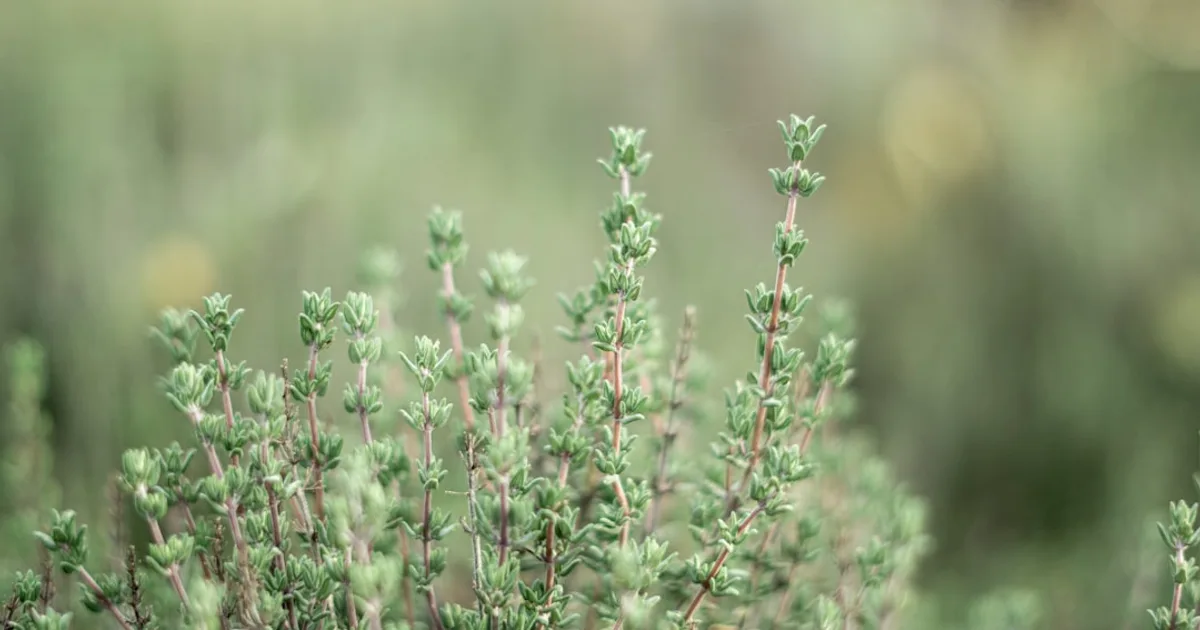
Thyme (Thymus vulgaris) is slow to establish from seed and worth every day of it. A single plant, once rooted, can survive 3-5 years with minimal care, coming back harder each spring in zones 5 through 9. The 90-180 day days-to-maturity range reflects this slow first year - after that, you have a woody, low-maintenance perennial that provides fresh and dried herb from late spring through early winter. The ROI math is simple: one $2.99 seed packet funds a multi-year perennial at roughly $0.30-$0.50 per plant.
French vs. common thyme: a real distinction
The species Thymus vulgaris includes two groups that matter for cooking:
French thyme (T. vulgaris ‘French’) has narrow gray-green leaves, upright growth to 12-15 inches, and high thymol and carvacrol content - the compounds responsible for the sharp, warm flavor in Mediterranean cooking. This is the culinary thyme that belongs in braises, roasted chicken, and stocks. It’s the type preferred by chefs and most extension horticultural references.
Common or English thyme (T. vulgaris) has slightly broader leaves, similar growth habit, and comparable but often milder flavor depending on growing conditions and soil. Many commercial seed packets labeled simply “thyme” are common thyme - fine for most uses.
Beyond these, the Thymus genus includes creeping thyme (T. serpyllum, mostly ornamental and edible but lower essential oil content), lemon thyme (T. citriodorus, used in applications where citrus note is appropriate), and others. For culinary production, T. vulgaris French is the standard.
Verify what you’re buying: crush a leaf and smell it. French thyme should smell piney, sharp, and warm. If it smells mild or almost grassy, look elsewhere.
| Cultivar | Primary compounds | Flavor profile | Hardiness zone | Best culinary use |
|---|---|---|---|---|
| French thyme (T. vulgaris ‘French’) | Thymol 40-50%, carvacrol 5-15% | Sharp, piney, warm, medicinal | Zone 5 | Braises, roasted meats, stocks, bouquet garni |
| Common/English thyme (T. vulgaris) | Thymol 30-45%, carvacrol variable | Warm, slightly milder than French | Zone 5 | General culinary, all applications |
| Lemon thyme (T. citriodorus) | Geraniol dominant, thymol low | Citrusy, light herbal | Zone 6 | Fish, chicken, salad dressings, compound butter |
| Creeping thyme (T. serpyllum) | Thymol variable, generally low | Mild, grassy-herbal | Zone 4 | Ground cover, light garnish use, ornamental primary |
| ’Doone Valley’ (variegated lemon thyme) | Geraniol, thymol low | Lemon thyme flavor | Zone 6-7 | Decorative plus light culinary use |
The thymol percentage is the clearest predictor of culinary intensity. French and common thyme at 30-50% thymol are the workhorses - what you want when the recipe says “thyme.” Lemon thyme at low thymol and high geraniol is a different herb, not a substitute. Use it when the citrus element is wanted, not when you just need thyme. Creeping thyme as a ground cover between pavers is an elegant use of the genus, but don’t expect it to flavor your roast chicken.
The ROI case
Fresh thyme at retail runs $3.00-$5.00 per small package (typically 0.5-1 oz), putting the retail price at $8.00-$16.00/lb based on USDA AMS fresh herb retail data. Dried thyme at specialty retailers runs $4.00-$8.00/oz - roughly $65.00-$128.00/lb. Your 0.25 lb fresh yield per season represents $3.00-$4.00 in grocery value.
The economic case improves sharply across years. Year one: $2.99 seed cost against a modest first-year harvest. Years two through five: $0 input, increasingly productive plant, no replanting. A three-plant thyme patch - about 2 square feet - handles most household needs indefinitely. If you use dried thyme regularly, a single large harvest and drying run in year two can yield enough to last 12 months.
5-year value accumulation for a 3-plant thyme patch:
| Year | Fresh yield (3 plants) | Value at $12/lb | Free divisions available | Cumulative input |
|---|---|---|---|---|
| Year 1 | ~2 oz total (0.12 lb) | ~$1.44 | 0 | $2.99 |
| Year 2 | ~5 oz total (0.31 lb) | ~$3.72 | 2-3 new plants | $2.99 |
| Year 3 | ~10 oz total (0.62 lb) | ~$7.44 | 2-3 more if desired | $2.99 |
| Year 4 | ~12 oz total (0.75 lb) | ~$9.00 | divide or maintain | $2.99 |
| Year 5 | ~12 oz total (0.75 lb) | ~$9.00 | divide or maintain | $2.99 |
Cumulative 5-year value: approximately $30-32. Total seed investment: $2.99. The plants become more productive through years 2-3, then plateau at a consistent yield as the woody structure stabilizes. Thyme can be rejuvenated at year 4-5 by division - splitting the clump, replanting half, and starting fresh - which resets the plant’s vigor and begins another 3-5 year productive cycle.
Growing requirements
Thyme germinates in 14-28 days at 65-70°F. The seeds are small - sow on the surface and barely cover, or press into moist seed-starting mix. Germination is often erratic; don’t be surprised if plants emerge over two to three weeks. Thin to 12 inches apart once seedlings are established.
Soil pH of 6.0-8.0. Native to thin Mediterranean soils, thyme strongly dislikes wet, heavy, or highly fertile soil. High moisture and high nitrogen drive soft, weak growth with poor flavor - the same dynamics as oregano. Raised beds in well-draining soil, or sloped sites with good drainage, are optimal. Sandy or rocky loam, amended with gravel if necessary, produces the most aromatic plants.
Full sun is non-negotiable for good flavor. Six to eight hours minimum. In partial shade, plants grow slowly, lack vigor, and have reduced thymol concentration.
Water sparingly. Once established (about 6-8 weeks from transplant), thyme tolerates extended drought without stress. In most climates, summer rainfall is sufficient and supplemental irrigation isn’t needed. The main risk is overwatering - if you water your vegetable beds on a timer, keep thyme in a separate area where it doesn’t receive the same irrigation schedule.
Cut back to 2-3 inches above the base in early spring before new growth begins. This prevents the center from becoming an unproductive tangle of old wood. Don’t cut into bare woody stems with no leaf nodes - new growth emerges only from stems that still carry foliage or buds.
What goes wrong
Root rot is the primary killer, almost always from overwatering or poorly draining soil. Established thyme is tough; the typical dead plant post-winter died from drainage problems during wet fall weather, not from cold. Amend soil aggressively before planting if your bed retains moisture.
Spider mites (Tetranychus urticae) appear in hot, dry conditions - an almost opposite situation from root rot, which tells you thyme fails at both extremes. Look for fine webbing and stippling on leaves. Overhead irrigation and neem oil applications manage populations. Mite pressure is most common in years where thyme isn’t getting supplemental water during a heat wave.
Gray mold (Botrytis cinerea) affects dense, poorly ventilated clumps in wet seasons. Thin the center of old plants and space transplants adequately - 12 inches between plants minimum.
Thyme-specific tip: In zones 5-6, plants occasionally die to the crown over winter. Don’t pull them immediately in spring. Wait until late April or early May - plants you’ve written off often push new growth from the base after the soil warms.
Culinary applications
Thyme is heat-stable. The thymol and carvacrol in the leaves survive long cooking better than the volatile compounds in more delicate herbs like basil or parsley. That’s why it belongs in applications that involve sustained heat: braises, stocks, roasted vegetables, grilled meats. Adding it early is correct.
Timing in cooking: Add fresh or dried thyme at the start of braises and stews - the flavor integrates rather than sitting on top. In a 2-hour lamb braise, thyme added at the beginning becomes part of the sauce background; thyme added in the last 10 minutes tastes separate and herby. For pizza and flatbreads, add to the sauce before baking. For quick-cooked applications (sautéed mushrooms, scrambled eggs), add in the last minute or as a finish.
Fresh vs dried ratio: 1 tablespoon fresh thyme leaves = 3/4 teaspoon dried. (This is slightly less than the 1:3 ratio often cited because thyme dries relatively well and retains oils effectively.) For dishes where you’re stripping leaves from the woody stem, bunch the stem in your fingers and pull backward against the leaf direction - the leaves strip cleanly in one motion.
Bouquet garni: the traditional French herb bundle used in stocks and braises. A basic version: 3-4 sprigs fresh thyme, 2-3 bay leaves, a few parsley stems (not leaves). Tie in a piece of cheesecloth or bundle with kitchen twine. Remove before serving. This is the application where growing your own thyme pays the most obvious dividend - fresh thyme in a bouquet garni vs dried thyme bags has a measurable flavor difference.
Lemon thyme applications: compound butter for fish (1 tbsp lemon thyme leaves + 4 tbsp softened butter + 1 tsp lemon zest + salt); herb crust for roast chicken with breadcrumbs, lemon zest, and olive oil; fresh into vinaigrettes where you want herbal and citrus together. Don’t substitute lemon thyme for common thyme in a braise - the geraniol changes the flavor direction.
Harvest and storage
Harvest stem tips throughout the growing season, cutting back to just above a leaf node. Don’t harvest more than one-third of the plant at once. The most aromatic harvest is just before bloom, when thymol concentration is highest (Sotiropoulou & Lagouri, ISHS Acta Horticulturae, 1996).
For drying, cut long stems, bundle loosely, and hang in a well-ventilated, dark, dry space. Thyme dries better than most herbs - the small leaves release moisture quickly and the essential oils are relatively stable at room temperature. Dried thyme is shelf-stable for 2-3 years and retains useful flavor, which is not true for all herbs.
Strip dried leaves from woody stems before storing. The woody stems are useful in stocks and braises but aren’t what you want in a spice jar.
Related crops: Tomato, Oregano, Marjoram, Winter Savory, Lovage
Related reading: Companion Planting Basics - what the evidence actually says about common pairings; Perennial Garden Economy - perennial herbs like thyme that establish once and produce for 5-10 years without replanting; Herb Garden ROI - the 8 highest-value culinary herbs compared
Frequently Asked Questions
Is thyme a perennial?
French and common thyme (Thymus vulgaris) are perennials in zones 5 to 9, returning each spring from woody stems. In zone 4 and colder, treat as an annual or overwinter in a container. A well-established plant can live 3 to 5 years with minimal care.
When should I harvest thyme?
Harvest in the morning after dew dries. Cut stem tips, taking no more than one-third of the plant at a time. Flavor is most concentrated just before the plant flowers - this is the best time to harvest for drying or preserving.
What is the difference between fresh and dried thyme?
Dried thyme is roughly 3x more concentrated than fresh because water weight is removed. Use 1 tsp dried as the equivalent of 1 tbsp fresh. One plant yields approximately 0.25 lb fresh annually, drying to about 0.08 lb - retail value of $1 to $2 at dried herb prices.
Growing Thyme? Track your harvest value and break-even date in the Garden ROI app.
Get the App