
Turmeric
Curcuma longa
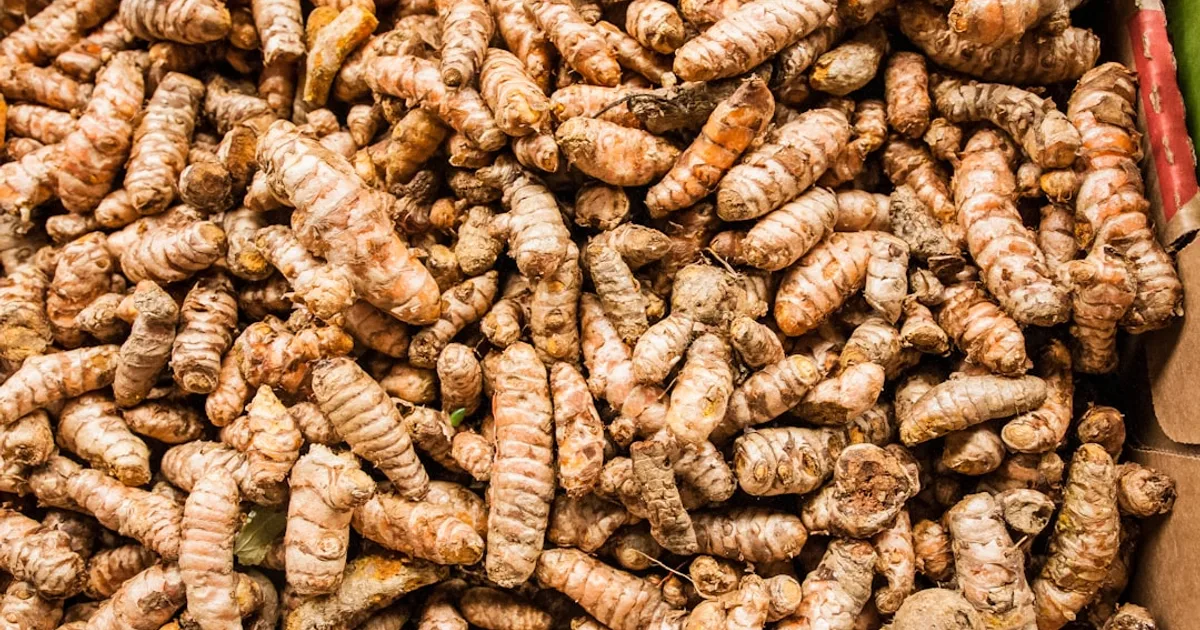
Fresh turmeric root is a specialty-market item in most of the country. Natural food stores and Asian markets sell it at $8-14/lb when they have it at all, and availability is inconsistent. Grocery stores that carry it typically have dried slices or the ground powder, not the fresh root. Growing your own is often the only reliable way to have it, and the growing process is nearly identical to ginger - same family (Zingiberaceae), same rhizome structure, same cultural requirements.
The flavor difference between fresh turmeric and dried ground turmeric is substantial. Fresh root is earthy, slightly peppery, and mildly bitter with a floral undertone. Dried and ground loses the brightness and concentrates the bitterness. If your experience with turmeric is limited to the dried version in a jar, the fresh root is a revelation.
What it actually is
Curcuma longa is a tropical monocot native to South Asia, cultivated continuously for at least 4,000 years for both culinary and medicinal use. Like ginger, it produces underground rhizomes on a plant that grows 3-4 feet tall with large, broad leaves. Unlike ginger’s pale yellow flesh, turmeric’s interior is intensely orange - the color of ripe peaches - due to curcumin and related curcuminoid pigments.
Curcumin is the compound responsible for turmeric’s vivid yellow-orange color and is the basis for the health claims surrounding the spice. Curcumin content in dried turmeric is typically 2-9% by weight, with significant variation between cultivars and growing conditions (USDA ARS phytochemical database). Fresh root contains the same compounds at lower concentration because of water content - roughly 0.5-1% curcumin in fresh root by weight.
The staining potential is real. Fresh turmeric juice stains skin, clothing, and cutting boards intensely. Work with it on a surface you don’t mind coloring, wear gloves if you’re processing large quantities, and expect orange-tinted fingertips.
| Characteristic | Turmeric (Curcuma longa) | Ginger (Zingiber officinale) |
|---|---|---|
| Flesh color | Bright orange-yellow | Pale yellow |
| Primary compounds | Curcuminoids (curcumin, bisdemethoxycurcumin) | Gingerols, shogaols, zingiberene |
| Flavor profile | Earthy, bitter, slightly peppery, floral | Warm, spicy, bright, citrusy |
| Heat level | None | Moderate to pronounced |
| Staining potential | High (curcumin is a dye) | Low |
| Growth habit | Same as ginger | Same as turmeric |
| Multiplication rate | 5-7x per season | 5-10x per season |
The ROI case
Fresh turmeric’s retail price premium over ginger is the financial argument for growing it. At $8-12/lb at natural food stores versus $4-8/lb for ginger, the per-pound return is higher from the same growing effort.
The multiplication math is similar to ginger: plant 0.25 lb of seed rhizomes, expect 1.0-1.75 lb of new rhizome in a good season (5-7x multiplication). In warm climates or containers, the return can be higher.
| Scenario | Planting weight | Multiplication | Harvest | Retail value (@ $10/lb avg) | Seed cost | Net |
|---|---|---|---|---|---|---|
| Zone 9+ in-ground | 0.25 lb | 6-8x | 1.5-2.0 lb | $15.00-20.00 | $4.99 (yr 1 only) | $10.01-15.01 (yr 1), $15-20 (yr 2+) |
| Zone 6-8 container | 0.25 lb | 4-6x | 1.0-1.5 lb | $10.00-15.00 | $4.99 | $5.01-10.01 |
| Zone 5 short-season | 0.25 lb | 3-4x | 0.75-1.0 lb | $7.50-10.00 | $4.99 | $2.51-5.01 |
After year one, replant a portion of your harvest as the following year’s starting material. The seed cost becomes zero in year two, and the net value of a zone 6-8 container planting climbs to $10-15 from a $5 investment - a 2-3x return on planting stock alone.
One 10-gallon container with 2-3 turmeric starts yields enough fresh root for a household’s annual use, plus surplus for gifting or drying.
The grocery-store starter math: a 0.1-0.15 lb piece of store turmeric - about $0.80-1.50 at $8-10/lb for organic - can produce 0.75-1.5 lb of fresh rhizome by fall. At $10/lb average fresh specialty retail, that’s $7.50-15.00 from a $1 investment. Organic grocery turmeric is more reliable as a starter than conventional for the same reasons as ginger: conventional root is often treated to suppress sprouting. If organic isn’t available locally, seed turmeric from tropical plant suppliers ($4-8 for 0.5 lb) is the more reliable option.
Fresh vs. dried value comparison: fresh turmeric root sells for $8-14/lb. Dried, ground turmeric at specialty and natural food retailers runs $12-20 per ounce ($192-320/lb equivalent). Processing your own fresh harvest into dried powder at home captures a fraction of that value differential - home-ground dried turmeric won’t command the same premium as a branded retail product, but the flavor and color quality of freshly processed root is better than supermarket powder that may be 18-24 months old.
Growing requirements
Turmeric’s cultural requirements are nearly identical to ginger with a few differences worth noting.
Temperature: Turmeric is slightly more cold-sensitive than ginger - emergence is slow if soil is below 65°F. The ideal soil temperature for planting is 70°F+. In zone 7, this means late May or early June in-ground, or April for containers that can be kept in a warm location. The plant itself tolerates air temperatures down to 50°F at night once established, but growth slows.
Light: Partial shade is ideal - 4-6 hours of direct morning sun with filtered or indirect afternoon light. In zones 6-7 where summer heat is moderate, full sun is acceptable. In zones 8-9 with intense afternoon heat, afternoon shade prevents leaf scorch.
Soil: Same as ginger: loose, well-draining, organically rich, pH 5.5-6.5. Raised beds with heavy compost amendment are ideal. Waterlogged soil causes rhizome rot within days; drainage is the non-negotiable requirement.
Feeding: Heavy feeders like ginger. Apply balanced fertilizer every 4-6 weeks, or side-dress with compost monthly. Potassium is particularly important for rhizome development - a balanced fertilizer with adequate potassium (the third number on the label) supports bulking.
Season length: Turmeric needs 8-10 months from planting to full harvest. For zones 5-7, start rhizomes indoors 8 weeks before last frost in 4-inch or larger pots, or in a greenhouse in February-March. The longer head start you can give them indoors, the more season length you create.
Starting from rhizomes
Source certified seed turmeric from mail-order herb and tropical plant suppliers. Grocery-store turmeric root is sometimes viable but may be treated to suppress sprouting, and variety is unknown. For reliably productive root, start with known seed stock.
Break rhizomes into pieces with 2-3 buds each. Let cut surfaces dry 24-48 hours. Plant 2 inches deep, buds up, in warm soil or potting mix. Keep consistently moist but not wet until sprouts emerge (2-4 weeks). Once established, the plants are vigorous.
Pre-sprouting indoors on damp paper towel at 75-80°F before transplanting to containers or beds saves 2-3 weeks of establishment time - useful in shorter-season climates.
What goes wrong
Failure to emerge from cold planting is turmeric’s most common failure mode in zones 5-7. The rhizome sits in cold, damp soil for weeks, then rots before the soil warms enough to trigger sprouting. Solutions: start in containers you can keep indoors until soil is consistently warm, or pre-sprout on paper towel before planting.
Leaf scorch from afternoon sun in hot climates looks like bleached, crispy leaf tips and margins. Provide afternoon shade or move containers to a protected location.
Root rot (Pythium, Fusarium) follows the same pattern as ginger - overwatering in cool conditions, or planting in poorly drained soil. Well-draining soil and restraint with irrigation until the plant is actively growing are the preventions.
Short season in zone 5-6: Turmeric planted in late May may only have 4-5 months before frost. The rhizome will be smaller than a full-season plant, but it’s still usable. You can extend the season by bringing containers in before first frost and letting the plant continue growing in a warm indoor location through October-November.
Overwintering dormant rhizomes: when the tops die back and the season ends, dig the rhizomes, brush off loose soil, and let them air-dry for 1-2 days. Store dormant rhizomes in a paper bag (not plastic - they need airflow) at 55-65°F. A cool basement shelf, the interior of a root cellar, or a cabinet near an exterior wall in an unheated room all work. Check monthly and discard any that show soft spots or mold. Stored correctly, turmeric rhizomes hold well for 4-5 months and restart readily in spring. Alternatively, leave rhizomes in their container with watering reduced to near-zero and store the whole pot in a frost-free space above 45°F - same as the ginger container overwintering method.
Rhizome fly (Mimegralla coeruleifrons) and nematodes (Pratylenchus, Meloidogyne) are commercial production concerns in the tropics; rarely significant in home gardens.
Harvest and use
Turmeric tops begin to yellow and die back in fall as day length shortens and temperatures drop. This is the signal for harvest - don’t rush it, the rhizomes are still bulking until the tops die. After the tops are fully yellow, dig with a garden fork.
Fresh turmeric should be handled carefully - the orange juice stains nearly everything it contacts. Use gloves for large processing sessions. Rinse well after digging and let surface-dry before storing.
Storage: Fresh turmeric root keeps 2-3 weeks at room temperature, 2 months refrigerated wrapped in paper towels inside a container. For longer storage: peel and freeze whole (grate from frozen), slice thinly and dry at 95°F for 8-10 hours then grind to powder, or ferment in brine (black turmeric paste, used in some South Asian preparations).
Drying your own: the traditional commercial process for dried turmeric involves boiling or steaming the fresh rhizomes before drying - this gelatinizes the starch, speeds drying, reduces bitterness, and helps produce a more evenly colored powder. For home processing: wash and boil whole rhizomes for 30-45 minutes until a knife inserts easily, then slice thinly (1/8 inch or less). Dry slices at 120-140°F in a food dehydrator for 4-6 hours until completely brittle (they should snap cleanly, not bend). Air-drying without a dehydrator works but takes 2-3 days in good airflow and requires protection from moisture. Grind dried slices in a dedicated spice grinder - turmeric stains plastic grinder bowls permanently. The resulting powder has a noticeably more vivid orange color and sharper aroma than commercial ground turmeric, which is often 18-24 months from harvest by the time it reaches retail.
In the kitchen: fresh turmeric is used grated or minced. A 1-inch piece grated fresh into a dish delivers more intensity than a teaspoon of ground dried. Core applications include golden milk (turmeric-ginger-milk-honey drink, served warm), fresh turmeric paste for curries and rice dishes, turmeric-ginger tea, and pickling (the same young-harvest pickling technique used for ginger works well). The fresh root is sharper and more complex than dried; reduce quantity from dried recipes by about 50% when substituting fresh.
Turmeric is a natural dye - the same curcumin that colors food colors fabric. A strong tea of fresh turmeric root dyes cotton, wool, and silk in the yellow-orange range. This is a legitimate secondary use for surplus production.
Related reading: Ginger - same cultural requirements, different culinary profile; Herb Preservation Guide - drying and storing rhizome crops
Growing Turmeric? Track your harvest value and break-even date in the Garden ROI app.
Get the App