
Lemongrass
Cymbopogon citratus
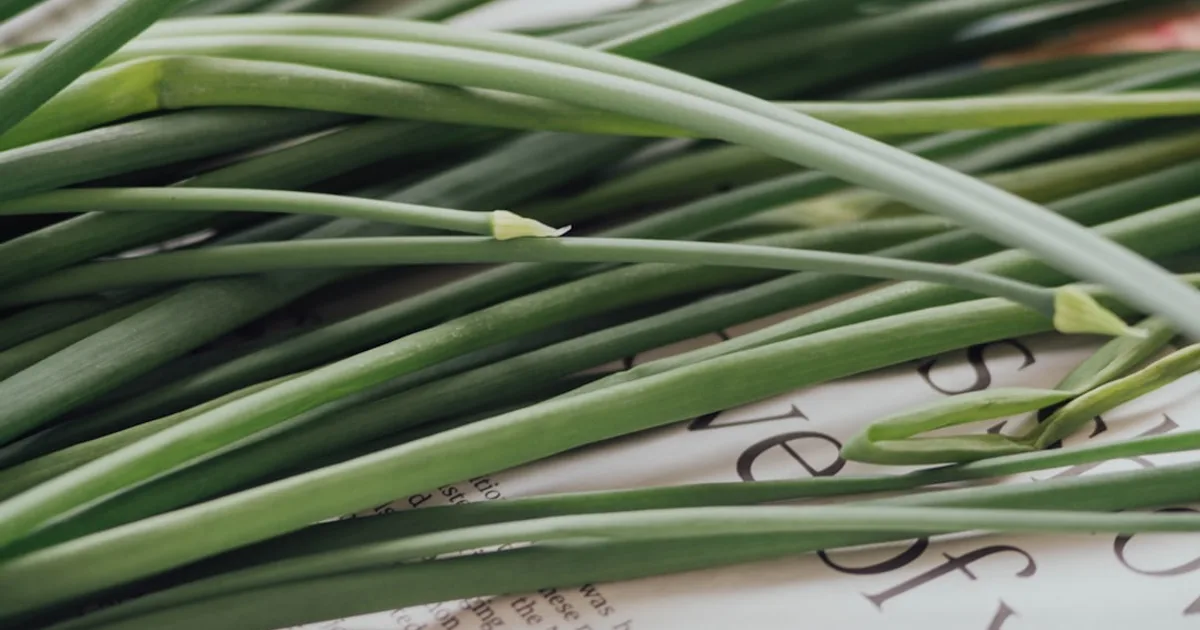
Lemongrass stalks at a specialty grocery store run $2-4 each for a few inches of trimmed stalk - effectively $25-40 per pound equivalent when you do the math. Grow your own and you’re cutting stalks that are 18-24 inches long and a full inch in diameter at the base, which is more material per stalk than you’ll ever find at retail (USDA AMS Specialty Crop Market News, 2023). The economic case is straightforward. The practical case - that it grows as a massive, self-dividing tropical grass that gives you free transplants every season - makes it better.
What it actually is
Lemongrass is a tall perennial tropical grass in the family Poaceae, native to South Asia. Two species are sold under the common name “lemongrass,” and the difference matters for culinary use.
Cymbopogon citratus is West Indian lemongrass - the one you want for cooking. Cymbopogon flexuosus is East Indian lemongrass, used primarily for industrial essential oil extraction. The distinction comes down to chemistry. C. citratus has a higher concentration of citral - a mixture of two aldehyde isomers, geranial and neral - and lower myrcene than C. flexuosus. Citral is the compound responsible for the clean lemon-citrus scent and flavor. C. flexuosus is more pungent and carries a slightly different aromatic profile, which is why the fragrance industry favors it for yield but cooks don’t (Blanco et al., Journal of Agricultural and Food Chemistry, 2009).
Many nurseries label both species simply as “lemongrass.” Ask for C. citratus by species name. If the staff can’t confirm it, smell the plant: C. citratus has a clean, bright lemon note. C. flexuosus is harsher, slightly turpentine-adjacent. Trust your nose over the label.
The edible portion is the swollen, pale lower stalk - specifically the inner 2-3 layers once you peel back the fibrous outer leaves. The upper green leaves are not eaten directly, but they’re useful added whole to soups, curries, and rice during cooking for flavor and removed before serving. The stalks are essential in Thai curry pastes (minced finely), Southeast Asian broths (bruised and simmered whole), and marinades.
In USDA zone 9 and above, lemongrass is a perennial and clumps expand year over year. In zones 7-8, it may overwinter outdoors with heavy mulching. In zones 4-6, treat it as a large annual or dig a division in fall, pot it, and overwinter it indoors in a sunny window - it will re-establish quickly when returned to the garden in spring.
One other thing to know: lemongrass roots produce allelopathic compounds that suppress germination in some neighboring plants. This matters for companion planting. It works well alongside established transplants - basil, mint - but don’t sow seeds directly next to an established lemongrass clump and expect good germination rates.
The ROI case
A pot of lemongrass starts costs $3.99-5.99. From a single clump planted in spring, you can harvest 8-15 stalks by midsummer. Each stalk represents $2-4 at retail. That’s $16-60 in retail value from a single clump in the first year.
The second-year economics are better. A mature lemongrass clump naturally divides into 4-8 or more separate sections, each of which can be transplanted independently. University of Florida IFAS Extension (Lemongrass fact sheet, 2019) documents mature clump yield at 3-5 lb per clump per season in full sun with adequate moisture. At $5.00/lb retail, one well-established clump returns $15-25 per season.
The division multiplier is the real economic story:
| Year | Clumps | Stalks per clump | Harvest (lb) | Value at $5/lb | Divisions available | Cost |
|---|---|---|---|---|---|---|
| Year 1 | 1 | 8-15 | 1.0 | $5.00 | 4-8 | $3.99 |
| Year 2 | 1-4 (from divisions) | 12-20 | 2-4 | $10-20 | 16-24 | $0 |
| Year 3 | 4-8 | 15-25 | 4-8 | $20-40 | free plants, indefinitely | $0 |
If you overwinter all your divisions and replant in spring, you can have a full row of lemongrass by year 2 with zero additional plant cost. The $3.99 start investment pays for itself in the first harvest. Everything after that is free yield against free inputs.
Starting from a grocery store stalk
The start cost listed above assumes a nursery transplant. There’s a cheaper option. Fresh lemongrass stalks from an Asian grocery store - typically $2-3 for a bunch of 3-5 stalks - can be rooted in water and grown into full plants.
The key is buying stalks that still have the root end intact. You want a slight bulge at the base, not a clean trimmed cut. Supermarket lemongrass is often heavily trimmed and won’t root. Asian grocery stores are more reliable because turnover is faster and trimming is less aggressive.
Place the bottom 3-4 inches of the stalk in a glass of water in a sunny window. Within 1-2 weeks, roots emerge. Transplant when roots are 1-2 inches long - let them get a little length before moving to soil. One bunch of 3-5 stalks can produce 3-5 plants for $2-3 total, compared to $3.99-5.99 per nursery pot. If you have an Asian grocery nearby, this is the better starting method.
Growing requirements
Lemongrass will not establish in cold soil. Wait until nighttime temperatures are consistently above 55°F before transplanting outdoors. In most of the US, that means late May to mid-June in zones 5-7, and late April to early May in zones 8-9.
It needs full sun - 6-8 hours minimum. Less than that and the clumps stay small and produce fewer stalks. Soil pH of 5.5-7.0, with good drainage. Rich, fertile soil with good organic matter produces the largest clumps. It will not tolerate standing water or saturated soil - roots rot in poorly drained conditions despite the plant wanting regular moisture.
Space clumps 3-4 feet apart. Lemongrass grows 3-5 feet tall and 2-4 feet wide at maturity. In a small garden, one or two clumps is enough for a household’s cooking needs.
Water 1-1.5 inches per week during active growth. Once established after 6-8 weeks, it tolerates short dry periods without serious damage, but consistent moisture produces larger, more flavorful stalks.
Zone-specific strategy
| Zone | Treatment | Start date | Harvest window | Overwintering method |
|---|---|---|---|---|
| 9-11 | Perennial in ground | Spring | Year-round (peak May-Oct) | None needed |
| 8 | Perennial with mulch | Spring | April-November | 6-8 inch straw mulch over crown |
| 7 | Annual or overwintered | April-May | June-October | Dig and pot before Oct 15; sunny window indoors |
| 6 | Annual or overwintered | May-June | July-October | Dig and pot before Oct 1; sunny window indoors |
| 4-5 | Annual | June | August-September | Start new plants each year, or overwinter indoors |
When bringing lemongrass indoors for winter, cut back the leaves to 6-8 inches before the move. Use a well-draining potting mix in a 5-gallon pot or larger. Place it in the sunniest window you have. Water sparingly - the plant goes semi-dormant in low indoor light and doesn’t need much moisture. Expect some leaf die-back over winter; this is normal and not a sign the plant is failing. In spring, harden off for 2 weeks before transplanting back outdoors. Once outdoor temperatures are consistently above 65°F, growth resumes quickly.
What goes wrong
Cold damage is the main concern in zones 6 and below. A hard frost kills lemongrass to the ground. Move potted divisions indoors before first frost - typically late September in zone 6, mid-October in zone 7.
Rust (Puccinia spp.) causes orange-red pustules on older leaves in humid conditions. Remove affected leaves and improve air circulation. Rarely serious enough to affect yield.
Spider mites establish on indoor overwintered plants in dry heated spaces. Inspect weekly and treat with insecticidal soap or neem oil at first sign. The low humidity of winter indoor air creates favorable conditions for them - increase humidity around the plant if possible with a pebble tray and water, or a nearby humidifier.
Slugs feed on young growth early in the season, particularly in cool, wet springs. Diatomaceous earth around the base of the plant deters them.
On the pest-resistance side: lemongrass’s volatile oils - citral, geraniol, limonene - repel many insects. This is part of why it’s sometimes listed as a pest-deterrent companion plant. The effect is real but modest. These compounds diffuse from the plant, and that diffusion radius isn’t large enough to shield neighboring crops from any serious pest pressure. Grow lemongrass for lemongrass, not as a pest control strategy for the rest of the garden.
Harvest
Stalks are ready when they’re at least 12-18 inches tall and 0.75-1 inch in diameter at the base. Stalks under 0.5 inch diameter are too small for most culinary uses - let them develop. The lower 4-6 inches of stalk is what gets minced for curry pastes; the upper fibrous portion adds whole to soups and is removed before serving.
To harvest, grip a stalk firmly at the base and pull with a twisting outward motion. This brings the stalk out with its white root end intact - the most flavorful part of the stalk. Alternatively, cut at the base with a sharp knife. Either method works; the pull method recovers more of the usable stalk.
For cooking, peel off the outer 2-3 fibrous layers to reach the pale green to white inner stalk. Those outer layers are not eaten but are useful for flavoring. Bruise the upper stalk with the back of a knife before adding it whole to soups and curries - this releases more of the essential oil.
Begin harvesting outer stalks once the clump has 12 or more stalks. Take no more than one-third of the clump at a time. This keeps the plant producing through the season rather than sending it into recovery mode.
Storage and use
Fresh lemongrass keeps in the refrigerator for 2-3 weeks wrapped loosely in a damp paper towel. Stalks freeze well whole - seal them in bags and use directly from the freezer in cooked applications without thawing.
The upper fibrous leaves dry well. Bundle them and hang in a warm, dry location with good airflow. Dried leaves retain flavor for 6-12 months and are useful for tea and flavoring grains during cooking.
In the kitchen:
Tom kha gai and tom yum soups: Use 2-3 stalks per pot, bruised with the back of a knife, simmered 20 minutes, removed before serving.
Lemongrass tea: Bruise 2-3 stalks, simmer in 3 cups of water for 10 minutes, strain, sweeten with honey if desired. Citral has documented antioxidant and anti-inflammatory activity (Blanco et al., Journal of Agricultural and Food Chemistry, 2009).
Marinades: Minced lemongrass combines with garlic, fish sauce, and lime juice as a standard Southeast Asian marinade base for chicken, pork, and shrimp. Use the lower 4-6 inches only; mince very fine or process in a food processor because the fiber doesn’t break down in cooking.
Lemongrass-infused oil: Pack bruised stalks in a neutral oil - grapeseed or light olive oil - and refrigerate for 2 weeks. The citral infuses into the oil. Use in stir-fries and salad dressings. Store no longer than 2 weeks refrigerated to avoid bacterial growth risk from the fresh plant material.
Dried lemongrass: The outer leaves and upper stalks dry well and hold flavor for 6-12 months. Bundle and hang in a warm location with good airflow, or dry in a food dehydrator at 95°F for 2-4 hours.
Related crops: Basil, Mint, Cilantro
Related reading: Beginner Homestead Crops - which crops make sense for a first homestead planting, including tropical herbs worth overwintering
Growing Lemongrass? Track your harvest value and break-even date in the Garden ROI app.
Get the App