
Ginger
Zingiber officinale
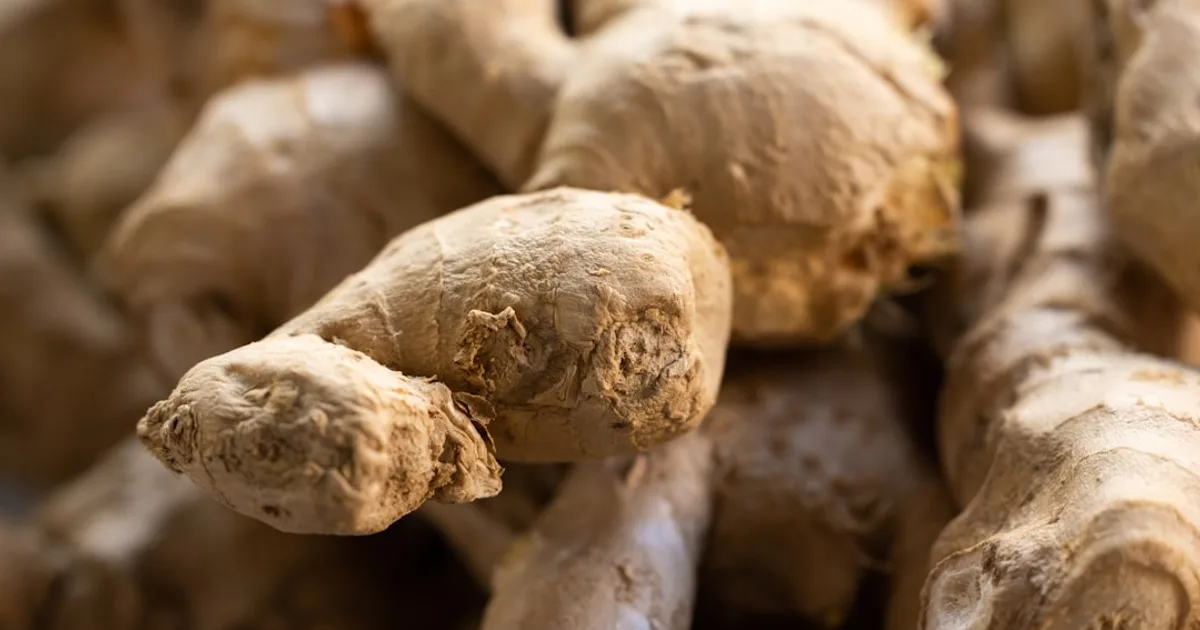
Ginger is one of those crops that seems exotic until you realize the growing requirements are just: warm, moist, and patient. Plant a rhizome piece in spring, give it a summer, harvest in fall. There’s no grafting, no pollination, no particular skill involved. The main constraint is season length - it needs 8-10 frost-free months to produce a real harvest, which limits it to zones 9-12 as a true perennial and requires container growing or early indoor starts everywhere else.
Fresh organic ginger at retail runs $4-8/lb (USDA AMS Specialty Crop Market News, 2023). Grocery store conventional ginger is typically $3-5/lb but the product is older, often irradiated to prevent sprouting, and lacks the intensity of freshly harvested rhizome. If you’ve only cooked with grocery-store ginger, the homegrown version is different.
What it actually is
Zingiber officinale is a tropical monocot in the family Zingiberaceae, closely related to turmeric, cardamom, and galangal. It’s a rhizomatous perennial in its native range (tropical Asia) that grows 2-4 feet tall with lance-shaped leaves on reed-like stems. In temperate zones, it’s treated as an annual - started indoors in late winter, grown outside through summer, harvested before first frost.
The edible portion is the underground rhizome - the knobby, pale-yellowish root. The flavor and heat come primarily from gingerols (in fresh root) and shogaols (more prominent in dried root and intensified by heat). Fresh ginger is more aromatic and brighter-tasting than dried because gingerols convert to shogaols during drying.
There are two main types for the home garden:
Common/fibre ginger (Z. officinale) is what’s sold in grocery stores and most seed catalogs. It produces the familiar pale-yellow rhizome with fibrous flesh. Varieties include ‘Kahili’ (high yield, good for containers) and standard Hawaiian ginger types widely available as rhizomes through mail-order.
Baby/young ginger is the same species harvested early - at 4-5 months rather than 8-10 months. Young ginger has tender, edible skin, pink growth tips, and much lower fiber content. It has a brighter, less intense flavor and is prized for pickling (gari, the Japanese pickled ginger served with sushi), candying, and fresh preparations where texture matters. Retail specialty markets sell young ginger at $8-15/lb when available. Growing your own is often the only way to access it in non-coastal areas.
| Form | Harvest timing | Skin | Texture | Best use | Retail price |
|---|---|---|---|---|---|
| Young/baby ginger | 4-5 months | Tender, edible | Low-fiber, crisp | Pickling, fresh slicing, candying | $8-15/lb (specialty) |
| Mature ginger | 8-10 months | Tough, peel required | High-fiber, fibrous | Cooking, tea, drying, grating | $4-8/lb fresh organic |
| Dried ground ginger | Dried mature | N/A | Powder | Baking, spice blends | $18-40/lb equivalent |
The ROI case
The economics of home-grown ginger depend on whether you’re growing for mature root or young root, and whether you’re in a long-season climate.
Starting material: a piece of grocery-store ginger with visible growth buds can serve as your planting stock, but grocery ginger is often treated to suppress sprouting. Mail-order certified seed ginger ($3.99-7.99 for 1/4 lb) is more reliable. One 1/4 lb piece produces 3-5 rhizome starts; a 1 lb investment produces 12-20 planting pieces.
Mature ginger multiplies 5-10x from planting weight under good conditions. Plant 0.25 lb of rhizomes; harvest 1.25-2.5 lb of new rhizome in a good year. At $5/lb average retail:
| Input | Planting weight | Multiplication factor | Harvest weight | Gross value | Seed cost | Net value |
|---|---|---|---|---|---|---|
| Zone 9+ (in-ground perennial) | 0.25 lb | 8-10x | 2.0-2.5 lb | $10.00-12.50 | $3.99 (year 1 only) | $6.01-8.51 (yr 1), $10-12.50 (yr 2+) |
| Zone 5-8 container | 0.25 lb | 5-7x | 1.25-1.75 lb | $6.25-8.75 | $3.99 | $2.26-4.76 |
| Young ginger harvest (5 months) | 0.25 lb | 3-4x | 0.75-1.0 lb | $7.50-15.00 | $3.99 | $3.51-11.01 |
The young ginger case (harvesting at specialty prices after 5 months rather than full-size at 10 months) often produces better financial return in northern climates where the full 10-month season isn’t achievable.
One important note: save back 20-30% of your best rhizomes each year as planting stock for the following year. After year one, your seed cost drops to zero.
The grocery-store starter math: a single inch-long knob of grocery ginger - the kind left over after a recipe - weighs roughly 0.1-0.2 lb and costs $0.30-1.00 at $3-5/lb retail. That piece, if it sprouts, returns 1-2 lb of fresh rhizome by fall at a gross value of $4-12. The limiting factor is sprouting reliability. Grocery conventional ginger is frequently treated with sprout inhibitors applied during storage and transport. Organic grocery ginger - available at natural food stores and Asian markets with high turnover - sprouts more reliably because it reaches stores without inhibitor application. In testing by home growers and documented in extension guidance (NC State Cooperative Extension, Ginger Production, 2022), organic grocery ginger has a sprouting success rate of 60-80% versus 20-40% for conventional. If you’re going to start from grocery ginger rather than certified seed stock, organic is worth the extra $1-3/lb premium.
Growing requirements
Ginger needs three things to thrive: warmth, consistent moisture, and patience. In zones 9-12, plant rhizomes directly in-ground in spring in a partially shaded location. In zones 5-8, start 8 weeks before your last frost date.
Soil: Loose, well-drained, organically rich. Ginger rhizomes rot in waterlogged soil. Raised beds with compost-heavy mix work well. Target soil pH 5.5-6.5. Heavy clay soils need significant amendment - rhizomes can’t expand in compacted ground.
Temperature: Soil temperature above 60°F before planting. Rhizomes planted in cold soil rot instead of sprouting. Air temperature should be consistently above 50°F at night. Ginger grows actively above 70°F; growth slows below 60°F. In containers, bring inside before nights drop below 50°F.
Light: Partial shade - 4-6 hours of direct sun with filtered afternoon shade. In the tropics, ginger grows under forest canopy. Direct hot afternoon sun in zones 6+ scorches the leaves and stresses the plant. Morning sun, afternoon shade is the ideal orientation.
Feeding: Heavy feeders. Apply balanced fertilizer (10-10-10 or similar) every 4-6 weeks through the growing season, or side-dress with compost monthly. Nitrogen deficiency shows up as yellowing older leaves and slow growth. Ginger responds well to foliar feeding with fish emulsion.
Containers: In Zones 3-8, containers are the practical path to a full-season ginger harvest. Minimum size is 5 gallons per plant; a 10-gallon or 15-gallon container gives the rhizomes room to expand and supports a real harvest. Use a well-draining potting mix amended with 30-40% compost by volume - ginger needs the organic matter for both moisture retention and nutrition. Plant rhizomes 2 inches below the surface, horizontal.
The container strategy pays off most in the shoulder seasons. Move pots outside once nighttime temperatures are reliably above 50°F in spring, bring them back in before the first frost in fall. In a good year for Zone 6, that’s a window of roughly May through October - close enough to the 8-10 month requirement that a container plant started early indoors in February or March can produce a harvestable crop.
Overwintering dormant rhizomes in the North: when frost kills the tops and the growing season ends, you have two options. First, you can harvest everything and store the rhizomes for replanting the following spring (refrigerate in a paper bag at 50-55°F). Second, you can leave dormant rhizomes in their container, reduce watering to near-zero, and store the pot in a frost-free space - a cool basement, garage, or heated porch at 45-55°F. Dormant rhizomes stored in the pot resume growth in spring without repotting. This second method is simpler and loses less rhizome mass than harvesting and re-drying.
Starting from rhizomes
The process is simple: source a rhizome piece with at least one visible “eye” (growth bud). If using grocery ginger, soak it overnight to leach any sprouting inhibitors. Cut into pieces 1-2 inches long, each with at least one eye. Let cut surfaces dry for 24-48 hours before planting to prevent rot.
Plant 2-4 inches deep, eyes facing up, 8-12 inches apart. Water in and keep consistently moist but not wet. Emergence takes 2-4 weeks depending on soil temperature - patience is required. The shoots emerge as tight furled spears, then open into the characteristic lance-shaped leaves.
In 4-6 weeks you’ll see multiple shoots from each planted piece. From there, the main work is consistent watering and feeding.
What goes wrong
Root rot is the primary failure mode, almost always from planting in cold wet soil or overwatering before the plant is established. The rhizome just disappears - there’s nothing to find at harvest. Prevention: warm soil, excellent drainage, hold back on watering until growth emerges.
Slow emergence or no emergence usually means either cold soil or treated grocery-store rhizomes that won’t sprout reliably. Solution: use certified seed ginger, pre-sprout rhizomes on a damp paper towel at 75-80°F before planting.
Yellowing leaves mid-season typically indicates nitrogen deficiency or irregular watering. Ginger drops leaves from the base up as they age - some lower-leaf yellowing late in the season is normal. Mid-season yellowing of newer growth is a problem; address with feeding and consistent irrigation.
Short season in northern zones: if you don’t have 8 months of frost-free weather, ginger won’t reach full size. The solution is early starts (February-March indoors), containers you can bring inside in fall to extend the season, or a pivot to young ginger harvested at 4-5 months when you still get usable root.
Bacterial wilt (Ralstonia solanacearum) and Pythium root rot are the two main disease concerns in commercial ginger production. Home gardeners rarely encounter bacterial wilt outside the Deep South, but Pythium rot is the primary reason for failed starts in cold, wet spring conditions.
Harvest and use
Ginger can be harvested at any point after the rhizomes have developed - you can carefully remove a piece of outer rhizome while leaving the rest of the plant to continue growing. Full harvest happens in fall after the tops begin to yellow and die back, typically 8-10 months after planting.
Dig carefully with a garden fork rather than a spade - rhizomes spread laterally and a spade cuts them. After lifting, shake off soil and let dry briefly in shade. Don’t wash until you’re ready to use; moisture promotes rot in storage.
Fresh ginger stores 3-4 weeks at room temperature, 2-3 months refrigerated. For longer storage: peel and freeze whole (grate directly from frozen - it’s easier than grating fresh), or process into ginger paste with a food processor and freeze in tablespoon portions.
In the kitchen, fresh ginger’s applications are wide. Stir-fries, marinades, and sauces are the obvious uses. Less expected: ginger tea (simmer fresh slices with lemon and honey), ginger-scallion oil (a finishing condiment for steamed fish and tofu), fresh ginger lemonade, and the aforementioned young-ginger pickling. The fresh-grated version of minced-ginger-from-a-jar is measurably more aromatic and bright.
Candied ginger and value multiplication: one pound of fresh ginger root, processed into crystallized/candied ginger (sliced, simmered in sugar syrup, dried, and coated in sugar), produces roughly 0.8-1 lb of finished product. Specialty food stores and online retailers sell crystallized ginger at $12-22/lb. That’s a 3-4x value amplification over the raw fresh root price. The process is time-intensive - about 2-3 hours of active work - but the product keeps for 6 months at room temperature and a year refrigerated. A surplus harvest at the end of the season that would otherwise sit in the refrigerator becoming fibrous is a reasonable candidate for candying.
Galangal distinction: galangal (Alpinia galanga) is a closely related member of the same family (Zingiberaceae), looks similar, and grows under the same conditions, but it is a distinct plant with a different flavor - sharper, more piney, and more medicinal-tasting than common ginger. It is not a substitute for ginger in most recipes. If you find rhizomes labeled “galangal” or “Thai ginger” at an Asian market, they sprout and grow using the same method as Zingiber officinale, but the culinary result is different. Both are worth growing if you cook Southeast Asian food regularly.
Related reading: Turmeric - same family, same growing requirements, different culinary profile; Growing in Containers - maximizing season length in northern climates
Growing Ginger? Track your harvest value and break-even date in the Garden ROI app.
Get the App