
Aronia (Chokeberry)
Aronia melanocarpa
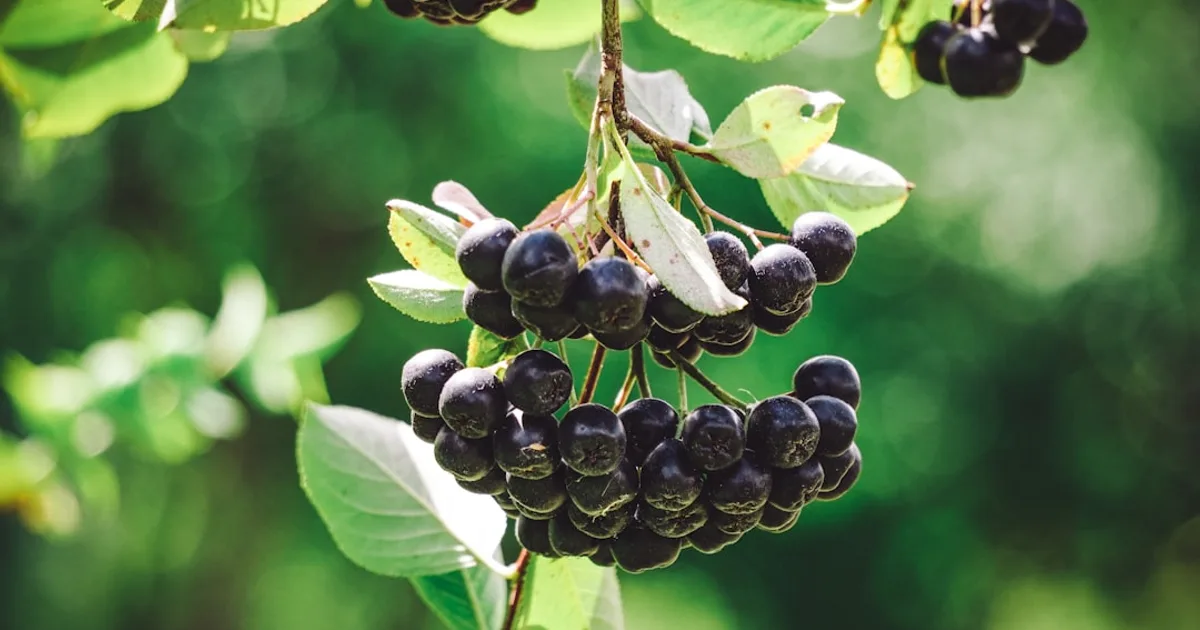
Aronia is a North American native shrub that most Americans have never eaten, despite growing wild across the eastern half of the continent. The berries - deep purple-black, intensely astringent when raw - have been discovered by the European health food market and by American juice producers as one of the highest antioxidant fruits measured in research, with ORAC values above blueberry, pomegranate, and most other commonly cited “superfoods” (Kulling and Rawel, Planta Medica, 2008).
Fresh aronia at farmers markets and specialty stores runs $6-12/lb. Dried aronia retails for $15-25/lb at health food stores. The shrubs are self-fertile, extremely cold-hardy (zones 3-8), tolerant of poor soils, and produce reliable crops with essentially no pest or disease pressure. This combination of traits - productive, cold-hardy, low-maintenance, commercially underserved - makes it one of the cleaner ROI propositions for home fruit production.
What It Actually Is
Aronia melanocarpa (black chokeberry) is a deciduous shrub native to eastern North America, in the rose family (Rosaceae). It grows 3-8 feet tall and produces clusters of 5-15 berries that ripen purple-black in August-September. The fall foliage is brilliant red-orange - making it valuable as an ornamental as well as a food plant.
The species distinction matters for production:
Black chokeberry (Aronia melanocarpa): the commercial standard. Deep purple-black berries; highest anthocyanin and antioxidant content; most widely cultivated for food production; the species this entry primarily covers.
Red chokeberry (Aronia arbutifolia): red berries; primarily ornamental; edible but lower anthocyanin content, higher astringency, and less productive than black chokeberry. Plant for fall color value rather than food production.
Purple chokeberry (Aronia × prunifolia): a natural hybrid of the two species; intermediate in color and flavor. Occasionally sold but less common than black chokeberry cultivars.
For edible production: plant Aronia melanocarpa (black chokeberry) or a named cultivar derived from it.
Why “chokeberry”? The raw berries are intensely astringent from high tannin and polyphenol content - similar to biting an unripe persimmon. This astringency diminishes when berries are cooked with sugar, dried, juiced, or processed with dairy. For fresh eating, fully ripe ‘Viking’ and ‘McKenzie’ are the most palatable of common cultivars, but raw aronia in quantity is still an acquired taste for most people.
Cultivars:
| Variety | Origin | Height | Yield | Astringency | Notes |
|---|---|---|---|---|---|
| Viking | Sweden | 5-7 ft | Very high | Low-moderate | Commercial standard; best flavor for fresh eating |
| Nero | Denmark | 4-5 ft | High | Moderate | Most widely planted; European breeding program |
| McKenzie | USDA | 4-6 ft | High | Low | Best raw flavor; USDA selection |
| Autumn Magic | North America | 3-5 ft | Moderate | Moderate | Best fall color; good ornamental value |
‘Viking’ is the dominant commercial production variety in Europe (Poland leads world aronia production) and the most common variety in US commercial plantings. For home garden use with food production as the goal, ‘Viking’ or ‘McKenzie’ are the best choices. For a landscape shrub that produces useful fruit but is valued primarily for fall color, ‘Autumn Magic’ or ‘Nero’ work well.
The ROI Case
Aronia begins producing in year 2-3 and reaches full production by year 4-5. Unlike most fruit crops, it rarely has a bad year - consistent, heavy production is one of its defining traits.
Fresh specialty market pricing: $6-12/lb (specialty and farmers market retail). Dried aronia: $15-25/lb at health food stores (USDA AMS does not maintain a price series for this crop; specialty market retail).
| Year | Yield per shrub | Value @$8/lb | Shrub cost | Cumulative net |
|---|---|---|---|---|
| 1 | 0 | $0 | -$19.99 | -$19.99 |
| 2 | 1 lb | $8 | - | -$11.99 |
| 3 | 4 lb | $32 | - | $20.01 |
| 4 | 8 lb | $64 | - | $84.01 |
| 5 | 12 lb | $96 | - | $180.01 |
| 8 | 15 lb | $120 | - | $540.01 |
Dried aronia value: fresh aronia loses approximately 75% of its weight when dried. At $20/lb for dried aronia, 12 lb of fresh berries yields approximately 3 lb dried = $60 value. Processing time is modest (dehydrator, minimal handling), so the per-hour return on drying is favorable.
Frozen commercial pricing: some commercial buyers purchase IQF (individually quick-frozen) aronia at $5-9/lb as a base for juice blends and supplements. For home production, this is less relevant, but it establishes a minimum floor value.
Zone Fit
Zones 3-4: aronia’s strongest zone range, where few other productive fruit shrubs can survive reliably. Cold-hardy to approximately -40°F (-40°C) in full dormancy - hardier than honeyberry, currant, or almost any other commercially useful small fruit. In zone 3-4, aronia is often the most practical fruiting shrub available. The plant’s native habitat includes the boreal regions of Canada and northeastern North America.
Zones 5-7: the primary productive zone for most North American home gardeners. Consistent yields from established shrubs; no special winter protection needed. Plant in full sun for maximum yield.
Zone 8: the southern limit for reliable production. In cooler parts of zone 8 (Pacific Northwest, high-elevation areas, northern zone 8), aronia performs adequately. In hot, humid zone 8 (Gulf Coast, lower South), summer heat reduces vigor and fruit quality, and the plant may defoliate early. Zone 8 gardeners in warm climates should consider blueberry or other more heat-tolerant alternatives.
Zone 9+: not suitable. Summer heat and mild winters both work against aronia; insufficient winter chill and heat stress combine to produce weak, unproductive plants.
Shade tolerance: aronia is notably more shade-tolerant than most productive fruit shrubs. It grows naturally at forest edges and in partial shade. Four to five hours of direct sun per day is enough for adequate (though not maximum) production. This makes it useful for garden spots that would fail most other fruit crops.
Growing Requirements
Cold hardiness: one of the most cold-hardy productive fruit shrubs available. Rated to -40°F in dormancy. Established plants survive harsh winters without protection in zones 3-7 without any management.
Soil adaptability: one of the most adaptable fruit shrubs. Tolerates wet soils, periodically flooded conditions, heavy clay, poor sandy soils, and pH from 4.5-7.5. Grows naturally in both bogs and dry upland soils in the wild. This breadth of tolerance is unusual - most productive fruit shrubs have significant soil requirements that aronia lacks.
Self-fertile: one shrub produces a full crop. Cross-pollination is not required, though multiple plants may improve berry size.
Suckering: aronia spreads via root suckers. This can expand production over time (a desirable effect) or spread into adjacent plantings (a problem). Mow or cut suckers at the soil surface annually to contain the spread; allow them if you want a larger productive thicket.
Pruning: aronia produces fruit on 3-6 year-old canes. Renewal pruning - removing the 2-3 oldest, most congested canes to the ground in late winter every 2-3 years - maintains vigor and fruit quality. An unpruned aronia becomes a dense thicket over time, which reduces air circulation, promotes disease, and decreases per-cane fruit production.
Fertilizing: light feeder. Top-dressing with compost in spring is sufficient in most soils. Avoid high-nitrogen fertilizer, which promotes vegetative growth at the expense of fruiting.
Pest and Disease Resistance
Aronia is one of the most pest-resistant commercial fruit crops in temperate cultivation. No significant pest or disease issues affect most plantings.
Birds: the primary competition. Berries attract robins, cedar waxwings, and other birds in September. Net plants 2 weeks before expected ripeness, or accept sharing with wildlife and plant enough volume to absorb losses. Aronia’s high yield capacity means bird competition typically costs a fraction of the total harvest rather than eliminating it.
Bacterial leaf spot (Pseudomonas syringae): occasional dark spots on leaves during wet springs. Cosmetic damage; rarely affects production. No treatment needed in most years.
Aronia shoot blight (Erwinia amylovora - the fireblight pathogen): can occasionally affect aronia as it does related rosaceous shrubs. Far less common and severe on aronia than on apple or pear. Prune affected tissue 12 inches below visible cankers if symptoms appear.
Root rot in waterlogged soils: rare given aronia’s natural tolerance of wet conditions, but sustained standing water can cause issues. Ensure adequate drainage in consistently wet spots.
For most home gardens, the management protocol for aronia pests is: do nothing, harvest promptly, and net against birds.
Harvest
Berries ripen mid-August through September depending on zone and variety. They turn fully black and develop a dusty white bloom on the skin at peak ripeness. Color change alone is insufficient - the berries should give slightly to gentle pressure and taste complex rather than merely astringent when fully ripe. Fully ripe berries are still astringent raw, but the flavor behind the astringency is evident.
Harvest by stripping berry clusters into a bucket; the clusters come off cleanly. A full-production shrub (6-8 years old) can yield 10-20 lb in a single harvest. Pick promptly once clusters are fully ripe - bird pressure increases as berries soften.
Preservation
Aronia’s value in the kitchen depends almost entirely on processing. Raw aronia eaten in quantity is unpleasant for most people - the tannin and polyphenol load is high enough to dry the mouth. The goal is to access the deep berry flavor while managing the astringency.
Freezing: the easiest and most versatile preservation method. Freeze on sheet pans, transfer to bags. Frozen aronia retains essentially all nutritional value; freezing breaks down some tannin structure, making frozen berries slightly less astringent than fresh. Keeps 12-18 months. Use directly from frozen in all cooked preparations. This is the recommended first step for large harvests.
Dried aronia: dehydrate at 135°F for 8-12 hours until the berries are raisin-textured. The drying process concentrates both the flavor and the tannins; dried aronia is more intensely flavored and somewhat more astringent than fresh. Used as a dried cranberry substitute in granola, trail mix, and baked goods. Mix with sweeter dried fruits (raisins, cranberries, apricot) to temper the intensity. At $15-25/lb retail, dried aronia has the highest per-pound value of any aronia preparation.
Aronia juice: process in a steam juicer or press. The juice is intensely dark purple, tannic, and tart. Dilute 1:3 or 1:4 with water, apple juice, or grape juice; sweeten to taste. The diluted juice is more pleasant to drink than straight aronia juice and still retains the high antioxidant content. Used commercially as a natural food colorant - a small amount of aronia juice turns yogurt, baked goods, or drinks deep purple without affecting flavor.
Jam and jelly: cook with sugar (2-3 cups sugar per 4 cups fruit), lemon juice, and optional added pectin (though aronia’s natural pectin often provides a usable set without). The astringency is sharply reduced by cooking and sugar. The resulting jam has a deep, complex berry flavor with less residual tannin than raw berries. Excellent with aged cheese, alongside pork, or spread on bread with butter. Water-bath process for shelf stability per USDA NCHFP guidelines.
Aronia wine: aronia ferments well. The high tannin and anthocyanin content makes an intensely colored, tannic wine similar to a rough young Cabernet in structure. Standard country wine process: crush berries, add Campden tablets, pitch wine yeast, ferment 7-10 days, press, age in secondary fermentation 4-6 months minimum. Blend with apple or cherry for a more approachable result.
Kitchen Applications
The astringency rule: cook or process aronia before eating in quantity. A handful of fresh, fully ripe aronia is pleasant; a cup of raw aronia is not. Blending with dairy, cooking with sugar, or mixing with sweeter fruits reduces astringency to workable levels in all preparation types.
Aronia jam: the most practical kitchen outlet. Cook equal parts fruit and sugar (or 4 cups fruit to 3 cups sugar) with lemon juice until the mixture reaches 220°F. The finished jam is nearly black, slightly tart, and rich. Spread on toast, serve with aged cheddar or blue cheese, or use as a component in game meat sauces.
Aronia compote: lightly simmer berries with a small amount of water, sugar, and spices (cinnamon, star anise, cardamom) until they burst and thicken slightly. Serve warm or cool over yogurt, oatmeal, pancakes, or vanilla ice cream. Mix with apple for a sweeter, less astringent result - 1 part aronia to 2 parts apple creates a compote most people find immediately appealing without additional sweetener work.
Aronia smoothie: frozen aronia blended with banana, yogurt, and honey. The banana’s sweetness tones down the tannins; the yogurt’s fat coats the mouth and reduces the astringent sensation. A 1/4 cup of frozen aronia per smoothie is a common ratio.
Baked goods: dried aronia or fresh/frozen aronia cooked briefly in baked preparations - muffins, quick breads, coffee cakes. Combine with orange zest or apple to balance the tartness. The dark purple color from aronia streaks through muffins distinctively.
Aronia vinaigrette: aronia juice reduced by half, whisked with neutral oil, a small amount of honey, and Dijon mustard. The tannins create a complex, slightly bitter vinaigrette that pairs with bitter greens (arugula, radicchio, endive) in ways that sweet vinaigrettes don’t.
Related crops: Elderberry - fellow native American berry shrub; Honeyberry - fellow cold-hardy specialty berry; Currant - similar cold-hardy fruiting shrub
Related reading: Berry ROI Comparison - per-shrub economics for native and specialty berries
Growing Aronia (Chokeberry)? Track your harvest value and break-even date in the Garden ROI app.
Get the App