Honeyberry
Lonicera caerulea
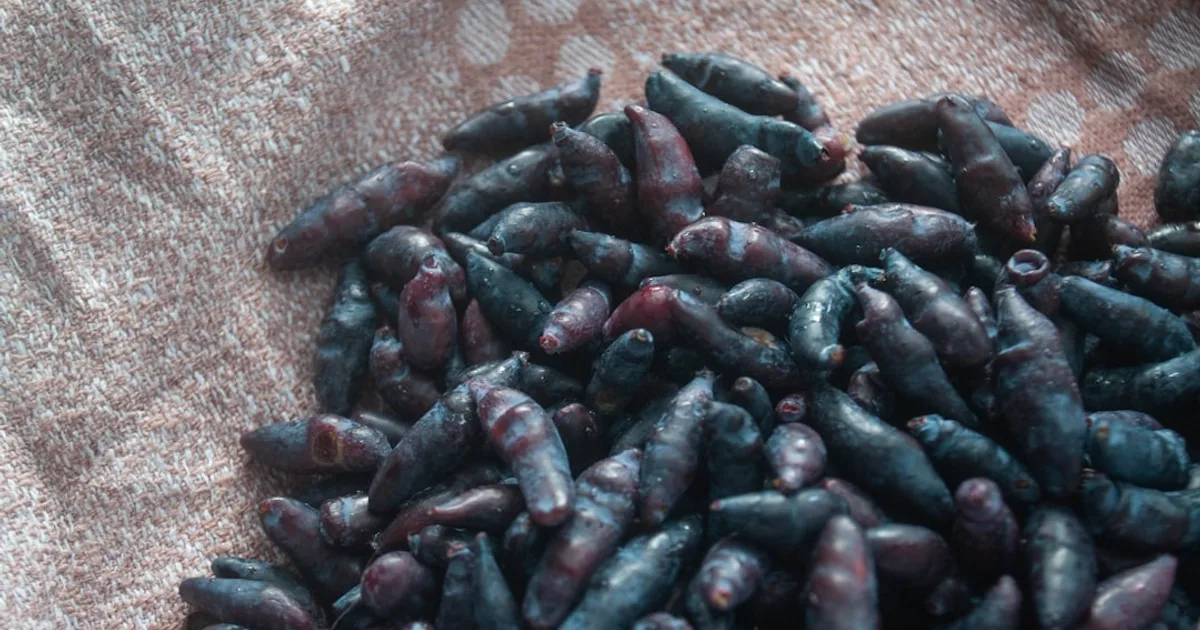
Honeyberry ripens before anything else in the garden - in late April to May in Zone 6-7, weeks before the earliest strawberries. The flowers withstand frosts to 20°F, which is not a quirk but an adaptation: the plant evolved across the boreal zones of northern Japan, Russia, and Canada. In Zone 3-4, where reliable fresh fruit production is severely limited, honeyberry is one of the few viable options that produce reliably.
The flavor is sometimes described as a blueberry-raspberry cross, with a tartness and wild-berry depth that commercial blueberries don’t have. At the handful of specialty farms and markets that carry them, honeyberries sell for $8-15/lb. Most Americans have no access to them commercially - which is exactly why planting them makes sense.
What It Actually Is
Lonicera caerulea is a honeysuckle (Lonicera spp.) native to northern boreal regions across Asia, Europe, and North America. Cultivated forms used for fruit production come from Japanese (L. caerulea var. emphyllocalyx) and Russian (L. caerulea var. kamtschatica) selections. These are the same plant species with regional common names that can confuse buyers:
- Haskap: the Japanese name, widely used in Japan and increasingly in Canadian commercial production
- Honeyberry: the North American marketing name
- Blue honeysuckle: the descriptive common name sometimes used in the UK
Same species, different regional names. When you see “haskap” at a nursery, it’s the same plant as “honeyberry.”
The shrub grows 3-6 feet tall as a compact, upright form. Berries are oblong rather than round - like a stretched blueberry, 1/2 to 1 inch long - dark blue-purple with a dusty bloom on the skin.
Flavor honesty: raw honeyberries from the garden are an acquired taste. Fresh-picked berries straight off the bush are more intensely tart and complex than a commercial blueberry, and first-time tasters sometimes expect something sweeter. The flavor rewards cooked preparations and jam making. For fresh eating, ‘Tundra’ and ‘Borealis’ are the sweetest of the common North American cultivars; wait until berries are fully ripe (several days past when they first turn blue) before eating raw.
Pollination requirement: honeyberries are not self-fruitful. Two genetically different varieties that bloom simultaneously must be planted together. Without a cross-pollinator, you get flowers but no berries. This is the most common planting mistake.
Cultivars and Compatible Pairs
The University of Saskatchewan Berry Breeding Program has produced the most widely tested North American cultivars. Japanese cultivars (‘Keiko’, ‘Borealis’, ‘Aurora’) were developed from different germplasm and must be paired with compatible types:
| Variety | Origin | Flavor | Season | Best paired with |
|---|---|---|---|---|
| Tundra | U of Saskatchewan | Sweet, mild | Early | Borealis, Indigo Gem |
| Borealis | U of Saskatchewan | Sweet-complex | Early | Tundra, Aurora |
| Aurora | U of Saskatchewan | Tart, wine notes | Mid-season | Borealis, Tundra |
| Indigo Gem | U of Saskatchewan | Sweet-tart | Early | Tundra, Borealis |
| Keiko | Japanese | Very sweet | Early | Aurora, Borealis |
| Maxie | U of Saskatchewan | Tart | Mid-season | Tundra, Borealis |
Reliable compatible pairs:
- ‘Tundra’ + ‘Indigo Gem’ (both early; widely available; sweet-forward profile)
- ‘Borealis’ + ‘Aurora’ (both mid-season; University of Saskatchewan; high yield)
- ‘Tundra’ + ‘Borealis’ (most widely recommended beginner pair; complementary seasons)
Purchase verified compatible pairs from a reputable specialty nursery rather than relying on name combinations alone. Variety selection from different regions may have different bloom timing than expected.
The ROI Case
Honeyberry shrubs begin producing in year 2-3 and reach full production by year 4-5. They’re long-lived (30+ years) and increase production gradually.
Specialty market pricing: $8-15/lb where sold (specialty and farmers market retail; USDA AMS does not track this crop). Commercial availability is minimal; the crop is essentially unavailable to consumers in most US regions.
| Year | Yield per 2-shrub pair | Value @$10/lb | Shrub cost (pair) | Cumulative net |
|---|---|---|---|---|
| 1 | 0.5 lb | $5 | -$39.98 | -$34.98 |
| 2 | 2 lb | $20 | - | -$14.98 |
| 3 | 6 lb | $60 | - | $45.02 |
| 4 | 10 lb | $100 | - | $145.02 |
| 5 | 12 lb | $120 | - | $265.02 |
| 8 | 14 lb | $140 | - | $625.02 |
The ROI case is primarily access and timing: honeyberries are the earliest berry in northern gardens, producing before any competing home-grown fruit. That early-season premium, combined with commercial unavailability, supports above-blueberry pricing at farmers markets.
Zone Fit
Zones 3-4: honeyberry’s strongest zone range. One of the very few fruit shrubs capable of consistent production this far north; rated to -40°F (-40°C) in full dormancy. Where apples, blueberries, and most other fruit crops fail, honeyberry produces.
Zones 5-6: ideal. Full production, reliable cross-pollination, and good fruit quality. The standard zone for most North American honeyberry production.
Zone 7: marginal. The upper limit for reliable production. In cooler parts of Zone 7 (northern Virginia, high-elevation areas), established plants produce acceptably. In warmer Zone 7 areas with mild winters, insufficient chilling hours become a problem.
Zones 8-9: not suitable. Honeyberry requires 1,000+ winter chilling hours to bloom and set fruit properly. Zone 8+ winters are too mild to satisfy this requirement, resulting in weak flowering and poor fruit set. Choose a different berry crop.
Heat sensitivity: summer heat above 85°F sustained over weeks reduces productivity and may cause early defoliation in established plants. This is the primary reason Zone 7+ struggles - not just insufficient chill hours, but summer temperatures that stress the plant after harvest. Zone 3-6 summers are mild enough to avoid this issue.
Growing Requirements
Planting: install bare-root or potted plants in early spring or fall. Plant both varieties within 10-15 feet of each other for cross-pollination. Planting at the same time ensures coordinated bloom timing from the same seasonal cues.
Soil: prefers well-drained, slightly acidic soil (pH 5.5-6.5). Tolerates a range including clay if drainage is adequate. Does not require the strongly acidic conditions (pH 4.5-5.0) that blueberry demands - this is a practical advantage for gardens without naturally acidic soil.
Light: full sun produces maximum yield and fruit quality. Partial shade (4-5 hours of direct sun) is workable but reduces yield noticeably. Unlike serviceberry, honeyberry is not an understory plant by preference.
Water: 1 inch per week during the growing season. More critical during fruit development (April-May); drought stress at this stage reduces berry size and causes premature drop.
Pruning: minimal for the first 5-6 years - let the plants establish their full form. After year 6-7, remove the 2-3 oldest, most congested canes at ground level each spring. Renewal canes from the base replace them over 1-2 seasons. This rejuvenation pruning maintains berry size and production on older plants.
Deer: young honeyberry plants are browsed by deer in winter. Protect with cages or fencing until plants reach 4+ feet in height.
What Goes Wrong
No berries from incompatible varieties: the most common failure. Verify cross-pollinator compatibility before purchasing. Some retailers sell “honeyberry” without specifying variety; a pair of plants from the same unknown variety produces no fruit.
Berries taste too tart at premature harvest: honeyberries look blue and ripe before they’re fully sweet. Color change alone isn’t sufficient - berries that look fully ripe may still be 5-10 days from peak sweetness. Berries at peak ripeness release easily from the branch with a gentle touch; under-ripe berries hold on. Taste before stripping the whole bush.
Fruit drop before harvest: over-ripe berries fall. Check plants every 2-3 days once fruit has turned blue; the window from ripe to dropping is short.
Poor production in warm climates: insufficient winter chill. Zone 8+ gardeners should choose a different fruit crop.
Birds: honeyberries attract birds early in the season (May), before most garden netting goes on. Net both plants 2 weeks before expected ripeness, as soon as berries begin to color.
Preservation
Fresh: 5-7 days refrigerated; quality declines after 5 days. Honeyberries hold somewhat better than serviceberries but still require prompt use or preservation.
Freezing: honeyberry freezes with better texture retention than most berries - closer to a commercial frozen blueberry than a home-frozen raspberry, which tends to become soft and wet after freezing. Freeze on a sheet pan first, then transfer to bags. Frozen honeyberries are excellent in all cooked applications and acceptable for fresh eating directly from frozen. This is the primary recommended preservation method.
Jam: high-pectin; sets readily with minimal added pectin. The jam has a deeper, more complex flavor than blueberry jam - darker color, wine-forward, with the characteristic tartness. Mix with apple or cherry juice if you want a sweeter finished product.
Juice and wine: honeyberries ferment well. The tartness and dark color make them a good wine-grape analog in cold climates where grapes don’t grow. Juice can be used as a blueberry juice substitute in any recipe.
Kitchen Applications
The raw eating note: honeyberries reward ripeness. Berries that are marginally ripe are unpleasantly tart; fully ripe berries (let them hang until they release with barely a touch) are noticeably sweeter and more enjoyable. If you’ve tried a raw honeyberry and found it too tart, let the remaining crop hang 5 more days.
Jam and preserves: the best-suited application for the concentrated flavor and tartness. Use 4 cups berries, 3 cups sugar, and 1 tablespoon lemon juice; cook to 220°F (no added pectin needed). The result is a nearly-black jam with more complexity than blueberry.
Pie and galette: the tartness works in baked pastry where sugar in the crust and filling balances it. Mix with equal parts sweeter fruit (apple, strawberry) for a mixed pie with complex flavor.
Sauce over ice cream or yogurt: simmer 2 cups berries with 1/4 cup sugar until berries burst; strain or use chunky. The color is striking and the flavor concentrated. Works well with vanilla ice cream where the tartness is a feature.
Smoothies and breakfast bowls: mix frozen honeyberries with banana and milk; the banana sweetness balances the honeyberry tartness without requiring added sugar.
Related crops: Serviceberry - fellow early-season berry, even earlier ripening; Currant - similar cold-hardy fruiting shrub; Aronia - another high-tannin native berry with similar cold hardiness
Related reading: Berry ROI Comparison - per-shrub economics for honeyberry, blueberry, raspberry, and serviceberry; Fruit Tree Payback Timeline - how long-lived fruit plants amortize initial investment
Growing Honeyberry? Track your harvest value and break-even date in the Garden ROI app.
Get the App