
Asparagus
Asparagus officinalis
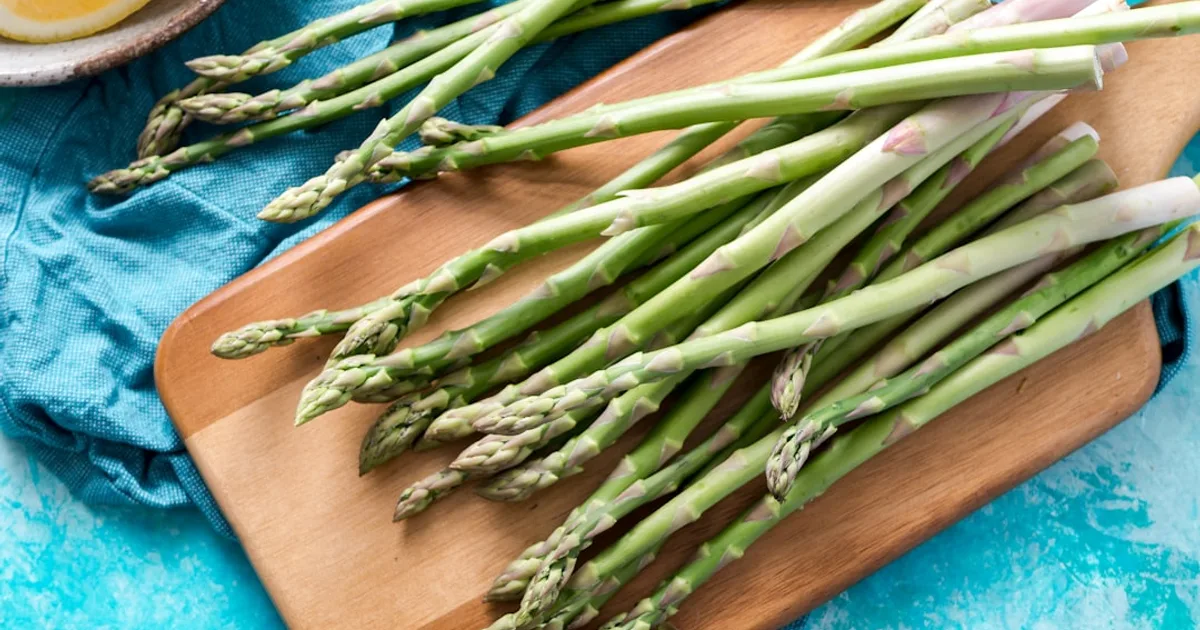
Asparagus (Asparagus officinalis) is the only perennial vegetable most home gardeners will ever plant that pays dividends for two decades from a single investment. You put crowns or seeds in the ground in year one, resist harvesting for two full seasons, and starting in year three you cut spears every spring for 20 years or more. The wait is the whole argument. Once you’re through it, the input cost drops to almost nothing.
What you’re actually growing
Asparagus is a member of the family Asparagaceae, and the edible portion is the young shoot emerging from a root crown. Left unharvested, those shoots grow into tall, ferny fronds that photosynthesize through summer and build energy reserves in the crown for next year’s flush. That cycle is what makes the plant perennial and what makes the first two years non-negotiable: you need the crown to be large and well-fed before you start taking anything from it.
Cultivar choice matters. ‘Jersey Knight,’ ‘Jersey Supreme,’ and ‘Jersey Giant’ are all-male hybrids developed at Rutgers University and represent the standard of modern asparagus breeding. All-male plants produce no seeds, which means all the plant’s energy goes into spear production rather than seed set - yields are consistently higher than older open-pollinated varieties. ‘Purple Passion’ is a hybrid with higher sugar content and better raw flavor, though it turns green when cooked. For most climates, a Jersey series hybrid is the correct starting point.
| Variety | Type | Male-only? | Zone | Relative yield | Notes |
|---|---|---|---|---|---|
| Jersey Knight | All-male hybrid | Yes | 4-8 | High | Rutgers standard; heat-tolerant; widely available |
| Jersey Supreme | All-male hybrid | Yes | 4-8 | High | Early producer; among the first spears in spring |
| Jersey Giant | All-male hybrid | Yes | 4-8 | High | Larger spear diameter; good for market |
| Purple Passion | All-male hybrid | Yes | 4-8 | Moderate | Sweeter raw; turns green when cooked; 20% lower yield than Jersey series |
| Mary Washington | Open-pollinated heirloom | No (male + female plants) | 3-8 | Moderate-low | Widely available; 20-30% lower yield than all-male hybrids; female plants set berries |
The all-male designation matters because female asparagus plants divert energy to seed (berry) production, which reduces spear yield by 20-30% compared to male plants that put all resources into vegetative growth. A bed of Mary Washington has roughly half male and half female plants by the time it matures. ‘Jersey Knight’ and related Rutgers-developed hybrids are all male and consistently outperform open-pollinated varieties in controlled trials (Rutgers NJAES, Asparagus Performance Trials, 2018-2021).
Crown planting is faster than seed. One-year-old bare-root crowns give you a one-year head start on seed-grown plants, though the per-crown cost is higher than seed (typically $1.50-$3.00 per crown versus $5.99 for a seed packet containing 50+ seeds). Seeds are practical for larger plantings where cost matters; crowns are practical if you want to shorten the wait by one year.
The ROI case
A $5.99 seed packet or a flat of 25 crowns at $30-50 represents your primary investment. Add in bed preparation - asparagus trenches should be 12-18 inches deep, amended with compost and bone meal - and you’re looking at perhaps $30-50 in total first-year cost for a 10-foot row. That row produces nothing in year one and very little in year two.
Year three, a productive 10-foot row of all-male hybrid asparagus yields 3-5 lbs of spears during the 4-6 week spring harvest window. At $4.00-$6.00/lb retail (USDA AMS Specialty Crop Market News, 2023), that’s $12-30 in grocery value from your year-three harvest alone. The plants produce at higher rates through years four through ten, when a mature planting can yield 8-12 lbs per 10-foot row. Annualize your establishment cost over even a 15-year productive life and the per-pound economics become difficult to argue with.
The comparison point: fresh asparagus in grocery stores runs $3.99-$5.99/lb through the spring window (USDA AMS, 2023). Asparagus loses quality fast after harvest; what you find at the store is often 3-5 days off the field. What you cut in the morning and eat that evening is a different product.
Year-by-year ROI table for a 10-foot row of ‘Jersey Knight’ crowns (established from 10 one-year crowns at $2.50 each = $25 crowns + $25 bed prep = $50 Year 1 investment; $5/year in mulch and amendments):
| Year | Harvest | Value at $4.50/lb | Cumulative value | Cumulative cost | Net position |
|---|---|---|---|---|---|
| Year 1 | 0 | $0 | $0 | $50 | -$50 |
| Year 2 | 0.5 lb (token harvest, 1 week only) | $2.25 | $2.25 | $55 | -$52.75 |
| Year 3 | 3-4 lb | $13.50-18.00 | ~$17 | $60 | -$43 |
| Year 4 | 5-7 lb | $22.50-31.50 | ~$44 | $65 | -$21 |
| Year 5 | 7-9 lb | $31.50-40.50 | ~$80 | $70 | +$10 |
| Year 6-10 | 9-12 lb/year | $40.50-54/year | cumulative ~$290 | $95 | +$195 |
| Year 10-15 | 10-12 lb/year | $45-54/year | cumulative ~$560 | $120 | +$440 |
Break-even occurs around year 5 for most plantings. By year 10, the compounding produces real net positive value. By year 15-20, a well-maintained bed represents hundreds of dollars in value from a $50 initial investment. The assumption that makes this math work: the bed is properly established, not harvested too early, and maintained with weed control and annual fertilization. Yield data from Rutgers NJAES asparagus production research.
Growing requirements
Asparagus is hardy in USDA zones 3-8, though it grows best where it gets a genuine winter dormancy with cold temperatures below 40°F for at least 4-6 weeks. Zone 9 growers can succeed but typically need to cut back fronds and simulate dormancy manually.
Soil pH of 6.5-7.0. Asparagus is one of the few vegetables that tolerates slightly alkaline conditions and does poorly in acidic soil. Test before planting; lime if needed. Deep, loose, well-drained soil matters more than fertility - roots go down 2-3 feet in a mature planting. Heavy clay that puddles kills crowns.
Dig a trench 12-15 inches deep, 12 inches wide. Work 3-4 inches of compost and a cup of bone meal into the trench bottom per 5 feet of row. Set crowns 18 inches apart with roots spread over a small mound, covered with 2-3 inches of soil initially. Fill in the trench gradually as shoots emerge through the first season. This graduated filling encourages deep root development.
Weed control through establishment is critical. Young asparagus is easily crowded out. Mulch 3-4 inches deep to suppress weeds; pull anything that breaks through. Mature plantings are easier - the dense fern canopy shades out most competition.
Water 1-1.5 inches per week during the spring growth period and through summer while fronds are building crown reserves. Reduce in fall as foliage yellows; stop supplemental water once fronds die back completely.
What goes wrong
Asparagus beetle (Crioceris asparagi and C. duodecimpunctata) are the primary insect pests. Adults and larvae feed on spears and fronds. Hand-pick adults and egg clusters (small black eggs attached to spears or fronds). Neem oil is effective on larvae. Permethrin handles heavy infestations. The common asparagus beetle is slate blue with cream spots; the spotted asparagus beetle is orange-red with 12 black spots.
Fusarium crown and root rot (Fusarium oxysporum f. sp. asparagi and F. moniliforme) is the primary disease problem, causing stunted spears and eventual crown death. It’s soil-borne and persists for years. There is no cure once established. Use disease-free certified crowns or seeds, improve drainage, and avoid wounding crowns during cultivation. Replanting into infected soil generally fails.
Purple spot (Stemphylium vesicarium) causes small, brown to purple lesions on spears and fronds. It spreads in wet conditions and reduces photosynthetic capacity when severe, weakening crowns over time. Copper-based fungicides help; improving air circulation by not crowding plants matters more long-term.
Frost late in spring catches emerging spears. Hard freezes (below 28°F) after spears have emerged cause the tips to darken and go mushy. There’s nothing to do about it - cut the damaged spears and wait for the next flush.
Harvest and storage
Do not harvest at all in year one. In year two, cut a few spears for one week maximum, then let everything grow out. This discipline is what separates a bed that lasts 20 years from one that collapses in five.
Starting year three, cut spears at ground level or just below when they are 6-9 inches tall and tips are still tight. Use a knife or harvest tool; don’t snap them - snapping leaves a stub that can harbor disease. Harvest daily during peak flush - spears left to grow out reduce subsequent spear production. Stop harvesting when the majority of new spears emerge pencil-thin; that’s the plant telling you the crown reserves are depleted for the season.
Fresh asparagus holds in the refrigerator, cut ends wrapped in a damp paper towel, for 3-5 days. For longer storage, blanch and freeze. Flavor and texture decline quickly after harvest - this is the main reason to grow it.
Related crops: Tomato, Garden Pea
Related reading: First Three Years ROI - how to model the establishment-cost math for crops that don’t produce in year one; Perennial vs. Annual ROI - comparing a 3-year establishment crop against annual alternatives using the same bed space
Frequently Asked Questions
How long before I can harvest asparagus?
Asparagus from crowns requires 2 full growing seasons before first harvest. In year 3, harvest lightly for 2 to 3 weeks. By year 4 to 5, the bed supports a 6 to 8 week harvest annually. From seed, add one more year. Once established, the bed produces for 20 years or more.
Should I plant asparagus from crowns or seeds?
Crowns (1-year-old dormant root clusters at $5 to $10 each) are the standard choice - they give you a 1-year head start. Seeds are cheaper but add a full season to establishment. Crowns planted at $5 to $10 each pay back within 5 to 7 years at $4 to $6/lb retail.
How do I maintain an asparagus bed after the harvest season?
Stop harvesting when spears thin to pencil diameter or after 6 to 8 weeks, whichever comes first. Allow remaining spears to grow into ferny fronds - this foliage builds root energy for next year's crop. Cut fronds to the ground in late fall or early spring after they yellow.
Growing Asparagus? Track your harvest value and break-even date in the Garden ROI app.
Get the App