
Bitter Melon
Momordica charantia
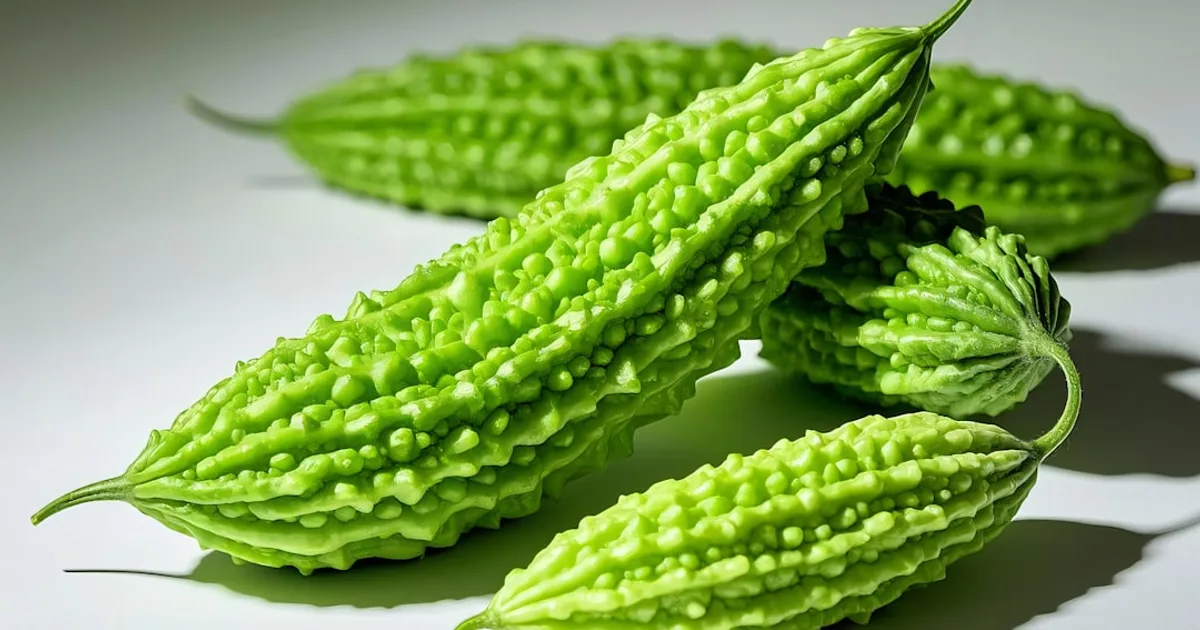
Bitter melon is one of those vegetables where the name is the full honest description. It is bitter. Genuinely, unmistakably, intentionally so. That flavor is the point. In South Asian cooking (karela), Chinese cooking (ku gua), and throughout Southeast Asia and the Caribbean, it’s a staple ingredient used specifically because of its bitterness, which balances rich meats, cuts through fat, and provides a flavor dimension that no substitution replicates.
At Asian grocery stores it runs $2-5/lb. Outside of areas with large South Asian or East Asian communities, it’s often unavailable entirely. The plant produces heavily in summer heat, yields over an extended season, and grows vigorously on any trellis or fence.
What it actually is
Momordica charantia is a tropical vine in the gourd family (Cucurbitaceae), native to tropical Africa and Asia. In frost-free climates it’s a perennial that can grow 15+ feet. Grown as an annual in zones 5-10, it reaches 8-12 feet on a trellis in a single season.
Two distinct types exist with different culinary applications:
Chinese bitter melon (M. charantia var. charantia): large, pale green, with smooth round bumps (warty texture). Less bitter than the Indian type. Used in stir-fries, soups, and stuffed preparations in Chinese cooking. Varieties: ‘Jade White’, ‘China Star’.
Indian bitter melon / karela (M. charantia var. muricata): smaller, darker green, with sharper ridges and pointed ends. More intensely bitter. Used in curries, stuffed and fried, and pickled. Varieties: ‘Hybrid Long Green’, ‘Mridula’.
| Type | Size | Bitterness | Texture | Primary use |
|---|---|---|---|---|
| Chinese (var. charantia) | 6-10 inches, 0.5-1 lb | Moderate | Smoother bumps | Stir-fries, soups |
| Indian/Karela (var. muricata) | 3-6 inches, 0.2-0.4 lb | Intense | Sharp ridges | Curries, stuffed, fried |
A third type worth noting for American gardeners:
Japanese bitter melon / Goya (used in Okinawan cuisine): pale green to white, with blunter, rounder bumps than the Chinese type. Shorter and fatter than Chinese varieties, typically 5-7 inches. The bitterness is similar in intensity to Chinese types but the texture after cooking is distinct - firmer and less watery. The centerpiece of goya champuru, the Okinawan stir-fry with tofu and egg that’s gained recognition outside Japan. ‘Okinawa White’ and ‘Green Tiger’ are available from specialty seed suppliers.
Caribbean types: smaller, often sold as “balsam pear” in Afro-Caribbean markets. Ribbed, bright green, and extremely bitter. Used in Jamaican and Trinidadian cooking, frequently in soups with salt fish or stewed with tomatoes and onions. Less commonly found in US seed catalogs but worth sourcing if Caribbean cooking is the goal.
The yield difference between types is real: Chinese and Goya types produce larger fruits and slightly higher total weight per plant (5-7 lb under good conditions), while Indian karela and Caribbean types produce more fruits at lower weight per fruit, which suits some culinary preparations better.
The bitterness comes primarily from momordicin and charantin - triterpenoid compounds concentrated in the flesh and seeds. Momordicin degrades somewhat with cooking, which is why blanched bitter melon is milder than raw.
The ROI case
A single trellis plant (trained up an 8-foot support) produces 15-25 fruits over the season, which works out to 3-5 lb per plant. At $3/lb average retail:
| Scenario | Plants | Yield | Value | Seed cost | Net |
|---|---|---|---|---|---|
| 1 plant, single trellis | 1 | 3-5 lb | $9-15 | $0.83* | $8.17-14.17 |
| 3 plants, 8 ft trellis | 3 | 9-15 lb | $27-45 | $2.49 | $24.51-42.51 |
*Estimated 3 seeds per plant from $2.49 packet.
The extended harvest period (6-10 weeks of continuous picking when conditions are right) is the financial argument. Unlike zucchini, which overwhelms quickly, bitter melon produces at a manageable pace and stores better.
Growing requirements
Bitter melon needs heat and a long season. It’s the last thing to plant in spring after everything else is in. Soil should be at least 65-70°F and nights reliably above 55°F.
Starting: start indoors 3-4 weeks before last frost. Soak seeds in water 24 hours before planting to soften the hard seed coat. Sow 1/2 inch deep in individual cells. Germination takes 7-14 days at 75-85°F. Transplant after last frost when nights are consistently warm.
Trellis: essential, and not optional for fruit quality. Bitter melon produces tendrils that grip any vertical surface, but the critical point is that the fruits must hang freely to develop their characteristic elongated shape. A fruit resting on the ground or caught on a horizontal surface will grow misshapen and ripen unevenly. A 6-foot trellis positioned so fruits hang vertically below the vine is the standard setup. Cattle panel arched into a tunnel, chain-link fence, or purpose-built trellis all work; the minimum requirement is 6 feet of vertical clearance below the growing point. The plant will grow to the top and cascade back down in a second flush, so account for 10-12 feet of vertical growth space on productive vines.
Pollination: bitter melon produces separate male and female flowers on the same plant. Male flowers appear first (2-3 weeks before female flowers); don’t be alarmed by a flush of male flowers that produce no fruit. Female flowers have a tiny immature fruit at the base. Bees and other pollinators handle the work; in low-pollinator conditions, hand-pollinate with a small brush.
Feeding: heavy feeder. Side-dress with balanced fertilizer when vines reach 3 feet, again at first female flower. Potassium supports fruit development.
What goes wrong
No female flowers / no fruit in early season is normal. The plant produces males first. Give it 3-4 weeks after the male flush for females to appear. If females appear but fruit doesn’t develop, the problem is pollination failure. Hand-pollinate.
Fruit yellowing before harvest means the fruit was left on the vine too long. Bitter melon turns yellow-orange as it ripens; at this stage the flesh is mushy and the seeds turn red. Harvest at full green size (color depends on variety) before any yellow appears.
Vine borers and squash bugs occasionally attack bitter melon as they would other cucurbits. Row cover until flowering, then remove for pollination. Hand-pick borers; Bt spray for young squash bug nymphs.
Powdery mildew appears late in the season on older leaves. Acceptable on mature plants; manageable with baking soda spray (1 tablespoon per gallon water) if severe.
Harvest and use
Harvest at full green size: firm, fully colored for the variety, before any yellowing. Chinese types at 6-10 inches; Indian/karela types at 4-6 inches. Regular picking (every 2-3 days) maintains production.
Cut rather than twist to avoid damaging vines. The cut surface weeps a small amount of white latex. This is normal and harmless.
Reducing bitterness: blanch sliced bitter melon in salted boiling water 1-2 minutes, then drain and pat dry. This takes the edge off without eliminating the characteristic flavor. Salting and pressing (cut, salt liberally, let sit 20 minutes, squeeze out liquid) also reduces intensity. Whether you want reduced bitterness depends entirely on the recipe. Some preparations use the full intensity deliberately.
Core preparations:
- Stir-fried bitter melon with egg (ku gua chao dan): the most accessible introduction. Thin slices stir-fried with beaten egg and soy sauce; the egg softens the bitterness.
- Stuffed karela: Indian type, hollowed and stuffed with spiced potato or minced meat, pan-fried or baked.
- Bitter melon soup: Chinese preparation with pork ribs and black bean sauce; the long braise mellows the bitterness.
- Bitter melon pickle: slice, salt, press, pack in rice vinegar with garlic and chili. Keeps for weeks in the refrigerator.
- Bitter melon chips: slice very thin, fry at 325°F until crisp. The bitterness concentrates and becomes more interesting; served as a snack throughout Southeast Asia.
Seed Saving
Bitter melon is one of the easier cucurbits to save seed from, and the process is straightforward if you let a few fruits go past the typical harvest window.
Leave selected fruits on the vine until they yellow and begin to split open. The seeds are ready when the fruit is completely soft and the interior pulp has turned red. This red coating (aril) covers the seeds and is sweet - it’s edible, and removing it is the first step in seed cleaning.
To clean: scoop seeds and red aril into a colander, rinse vigorously under running water while rubbing the aril off. Spread seeds on a paper plate or ceramic plate (not paper towel - seeds will stick) and dry at room temperature for 2-3 weeks. Seeds are fully dry when they snap cleanly rather than bending. Store in a paper envelope or glass jar in a cool, dry location. Viable for 3-5 years under good storage conditions.
One consideration with saving seed from hybrid varieties (marked as F1): the offspring will not breed true and may differ from the parent plant. Open-pollinated varieties like ‘Bitter Gourd Long’ or traditional Indian karela types breed true from saved seed. Check the seed packet - if it says F1, buy fresh seed each season or switch to an OP variety.
Market Value and Price Context
Fresh bitter melon at Asian grocery stores in major US cities typically runs $1.50-3.00/lb for Chinese types; Indian karela ranges $2-4/lb (USDA Agricultural Marketing Service, Specialty Crops Terminal Market Reports, 2024). Organic or specialty varieties at natural food stores can reach $4-6/lb, though supply is inconsistent outside urban markets.
The substitution value is real and geographic. In cities with large South Asian or East Asian communities, bitter melon is routinely available. Outside those markets, it may not exist at any price within a reasonable drive. For families who cook with it regularly, the home-grown option replaces a specialty grocery trip or mail-order purchase - and the Indian karela varieties that produce the specific flavor profile of South Asian cooking are rarely stocked even where bitter melon is available, since stores typically carry Chinese types.
A 3-plant planting producing 10-15 lb over the season against $2.50/lb average retail represents $25-38 in fresh produce value from a $2.49 seed packet. The non-financial case - access to the right variety for the right dish - often matters more than the grocery math for the specific audience who grows this crop.
Related reading: Cucumber - fellow cucurbit with succession planting and trellis guidance; Luffa - tropical cucurbit grown for culinary use and sponge production; Asian Greens ROI - high-value specialty crops for Asian cooking
Growing Bitter Melon? Track your harvest value and break-even date in the Garden ROI app.
Get the App