
Cucumber
Cucumis sativus
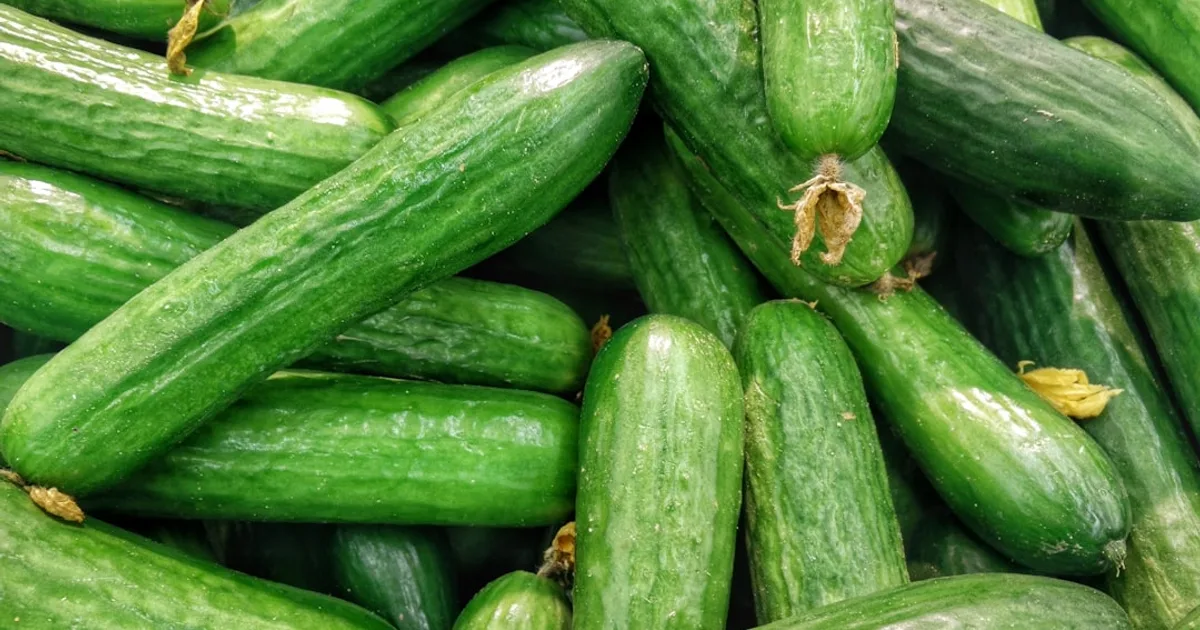
The most compelling math in cucumber growing has nothing to do with fresh eating. It’s this: 4 pounds of pickling cucumbers - worth maybe $3 at retail - plus $2 in vinegar, salt, dill, and garlic, packed into jars you already own, produces 4 pints of refrigerator dill pickles. At farmers markets and specialty grocery stores, those pints retail for $5–$7 each. That’s $20–$28 of product from $5 in inputs. Scale it up with water bath canning and you’re putting up shelf-stable pickles for 12–18 months. A single productive pickling cucumber plant running 8–10 weeks can supply the cucumbers for 15–20 pints of pickles. That’s why serious home food preservers grow a dedicated row of pickling cucumbers every year, not just a plant or two for salads.
For fresh eating, the returns are still solid. At $1.78/lb average retail (USDA ERS 2023), an 8-pound yield from a single trellised plant represents roughly $14 in grocery value from $0.25–$0.50 worth of seed. But if you grow slicing cucumbers and stop there, you’re leaving money on the table.
Which type to grow
The category matters more with cucumbers than with most vegetables. Growing the wrong type for your intended use is the most common mistake beginners make, and it’s entirely avoidable.
Slicing cucumbers - Marketmore 76, Straight Eight, Diva - are bred for fresh eating. They run 8–9 inches, have thick smooth skin, mild flavor, and low bitterness. Diva is an All-America Selections winner with seedless interior and thin skin - it’s the best slicing choice if you want a fruit that eats more like a Persian without paying Persian prices at the seed counter. At $1.50–$2.00/lb retail (USDA AMS 2023), slicers deliver solid fresh-eating ROI but limited premium pricing potential. The flesh is moist and seedy toward the center. They’re what you find in every grocery store. Harvest them at the right size and they’re excellent. Try to pickle them and you’ll get soft, waterlogged pickles because the thick skin slows brine penetration and the wet flesh doesn’t hold its crunch after processing.
Pickling cucumbers - Calypso, National Pickling, H-19 Little Leaf - are shorter (3–5 inches at full size), have thinner skin, bumpier surface, and drier, crisper flesh. H-19 Little Leaf is worth calling out specifically: it’s a compact, parthenocarpic variety (sets fruit without pollination), which makes it useful for protected growing under row cover or in areas with low bee activity. It also has strong powdery mildew resistance. Fresh, pickling cucumbers retail for $1.00–$1.50/lb - lower than slicers or Persians. The value case for pickling types is not in fresh sale price. It’s in the processed value of what comes out of the canning jar. The thin skin lets brine penetrate quickly and evenly. The dry flesh stays firm through the vinegar bath. You can eat them fresh - they’re good - but they won’t impress anyone expecting a grocery-store slicer. Process them at 2–4 inches for whole dill pickles, or 4–5 inches for sliced bread-and-butter style. If you want pickles that actually hold their crunch, grow pickling cucumbers. There’s no substitute.
Persian/mini cucumbers - Beit Alpha types, Persian Baby - run 4–6 inches, are nearly seedless, have thin edible skin, and a sweet, clean flavor. They produce in clusters and don’t require peeling. At retail they command $3–$5/lb (USDA AMS Fresh Fruit and Vegetable Shipment Reports; Whole Foods Market and specialty grocer pricing surveys, 2023), and farmers market customers will pay that rate for a pint basket without hesitation. The premium over slicers reflects both the seedless interior and the absence of the thick waxy peel you have to shave off a standard grocery-store slicer. If you’re growing for fresh eating and want the best ROI per pound at market or as a home grower avoiding retail, this is the category to prioritize. They’re not ideal for pickling because the denser flesh and compact size makes for awkward whole pickles and slower brine penetration.
Retail prices from USDA AMS; days to maturity from Johnny’s Selected Seeds and Burpee variety data.
| Type | Key Varieties | Days to Harvest | Harvest Size | Retail Price | Best Use |
|---|---|---|---|---|---|
| Slicing | Marketmore 76, Straight Eight, Diva | 55–65 days | 8–9 inches | $1.50–$2.00/lb | Fresh eating, salads |
| Pickling | Calypso, National Pickling, H-19 Little Leaf | 50–58 days | 3–5 inches | $1.00–$1.50/lb fresh; high processed value | Dill pickles, bread-and-butter, preserved |
| Persian/Mini | Beit Alpha types, Persian Baby | 60–70 days | 4–6 inches, seedless | $3.00–$5.00/lb | Fresh eating, snacking, appetizer boards |
Retail price ranges from USDA AMS Fresh Fruit and Vegetable Shipment Reports (2023) and specialty produce market surveys. Variety days-to-maturity from Johnny’s Selected Seeds and Burpee trial data.
The other split worth knowing: monoecious vs. gynoecious types. Standard cucumbers produce separate male and female flowers on the same plant. Most modern hybrid varieties are gynoecious - predominantly female flowers, more fruit set, earlier production. Gynoecious seed packets typically include a few seeds of a monoecious pollinator variety for a reason: all-female flowers need pollen from somewhere. Read the packet before assuming all the seeds are the same.
The pickling ROI, spelled out
A $2.99 packet of National Pickling or Calypso cucumber seed contains 25–30 seeds. Start four plants and thin to three. Those three plants, trellised and well-watered, will produce 25–35 lb of cucumbers over an 8–10 week harvest window. You don’t need all of it for pickles, but here’s what the math looks like when you use 10 lb:
10 lb pickling cucumbers (from 2–3 plants grown from a $2.99 packet) Brine ingredients: 2 quarts white vinegar ($1.50), pickling salt ($0.25), fresh dill ($0.50 or free if you grow it), garlic ($0.25) - total roughly $2.50 Jars: reused from previous seasons, or $12–$15 for a case of 12 wide-mouth pints
Ten pounds of 3–4 inch pickling cucumbers packs approximately 7–8 quart jars or 14–16 pint jars. Water bath processed at 10 minutes, they’re shelf-stable for 12–18 months. At $5–$7 per quart jar retail (USDA ERS specialty food pricing; farmers market surveys from the Upper Midwest and Northeast), that’s $35–$56 in preserved value from 7–8 quarts - from $2.99 in seed plus $2.50 in brine ingredients. The raw cucumbers themselves, at $1.00–$1.50/lb fresh, represent $10–$15 in field value. You’re tripling to quadrupling that value in the jar.
The 2–3 plants that supply 10 lb of cucumbers for a pickling batch represent the low end of what productive pickling plants deliver. Three well-managed Calypso plants trellised on a 5-foot panel will typically produce 25–35 lb over an 8–10 week season - enough for three or four full pickling batches. That’s 21–32 quarts of shelf-stable dill pickles from a garden footprint smaller than a card table.
The first year you buy jars, the jar cost eats into returns. After that, the math is lopsided in your favor. A case of 12 quart jars at $14 amortized over five years of use is essentially zero. If you’re preserving with lacto-fermentation instead of vinegar pickling, the economics get even more favorable - no vinegar, no lids to replace, and the process adds probiotic value that refrigerator or canned pickles don’t deliver. See lacto-fermentation and preservation for how the process works and what it costs.
Quick refrigerator pickle framework: For 4 pints refrigerator dills, pack 4 lb of 4-inch pickling cucumbers (halved or speared) into clean pint jars. Bring 2 cups white vinegar, 2 cups water, and 2 tablespoons pickling salt to a boil. Add 2 cloves garlic and 1 fresh dill head per jar, pour hot brine over cucumbers leaving 1/2 inch headspace, cool, cap, and refrigerate. Ready in 48 hours. Good for 2–3 months in the refrigerator without water bath processing.
Trellis vs. ground: the yield-per-square-foot math
This is where cucumber ROI separates from most vegetables. Ground-grown cucumbers sprawl. A standard recommendation for non-trellised cucumbers is one plant per 6–9 square feet to avoid vine tangling and allow harvest access. A four-plant planting of slicing cucumbers running in hills on the ground will consume 30–36 square feet of bed space.
Trellis the same four plants on a 5-foot cattle panel or wire mesh trellis, spacing them 18 inches apart in a row, and they occupy 6 linear feet of trellis - roughly 6–8 square feet of bed footprint. The vines climb vertically. The fruit hangs. The footprint shrinks by roughly 75%.
The University of Kentucky Cooperative Extension Service cucumber production trials (UK Extension publication ID-128) found that trellised cucumbers consistently produce equivalent or higher per-plant yields compared to ground-grown, while requiring 50–70% less horizontal bed space. This is not a minor operational detail. In a 4x8 raised bed, the math looks like this:
Ground-grown cucumbers - 4x8 raised bed (32 sq ft)
- 2 plants at 12–14 sq ft each = 28–32 sq ft
- Per-plant yield: 8–10 lb slicing cucumbers
- Total bed yield: 16–20 lb
- At $1.75/lb: $28–$35 per bed per season
Trellised cucumbers - 4x8 raised bed with 6-foot back trellis
- 5–6 plants at 18-inch spacing along trellis
- Per-plant yield: 8–10 lb (equivalent to ground, per UK Extension trials)
- Total bed yield: 40–60 lb
- At $1.75/lb: $70–$105 per bed per season
The difference is not yield per plant but plants per bed. Trellising does not magic additional production out of each vine; it compresses the footprint so you can run more plants in the same space. If you’re comparing cucumber to zucchini on a square-footage basis, see the zucchini comparison - zucchini wins on raw pounds per plant but loses on space efficiency once you account for its fixed sprawl.
A 5-foot cattle panel arch between two 4x4 beds lets both beds use the same trellis, effectively doubling the growing surface while leaving the bed soil fully accessible. This is the standard setup for serious market gardeners growing cucumbers intensively.
Growing requirements
Don’t rush the planting date. Cucumbers want soil temperature at or above 70°F before direct seeding. Germination stalls below 60°F and seeds rot in cold wet soil before they sprout (Purdue Extension, Cucumbers, HO-97). In most of the continental US, that means direct seeding two to three weeks after last frost.
If you’re starting transplants, use degradable pots - cucumbers have sensitive roots and bare-root transplant shock sets plants back noticeably. Keep the indoor head start to two to three weeks. Older transplants are more root-bound and harder to establish.
Soil pH of 6.0–6.8 is the target range. Cucumbers are light to moderate feeders. High nitrogen encourages lush foliage and delays flowering, so amend with compost rather than synthetic nitrogen as your primary soil prep. Once plants are actively vining and setting fruit, a balanced water-soluble fertilizer at half the recommended rate every two to three weeks keeps production steady.
Trellising is not optional if you’re growing more than one or two plants. Vertical growing does three things: it improves airflow around foliage, which directly reduces powdery mildew pressure; it keeps fruit off the soil where it rots and attracts pests; and it makes harvest faster. Ground-grown cucumbers typically yield 20–30% less than the same variety trellised (Cornell Cooperative Extension, Cucumber Production, 2019). Hanging fruit also tends to be less bitter than ground-contact fruit because the fruit develops without pressure points that can stress the plant.
A cattle panel or sturdy wire mesh trellis at 5–6 feet handles even aggressive vines. In a 4-foot-wide raised bed, a 6-foot trellis running the length of the bed supports 2–3 plants comfortably with 18-inch spacing. In a raised bed, a trellis doubles your effective growing area per square foot. Use cucumber clips or loose fabric ties - never wire around the stem.
Water 1–1.5 inches per week, consistently. Mulch 2–3 inches deep to buffer moisture between waterings. The consistency matters more than the quantity.
Why cucumbers go bitter - and how to prevent it
Bitter cucumbers come from cucurbitacins, a group of triterpenoid compounds that the plant produces in response to stress. They’re not a quality failure in the seed - they’re a stress response in the plant. Cucurbitacins concentrate most heavily at the stem end and in the skin, which is why peeling a bitter cucumber from the blossom end and discarding the stem-end inch often solves it for eating.
Three conditions trigger cucurbitacin accumulation: water stress, temperature extremes (especially heat spikes above 90°F), and over-maturity. A plant that misses an irrigation by three or four days during a heat spell will produce noticeably bitter fruit in that flush. A cucumber left on the vine too long will be bitter even if everything else went right.
Prevention is straightforward:
- Water consistently. Drip irrigation or soaker hose is better than overhead watering because it delivers moisture directly to the root zone without wetting the foliage.
- Mulch to buffer soil moisture and moderate soil temperature.
- Harvest at the correct size. Don’t let fruit yellow or oversize.
- Trellis the plants - ground contact and the mechanical stress of lying on soil can contribute to cucurbitacin buildup in individual fruit.
- If bitterness persists despite good growing conditions, switch to a burpless or low-cucurbitacin variety. Burpless cucumbers (a category that includes many Persian types and modern hybrids like Sweet Slice) have been selectively bred for reduced cucurbitacin content. They’re not completely free of the compound, but the concentration is low enough that most people don’t notice it.
For occasional bitter fruit: peel the cucumber starting from the blossom end, cut off and discard the stem-end inch, and most of the bitterness goes with it. Don’t rub the cut end on the skin - that’s folk advice that doesn’t hold up, and it just spreads the cucurbitacins around.
Powdery mildew and variety selection
Powdery mildew (Podosphaera xanthii) is the primary foliar disease in cucumbers. It shows as gray-white powdery patches on the upper surfaces of older leaves, typically appearing in late summer as days shorten and dew periods lengthen. Mildew doesn’t kill plants immediately, but it progressively weakens them and cuts the productive season short by 2–4 weeks. Plants that hit peak production in mid-July often show heavy mildew by mid-August.
Fungicide applications - sulfur-based or potassium bicarbonate - can slow progression but won’t reverse existing infection. They work best as a preventive spray applied before symptoms appear on susceptible varieties. For a full treatment protocol, see powdery mildew treatment.
The better answer is variety selection. The following varieties carry documented powdery mildew resistance:
- Marketmore 76 - the standard PM-resistant slicing cucumber; resistant to powdery mildew, cucumber mosaic virus, and angular leaf spot. Produces well into September in most zones.
- Dasher II - hybrid slicer with strong PM resistance; earlier to produce than Marketmore, higher yield, very consistent fruit size.
- Saladin - European greenhouse-type cucumber with tolerance to multiple powdery mildew races; good choice if you’re growing under row cover or low tunnel.
- Calypso - pickling type with PM resistance; the variety to reach for if you’re growing pickling cucumbers in a humid climate.
Non-resistant varieties like National Pickling and Straight Eight will typically show mildew symptoms by mid-August in most of the eastern US. If you’re choosing between similar varieties and mildew resistance is listed for one of them, it’s worth the extra consideration - especially if you’re growing for late-season pickling harvests.
What else goes wrong
Cucumber beetles - the striped cucumber beetle (Acalymma vittatum) and spotted cucumber beetle (Diabrotica undecimpunctata howardi) - are the most consequential pest. They feed on leaves, flowers, and fruit, but the real damage is what they carry: bacterial wilt (Erwinia tracheiphila). A plant that wilts suddenly during warm weather and doesn’t recover overnight likely has bacterial wilt. Confirm by cutting a wilted stem and slowly pulling the cut ends apart - if sticky bacterial threads form between them, it’s wilt. Remove the plant immediately. There is no treatment.
Row cover from transplant until first flowers appear sharply reduces beetle feeding during the vulnerable seedling stage. Remove the cover when female flowers open so pollinators can reach them. For a complete management strategy including trap crops, kaolin clay, and spinosad application timing, see cucumber beetle control.
Pollination failure shows up as flowers dropping without setting fruit. Male flowers open first, one to two weeks before female flowers, which you can identify by the small swelling at the base of the flower. If female flowers appear but drop without setting, hand-pollinate by transferring pollen from a male flower to the female’s center with a small paintbrush. Low bee activity during rain or cool spells is the usual cause, and it resolves on its own once weather improves.
Blossom-end rot is less common in cucumbers than in tomatoes but does occur under inconsistent irrigation, particularly when plants are set in soil with calcium levels below 2,000 ppm (UC Davis ANR, Cucumber Production in California, Publication 7219). Foliar calcium sprays help in the short term, but the fix is even watering.
Harvest and storage
Slicing types are best at 6–8 inches. Pickling types at 2–4 inches for whole dills; 4–5 inches for sliced bread-and-butter. The rule that applies to all cucumbers: harvest before the skin starts to yellow. A yellowing cucumber is overmature. The seeds are hardening, the flesh is softening, and leaving it on the vine signals the plant to reduce flower production. Check plants every one to two days during peak production - in hot weather, a cucumber can go from ideal to oversized in 48 hours.
Check under the large lower leaves when you harvest. Missed fruit hiding underneath is the most common reason production drops off unexpectedly mid-season.
Store unwashed cucumbers in the refrigerator at 45–50°F. Temperatures below 40°F cause chilling injury - pitting and accelerated decay - so don’t put them in the coldest part of the fridge. For fresh eating within 2–3 days, room temperature actually produces better flavor than cold storage because refrigeration suppresses the volatile flavor compounds, the same way it flattens tomatoes.
For pickling: process within 24 hours of harvest if possible. The longer cucumbers sit after picking, the more the cell structure softens and the higher the chance your finished pickles won’t have the snap you want. If you’re water bath canning, use cucumbers harvested the same day.
Related crops: Tomato, Green Bean, Zucchini
Related reading: The Financial Case for Canning - converting a cucumber surplus into pickles that store for a year; Lacto-Fermentation and Preservation - fermenting cucumbers without vinegar or canning equipment; Harvest Glut Triage - what to do when the cucumber bed outruns your kitchen; Raised Bed Break-Even - how to run the numbers on whether your garden investment pencils out; Cucumber ROI Analysis - yield per square foot and real return on a 4x8 bed
Pest and disease guides: Cucumber Beetle Control; Powdery Mildew Treatment
Frequently Asked Questions
How much does a cucumber plant produce?
A healthy cucumber vine produces about 8 lbs over the season with consistent picking. Leaving cucumbers on the vine slows production, so harvest every 2 to 3 days.
How long do cucumbers take to grow?
Cucumbers take 55 to 70 days from seed to first harvest. Slicing varieties mature around 55 to 60 days; pickling types are similar.
Is growing cucumbers worth it?
At $1.78/lb grocery price, a single vine yielding 8 lbs returns about $14 on a $3 seed investment - nearly 5x. They are low-input and highly productive.
How do you store cucumbers?
Store cucumbers at room temperature for 1 to 2 days or in the warmest part of the refrigerator (crisper) for up to a week. Cold below 50 degrees causes pitting and watery flesh.
Growing Cucumber? Track your harvest value and break-even date in the Garden ROI app.
Get the App