
Boysenberry
Rubus ursinus x idaeus
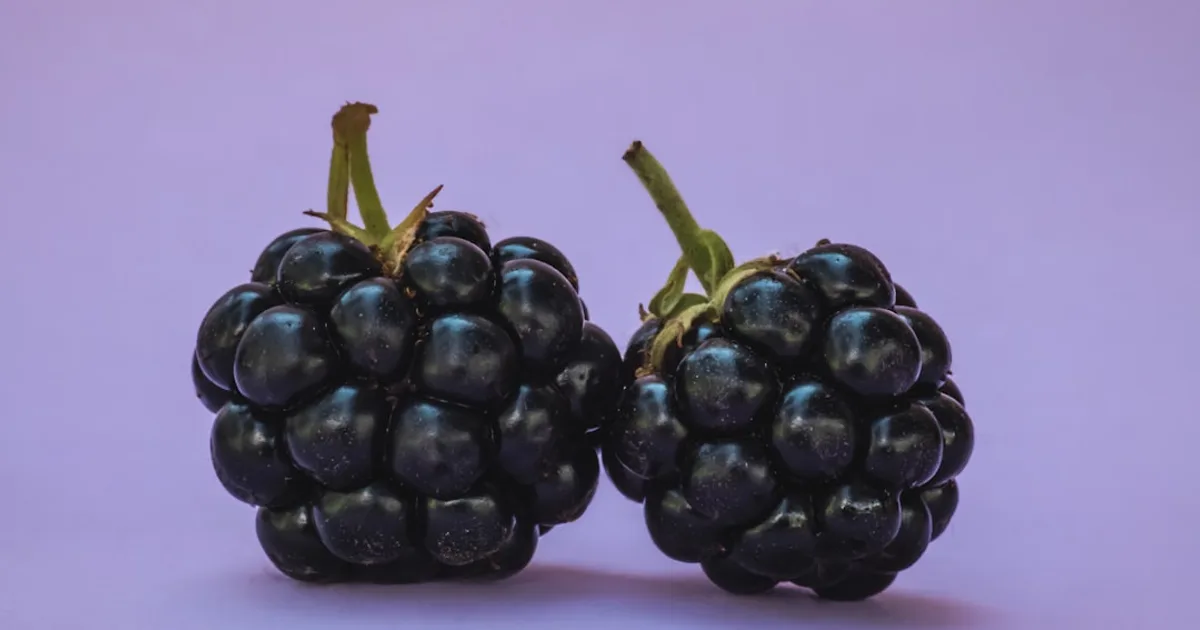
Fresh boysenberries are essentially absent from grocery stores. Not hard to find - absent. The berry bruises so easily and deteriorates so quickly after picking that commercial distribution can’t move it from field to shelf in time. If you want to eat a fresh boysenberry, you grow one. That fact alone is the entire ROI argument for planting this crop.
What it actually is
The boysenberry (Rubus ursinus x idaeus) is a complex hybrid developed in the 1920s by Rudolph Boysen, a California horticulturist who crossed a loganberry (itself a hybrid of blackberry and red raspberry) with a dewberry. Boysen abandoned the planting before it amounted to anything commercial. In the 1930s, Walter Knott - of Knott’s Berry Farm in Buena Park, California - tracked down the near-dead vines on Boysen’s abandoned farm, propagated them, and built a significant portion of his agricultural business on the resulting fruit.
The precise parentage is still debated in horticultural literature. The USDA Agricultural Research Service describes the boysenberry as a complex hybrid involving Rubus ursinus (Pacific blackberry/dewberry), Rubus idaeus (red raspberry), and loganberry parentage, though some sources suggest additional European blackberry (R. fruticosus) genetics. What’s not debated is the result: an unusually large berry, typically 1 to 1.5 inches long, with a deep purple-maroon color, a flavor that sits somewhere between blackberry and raspberry, and an acidity that makes it excellent in cooked applications.
The fruit is larger than blackberry or raspberry. It also produces a hollow core like raspberry when picked - the receptacle stays on the plant, and you’re left with a tender, juice-loaded berry with no structural center to protect it from pressure. That’s why it bruises so quickly. That’s why you can’t buy it at Kroger.
Why you can’t buy it fresh
Commercial fresh berry distribution runs on a 7-to-10-day supply chain. From harvest to store shelf, the fruit moves through cooling facilities, packing houses, refrigerated trucks, distribution centers, and retail floor display. Strawberries tolerate this. Blueberries tolerate this. Blackberries, barely.
Boysenberries don’t. The fruit has a 1-to-2-day fresh shelf life after harvest (University of California Cooperative Extension, Caneberry Production in California, ANR Publication 3525, 2008). The skin is thin. The flesh is soft. A single layer of berries in a flat will show visible bruising within hours at room temperature. Even under refrigeration, quality drops fast.
This is why virtually every boysenberry product at retail is frozen, canned, or processed into jam, syrup, or juice. Frozen boysenberries at specialty grocers like Whole Foods and Trader Joe’s run $6-$9 per pound. Fresh at u-pick farms - where they exist, mostly in California, Oregon, and New Zealand - run $5-$8 per pound. That’s not a premium for specialty status. That’s a premium because fresh boysenberries require you to be physically present at the farm.
Growing your own is not an alternative to buying fresh boysenberries. It’s the only way to eat them fresh at all, outside of a trip to a u-pick operation.
The ROI case
A bare-root boysenberry cane runs $12-$16 from nurseries like Stark Bros or Raintree Nursery. The startup cost is higher than blackberry or raspberry because the crop is less mainstream and nursery volume is lower. You’re paying a scarcity premium at planting, but that same scarcity is what makes the fruit worth $7/lb.
Boysenberries are a multi-year crop. Year one is establishment. You won’t get real fruit until year two, and full production doesn’t arrive until year three. This is the same timeline as blackberry and raspberry - the root system needs to establish before the plant can support a serious fruit load.
| Year | Yield per plant | Value at $7/lb | Cumulative value (1 plant) | Notes |
|---|---|---|---|---|
| 1 | 0 lb | $0 | -$12.99 | Primocanes only; no floricanes to fruit |
| 2 | 2-3 lb | $14-21 | $1-8 | Break-even for many plants |
| 3+ | 4-6 lb | $28-42/yr | $16-50+ annually | Full production; floricane crop |
Break-even on a single $12.99 cane happens somewhere in year two to early year three depending on site conditions and management. By year four, a single cane is generating $28-$42 per season in fresh fruit value that you literally could not buy at any mainstream retailer regardless of what you were willing to pay.
Planting three canes - a reasonable minimum for useful harvests - costs roughly $39. By year three, those three plants produce 12-18 lbs annually, worth $84-$126 at $7/lb. Annual maintenance costs are low: mulch, some compost, occasional trellis upkeep. No annual seed purchase. No transplant labor after establishment. The perennial economics compound in your favor every year.
Retail price reference: USDA AMS Specialty Crop Market News tracks frozen small fruit prices; frozen boysenberry at specialty retail averaged $7-$9/lb in 2023. The $7/lb figure used here is conservative.
Cane management: the primocane/floricane cycle
This is the critical section. Boysenberries, like all Rubus hybrids in this class, produce fruit on second-year canes (floricanes). If you don’t understand the biennial cane cycle, you’ll either cut out next year’s fruit or leave a tangled mess that produces poorly and harbors disease.
Year-one canes are called primocanes. They are vegetative. They grow, they harden off, they develop buds along their length, and they do not fruit. Their entire purpose in year one is to get ready to fruit the following year.
Year-two canes are called floricanes. These are last year’s primocanes. They push out laterals from those hardened buds, flower, and set fruit. After the harvest is complete - late July through August in most zones - the floricane is finished. It won’t fruit again. Its job is done.
After harvest, remove every floricane to the ground. Cut them at the base and get them out of the planting. Do not leave stubs. Remove the cut material from the site rather than composting it on-site - cane debris carries disease inoculum. At this point, your planting should consist entirely of the current season’s primocanes, which are standing tall and green and already setting themselves up to become next year’s floricanes.
Train the new primocanes to the trellis. This is the second half of post-harvest management. Once the spent floricanes are removed, you can see clearly what you have. Tie the primocanes to the trellis wires at 2-3 foot intervals. Boysenberry is a trailing type - unlike erect blackberry, the canes don’t support themselves and will sprawl across the ground if you don’t guide them up. Trailing canes on the ground become a management problem: they root at the tips (creating unwanted plants), collect soil-borne pathogens, and make harvest difficult.
The trellis for boysenberry needs to be sturdy. Use T-posts or wooden posts at 8-foot intervals minimum. Run two wires: one at 3 feet, one at 5 feet. Heavier gauge wire (12-14 gauge) holds up better than lighter options under the weight of a full cane. Set posts at planting, before you ever need them, not after the canes have already sprawled.
Boysenberry canes can reach 10-15 feet in length. You’ll weave or tie them along the trellis wires in a fan pattern, spacing canes roughly 6-8 inches apart to allow airflow and sun penetration. Crowded canes produce more disease pressure and smaller fruit.
Growing requirements
Boysenberries are adapted to USDA Hardiness Zones 5-9. They are less cold-hardy than standard blackberry - if you’re in Zones 5-6, treat primocane protection as non-optional. Before the first hard freeze, lay primocanes off the trellis and cover them with 6-8 inches of straw mulch or similar insulating material. Remove the mulch gradually in spring as temperatures stabilize. Canes that freeze back to the ground in Zone 5 without protection won’t fruit the following year.
In Zones 7-9, cold hardiness is not a concern. The limiting factor shifts to heat and water availability in summer.
Soil: pH 5.5-6.5, well-drained, loose to 12 inches depth. Boysenberry is more sensitive to waterlogged soil than blackberry. If drainage is marginal, build a raised row or bed - even 6-8 inches of elevation helps. Phytophthora root rot is a real threat in saturated conditions. Incorporate 2-3 inches of compost before planting.
Sun: Full sun, 6+ hours daily minimum. Eight or more hours drives maximum production. Boysenberries planted in partial shade produce longer, weaker canes, lower fruit set, and more disease pressure. Don’t compromise on light.
Spacing: 5-8 feet between plants. Boysenberry spreads horizontally along the trellis; give each plant room to fill its allotted trellis space without crowding its neighbors. Rows at 8-10 feet apart.
Planting time: Spring, once soil is workable and daytime temperatures are consistently above 45°F. Plant bare-root canes when dormant. Set the crown at soil level, spread the roots, firm the soil, water thoroughly. Apply 3-4 inches of mulch around (but not against) the crown.
Water: 1-1.5 inches per week through the growing season, consistent rather than sporadic. Drip irrigation is strongly preferred - it delivers water at the root zone without wetting foliage, which reduces fungal disease pressure. During fruit development, consistent soil moisture prevents cracking and improves berry size and sweetness.
Fertilizer: Apply balanced fertilizer (10-10-10 or similar) at bud break in spring. A second light nitrogen application after harvest supports primocane development. Avoid heavy nitrogen applications in late summer - you don’t want to push tender new growth into fall that won’t harden before frost.
Varieties
Named boysenberry varieties are limited compared to blackberry or raspberry, which have extensive university breeding programs behind them. The Oregon Raspberry and Blackberry Commission maintains variety data and is the most authoritative domestic source for Rubus breeding information (ORBC, Variety Development Update, 2022).
Thornless Boysenberry is the most widely available selection, sold by Stark Bros, Raintree Nursery, and One Green World. The thornless characteristic was selected for home garden and u-pick use. Some growers report slightly lower yields compared to thorned types, though the evidence for a consistent yield gap is mostly anecdotal in home garden settings. For most home gardeners, the thornless type is the right choice: easier to train, easier to harvest, easier to manage during cane removal.
Thorny (standard) boysenberry is available from specialty nurseries and through some regional mail-order suppliers. If yield is the primary objective and you’re comfortable managing thorned canes, the thorny type is worth considering. The thorns are substantial - heavier gloves and long sleeves are not optional.
A note on availability: boysenberry plants sell out from most nurseries early in the season, often by February for spring shipping. Order in fall or early winter if you want your choice of material. Buying whatever’s left in April usually means limited options.
What goes wrong
Orange rust (Gymnoconia nitens) is the disease you need to know first. This fungal pathogen is specific to Rubus species and is systemic - it colonizes the entire plant, including the root system. Infected plants show pale, yellowish shoots in spring that develop into leaves with orange spore pustules on the undersides. There is no cure. Infected plants must be dug out entirely - roots and all - and destroyed. Do not compost them. Orange rust spreads via airborne spores; remove infected plants immediately before the pustules mature and release. Planting certified disease-free stock and buying from reputable nurseries is the primary prevention strategy (OSU Extension, Rubus Diseases in the Pacific Northwest, PNW 202).
Spotted wing drosophila (Drosophila suzukii, SWD) is a significant pest for boysenberry and any soft-fruited crop. Unlike standard fruit flies that target overripe or damaged fruit, SWD females have a serrated ovipositor that lets them lay eggs inside intact, ripening fruit. The larvae hatch and feed inside the berry. By the time you notice - often when you bite into a berry - the damage is done. SWD populations build through summer and peak during boysenberry’s late harvest window.
Monitoring with apple cider vinegar traps (commercial traps are available, or DIY with a jar, vinegar, dish soap) lets you track pressure levels. When SWD populations are high, daily harvest is essential - ripe fruit left on the cane becomes an egg-laying target. Kaolin clay applications on developing fruit deter oviposition with mixed results; fine mesh exclusion netting over the planting during ripening is more reliable but labor-intensive. The practical first line of defense is harvest frequency. Pick everything that’s ripe, every day, at peak season.
Aphids in spring on new primocane growth are a routine problem, not a crisis. Colonies of green or black aphids establish quickly on soft new growth and can distort emerging shoots. A strong jet of water knocks most of them off. Beneficial insects - parasitic wasps, lady beetles - typically bring populations under control within 2-3 weeks if you don’t spray broad-spectrum insecticides that kill them too. If populations persist and are causing visible damage, insecticidal soap or neem oil applications are effective and compatible with beneficial insect preservation.
Botrytis gray mold (Botrytis cinerea) hits ripening fruit during cool, wet harvests. Infected berries turn gray and collapse. The primary management tool is airflow: keep cane density reasonable, don’t let the canopy close completely, and harvest frequently. Leaving ripe fruit on the plant in wet conditions is an invitation to botrytis.
Harvest and storage
Boysenberry ripens over a 3-4 week window in midsummer, typically July through early August in most zones (earlier in Zone 8-9, later in Zone 5-6). Fruit doesn’t all ripen at once. You’re picking the same plants every one to two days throughout the harvest window, which means sustained attention but also a continuous supply of fresh fruit rather than a single overwhelming harvest.
A ripe boysenberry releases from the receptacle with almost no force - a gentle touch, and it comes free. It should be uniformly deep purple-maroon, not showing any red patches, and it should give slightly under light pressure. If you have to tug it, it’s not ready. If it squashes when you touch it, you’re a day late.
Use shallow containers for harvesting. A single layer of berries in a half-pint basket is about the limit before the bottom layer starts taking damage from the weight above. This matters for quality: damaged berries at the bottom of a deep container develop mold faster and drag down the quality of everything they contact.
Fresh storage: Refrigerate immediately. Spread berries in a single layer on paper-towel-lined trays if possible - the towels absorb condensation that accelerates mold. Eat within 1-2 days. There is no technique that extends boysenberry fresh shelf life beyond this. The biology of the fruit is working against you.
Freezing: Spread berries in a single layer on parchment-lined sheet pans and freeze until firm, typically 2-4 hours. Transfer to freezer bags and remove as much air as possible. Frozen boysenberries hold quality for 10-12 months and are excellent for jam, syrup, pie filling, and sauces. The freezing process softens the cell structure somewhat, so thawed berries won’t hold their shape, but the flavor holds exceptionally well and the color is better than most frozen bramble fruit.
Jam and preserves: Boysenberry jam captures the intensity of fresh flavor in a form that keeps for a year and doesn’t require refrigeration until opened. The natural pectin content is moderate; most home jam recipes use added pectin. One pound of boysenberries produces roughly one half-pint of jam. At specialty retail, boysenberry jam runs $10-$16 per half-pint - the same fruit that cost you $0 per pound to grow (beyond the initial cane investment, which amortizes over years).
Related crops: Blackberry, Raspberry
Related reading: Fruit Tree Payback Timeline - when perennial fruit crops cover their cost
Growing Boysenberry? Track your harvest value and break-even date in the Garden ROI app.
Get the App