
Mint
Mentha spp.
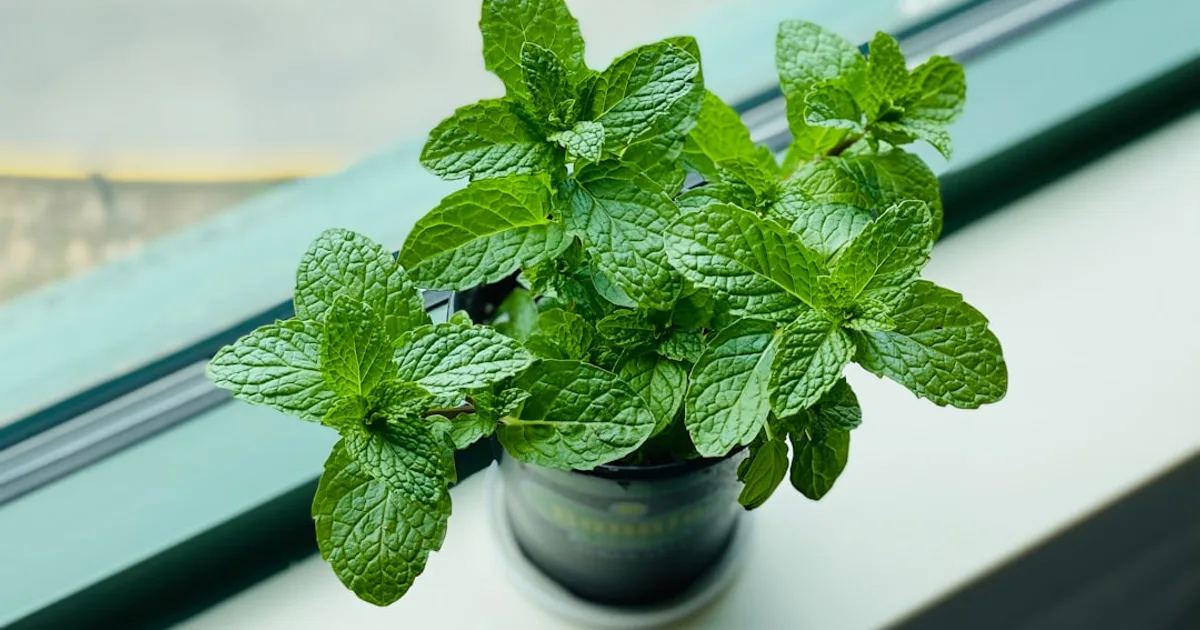
Mint (Mentha spp.) is one of the easiest herbs to grow and one of the fastest to become a problem. Both things are true, and which one defines your experience depends entirely on the first decision you make.
This page covers the genus broadly. For variety-specific depth, see Peppermint - the high-menthol culinary and tea standard - and Spearmint - the mild type most useful for cooking and cocktails. Most garden mint is one or the other.
Containment: This Comes First
Mint spreads by underground stems called stolons - horizontal runners that travel through the top few inches of soil, send up shoots every few inches, and keep moving. They don’t stop at the edge of where you planted. They don’t stop at the edge of your raised bed. Left unchecked in open soil, a single mint plant will overtake a 4-square-foot area in the first season, double or triple that in the second, and by the third season you’ll be pulling mint out of things you don’t want it in. Getting it out of established garden beds means hand-pulling every fragment of root, because any piece you leave behind will regenerate.
You have three practical options.
Option 1: Grow entirely in above-ground containers. A 12- to 16-inch pot on a patio or deck. This is the simplest approach. The plant can’t escape, you can move it, and when it outgrows the container after two or three years you divide it and repot. You’ll never have to worry about containment again.
Option 2: Sink a container in the ground to rim level. Take a bottomless bucket, a cut-off 5-gallon nursery pot, or a purpose-made root barrier and sink it so the rim sits flush with or just above the soil surface. Plant the mint inside the container. When runners hit the container wall, they stop. This gives you the look of in-ground planting while blocking lateral spread. The container has to be bottomless or have drainage holes - mint doesn’t tolerate waterlogged roots - and the rim must stay at or above soil level, because runners can get over a submerged rim.
Option 3: A dedicated bed with mowed edges. If you have space and want a larger patch, give mint its own isolated bed and mow around it regularly to cut any runners that escape the edges. This works but requires consistent attention. Skip mowing for a few weeks and the runners will be into adjacent lawn or beds.
Most home gardeners are best served by Option 1 or 2. The contained pot on a patio produces all the mint a household needs. Don’t let enthusiasm about mint’s productivity talk you into planting it in open soil.
The Varieties Worth Knowing
Not all mint is peppermint, and the differences matter for how you use it. The five types you’ll find at most nurseries:
| Variety | Species / Notation | Menthol Content | Flavor Profile | Best Use |
|---|---|---|---|---|
| Peppermint | Mentha × piperita | High | Intense, cooling, sharp | Tea, medicinal, candy flavoring |
| Spearmint | Mentha spicata | Low | Mild, sweet, bright | Cooking, mojitos, salads |
| Chocolate mint | M. × piperita (cultivar) | High | Peppermint base + cocoa aroma | Desserts, novelty drinks |
| Apple mint | Mentha suaveolens | Low-moderate | Fruity, soft, fuzzy-leafed | Fresh use, fruit salads |
| Orange mint | M. × piperita var. citrata | Moderate | Citrus-forward, floral | Cocktails, teas, garnish |
Peppermint is the default for dried herb and medicinal use because of its menthol concentration. Spearmint is what most people actually want for cooking - the lower menthol content means it doesn’t overwhelm a dish the way peppermint can. Chocolate mint is mostly a novelty; it’s pleasant to brush against in the garden, but in a blind taste test most people can’t reliably distinguish it from standard peppermint once dried. Orange mint earns its keep if you make cocktails or want something interesting in iced tea.
You can grow more than one variety, but keep them physically separated. Different mints will cross-pollinate and, more practically, the runners will intermingle and you’ll eventually lose track of which is which.
Why You Should Buy Plants, Not Seed
Peppermint is a sterile hybrid - a cross between watermint (M. aquatica) and spearmint (M. spicata) - which means it doesn’t produce viable seed. What you find sold as “peppermint seed” is either mislabeled spearmint or some other Mentha selection that will not be peppermint when it grows out. Buy transplants.
Spearmint can be grown from seed, but germination is slow and results are variable. The seedlings are not uniform. For $2.49 to $3.99 at most nurseries you can get a proven transplant that will establish quickly and produce in its first season. The seed-to-harvest timeline is longer, and the outcome is less predictable. This is one crop where buying plants is the right call every time.
The ROI Numbers
A single transplant in a 12-inch container, given adequate water and regular harvesting, produces 0.25–0.5 lb of fresh leaves per season in its first year. An established container fills out more and can push 0.5–0.75 lb fresh. Fresh mint bunches run $4–$8/lb at retail (USDA AMS). That’s $1–$4 per container per season in raw grocery value.
The case for fresh is convenience, not ROI scale: a $1.99 grocery store bunch is all the mint most households need for a week, and home-grown replaces that without a special trip. The real value is access - cutting a handful of fresh mint whenever you need it, rather than managing a wilting bunch from the store.
Dried mint stores differently. The fresh-to-dried ratio for mint is roughly 4:1 by weight - 4 oz fresh yields approximately 1 oz dried. Dried mint retails at $8–$15/lb for conventional and up to $25/lb for specialty organic (USDA AMS). A container producing 0.5 lb fresh per season converts to roughly 2 oz dried - worth $1–$2 per season in dried herb value. Modest numbers, but mint is a zero-replant perennial. The ongoing input cost after year one is water.
Year two also changes the economics because you propagate new plants at zero cost. Mint roots readily from stem cuttings in water - new plants in 2–3 weeks. One established container becomes however many plants you want.
Year two also changes the math because you can propagate your own plants at no cost. Mint roots readily from stem cuttings placed in water. Within two to three weeks, a cutting will have enough root growth to pot up. One established plant can produce a dozen cuttings in a single harvest. If you want to grow multiple varieties, your year-two cost for additional plants is $0.
The Tea Calculation
The most practical value for most households isn’t dried bulk herb - it’s tea. Fresh or dried mint tea is one of the most direct ways to put a garden surplus to use, and the economics are worth looking at directly.
A standard commercial peppermint tea bag contains roughly 1.5 to 2 grams of dried mint (approximately 0.05 to 0.07 oz). A cup of loose-leaf tea brewed to similar strength uses about 0.1 oz (roughly 3 grams) of dried mint. At $20/lb for specialty dried peppermint, that 0.1 oz costs approximately $0.125 - call it $0.12 to $0.13 per cup in raw herb value.
Commercial tea bags sell for roughly $0.15 to $0.25 per bag at mainstream prices, and more for premium or organic brands. The herb cost per cup at home production approaches $0 once the plant is established, because your marginal cost per additional harvest is just your time.
For a household that drinks two cups of mint tea daily, that’s roughly 730 cups per year. At $0.20 per commercial tea bag, that’s $146 per year in tea purchases. A single established mint plant in a 12-inch pot will supply more dried herb than a household of two needs for tea, plus fresh use throughout the season. The payback on the initial $4 transplant cost occurs in the first two to three weeks of tea consumption.
This is the case where the ROI math actually becomes significant - not in the abstract value of dried herb per pound, but in the direct substitution of a recurring household purchase.
Menthol Timing: Harvest Before Flowers
Menthol concentration in peppermint leaves peaks just before the plant flowers. The essential oil content is highest when the plant has put full energy into leaf production but hasn’t yet begun redirecting resources into reproduction. Once flower buds open, menthol content drops measurably and the dried herb is less potent.
The practical implication: watch for flower buds and harvest before they open. For the most potent dried mint - whether for tea, culinary use, or any medicinal application - you want leaves cut at the pre-flower stage. Regular harvesting keeps the plant in vegetative mode and naturally delays flowering, which is one reason frequently harvested mint stays more productive than neglected plants.
If you miss the window and the plant flowers, cut it back hard. It will re-vegetate from the base and give you another harvest cycle.
Growing Requirements
Site it with morning sun and some afternoon relief from direct heat. In climates with consistently hot summers (Zone 7 and south), full afternoon sun will stress the plant and reduce oil concentration in leaves. In Zone 6 and north, full sun is fine. Four to six hours is enough; mint doesn’t need eight hours the way fruiting crops do.
Soil should drain freely. Mint has higher water needs than most herbs, but sitting in waterlogged soil encourages root rot. In containers, use a quality potting mix - not garden soil, which compacts in pots - and make sure drainage holes are clear. Water when the top inch of soil is dry; in summer heat, container mint may need water every day or two.
Fertilize lightly. A half-strength balanced liquid fertilizer once a month during the growing season is sufficient. Heavy nitrogen pushes lush growth but dilutes the essential oil concentration in leaves - the same dynamic you see in basil. More fertilizer does not mean more flavor.
Mint is perennial and cold-hardy through most of the continental US. Most Mentha species are rated for USDA Hardiness Zones 3–9. In cold climates, above-ground growth dies back in late fall and the plant overwinters in the roots, re-emerging in spring without any intervention. Container plants in Zone 5 and colder may benefit from moving to an unheated garage or shed for winter to protect the root ball from hard freezes.
What Goes Wrong
Mint rust (Puccinia menthae) is the most common disease problem - orange-yellow pustules on leaf undersides, distorted new growth, reduced vigor. It’s a fungal pathogen that overwinters in infected plant debris and spreads by airborne spores. Remove and bin (don’t compost) heavily infected material. Improve airflow around plants and avoid overhead watering in the evening. In severe cases, cut the plant to the ground, remove all debris, and let it regrow. Mint rust recurs if you don’t clean up infected tissue at end of season.
Verticillium wilt (Verticillium dahliae) causes stems to yellow and collapse progressively. It’s a soilborne pathogen with no cure and long soil persistence - which is another argument for container growing, where you can replace the potting medium if the problem appears.
Spider mites (Tetranychus urticae) show up in hot, dry conditions as stippled, bronzed foliage and fine webbing on leaf undersides. A hard spray of water knocks most populations back. Insecticidal soap works for heavier infestations; apply in the evening to avoid leaf scorch.
Aphids cluster on new growth in spring. Same protocol - water spray first, insecticidal soap if the population doesn’t respond.
Harvest and Storage
Cut stems in the morning after dew has dried. The aromatic oils are most concentrated at this point. For fresh use, stems keep upright in a glass of water at room temperature for two to three days, or wrapped in a damp paper towel in the refrigerator for up to two weeks.
For drying, bundle six to eight stems and hang them upside down in a warm, well-ventilated spot out of direct light. Good airflow matters more than heat - a barn, a covered porch, or a pantry with a fan all work. Leaves are adequately dry when they crumble easily, typically seven to fourteen days. Strip dried leaves from stems, store in an airtight container away from heat and light. Properly dried and stored peppermint holds usable potency for twelve months; after that it’s still technically mint but the menthol has faded.
For bulk freeze storage, blanch stems briefly in boiling water, pat dry, freeze flat on a sheet pan, then transfer to bags. Alternatively, blend fresh leaves with a small amount of water and freeze in ice cube trays - useful for dropping into drinks or cooked applications through winter.
Repotting and Division
Container mint becomes root-bound after two to three years. When you see roots circling the inside of the pot or the plant’s production declining despite adequate water and fertilizer, it’s time to divide. Pull the root ball out, cut it into sections, repot one section in fresh potting mix, and either pot up the rest as additional plants or compost them. Division at this stage is also how you get free planting stock for additional containers. The cost of expansion after year two is your time and a bag of potting mix.
Related crops: Peppermint, Spearmint, Basil, Apple Mint, Catnip, Bee Balm, Lemon Balm, Lemon Verbena
Related reading: Herb Preservation Guide - drying, freezing, and infusing mint; Herb Garden ROI - the 8 highest-value culinary herbs compared; Companion Planting Basics - what the evidence actually says about mint’s claimed pest-deterrent effects
Frequently Asked Questions
How much does a mint plant produce?
A single container mint plant produces about 0.35 lbs of fresh leaves per season when harvested regularly. In-ground plants spread aggressively and can produce several pounds from a small patch.
How long does mint take to establish?
Mint takes 90 to 120 days to become a full, productive plant from a new starter. By the second year, established plants produce heavily each spring.
Is growing mint worth it financially?
Grocery fresh mint averages $6/lb and is sold in small bunches for $2 to $4 each. A $4 potted plant provides years of free harvests and is one of the easiest herbs to propagate from cuttings.
How do you store fresh mint?
Store fresh mint stems in a glass of water at room temperature for up to a week. For longer storage, freeze whole leaves flat on a tray then bag them, or dry in a low oven until brittle.
Growing Mint? Track your harvest value and break-even date in the Garden ROI app.
Get the App