
Raspberry
Rubus idaeus
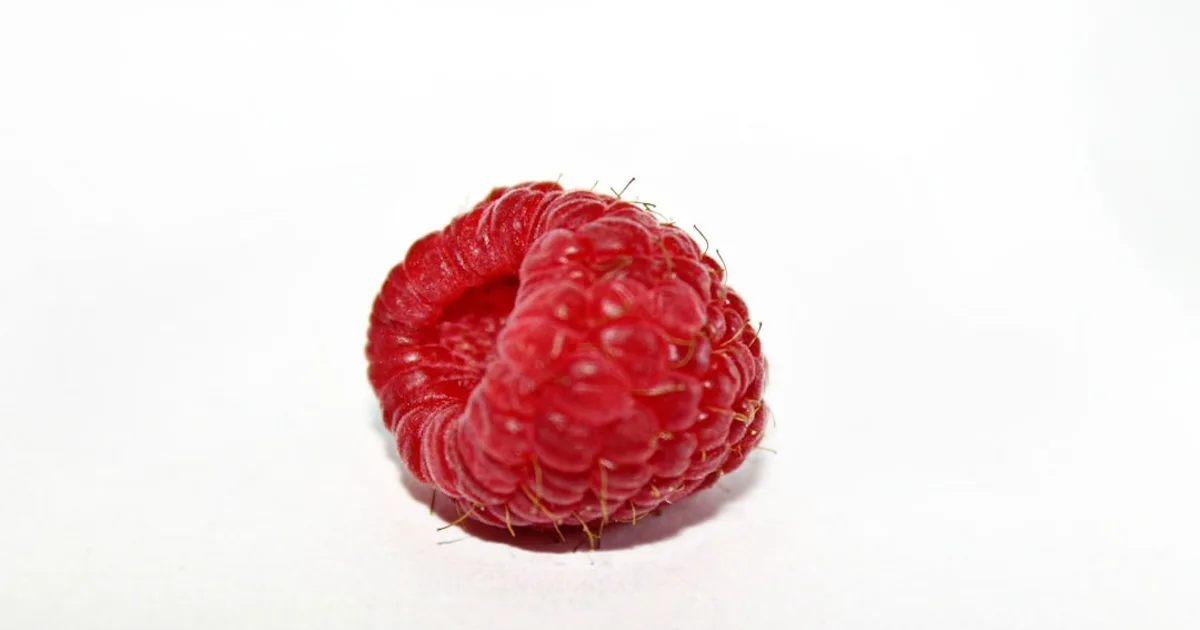
Fresh raspberries run $5–$8 per half-pint at retail (USDA AMS Market News, 2023). A half-pint is less than a third of a pound. That makes raspberry one of the highest-value crops per square foot in a home garden, and unlike most high-value produce, it produces year after year once established with minimal per-season investment.
Cane structure and types
Red raspberry (Rubus idaeus) produces biennial canes from a perennial root system. Each cane lives for two years. Year-one canes (primocanes) are vegetative - they grow to full height but don’t fruit. Year-two canes (floricanes) produce fruit, then die. You cut the dead floricanes out after harvest.
Summer-bearing (floricane-fruiting) varieties follow this strict pattern and produce one crop in early to midsummer. ‘Latham,’ ‘Nova,’ and ‘Boyne’ are reliable summer-bearing cultivars for Zones 3–7.
Everbearing (primocane-fruiting) varieties fruit on both the tip of the first-year cane in fall and on the middle section of those same canes the following summer. The practical advantage: you can choose to mow the entire planting to the ground each fall, sacrifice the summer crop, and get one clean, manageable fall harvest. Or you can leave the canes over winter for two crops, which requires more careful pruning management. ‘Heritage’ and ‘Autumn Bliss’ are the standard everbearing cultivars.
The ROI case
A bare-root bundle of 5–10 canes runs $8–$15. By year two, established plants yield 1.5–2.5 lb per linear foot of row (Oregon State University Extension, Raspberry Production for the Pacific Northwest, EM 8886, 2020). A 10-foot row returns 15–25 lb at peak production. At $6/lb, that’s $90–$150 in annual grocery value from a planting that cost less than $15.
The compounding effect comes from suckers. Raspberry spreads aggressively via root suckers - new canes emerging from the root system several inches to several feet away from the main row. Manage them and you have a clean row; dig them up and replant or share them, and you’re expanding your planting for free every year.
Growing requirements
Plant in full sun. Six hours is the minimum; eight or more is better. Raspberries planted in part shade produce weaker canes and more disease pressure.
Well-drained soil is critical. Raspberries in waterlogged soil develop Phytophthora root rot rapidly. If your site drains poorly, plant in raised rows or raised beds. Otherwise, soil loosened to 12 inches with 2–3 inches of compost incorporated is adequate. pH 6.0–6.5 is the target range (UC Cooperative Extension, Raspberries for the Home Garden, 2019).
Space canes 2–3 feet apart within rows, rows 8–10 feet apart to allow equipment or wheelbarrow access. Install a trellis - two parallel wires at 2.5 feet and 4.5 feet height, supported by posts every 15–20 feet. Unsupported canes flop over, break in wind, and complicate picking.
Water consistently at 1–1.5 inches per week through the growing season, more during fruit development. Drip irrigation delivers water to the root zone without wetting foliage, which reduces disease pressure. Mulch 3–4 inches deep to retain moisture and suppress weeds - raspberries are shallow-rooted and don’t compete well with grass.
What goes wrong
Phytophthora root rot (Phytophthora fragariae var. rubi) is the most common cause of raspberry decline. Infected plants yellow, wilt, and die. There is no cure; the pathogen persists in soil indefinitely. Prevention is the only strategy: choose well-drained sites, avoid overhead irrigation, and purchase disease-free certified planting stock. Do not replant raspberries in a site where they have previously died.
Gray mold (Botrytis cinerea) affects flowers and developing fruit during cool, wet weather. Infected fruit turns gray and collapses. Improve airflow by thinning canes to 4–6 per foot of row and keeping the row width narrow. Remove infected fruit immediately.
Raspberry crown borer (Pennisetia marginata) is a clearwing moth whose larvae bore into the crown and roots of raspberry canes, causing sudden wilting of canes in summer. Infested canes have frass and discoloration at the base. Cut out and destroy affected canes; there is no effective rescue treatment once larvae are inside the plant.
Japanese beetle (Popillia japonica) adults skeletonize leaves and damage ripening fruit from midsummer onward. Hand-pick in the morning when adults are sluggish; kaolin clay applications deter feeding. In high-pressure areas, neem-based products applied regularly provide partial protection.
Harvest and storage
Ripe raspberries separate from the receptacle (the white core) cleanly with slight pressure. If the fruit resists or tears, it’s not fully ripe. If the receptacle comes with it, you’re picking too late. The window between underripe and overripe for fresh eating is narrow - often a day or two for a given cluster of fruit.
Pick every day or two at peak season. Ripe raspberries are fragile: they bruise easily, mold starts fast, and heat accelerates deterioration. Harvest in the morning after dew dries, handle as little as possible, and refrigerate immediately. Use within two to three days.
For freezing, spread in a single layer on a sheet pan until firm, then bag. Frozen raspberries hold well for baking, sauces, and jam for up to 12 months.
Summer-bearing vs. everbearing: the practical comparison
The difference between these two types isn’t just about when you pick. It shapes how you prune, how you plan your season, and what your annual yield looks like.
| Summer-bearing | Everbearing | |
|---|---|---|
| Fruiting canes | Floricanes only (second-year canes) | Primocane tips in fall + floricanes the following June |
| Harvest window | One crop, June-July | Two crops: June and August-October |
| Berry size | Larger | Smaller per berry |
| Yield per plant | 4-6 lbs/plant/year at peak | 2-3 lbs per crop, 4-5 lbs total/year |
| Pruning complexity | Lower - remove floricanes after harvest | Higher if running two crops; simpler if mowing entire planting to ground each fall |
| Best for | Large single harvest, freezing, jam | Extended fresh eating season |
Source: Penn State Extension, Small Fruit Management, 2019.
The yield numbers in that table reflect established plantings at years three and beyond. Year one and two are different, which is covered in the ROI table below.
Primocane vs. floricane biology
This is the thing most people get wrong, and getting it wrong means you cut out the wrong canes. Summer-bearing raspberry is strictly floricane-fruiting. The first-year cane (primocane) grows to full height, develops lateral buds, and does nothing else. The second year, that same cane - now a floricane - produces lateral branches, flowers, and fruit. After fruiting, it dies. The root system keeps going and pushes up new primocanes.
The pruning logic follows directly from this: after summer-bearing harvest, you remove every cane that fruited. Those floricanes are done. The primocanes standing next to them are next year’s fruit. If you cut them too, you’ve just eliminated your crop.
Everbearing raspberry is different in one important way. The primocane produces fruit at its tip in late summer. That same cane then overwinters. In June of the second year, the lower and middle portions of that cane produce a second crop before dying. So an everbearing cane fruits twice, and your planting is never in a zero-cane state.
The shortcut management option for everbearing: mow everything to the ground after the fall crop. You lose the June fruiting the following year, but you get one clean, easy-to-manage fall crop. This is a legitimate trade-off if you’d rather simplify management than maximize yield.
10-year raspberry ROI
These numbers assume 5 plants to start, red raspberry, sold or valued at $6/lb (USDA AMS retail average for pints and half-pints, 2023). Input costs reflect mulch, occasional fertilizer, and replacement stakes. Sucker expansion is factored in starting Year 3.
| Year | Plants | Input cost | Expected yield (lbs) | Value at $6/lb | Net (year) | Cumulative net |
|---|---|---|---|---|---|---|
| 1 | 5 | $30-50 | 0 (pinch flowers) | $0 | -$30 to -$50 | -$30 to -$50 |
| 2 | 5 | $5-10 | 15-25 | $90-150 | $80-145 | $30-95 |
| 3 | 12-15 | $10 | 36-60 | $216-360 | $206-350 | $236-445 |
| 4 | 15-20 | $10 | 45-80 | $270-480 | $260-470 | $496-915 |
| 5 | 15-25 | $10 | 45-100 | $270-600 | $260-590 | $756-1,505 |
| 6-10 | 15-25 (managed) | $10/yr | 45-100/yr | $270-600/yr | $260-590/yr | $1,200-2,500+ by Year 10 |
Sources: Penn State Extension, Small Fruit Management, 2019; USDA ARS raspberry production data.
Year 1 yield is intentionally zero. Pinch off any flowers that appear in the first season. The energy that would go into fruit goes into root development instead. You will get a better Year 2 and beyond if you do this. It’s an easy thing to skip and a hard thing to un-do.
Year 2 yield assumes 5 plants at 3-5 lbs each, which is conservative for well-established first-year plantings. Some gardeners see more.
Year 3 onward assumes sucker expansion - which happens whether you plan for it or not.
Sucker propagation and what it does to the math
Raspberry is self-expanding. Each established plant produces 3-6 basal suckers per year - new canes pushing up from the root system, often a foot or two outside the main row. Manage them and you have a clean planting. Let some of them root and move them or leave them in place, and your patch doubles in size without spending a dollar.
The economics of this are real. Five plants in Year 1 can realistically become 15-25 plants by Year 3 at zero additional cost. Run the numbers on that:
- 20 plants at 3 lbs each at $6/lb = $360/yr in grocery value
- Initial investment: $30-50 in bare-root canes
- Calculated 10-year ROI: 800%+ from that initial stake
Source: Penn State Extension, USDA ARS.
The practical implication: raspberry patch management involves two jobs most gardeners don’t expect. First, deciding how far you want the patch to expand - and managing suckers accordingly by digging them up, relocating them, or cutting them back. Second, keeping the row narrow (18-24 inches wide) so air moves through and picking is easy. An unmanaged patch goes from “productive” to “impenetrable” in three or four seasons.
Suckers also give you something valuable: free plants to trade. A healthy mature patch produces enough suckers each spring to give away to neighbors, start new rows, or fill gaps. Dig them when they’re 6-8 inches tall, before they establish deeply, and transplant immediately with adequate water. Survival rate is high if you don’t let the roots dry out.
Disease pressure
Three problems are worth knowing before they appear.
Botrytis (Botrytis cinerea, gray mold) hits fruit and flowers in cool, wet conditions. Infected berries collapse and go gray-white. The fix is air circulation - thin primocanes to 4-6 per foot of row, keep the row narrow, and remove infected fruit before spores spread. Good canopy management prevents most botrytis without any sprays.
Cane blight (Leptosphaeria coniothyrium) enters through pruning wounds and damaged tissue. Infected canes show purple-brown lesions that girdle the cane and kill it. Prune with clean tools (wipe with 70% isopropyl alcohol between plants), remove infected canes at ground level, and don’t leave stubs. Floricane removal after harvest eliminates a lot of the entry points this pathogen needs.
Raspberry mosaic virus doesn’t have a single cause - it’s a complex of several viruses transmitted primarily by aphids, specifically the large raspberry aphid (Amphorophora agathonica). Infected plants show mottled, distorted leaves and sharply reduced yields. There is no cure. Prevention: purchase certified virus-free stock, monitor for aphid populations starting in early summer, and rogue out any plants showing mosaic symptoms before aphids spread the virus further. Resistant cultivars exist - ‘Latham’ and ‘Nova’ have some resistance to the aphid vector.
Related crops: Strawberry, Arugula
Related reading: First Three Years ROI - how perennial fruit crops build value over time; Perennial Garden Economy - the economics of cane fruits across a 10-year planting lifecycle; Raspberry ROI Analysis - per-cane yield data and break-even calculation for a home planting
Frequently Asked Questions
How much do raspberry canes yield?
A single established raspberry cane produces about 2 lbs per season. A 10-foot row of canes (6 to 8 plants) yields 12 to 16 lbs at maturity.
How long do raspberry plants take to produce?
Summer-bearing raspberries fruit in their second year from planting; fall-bearers can produce in their first year on new canes. Full production takes 2 to 3 years.
Is growing raspberries worth it financially?
Fresh raspberries average $6/lb at grocery stores. At 2 lbs per cane, a 4-cane planting returns $48 annually against a roughly $20 initial plant investment - payback within 1 to 2 years.
How do you store raspberries?
Raspberries are highly perishable. Refrigerate in a single layer on paper towels and use within 2 days. Spread on a tray, freeze 2 hours, then bag for longer storage.
Growing Raspberry? Track your harvest value and break-even date in the Garden ROI app.
Get the App