
Brussels Sprouts
Brassica oleracea var. gemmifera
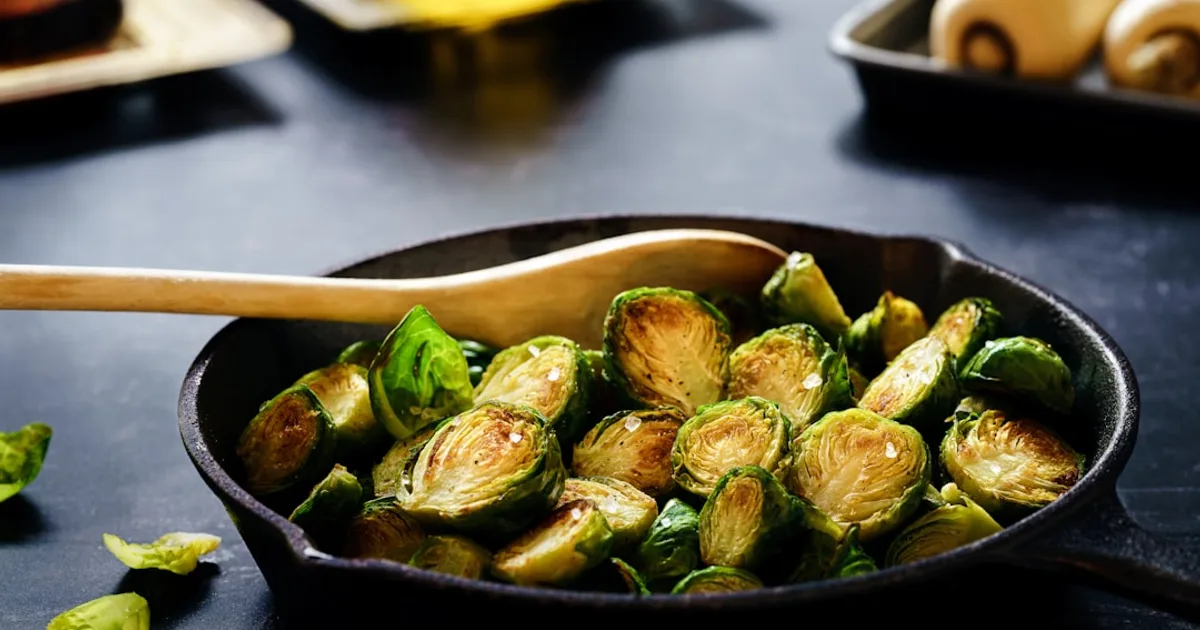
Brussels sprouts (Brassica oleracea var. gemmifera) produce more grocery value per plant than any other brassica. At $4-6/lb retail (USDA AMS Specialty Crop Market News, 2023) and 1.5 lb per plant across the season, a single plant returns $6-9 in grocery value from $0.10-0.15 in seed cost. The trade-off is the longest lead time of any brassica - 85-110 days from transplant - and a flavor that depends entirely on cold weather most gardeners don’t plan around.
What frost actually does
The bitterness reputation is a timing problem, not a variety problem. Sprouts harvested before cold weather are bitter - glucosinolate compounds concentrate without the cold to convert them. Once temperatures drop below 28°F, the plant converts leaf and sprout starches to sugars. The same sprout that tastes flat in September tastes measurably sweeter after a hard frost in November. Plan for that. You’re not just avoiding heat by growing into fall - you’re actively improving the product.
The ROI case
A $2.99-3.49 packet contains 200-300 seeds at $0.01-0.02 each. A well-managed plant yields 1-1.5 lb of sprouts harvested over 6-8 weeks as temperatures drop. At $4.50/lb, that’s $4.50-6.75/plant. Four plants in a 4-foot row section return $18-27 in grocery value. The real cost is bed occupancy from early summer through late fall - space that can’t grow anything else.
Growing requirements
Start transplants indoors 10-12 weeks before the outdoor planting date. In zones 5-6, start in late March to early April for a late May transplant. The plants need to be in the ground early enough to reach full size before fall, with their prime production period occurring as temperatures drop.
Soil pH 6.0-7.0. Brussels sprouts are heavy nitrogen feeders. Side-dress with blood meal or 8-1-1 granular fertilizer every 4-6 weeks through August. Stop nitrogen by early September - late nitrogen produces soft, loose sprouts.
Space transplants 24 inches apart. A mature plant grows 24-36 inches tall and needs air circulation. Crowded plants have worse aphid pressure.
When lower leaves yellow and bottom sprouts reach 3/4 inch diameter, remove the lower leaves from the bottom 6-8 inches of stalk. This concentrates energy into sprout development. Two weeks before your target harvest, pinch out the growing tip at the top of the plant to push energy into the remaining sprouts.
What goes wrong
Cabbage aphid (Brevicoryne brassicae) forms dense gray-green colonies in sprout axils and growing tips - the primary pest in most regions. A hard water spray removes small colonies; insecticidal soap handles heavier infestations. Avoid broad-spectrum sprays that kill the parasitic wasps that naturally suppress aphid populations.
Imported cabbageworm (Pieris rapae) and cabbage looper (Trichoplusia ni) chew through sprouts and leaves. Bacillus thuringiensis var. kurstaki (Bt) is effective applied while caterpillars are small. Row cover over transplants prevents egg-laying.
Loose, open sprouts result from warm temperatures during development or excess nitrogen late in the season. Harvest and use immediately - they’re edible, not ideal.
Clubroot (Plasmodiophora brassicae) - soilborne, persistent for decades. Lime to pH 7.2 to reduce pressure; rotate brassicas out of infected beds for 4+ years (Penn State Extension, Crucifer Diseases, 2019).
Harvest and storage
Harvest lowest sprouts first when they reach 1-1.5 inches in diameter and feel firm. Work upward over 6-8 weeks as upper sprouts mature. After a hard frost, cut the entire stalk and store in a cool garage or refrigerator - sprouts on the stalk hold quality 3-4 weeks, longer than sprouts removed from the stalk.
Blanch 3-5 minutes, cool in ice water, dry thoroughly, freeze in a single layer before bagging. Quality holds 12 months frozen (National Center for Home Food Preservation, Freezing Vegetables, 2021).
Long-season timing by zone
Brussels sprouts need 85-120 days from transplant to first harvest - the longest window of any common vegetable in the home garden. Getting the timing wrong by three weeks can mean zero harvest before a hard freeze ends the season.
Work backward from your first expected hard frost, not forward from last frost. Zone 5 (average first frost October 7-15) with a 120-day variety: count back 120 days from October 10 and you need transplants in the ground by June 13. That means starting seeds indoors 4-6 weeks before transplant date - late April to early May. But the best sprouts come in October and November after frost sweetens them, so you are not racing to beat fall. You are timing your harvest to land squarely in it.
A practical planning sequence:
- Find your average first hard frost date (28°F or below).
- Subtract 120 days to find your latest transplant date.
- Subtract 4-6 weeks from transplant date to find your indoor seed start date.
- Transplant as a hardened seedling 2-3 weeks before last spring frost is also workable in cold climates - brussels sprouts tolerate light frost at transplant stage.
By zone:
- Zone 4 (first frost late September): transplant mid-April, harvest late September into October.
- Zone 5 (first frost early-mid October): transplant late May to early June, first harvest September, peak harvest October-November.
- Zone 6-7 (first frost late October to November): transplant late April to early May, harvest November into December.
A three-week planting delay in Zone 5 means sprouts that should mature in October are still developing when a hard freeze arrives in early November. Immature sprouts at freeze do not finish. You lose the harvest. This is the most timing-sensitive vegetable in the home garden (University of Minnesota Extension, Growing Brussels Sprouts, 2022).
Topping for bigger sprouts
At 4-6 weeks before your first expected frost - approximately early September in Zone 5 - top the plant by pinching or cutting the growing tip cleanly with pruning shears. Removing the terminal bud stops the plant from initiating new leaves and redirects all carbohydrate production into the sprouts already set on the stalk.
Without topping, sprouts typically mature to 0.75-1 inch in diameter. After topping, the same sprouts reach 1.5-2 inches in diameter as they pull additional energy from the plant before frost. University of Minnesota Extension documents this technique as standard practice for maximizing harvest size in northern zones (Growing Brussels Sprouts, 2022).
Do not top early. If you top in late July, you cut off 6-8 weeks of additional sprout set. The window is specifically 4-6 weeks before first frost - early enough for remaining sprouts to size up, late enough that you have already set the full stalk.
Remove yellowing lower leaves at the same time you top. Clear the bottom 8-10 inches of stalk. This is housekeeping and airflow management, not just aesthetics - dense lower foliage traps moisture and creates the humid microclimate that aphid colonies prefer.
Aphid pressure and the economic threshold
Cabbage aphid (Brevicoryne brassicae) treats brussels sprouts as a preferred host. Unlike aphids on other vegetables that scatter across foliage, cabbage aphid forms dense, waxy gray-green colonies that concentrate in sprout axils and the growing tip. A single colony can number thousands of individuals within two weeks of establishment.
Not every aphid colony requires intervention. Calibrate your response to actual damage:
- 5-10% of leaf area affected: The plant is managing. Natural parasitic wasps (Diaeretiella rapae) are likely present. Do not spray - you will kill the beneficial insects suppressing the colony.
- 30%+ of leaf area affected: Colony is drawing resources and affecting new growth. Intervene with a hard water blast or insecticidal soap targeting the colonies directly.
- Aphids penetrating developing sprout heads: Act immediately. Sprouts with aphid colonies inside the tightly wrapped leaves are not salvageable. They are unmarketable whether you plan to sell or just want a clean harvest.
The economic threshold calculation: 15 plants at 1.5 lb/plant at $4.50/lb equals $101.25 in potential grocery value. When you see 5 or more heavily infested plants, the spray decision pays for itself many times over. A $4 bottle of insecticidal soap concentrate is not a close call against a $100 harvest.
Blast with water first. A strong hose stream knocks colonies off before they entrench in sprout axils. Do this in the morning so foliage dries before evening. Follow with insecticidal soap at label rate if colonies persist. Avoid broad-spectrum pyrethroids - they eliminate the parasitic wasps and make the next infestation worse.
Frost sweetening and what it means for value
Brussels sprouts exposed to at least two frosts at 28-32°F undergo a measurable biochemical conversion. Cold temperature stress activates enzymes that break down starches into soluble sugars - primarily glucose and sucrose - throughout the sprout tissue. USDA ARS post-harvest research documents sugar content increases of 50-70% in sprouts after repeated frost exposure (Post-Harvest Physiology of Brassica Vegetables, USDA ARS).
The sprout you harvest from your garden in November after three frosts is not the same product as a commodity sprout picked in September in California and shipped for two weeks. The flavor compounds, sugar levels, and texture are categorically different. Store-bought bitterness is a cold chain and timing problem - those sprouts never experienced the temperature drop that converts the glucosinolates and concentrates the sugars.
From a market value standpoint: commodity brussels sprouts price at $3.50-4.50/lb at retail. Frost-kissed, locally grown sprouts at a late-season farmers market command $5-7/lb from buyers who know the difference. Your November harvest from a well-timed planting represents the top of the market, not the baseline.
Leave plants standing through the first several frosts rather than harvesting at the first sign of cold. The stalk can withstand temperatures into the mid-20s°F without damage to developing sprouts. Harvest after frost, not before it.
Related reading: Spring Garden Planning - timing the transplant date correctly determines whether sprouts mature in cool weather or bolt in summer heat
Growing Brussels Sprouts? Track your harvest value and break-even date in the Garden ROI app.
Get the App