
Kale
Brassica oleracea var. acephala
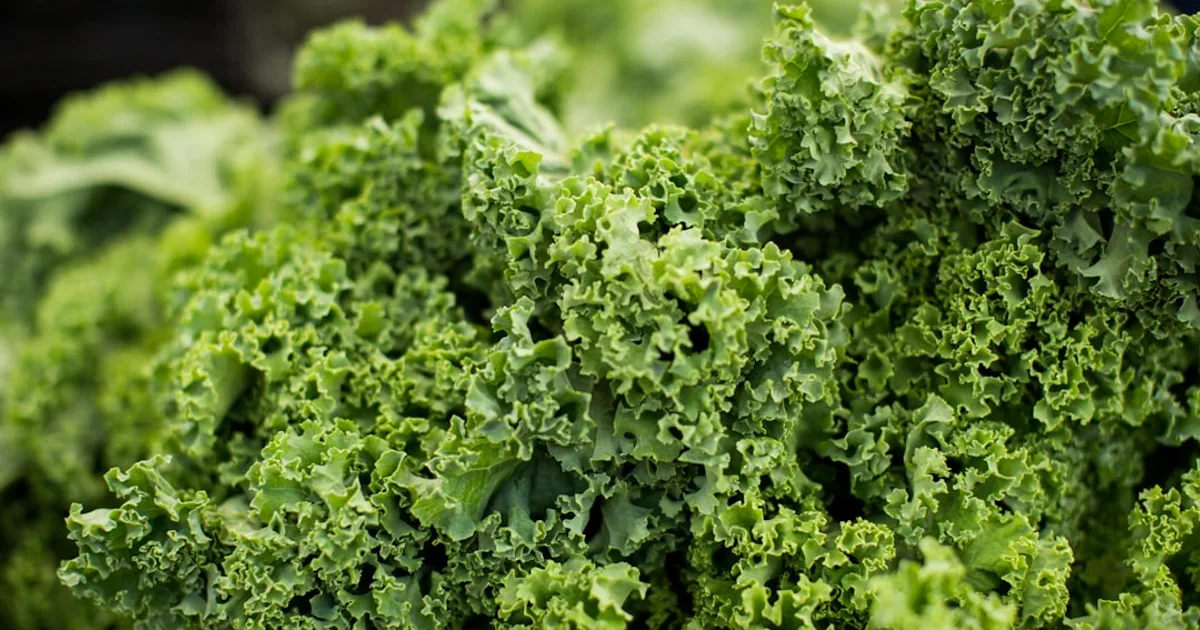
Kale (Brassica oleracea var. acephala) is one of the few vegetables that actually gets better after the first frost. Leave it in the ground through November in Zone 6, and the same plant you were pulling tough leaves off in August becomes something noticeably different - sweeter, less bitter, more tender. Most people who don’t like kale have only eaten August kale. That’s not the best version of the plant.
The other thing worth knowing upfront: a $2.49 seed packet and three plants can produce 17 to 18 pounds of greens across an eight-month season. At grocery prices, that’s $43 in value from less than three dollars in seed. The math is real, and the numbers below show exactly how it works.
The cultivar decision
Kale splits into four practical categories. They taste different, tolerate cold differently, and serve different uses in the kitchen. Pick the wrong one for how you cook and you’ll undervalue the whole crop.
| Type | Key Cultivars | Days to Maturity | Cold Hardiness | Flavor / Best Use |
|---|---|---|---|---|
| Curly | Winterbor, Redbor, Vates | 55-65 days | Hardy to 10°F | Most familiar; textured, slightly bitter; best cooked or frozen |
| Lacinato (Dinosaur) | Nero di Toscana, Cavolo Nero | 60-70 days | Hardy to 15°F | Dark, wrinkled strap leaves; sweetens strongly with frost; Italian cooking standard |
| Red Russian | Red Russian | 50-60 days | Hardy to 10°F | Feathery, purple-veined, flattest and mildest; best raw in salads or sandwiches |
| Siberian | Siberian, True Siberian | 65-75 days | Hardy to -10°F (Zone 3) | Coarser texture, blue-green, heavy producer; best choice for Zone 3-4 |
| Premier | Premier | 50 days | Hardy to 10°F | Fast-maturing curly type; earliest spring harvest and fastest fall establishment |
Curly kale (Winterbor, Redbor) is what fills most grocery store bins. The heavy crinkling catches dressings and cooking fats well, and the texture is built for braising. It’s the most cold-hardy of the cooking kales.
Lacinato - sold as dinosaur kale, Tuscan kale, or cavolo nero - has dark blue-green leaves with a puckered, almost reptilian surface. It’s the standard in Italian cuisine for a reason: the flavor is more complex, less aggressively bitter, and it sweetens more after frost than curly types do. If you’re making ribollita or braised greens, lacinato is what the recipe was written for. Specialty grocery stores price it at $4-6/lb because it looks distinctive and markets well.
Red Russian is the kale for people who want to eat it raw. The leaves are feathery with purple veins and a mild, almost sweet flavor even before frost. It doesn’t hold up as well to long cooking - it goes limp fast - but it’s what you want for salads, sandwiches, and smoothies. Days to maturity runs about 50-60 days from transplant (Johnny’s Selected Seeds variety trial data).
Siberian kale (Brassica napus, technically a different species from the others) is grown primarily in Zone 3-4 where the cooking kales can’t reliably overwinter. It survives temperatures down to -10°F in established stands (University of Vermont Extension, Brassica Crops, 2020). The leaves are smoother and coarser than curly kale, and the flavor is mild. It produces heavily and keeps producing. If you’re in a cold climate (Zone 3-4) and want greens into winter, this is the one.
For most Zone 5-7 home gardens: Winterbor for volume and freezing, lacinato if you cook Italian or want the best frost-sweetened eating kale, Red Russian if you make salads. You can grow all three from one packet if you direct-seed a short row of each.
The ROI case
A standard seed packet at $2.49 contains 200-400 seeds - far more than you’ll use in a season. Three plants is a reasonable number for a household that eats greens regularly.
The calculation that makes kale interesting isn’t the per-plant yield number. It’s the season length.
In Zone 6, you can plant kale April 1 (approximately four weeks before last frost) and harvest from late June through February - eight to nine months if the plants survive a typical winter, which they do. Kale survives temperatures down to about 10°F without cover, and with minimal row cover or a cold frame, that extends further.
At a conservative harvest rate of 0.5 lb per week from three plants across 35 weeks of the season:
0.5 lb/week × 35 weeks = 17.5 lb
17.5 lb × $2.50/lb (mature kale, USDA AMS retail) = $43.75
From $2.49 in seed. That’s a 17x return on seed cost, which is the headline number. The comparison point is what you’d spend replacing that volume at the grocery store.
For context on the 0.5 lb/week figure: a single established kale plant in active production yields 0.3-0.5 lb per cutting. With three plants and weekly harvesting of outer leaves, 0.5 lb/week per session is conservative, not optimistic (Cornell Small Farms Program variety trial data, 2021).
The season math by zone:
| Zone | Spring Start | Final Harvest | Weeks Producing | Yield (3 plants, 0.5 lb/wk) | Value at $2.50/lb |
|---|---|---|---|---|---|
| Zone 5 | April 1 | January (with cover) | 36 weeks | 18 lb | $45.00 |
| Zone 6 | April 1 | February | 35 weeks | 17.5 lb | $43.75 |
| Zone 7 | March 15 | March (following year) | 40+ weeks | 20 lb | $50.00 |
| Zone 3-4 | April 15 | November | 26 weeks | 13 lb | $32.50 |
This assumes mature kale at standard retail pricing. Baby kale changes the economics.
Baby kale: a different product and a different price
Baby kale - leaves harvested at 4-6 inches before the plant matures - sells for $6-10/lb at specialty grocers and farmers markets. It’s tender enough to use as a salad green without cooking, which opens a market that full-size kale can’t access.
The way you produce baby kale is different from the cut-and-come-again approach for mature leaves. Broadcast-sow a dense stand - about 1 gram of seed per square foot - and cut the whole bed with scissors at 4-6 inches, the same way you’d harvest a salad mix. The bed regrows for two or three more cuts before quality declines.
At $8/lb (midpoint of the $6-10 range), a 4-square-foot baby kale bed that yields 1 lb per cut and provides three cuts returns about $24 from a planting that used maybe $0.30 in seed. The tradeoff is that you’re not getting the extended season production of a mature plant - you’re harvesting fast and starting over.
The choice between baby and mature kale is a marketing decision if you’re selling, and a texture preference if you’re cooking. Both are valid. The seed packet serves both approaches.
Frost sweetening: what’s actually happening
Frost makes kale better. This isn’t folk wisdom - there’s a documented physiological mechanism behind it.
When temperatures drop below 28°F, kale leaves respond by converting stored starches to soluble sugars. The conversion is a cold-hardening response: sugars lower the freezing point of cell fluids, protecting plant tissue from ice crystal damage (Hüner et al., Plant Physiology, 1998). The side effect for the cook is that the same compounds that were producing bitter glucosinolates at room temperature are partially displaced by sugars in cold conditions.
Lacinato kale is especially responsive to this. December lacinato from a Zone 5-6 garden is a noticeably different ingredient than August lacinato from the same plant - milder, slightly sweet, with a complexity that changes how you’d use it.
The practical implication: don’t pull kale in October because the season “feels over.” The best harvest of the year is coming. Leave the plants in the ground through the first hard freezes and plan on eating kale through Thanksgiving and into December. In Zone 6, that’s the window where the leaves are at their best and the grocery store price for fresh greens is at its highest.
Fall planting: the most underused kale window
Most gardeners plant kale in spring and accept that by August the heat and caterpillar pressure will have degraded the crop. The better move is a fall planting specifically timed to produce through winter.
The target for fall kale is to direct-seed 6-8 weeks before your first expected frost. In Zone 6 (first frost typically October 15), that means seeding between August 15 and September 1. The goal is a plant with at least 8-10 mature leaves - substantial root mass and established foliage - before temperatures drop consistently below 40°F. A seedling hit by hard frost before it’s established won’t recover the way a mature plant will.
Why direct seed rather than transplant for fall? Transplant shock slows establishment, and you’re racing the calendar. Direct-seeded kale that germinates into warm soil (soil temps are still 65-75°F in August) establishes faster than a transplant stressed from moving. Sow three to four seeds per spot at the final spacing (18-24 inches), thin to one plant per spot when seedlings are 4 inches tall.
The frost-sweetening mechanism becomes your ally with fall-planted kale. The first frost hits leaves that haven’t been through a full summer of heat stress, so the flavor transition is especially pronounced. Gardeners who only grow spring kale often don’t understand what the fuss is about. Fall kale is a different food.
Row cover in zones 5-7: A single layer of floating row cover (1.5 oz/sq yd weight) raises overnight temperatures by 4-6°F and is enough to keep kale productive through December in Zone 5-6, and often into January in Zone 7. You don’t need a cold frame - drape the fabric directly over the plants and anchor the edges. The plants don’t need pollination at that stage, so there’s no downside to keeping it on continuously from late October through February. A 10-foot roll of row cover costs roughly $15-20 and lasts multiple seasons (Johnny’s Selected Seeds cultural notes; Penn State Extension, Season Extension for Vegetables, 2020).
In Zone 7, fall-planted kale often requires nothing more than the plant itself. The winters are mild enough that established kale produces more or less continuously from September through April, with only brief slowdowns during hard freezes.
The cut-and-come-again math: 4 plants covering a household
The cut-and-come-again method is the reason kale’s season math works. Done correctly, you’re not replanting - you’re harvesting from the same plants for months.
The principle: cut outer leaves first, leave the central growing bud and at least 4-6 inner leaves intact. The plant produces new leaves from the center continuously. Harvest every 7-14 days during active growth periods; every 3-4 weeks during cold-weather slowdowns when growth rate drops.
Here’s what 4 plants actually produces for a household:
| Phase | Duration | Growth Rate | Yield (4 plants) | Notes |
|---|---|---|---|---|
| Spring establishment | April - May | Slow | 0.25 lb/week | Plants sizing up; harvest lightly |
| Peak spring | June - early July | Active | 0.5-0.75 lb/week | Full production; cut every 7-10 days |
| Summer heat | mid-July - August | Slow | 0.25 lb/week | Heat stress; harvest what looks good |
| Fall recovery | September - October | Active | 0.5-0.75 lb/week | Best eating before frost |
| Post-frost sweetened | November - December | Moderate | 0.3-0.5 lb/week | Peak flavor; growth slows |
| Deep winter | January - February | Minimal | 0.1-0.2 lb/week | Harvest on warm days; plants dormant |
Across 40+ weeks, 4 plants at the conservative end of these ranges produces 18-22 lbs of greens for the season. At $3/lb (USDA AMS retail composite for mature kale, 2023), that’s $54-66 from a single planting. At $4/lb (organic specialty retail), the range is $72-88.
Four plants occupy roughly 32 square feet (4 plants × 8 sq ft per plant at 24-inch spacing in a 4-foot-wide bed). That’s a manageable footprint - a single 4×8 raised bed handles it with room for a row of herbs along the front edge.
The strip-harvest mistake is the main reason people think kale “stops producing.” If you pull all the leaves off a plant - or worse, cut the central growing tip - the plant is done. Leave the center intact every single time. The growing tip is the whole operation.
Nutrition per dollar: why kale is a genuine outlier
The ROI case for kale isn’t just about price per pound. It’s about what you’re getting per dollar spent.
Kale is not a high-calorie crop. One cup of chopped raw kale contains about 33 calories (USDA FoodData Central, ID 169206). You’re not growing it for energy density - you’re growing it for micronutrient density, and on that measure it’s difficult to match.
The numbers from USDA FoodData Central for one cup of raw kale (67g):
| Nutrient | Amount | % Daily Value |
|---|---|---|
| Vitamin K | 547 mcg | 456% |
| Vitamin C | 80 mg | 89% |
| Vitamin A (as RAE) | 206 mcg | 23% |
| Calcium | 91 mg | 7% |
| Iron | 1.2 mg | 7% |
| Folate | 19 mcg | 5% |
| Manganese | 0.5 mg | 22% |
(Source: USDA FoodData Central, SR Legacy, Kale, raw, FDC ID 169206)
That’s more than four times your daily vitamin K need from one cup. One cup of kale delivers nearly a full day’s vitamin C - comparable to an orange, at a fraction of the growing cost per calorie.
What does this cost to produce at home? At 22 lbs per season from 4 plants, and roughly 453g per pound, you’re producing about 9,966g of kale across the season. At 67g per cup, that’s approximately 149 cups. The seed cost is $2.49. The implicit cost per cup - excluding time and any infrastructure you’d have anyway - is around $0.02.
A cup of organic packaged kale at a mid-range grocery store runs $1.00-1.50 (retail weight calculated from a $4-6/lb price and approximately 3 cups per 100g serving). You’re replacing a $1.25/cup grocery item with a $0.02/cup garden item.
For context: a monthly Netflix subscription is approximately $15-22. That budget, spent once on kale seed and a bag of fertilizer, produces 149+ cups of one of the most nutrient-dense vegetables available across a 40-week season. This isn’t a condemnation of streaming services. It’s a useful anchor for what garden spending actually buys.
The vitamin K numbers deserve a specific note. Most people have no idea how deficient their diet is in vitamin K1 (phylloquinone). Dark leafy greens are the primary dietary source, and fresh garden kale is one of the richest sources available. The conversion of glucosinolates to sugars during frost doesn’t affect the vitamin K content - the fat-soluble vitamins remain stable through light cooking and freeze-thaw cycles.
Kale compares favorably to other high-value greens in the garden. For the full picture on how kale stacks up against Swiss chard and collard greens for production value, see Collard Greens and Swiss Chard. The Salad Greens ROI analysis shows where kale sits in the broader landscape of cut-and-come-again crops by dollar-per-square-foot.
The winter and early-spring harvest window
Kale that survives a Zone 5-6 winter doesn’t just sit there dormant - it resumes active growth in late February or early March, several weeks before anything else in the garden is producing.
This matters for the ROI case because late-winter grocery store prices for fresh greens run higher than summer prices. Organic kale in February at a mid-range grocery store typically runs $3-4/lb; the summer price at the same store might be $2.50/lb. You’re harvesting when the crop is most valuable, from a plant you put in the ground ten months earlier.
The overwintering also means you can harvest leaves through most of winter during mild spells. Kale doesn’t continue growing below about 25°F, but it holds its leaves and stays edible through repeated freeze-thaw cycles. A plant that freezes solid overnight thaws out fine by midday and can be harvested when thawed.
For Zone 5 gardeners: a light row cover or cold frame over kale plants extends the winter harvest by several weeks and makes the leaves available even during harder cold snaps. The investment is minimal - floating row cover costs a few dollars and one roll covers multiple beds for years.
Growing requirements
Kale is a cool-season biennial grown as an annual. Soil temperature of 45-85°F supports germination; optimal germination is at 60-65°F (Cornell Cooperative Extension, Kale Production, 2018). That’s a wide range, which is why kale can be direct-seeded much earlier in spring than warm-season crops.
For spring production: sow outdoors 4-6 weeks before last frost as soon as the soil can be worked and consistently above 40°F. For fall production: sow 8-10 weeks before first fall frost so plants have time to size up before temperatures drop.
Space transplants 18-24 inches apart. A single Vates or Winterbor plant at full maturity can span two feet across and keep producing leaves for months. Crowded plants have worse airflow, more disease pressure, and smaller individual leaves.
Soil pH of 6.0-7.0. Kale is a moderate feeder. Work in compost before planting, then apply a nitrogen-forward fertilizer - blood meal, 8-1-1 granular, or similar - every four to six weeks. Nitrogen-deficient kale turns pale yellow-green and produces small, tough leaves. It’s usually the reason backyard kale underperforms grocery store kale: the grocery version was fertilized heavily on a schedule.
The cut-and-come-again technique is what makes the season math above work. Harvest outer leaves first, leaving the central growing point and at least four to six inner leaves intact. The plant keeps producing from the center. Harvest every 7-14 days. If you strip a plant to the stem, it’s done.
What goes wrong
Imported cabbageworm (Pieris rapae) and cabbage loopers (Trichoplusia ni) are the main caterpillar pests. Both leave large irregular holes. Cabbageworm eggs are tiny yellow footballs laid singly on leaf undersides; loopers are light green caterpillars that move with a characteristic looping stride. Bacillus thuringiensis var. kurstaki (Bt) is highly effective when applied while caterpillars are still small. Row cover over young transplants prevents egg-laying entirely.
Cabbage aphids (Brevicoryne brassicae) form dense gray-green colonies in leaf axils and growing tips. A hard spray of water removes most of them. Insecticidal soap handles heavier infestations. Parasitic wasps are effective natural controls - avoid broad-spectrum insecticides that kill them along with the aphids.
Clubroot (Plasmodiophora brassicae) causes swollen, distorted roots and yellowing plants that wilt on warm days. It’s a soilborne pathogen that persists for decades in acidic soil. Raising pH above 7.2 with lime reduces clubroot pressure (Penn State Extension, Crucifer Diseases, 2019). Rotate brassicas out of any infected bed for three to four years.
Black rot (Xanthomonas campestris pv. campestris) enters through leaf margins and creates V-shaped yellow lesions that progress inward. It’s seedborne and spreads in wet conditions. Use certified disease-free seed, avoid overhead irrigation, and remove infected plants completely.
Harvest and storage
Harvest leaves in the morning with a sharp knife or scissors. Tearing leaves risks snapping near the midrib and leaving stubs that rot. Kale holds in the refrigerator for one to two weeks - longer than most leafy greens because the tougher cell walls slow moisture loss.
On larger leaves, the midrib is fibrous enough to be worth removing: hold the stem end in one hand and strip the leaf away from both sides with the other. Small and medium leaves cook whole without issue.
Kale softens with heat. The raw texture that can seem aggressive - especially in curly types - largely disappears after five minutes of cooking. If you’ve tried it raw and found it unpleasant, try it braised or sauteed before writing it off.
For storage: blanch and freeze for eight to ten months of acceptable quality (National Center for Home Food Preservation, Freezing Vegetables, 2021). Frozen kale works well in soups, stews, and smoothies - it won’t have the texture of fresh, but the flavor holds.
Kale chips are the most practical way to use a surplus. Dehydration concentrates the flavor, and chips store at room temperature for weeks with no additional processing.
Related crops: Lettuce, Garlic, Collard Greens, Swiss Chard, Mustard Greens, Chrysanthemum Greens, Mizuna
Related reading: Spring Garden Planning - how to time your cool-season plantings around frost dates to maximize the shoulder seasons; Grocery Tier ROI - why organic kale sits in the highest-value tier home gardens can replace; Salad Greens ROI - where kale ranks among cut-and-come-again greens by dollar per square foot; First Garden: 10 Best Crops - kale as the highest-forgiveness beginner crop; Continuous Harvest Crops - kale as a cut-and-come-again perennial; Winter Garden Planning - kale improves after first frost; Kale ROI Analysis - the per-square-foot value case with real yield and price data
Frequently Asked Questions
How much does a kale plant yield?
A single kale plant can produce 5 to 6 lbs of leaves over the season with continuous harvest of outer leaves. Plants remain productive for multiple months in cool weather.
How long does kale take to grow?
Kale reaches harvest size in 55 to 75 days. You can begin taking outer leaves around day 50, letting the center continue to grow.
Is kale worth growing at home?
Grocery kale averages $3.50/lb. One seed packet ($3) yields multiple plants producing $19 or more in harvest value - over 6x return on seed cost.
How do you store fresh kale?
Refrigerate kale unwashed in a plastic bag with a damp paper towel for up to a week. Blanch and freeze for long-term storage of large harvests.
Growing Kale? Track your harvest value and break-even date in the Garden ROI app.
Get the App