
Chervil
Anthriscus cerefolium
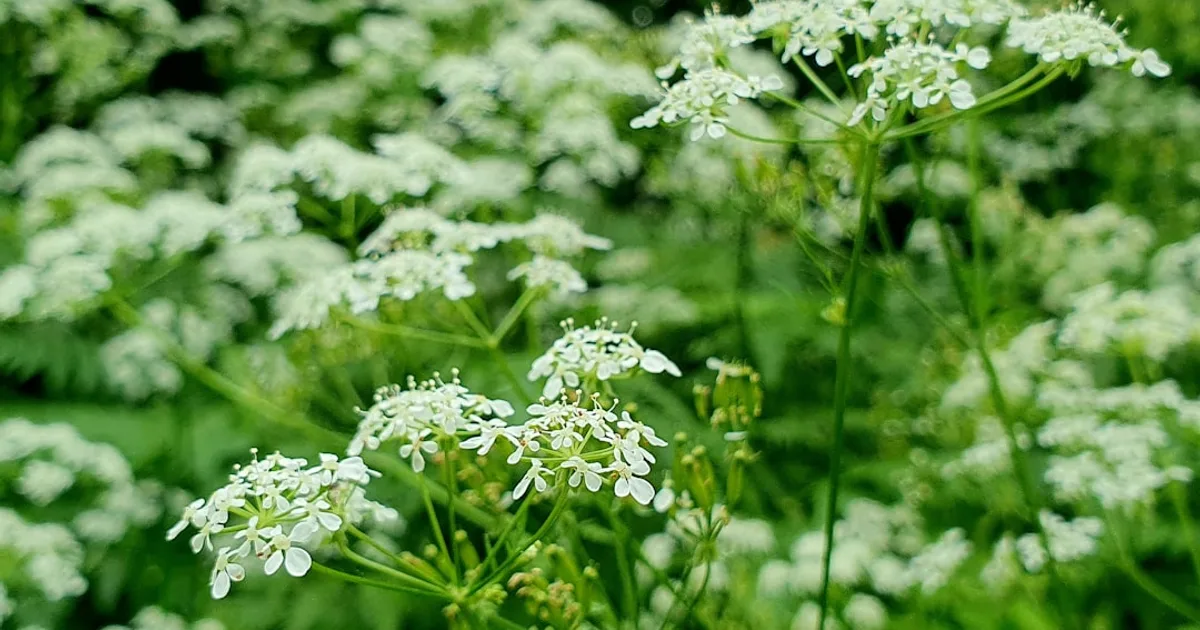
Chervil is French parsley’s more interesting cousin, used in French classical cuisine for 400 years and still largely absent from American grocery stores. When you find it fresh, it costs $8-12/lb at specialty grocers, usually wilted and well past its best. The plant grows in 30-45 days, tolerates shade, and performs best in conditions that challenge other crops - cool, partly shaded spots under taller plants or against north-facing walls. It occupies space that would otherwise be wasted.
The flavor is difficult to describe without reference to other herbs. It’s parsley-like but lighter, with a distinct anise undertone somewhere between tarragon and fennel frond. It’s a different flavor profile from parsley, and it degrades rapidly in cooking - chervil should be added after the heat is off, or used raw. Heating it destroys what makes it worth using.
What it actually is
Anthriscus cerefolium is an annual in the carrot family (Apiaceae), native to the Caucasus and widely naturalized in Europe. It grows 12-24 inches tall with finely divided, fernlike leaves that resemble flat-leaf parsley in silhouette but are lighter green and more delicate. It bolts in summer heat, producing small white flowers in umbels before dying. It’s a cool-season plant - spring and fall only in most of the country.
Chervil is one of the four classic French fines herbes (with parsley, tarragon, and chives), the blend traditionally used in French cooking for delicate preparations. It appears throughout classical French cuisine: omelettes aux fines herbes, béarnaise sauce (one of the six components), fines herbes butter, and as a garnish for clear soups and delicate fish. Auguste Escoffier’s Le Guide Culinaire (1903) references it in dozens of preparations.
The anise compound responsible for its flavor is primarily estragole and related phenylpropanoids. These volatile compounds are sensitive to heat and begin breaking down at cooking temperatures. This is not optional botanical trivia - it determines how to use it.
| Characteristic | Chervil | Flat-leaf parsley | French tarragon |
|---|---|---|---|
| Flavor | Light anise, grassy, delicate | Green, vegetal, neutral | Assertive anise, vanilla |
| Heat stability | Poor; use raw or add off-heat | Good; survives cooking | Poor; use fresh or off-heat |
| Season | Cool-season annual | Biennial, tolerates heat | Perennial, dormant in winter |
| Shade tolerance | High - performs well in shade | Low - needs full sun | Low - needs full sun |
| Days to harvest | 30-45 | 70-90 | 60-90 (from division) |
| Retail availability | Rare outside specialty stores | Very common | Uncommon |
The ROI case
Chervil’s retail scarcity is the primary financial argument for growing it. At $10/lb when you can find it, and with most supermarkets not stocking it at all, home production is often the only way to have it reliably.
A 4-foot row direct-seeded produces 0.25-0.5 lb of harvestable leaf in 30-45 days. The seed cost for that harvest is roughly $0.62 (quarter of a $2.49 packet). Succession planting every 3 weeks through spring and fall produces steady supply.
| Planting | Row length | Yield | Value | Seed cost | Net |
|---|---|---|---|---|---|
| Spring (succession × 3) | 4 ft × 3 = 12 ft | 0.75-1.5 lb | $7.50-15.00 | $1.87 | $5.63-13.13 |
| Fall (succession × 2) | 4 ft × 2 = 8 ft | 0.5-1.0 lb | $5.00-10.00 | $1.25 | $3.75-8.75 |
| Annual total | 20 ft | 1.25-2.5 lb | $12.50-25.00 | $3.12 | $9.38-21.88 |
The shade tolerance is an underappreciated economic point. Chervil produces well in the partly shaded spots under trellises, against north-facing fences, or beneath taller crops - locations that produce nothing else useful. Placing it in otherwise empty shade space adds return without consuming any productive sunny bed space.
Growing requirements
Light: chervil is one of the few culinary herbs that actively prefers shade. Full sun in warm weather causes rapid bolting and reduced leaf quality. In spring, partial shade (3-5 hours direct sun) produces better-tasting, longer-lived plants than full sun. In the hottest months, only deep shade keeps it productive at all. In fall, full sun works as temperatures drop.
Sowing: chervil requires light for germination - sow on the soil surface or barely cover (1/8 inch max). Press seeds into soil to ensure good contact. Germination takes 1-3 weeks at 50-65°F; it’s notably slow to germinate at higher temperatures. Direct-sow only - chervil has a taproot that makes transplanting difficult and usually results in bolting.
Temperature: like most cool-season herbs, chervil grows best at 45-65°F air temperatures. Above 70°F consistently, it bolts rapidly. Succession plant every 2-3 weeks in spring; plan a fall succession starting 8-10 weeks before first frost. In mild climates (zones 7-9), it can overwinter with minimal protection.
Fresh seed: chervil seed loses viability relatively quickly - store packets sealed in a cool, dry location and use within 2 years. Old seed germinates poorly. This is a more significant issue for chervil than for many vegetables.
Succession is essential: a single sowing lasts 4-6 weeks before bolting makes it unusable. Multiple small sowings every 2-3 weeks maintain continuous supply through the cool season.
What goes wrong
Bolting before significant leaf development is the main frustration, particularly in spring plantings started too late or sited in too much sun. The plant puts 4-5 small leaves out, then immediately shoots up a flower stalk. Prevention: sow early, in shade, and harvest young. Don’t wait for a full, lush plant - chervil is not a patient crop.
Poor germination usually means seed was covered too deep, soil was too warm, or seed was old. Sow on the surface, tamp down, and keep moist. If germination doesn’t happen within 3 weeks, try again with fresh seed in a cooler location.
Wilting in heat is normal - chervil droops in midday heat even when soil is moist. It recovers by evening. This is not a watering problem; it’s the plant’s response to heat stress and is the reason a shaded location extends the season.
Carrot fly (Psila rosae) larvae occasionally tunnel into the taproot, causing sudden wilting and plant death. Row cover prevents adult fly egg-laying. Rotate planting locations each season.
Harvest and use
Harvest begins at 30-40 days when plants are 4-6 inches tall. Cut outer leaves first, leaving the growing center intact for continued production. Alternatively, cut the whole plant 1 inch above soil level once it reaches full size - it may regrow once before bolting.
Harvest in the morning. Chervil is more perishable than most herbs - store refrigerated, wrapped in slightly damp paper towel, and use within 3-4 days. It doesn’t dry well (volatile compounds are lost), doesn’t freeze as a dried product (turns to mush), but can be frozen in olive oil or butter like basil.
The critical rule: add chervil after heat, not during. Stir into finished dishes, use as a garnish, or add to sauces pulled off the flame. One tablespoon of fresh chervil stirred into a finished cream sauce is a different result than the same amount added at the beginning.
Core applications:
- Omelette aux fines herbes: the classic. Soft scrambled eggs folded with fresh chervil, chives, parsley, and tarragon. The chervil’s delicacy is why this dish demands fresh herbs, not dried.
- Finishing soups: a pinch of fresh chervil on consommé or vichyssoise just before serving.
- Salads: chervil leaves are mild enough to use as a salad green, not just a garnish. Combine with butter lettuce, a light vinaigrette, and perhaps a few chive flowers.
- Béarnaise sauce: the traditional recipe calls for chervil; most commercial versions omit it. Using it is one of the ways homemade béarnaise differs from restaurant versions.
- Compound butter: mince with chives and parsley, mix into softened butter, roll in plastic wrap, and refrigerate. Use to finish fish, vegetables, or steak.
Related reading: Tarragon - fellow fines herbes herb; Herb Preservation Guide - freezing delicate herbs that don’t dry well
Growing Chervil? Track your harvest value and break-even date in the Garden ROI app.
Get the App