
Goji Berry
Lycium barbarum
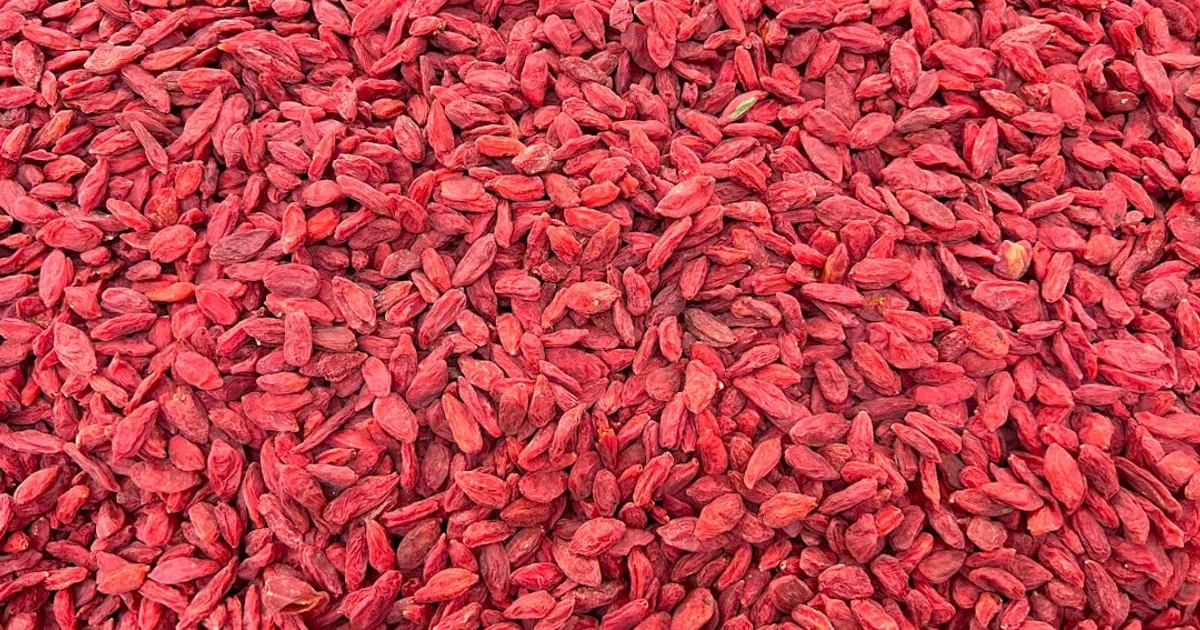
Fresh goji berries (Lycium barbarum) are nearly impossible to find in US retail. Dried goji berries sell for $10-20/lb in the specialty and supplement market (USDA AMS Specialty Crop Market News, 2023). You can grow the plant in zones 3-10, it will produce for 50+ years, and it asks for almost nothing once established. The reason more people don’t grow it comes down to the first two years looking like a failure before production picks up.
What you’re actually growing
Goji berry (also called wolfberry) is a member of the nightshade family (Solanaceae), the same family as tomato, pepper, and eggplant. It grows as a thorny, arching shrub reaching 6-10 feet tall and nearly as wide. The small, bright orange-red berries are 0.5-0.75 inches long with a flavor that is somewhere between a cranberry and a cherry tomato - mild, slightly sweet, faintly tart, with a vegetal undertone that catches most people off guard the first time. That description is important because fresh goji berries taste nothing like the dried form you find at Whole Foods. The dried ones are concentrated and chewy, almost candy-like. Fresh off the plant, they are subtle and perishable.
Two species are grown commercially: Lycium barbarum (Tibetan goji, more common in the West) and Lycium chinense (Chinese wolfberry). For home production in North America, L. barbarum is the right choice. It’s hardier, more widely adapted, and better documented in US extension literature (Cornell Cooperative Extension, Goji Berry Production, 2018).
Most plants sold at big-box nurseries and through general seed catalogs are generic L. barbarum seedlings with unknown parentage. Seedling-grown stock is variable - some plants produce well, some produce almost nothing, and you won’t know which you got until year two or three. Named varieties cost a few dollars more per plant and produce more consistently with larger fruit.
Three varieties worth buying: ‘Phoenix Tears’ produces large berries with reliable yields and has performed well in trials across multiple US climates. ‘Big Lifeberry’ was developed specifically for North American growing conditions and has better flavor than most seedling stock. ‘Crimson Star’ is the most widely sold named variety and the easiest to source from specialty nurseries. Any of the three is a better bet than anonymous seedlings when yield is the goal.
The ROI case: year by year
This is where most goji berry write-ups go wrong. They quote a mature-plant yield without telling you what the first two or three years look like - and those years are the ones that determine whether you give up or stay with it.
A $4.99 bare-root start does not pay back in year one. It barely pays back in year two. The return comes in years three through six and beyond. Here is what that actually looks like (Cornell Cooperative Extension yield ranges; USDA AMS pricing for fresh and dried, 2023):
| Year | Growth Stage | Fresh Yield / Plant | Fresh Value at $14/lb | Dried Yield (4:1 ratio) | Dried Value at $18/lb | Cumulative Net Return |
|---|---|---|---|---|---|---|
| 1 | Establishment | 0 lb | $0 | 0 lb | $0 | -$4.99 |
| 2 | Early production | 1-2 lb | $14-28 | 0.25-0.5 lb | $4.50-9.00 | $9-23 |
| 3 | Building | 3-5 lb | $42-70 | 0.75-1.25 lb | $13.50-22.50 | $51-93 |
| 4 | Mature | 5-8 lb | $70-112 | 1.25-2 lb | $22.50-36 | $121-205 |
| 5 | Mature | 5-8 lb | $70-112 | 1.25-2 lb | $22.50-36 | $191-317 |
| 6 | Mature | 5-8 lb | $70-112 | 1.25-2 lb | $22.50-36 | $261-429 |
Payback happens somewhere in year 2 to year 3 depending on your yield. By the end of year 6, a single $4.99 plant - assuming you use or sell the fresh berries at local market rates - has returned $261 to $429 in fresh value. That’s a 52x to 86x return on plant cost over six years, before you account for any expansion through cuttings.
The catch: this math assumes you can actually use or sell what you harvest. If you’re growing for personal use, fresh goji fits into smoothies, salads, and snacking, but 5-8 lb per season is more than most households consume fresh. That’s where drying becomes practical.
Fresh vs. dried: what the math actually says
The drying ratio for goji berries is approximately 4:1. Four pounds of fresh berries yield roughly one pound dried (Cornell Cooperative Extension, 2018). That ratio matters for the value calculation.
Take a mature plant producing 5 lb fresh in a good year:
- Fresh path: 5 lb × $14/lb = $70
- Dried path: 5 lb yields 1.25 lb dried × $18/lb = $22.50
Fresh is worth more than three times as much per pound - but only if you can move it quickly. Fresh goji berries have a 3-5 day shelf life at refrigerator temperatures. They do not travel well and they do not last. If you cannot eat or sell them within a few days of harvest, you are looking at the drying path whether you planned for it or not.
To dry: spread berries in a single layer on dehydrator trays and run at 125°F for 24-36 hours. Alternatively, spread in a single layer on screens in full sun or shade for 5-7 days, turning once daily. The shade-dried method takes longer but produces berries with slightly better color. Properly dried berries are leathery and pliable, not brittle or sticky. Store in airtight glass containers away from light - shelf life is approximately one year at room temperature.
The practical takeaway: grow goji for fresh use if you have a plan for the harvest. Grow it for drying if you want a shelf-stable product. Fresh is more valuable but requires either a farmer’s market outlet, neighbors who’ll buy it, or a household that will actually eat 5-8 lb of fresh goji over a 3-week harvest window.
Growing requirements
Cold hardiness to zone 3 (-40°F). Heat tolerance extends to zone 10. This is one of the widest hardiness ranges of any fruiting shrub. In warm climates it acts as a semi-evergreen. In zones 3-5 it dies back to the crown and regrows from the roots each spring, behaving more like an herbaceous perennial than a woody shrub.
Soil pH 6.8-8.1 - goji actually prefers slightly alkaline soil, which is unusual among fruiting plants. This makes it viable in garden beds that would stress acid-preferring crops. Drainage matters more than fertility. Standing water or compacted clay with poor drainage kills established plants through crown rot. If your soil is heavy, plant on a slight berm or in a raised bed.
Full sun produces the best fruit set and largest berry size. Partial shade is tolerable but fruit size and yield decline noticeably below 6 hours of direct sun per day.
Water weekly during the first two seasons to support root establishment. Once established, goji tolerates drought well - plants in the Intermountain West often perform without supplemental irrigation in normal rainfall years. Excess water encourages vegetative growth at the expense of fruiting.
The thorns are serious. Older wood carries spines 0.5-1.5 inches long. Wear leather gloves for any pruning or harvest work. Training the arching canes on a simple two-wire trellis (wires at 18 inches and 4 feet) makes both management and harvest easier.
Pruning for production
Goji fruits on new wood. This is the single most important fact about managing the plant for yield. Without annual pruning, established plants become dense, unproductive tangles of old wood with fruiting pushed to the outer perimeter where you can’t reach it.
The pruning schedule:
In early spring before new growth starts, remove all dead wood and canes thinner than a pencil. Cut remaining canes back by about one-third their length. Select 3-5 of the most vigorous canes and train these as your primary structure on the trellis. After the main harvest in late summer, remove the canes that fruited most heavily - they will not produce as well the following year, and new canes coming up from the base will replace them.
This sounds more complicated than it is. On an established plant it takes roughly 20 minutes twice a year once you’ve done it a season or two and can read the cane structure. The first year you prune, you will feel like you’re cutting too much. You probably aren’t. The plant responds to hard pruning with vigorous new cane growth, which is exactly what you want.
Bird management
This is not optional. Goji berries attract birds heavily once the fruit begins to color, and the problem is worst during fall migration when bird pressure peaks exactly when your berries ripen. An unprotected plant can lose 50-80% of its ripe fruit in a single day when robins, cedar waxwings, or thrushes move through.
Install bird netting when the first berries begin to turn orange. Use netting with a mesh no larger than 3/4 inch to exclude small birds. Drape it loosely over the trellis and secure the bottom edges with stakes or rocks. Remove after harvest is complete. Reflective tape and fake owls provide minimal deterrence against hungry migrating birds - physical exclusion is the only reliable method.
What goes wrong
Spider mites (Tetranychus urticae) are the most consistent pest, especially during hot, dry weather. Fine webbing on leaf undersides and stippled, discolored foliage are the signs. Overhead irrigation disrupts colonies effectively. Neem oil or insecticidal soap controls severe infestations. Avoid broad-spectrum insecticides - they kill predatory mite populations that normally keep spider mites in check.
Aphids are common in spring on new growth. Natural predator populations handle most infestations within two to three weeks. Insecticidal soap for severe cases, or a strong blast of water to knock colonies off new growth.
Fusarium crown rot occurs when drainage is poor. There is no treatment once a plant is infected. Site selection and raised planting are the only preventions.
Goji berry psyllid (Bactericera gobica) causes leaf galling and fruit distortion in some regions, particularly the western US. Spinosad provides partial control. This pest is less common than spider mites but more difficult to manage once established (USDA ARS).
The slow first two years lead many gardeners to abandon goji as unproductive. The plants are not failing in year one - they are putting resources into root development. Do not push heavy nitrogen fertilization in year one; it drives vegetative growth at the expense of root depth. A light application of balanced fertilizer (10-10-10 at label rates) in early spring of years two and three is sufficient.
Propagation by cuttings
Here is the detail that makes the multi-year ROI calculation more interesting. Softwood cuttings taken in late June through July root readily in moist propagation medium. Take cuttings 4-6 inches long from this year’s new growth, strip the lower leaves, dip the cut end in rooting hormone, and stick in a 50/50 mix of perlite and peat. Keep moist and out of direct sun. Rooting takes 3-4 weeks.
By year two, a healthy established plant can supply enough cutting material to start 6-10 new plants at zero cost. Those plants will begin producing in their own year two, meaning you can expand your planting without buying additional stock. Factor that into the long-term math: a $4.99 investment in year one can become 6-10 producing plants by year four at no additional plant cost.
Harvest and storage
Berries ripen over an extended period rather than all at once - typically 4-6 weeks in late summer through fall depending on your zone. Individual berries turn fully orange-red and yield to gentle pressure when ready. A gentle shake of the cane will drop ripe berries into a flat basket or sheet held beneath, which is faster than picking one at a time.
Fresh berries keep 3-5 days refrigerated. Freeze for up to one year - spread in a single layer on a baking sheet to freeze before bagging, which prevents clumping. For drying instructions, see the fresh vs. dried section above.
Fresh berries eaten out of hand, added raw to salads, or pressed for juice offer a flavor profile most people don’t expect - mild, slightly tangy, pleasant but not the sweetness-forward flavor of the dried form. Cooking them into sauces is traditional in Chinese cuisine. If you grow goji and have never tasted fresh berries off the plant, the first one will reframe everything you thought you knew about the crop.
Related crops: Arugula, Elderberry
Related reading: First Three Years ROI - how to think about the economics of slow-starting perennial crops
Growing Goji Berry? Track your harvest value and break-even date in the Garden ROI app.
Get the App