
Gooseberry
Ribes uva-crispa
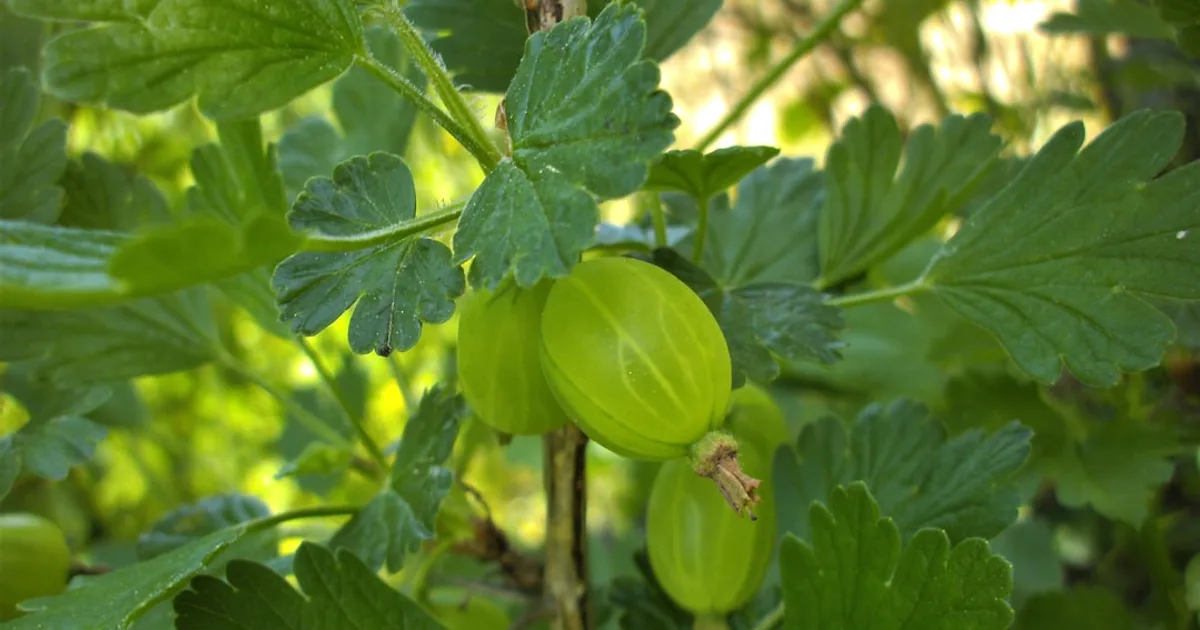
Gooseberry (Ribes uva-crispa) is one of the more productive fruit shrubs available to cold-climate gardeners, capable of returning 4-6 lb per plant annually starting in year two or three. It is also essentially unavailable in US retail - not because there’s no market for it, but because production infrastructure never developed after the same federal restrictions that hobbled currant growing. Plant one now and you’re looking at a 15-20 year producing life from a shrub you can start for $5.
What you’re actually growing
European gooseberry (Ribes uva-crispa) and American gooseberry (Ribes hirtellum) differ primarily in disease resistance. European varieties produce larger, better-flavored fruit - greenish-yellow to red when ripe, up to the size of a small grape - but are susceptible to powdery mildew in humid climates. American varieties are smaller-fruited but carry strong resistance to mildew and are adapted to the disease pressure common in the eastern US.
Hybrid varieties bridge both worlds. ‘Hinnomaki Red’ and ‘Hinnomaki Yellow’ (Finnish breeding) are the most widely grown in North America, offering European fruit quality with acceptable mildew resistance. ‘Poorman’ is an older American-European cross with good flavor and hardiness. ‘Invicta’ is a reliable British variety with mildew resistance.
Shrubs grow 3-5 feet tall and wide and are heavily thorned - wear leather gloves when working in them. They are self-fruitful.
The ROI case
A bare-root plant at $4.99 doesn’t produce a usable harvest in year one. Year two yields a pound or so. By year three, expect 3-6 lb on a well-established shrub (University of Minnesota Extension, Growing Gooseberries and Currants, 2020). At $4-7/lb (USDA AMS Specialty Crop Market News, 2023), that’s $12-42 per plant per year from year three forward. The shrub may produce for 20+ years with annual pruning.
Gooseberries also preserve exceptionally well. Canned or frozen, they retain flavor that makes them useful as a pie filling and sauce ingredient year-round. If you’re valuing your production at the cost of what you’d otherwise buy, frozen gooseberries in specialty stores sell for $8-12/lb when available.
10-Year ROI Projection
This table tracks one plant through its establishment and production ramp-up. Inputs: $4.99 bare-root plant, $10 soil amendment at planting, $2/year in fertilizer, $5/year pruning time valued at minimum wage (prorate as you see fit - actual time is 20 minutes). Pricing at $5/lb fresh (USDA AMS 2023 mid-range for specialty berries).
| Year | Yield (lb) | Gross value | Annual inputs | Cumulative input | Cumulative value | Net cumulative |
|---|---|---|---|---|---|---|
| 0 (plant) | 0 | $0 | $14.99 | $14.99 | $0 | -$14.99 |
| 1 | 0.5 | $2.50 | $7 | $21.99 | $2.50 | -$19.49 |
| 2 | 1.5 | $7.50 | $7 | $28.99 | $10 | -$18.99 |
| 3 | 4.0 | $20 | $7 | $35.99 | $30 | -$5.99 |
| 4 | 5.0 | $25 | $7 | $42.99 | $55 | +$12.01 |
| 5 | 5.5 | $27.50 | $7 | $49.99 | $82.50 | +$32.51 |
| 6-10 | 5.5/yr | $27.50/yr | $7/yr | ~$85 total | ~$220 | +$135 |
Sources: Yield data from University of Minnesota Extension Growing Gooseberries and Currants (2020); USDA AMS Specialty Crop Market News (2023) for pricing.
Break-even arrives in year 4. From year 4 onward the plant returns roughly $20/year in net value with minimal annual investment. A 20-year-producing shrub returns well over $300 in net value on a $15 establishment cost. The economics are similar to currant - the perennial payoff is real, but requires patience through a 3-year establishment period.
Cultivar Comparison
| Variety | Fruit color | Mildew resistance | Cold hardiness | Approximate yield | Notes |
|---|---|---|---|---|---|
| Hinnomaki Red | Red-pink at ripeness | Good | Zone 3 | 4-6 lb/plant | Finnish breeding; best combination of flavor and disease resistance for humid US climates |
| Hinnomaki Yellow | Golden yellow | Good | Zone 3 | 4-5 lb/plant | Similar to Red; richer, sweeter flavor; slightly lower productivity |
| Poorman | Red | Moderate | Zone 3 | 4-6 lb/plant | American-European cross; vigorous grower; reliable under variable conditions |
| Invicta | White-green | Excellent | Zone 4 | 5-8 lb/plant | British variety; highest yield of those listed; good for high-humidity regions where mildew is persistent |
| Pixwell | Pink-purple | Moderate | Zone 3 | 3-5 lb/plant | Small thornless canes make harvest easier; slightly lower flavor quality than Hinnomaki types |
Sources: University of Vermont Extension Small Fruits for Vermont Gardens (2021); University of Minnesota Extension Gooseberry Variety Notes (2020).
For the eastern US where powdery mildew pressure is reliable from late June onward, Hinnomaki Red and Invicta are the defensible choices. For the inland West and Pacific Northwest with lower humidity, European varieties like Captivator and Leveller (not listed above) perform well but are harder to source. Pixwell’s near-thornlessness is worth something if you garden with young children or hate leather gloves.
Growing requirements
Cold hardiness to zone 3, same as currant. Gooseberries bloom early in spring and the flowers can be damaged by late frost - a site with good cold air drainage (avoid frost pockets) reduces this risk. They also tolerate partial shade, which makes them useful in spots that rule out most fruit.
Plant spacing 4-5 feet in rows 8 feet apart for managed production. For backyard planting, 4 feet from other plants gives enough air circulation to reduce mildew pressure.
Soil pH 6.0-7.0. Amend with compost before planting. Gooseberries are moderate feeders - apply a balanced fertilizer in early spring at 0.5 lb per plant, no more. Excess nitrogen produces soft, disease-susceptible growth.
Pruning is annual and mandatory, same as currant. Remove all canes older than 3 years. Aim for an open vase shape with good airflow through the center of the shrub - this is the primary structural defense against powdery mildew.
Pruning by cane age
Gooseberries fruit on 1, 2, and 3-year-old canes. The 2 and 3-year-old canes carry the highest fruit load; the 1-year-old canes are establishing. Your goal is to maintain roughly equal numbers of all three age classes - 3 to 5 canes per age class in a mature shrub.
The practical identification: new canes (year 1) are green to light gray-green and grow from the crown or from the base of existing canes. Second-year canes are darker, slightly woodier, often with more lateral branching. Third-year canes are distinctly dark brown, gnarly, with significant lateral branch structure. Canes older than 3 years are the darkest, have the most complex structure, and should be removed at the soil line.
Annual dormant pruning protocol (late winter before bud swell, or immediately after harvest in late summer):
- Remove all canes at the soil line that are 4+ years old. In practice these are easy to spot: the darkest, most gnarled wood in the shrub.
- Remove dead, diseased, or crossing canes of any age.
- Remove enough remaining canes to open the center of the shrub. Air should move freely through the canopy.
- Retain 4-5 each of 1, 2, and 3-year canes.
- The finished shrub should look open, with visible space between all major canes.
A mature gooseberry that has not been pruned for several years can be renovated over two seasons. In year 1, remove all canes older than 3 years and all dead/diseased wood. The remaining structure may look sparse but it will respond with new growth. In year 2, resume normal age-class pruning. Do not try to renovate the entire shrub in one pass - the fruit production set-back is too significant.
Source: Cornell Cooperative Extension Currants and Gooseberries: Production Guide for the Northeast (2023).
What goes wrong
Gooseberry powdery mildew (Podosphaera mors-uvae) is the most common and damaging problem, coating young shoots, leaves, and fruit with white powder. American varieties and mildew-resistant European cultivars reduce risk. When it appears on susceptible varieties, apply sulfur or potassium bicarbonate fungicide at first sign. Remove affected tissue. The fungus overwinterswithin infected buds, so late-fall pruning of affected growth matters.
Gooseberry sawfly (Nematus ribesii, same species that attacks currant) defoliates quickly. Inspect the interior of shrubs in late spring - the larval feeding starts in the center and works outward. Early detection and spinosad application prevents complete defoliation.
Currant fruit fly (Epochra canadensis) larvae tunnel inside developing fruit, causing premature drop. Adult flies emerge in late spring to lay eggs in young fruit. Remove and destroy dropped fruit. Spinosad applied at bloom provides preventive control.
Birds will harvest your ripe gooseberries faster than you do in many areas. Lightweight bird netting draped over shrubs during the 2-week harvest window is the practical solution.
Harvest and storage
Harvest timing depends on use. For cooking - pies, jams, preserves - pick when the fruit has sized up and turned slightly translucent but before it softens. The tart flavor works in cooked applications and high-pectin underripe gooseberries produce excellent set in jam without added pectin.
For fresh eating, let fruit hang until it softens slightly and the color deepens. Green varieties turn yellow; red varieties deepen to burgundy. At this stage the flavor is sweet-tart rather than purely tart.
Fresh ripe gooseberries keep 1 week refrigerated. Freeze dry on sheet pans for long-term storage. Frozen gooseberries thaw with acceptable texture for cooked applications.
Related crops: Currant, Arugula
Related reading: First Three Years ROI - how to account for a perennial’s production ramp-up in your break-even math
Growing Gooseberry? Track your harvest value and break-even date in the Garden ROI app.
Get the App