
Lemon Verbena
Aloysia citrodora
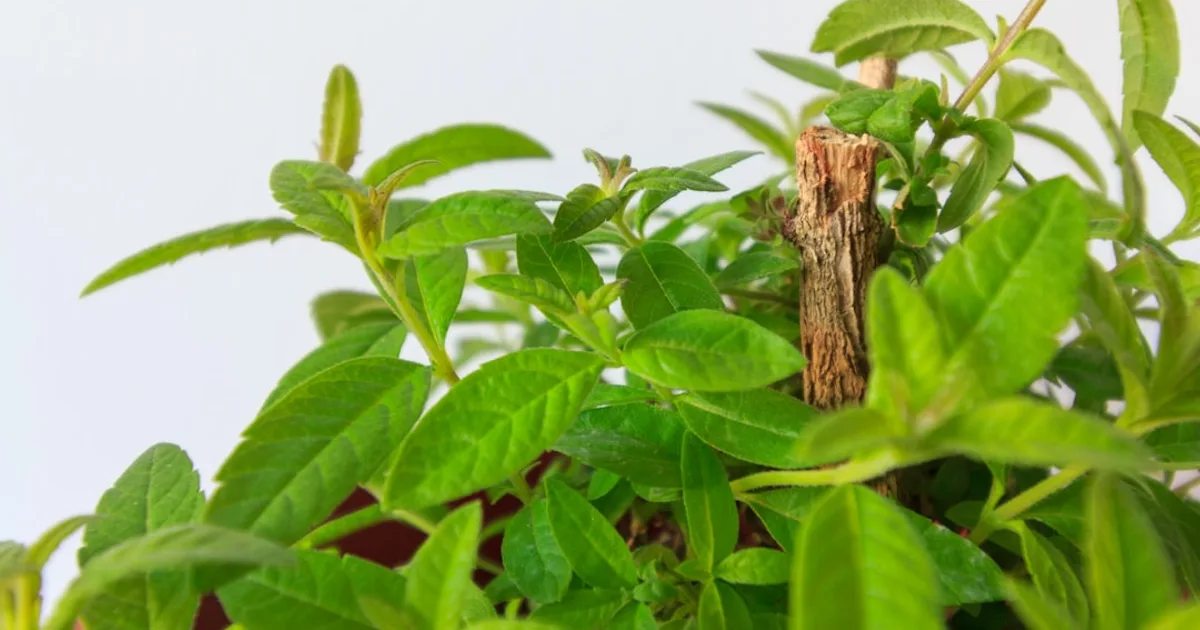
Lemon verbena smells more like lemon than an actual lemon does. The essential oil in its leaves - primarily citral, a compound also present in lemon peel but at far higher concentration in lemon verbena - produces a clean, bright, intensely lemony scent with no bitterness. It’s not a substitution for lemon juice or zest; it’s a different kind of lemon flavor, more perfumed and floral, that does things in cooking that citrus fruit cannot.
Fresh lemon verbena at specialty grocers and herb retailers runs $10-14/lb. Good luck finding it at a conventional grocery store. It’s a container herb in most of the country - tender perennial that overwinters in zones 8-11 but dies to the ground with frost, and in zones 5-7 the plant needs to come inside before hard frost if you want to keep it.
What it actually is
Aloysia citrodora (syn. Lippia citriodora) is a woody shrub in the verbena family (Verbenaceae) native to South America - Argentina and Chile primarily. In its native climate, it reaches 6-10 feet tall and lives indefinitely. In zone 7 and colder, it’s either a container plant or a sacrificial annual.
The lemon scent is primarily citral, which breaks down to geranial and neral, collectively responsible for the lemon character. Citral content in fresh lemon verbena leaves is higher than in lemon peel - the plant registers as hyperbolically lemon-scented to the nose. This makes it one of the most effective lemon-flavored herbs, outperforming lemon balm (Melissa officinalis), lemon thyme, and lemon basil for intensity and cleanliness of flavor.
Lemon verbena doesn’t look like much - narrow, lanceolate leaves on somewhat sparse, woody branches. It’s not ornamental in the way that lavender or basil is. The value is entirely in the leaves.
| Herb | Primary compound | Flavor profile | Heat stability | Growing notes |
|---|---|---|---|---|
| Lemon verbena | Citral (geranial + neral) | Intense, clean lemon | Moderate; some loss | Tender perennial; needs overwintering |
| Lemon balm | Citral + citronellal | Lemon, slightly minty | Poor | Hardy perennial, zones 4-9 |
| Lemon thyme | Citral + thymol | Lemon + thyme character | Good | Hardy perennial, zones 4-9 |
| Lemon basil | Linalool + citral | Lemon + basil character | Poor | Annual, needs heat |
| Lemon zest | Citral + limonene | Bright lemon, slight bitter | Moderate | N/A |
The heat stability comparison matters for cooking applications. Lemon verbena handles moderate heat reasonably well - infusing it in hot cream, adding it early to simmered applications - without the complete volatile loss that lemon basil undergoes. Extended high-heat cooking still degrades the aroma, but it holds up well enough for custards, panna cotta, and sauces cooked briefly.
The ROI case
A containerized lemon verbena plant returns value as both a fresh culinary herb and a dried herb. The dried leaves retain flavor unusually well compared to other lemony herbs, which is part of why it’s used in commercial herbal teas.
A 3-gallon container plant at full size produces 0.25-0.5 lb of harvestable leaf per cutting. Cut by a third, it regrows within 3-4 weeks, allowing multiple harvests per season. A larger pot (5-7 gallon) produces proportionally more.
| Scenario | Container size | Harvests/season | Yield | Value @$12/lb | Input | Net |
|---|---|---|---|---|---|---|
| Zone 8+ perennial, 3-gal | 3 gallon | 3-4 | 0.75-1.5 lb | $9.00-18.00 | $3.49 yr 1, $0 yr 2+ | $5.51-14.51 yr 1, $9-18 yr 2+ |
| Zone 5-7 overwintered container | 3 gallon | 2-3 | 0.5-1.0 lb | $6.00-12.00 | $3.49 yr 1, ~$0 yr 2+ | $2.51-8.51 yr 1 |
| Zone 5 annual (replaced each year) | 3 gallon | 2-3 | 0.5-1.0 lb | $6.00-12.00 | $3.49 | $2.51-8.51 |
In zones 8+, where it can stay outdoors year-round, lemon verbena becomes a low-maintenance perennial that produces indefinitely and appreciates over years as the shrub grows larger. The compounding value here is real.
Dried lemon verbena adds another calculation. Dried lemon verbena leaves used in herbal tea command $8-15/oz at natural food retailers. A half-pound of fresh leaf dries down to roughly 1-2 oz. At $10/oz dried, a single good harvest of fresh leaf represents $10-20 in dried herb value - return of 3-6x the annual seed cost.
Growing requirements
Container culture: lemon verbena is best grown in containers in most of the country. Use a 3-5 gallon container (larger produces larger plants), a well-draining potting mix (a peat-perlite blend or coco coir works well), and a spot that gets full sun.
Light: full sun required for best essential oil production. 6-8 hours minimum. Partial shade produces leggy, less fragrant plants.
Water: allow the top inch of soil to dry between waterings. Lemon verbena doesn’t like constantly wet roots - it’s Mediterranean in its drainage preferences. Established container plants can tolerate brief drought; consistent overwatering causes root rot.
Feeding: moderate feeder. A balanced slow-release fertilizer at the start of the season, plus liquid fertilizer monthly, supports consistent growth. Heavy nitrogen produces lush growth with reduced oil concentration.
Starting: germination from seed is unreliable and slow - lemon verbena is typically propagated from cuttings. Purchase a young plant from an herb nursery or take stem cuttings from an existing plant. A 4-inch stem cutting rooted in moist perlite or a peat-perlite mix roots in 3-4 weeks.
Overwintering in zones 5-7: before first hard frost, bring containers indoors to a cool, bright location (unheated garage with a window, basement with a grow light). The plant will drop its leaves and go dormant - this is normal. Reduce watering to nearly nothing during dormancy; just enough to prevent the root ball from drying completely. In spring, move back outdoors when night temperatures consistently stay above 40°F.
What goes wrong
Leaf drop after moving indoors is normal dormancy behavior, not a sign that the plant is dying. The woody stems remain alive through winter. Resume normal watering and the plant leafs out again in spring.
Spider mites (Tetranychus spp.) are the primary pest concern, particularly on container plants kept indoors or in dry conditions. Fine webbing on leaves is the indicator. Increase humidity around the plant, wash leaves with a strong water spray, or treat with insecticidal soap. Mites thrive in hot, dry conditions; improving humidity reduces pressure.
Root rot from overwatering is a common container plant failure. Ensure containers have drainage holes and that saucers don’t hold standing water. If a plant wilts despite moist soil, check the roots - black, mushy roots mean rot. Treatment requires repotting into fresh mix after removing affected roots.
Whitefly infestations on container plants kept in warm indoor locations. Yellow sticky traps for monitoring; insecticidal soap or neem oil for control.
Harvest and use
Begin harvesting once plants are established and actively growing - 3-4 months after planting. Cut 4-6 inch stem tips, or strip individual leaves from branches. Regular harvesting promotes bushy growth; unpruned plants become leggy with leaves only at the tips.
For maximum oil content and flavor, harvest in the morning after dew dries, before the day heats up.
Fresh storage: lemon verbena wilts quickly once cut. Keep stems in a glass of water at room temperature for up to a week, like cut flowers. Refrigeration can cause blackening.
Drying: bundle loosely and hang in a warm, dry, ventilated location away from direct sun. Lemon verbena retains fragrance much better after drying than most lemony herbs. Dried at low temperature, the leaves keep their bright lemon character for 6-12 months in a sealed jar.
In the kitchen:
- Teas and infusions: fresh or dried lemon verbena makes a clean, bright herbal tea with no astringency. Steep 3-4 fresh leaves (or 1 tsp dried) per cup in just-below-boiling water for 5 minutes.
- Custards and panna cotta: steep leaves in hot cream before straining and setting. The lemon flavor infuses beautifully; this is the application where lemon verbena outperforms lemon zest.
- Ice cream and sorbets: infuse into the base; produces a floral, intensely lemony result.
- Fruit salads: tear fresh leaves over stone fruit (peaches, nectarines, plums) and allow to macerate briefly.
- Cocktails: muddle fresh leaves into gin or vodka drinks; make a simple syrup with fresh leaves.
- Finishing savory dishes: a few fresh leaves torn into a finished pasta with olive oil and shellfish, or onto grilled fish.
- Herb butter: combine with chives and parsley in compound butter for fish and vegetables.
Related reading: Herb Preservation Guide - drying lemony herbs while retaining volatile compounds; Basil - fellow tender herb requiring overwintering or annual replacement
Growing Lemon Verbena? Track your harvest value and break-even date in the Garden ROI app.
Get the App