
Lima Bean
Phaseolus lunatus
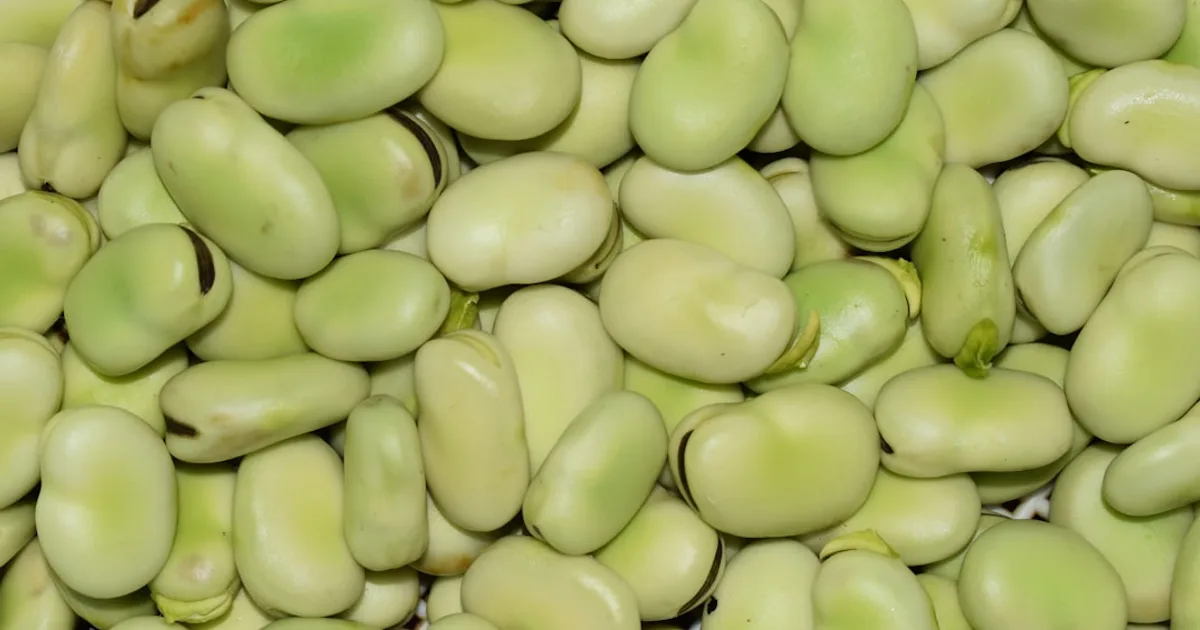
Fresh lima beans (Phaseolus lunatus) are one of those vegetables where growing your own fills a genuine gap rather than just replicating what’s at the grocery store. Outside the Southeast United States, fresh shell limas are nearly impossible to find at retail. The fresh bean market collapsed as processing and freezing became standard. Frozen limas are everywhere. Fresh limas are almost nowhere. That’s your opening.
What it actually is
Lima bean is a warm-season annual legume in family Fabaceae, native to Central and South America. It is a distinct species from the common snap bean (Phaseolus vulgaris) - different genetics, different heat requirements, different temperament. Lima beans need more sustained warmth to set pods than common beans. They stall in cool summers and perform best where temperatures consistently hit 80-90°F through July and August. They are not a cool-season crop by any stretch, and treating them like one is the fastest way to a frustrating season.
The distinction between baby limas and large-seeded types matters practically. Baby limas - also called sieva beans - are small-seeded varieties that mature faster, have thinner skins, and a lighter, more delicate flavor. Fordhook types are large-seeded with a starchy, buttery density. They are not interchangeable in the kitchen. A recipe calling for small creamy butter beans will not be served well by Fordhooks, and the reverse is equally true.
Bush limas reach 18-24 inches tall and need no support. Pole limas run 8-10 feet and need a real trellis, not the flimsy tomato cage stuff - six-foot posts with wire or string every 8 inches. The trade-off is production: pole types yield more per plant over a longer harvest window. Bush types set all their pods over a compressed 2-3 week period, then they’re done.
The ROI case
A $2.99 seed packet covers a 15-20 foot row at standard spacing. From that row you can realistically expect 3 lb of shelled fresh beans from a bush planting, or closer to 4-5 lb from a pole planting given the extended harvest window. The numbers change depending on whether you harvest fresh or let the beans dry on the vine.
The fresh path. Fresh shelled lima beans retail at $3-5/lb where they are sold at all (USDA AMS Specialty Crop Market News, 2024). At farmers markets, where novelty drives pricing and competition is thin, fresh shell limas from large-seeded Fordhook types regularly bring $5-8/lb. They are unusual enough that customers who know what they are will pay for them.
Working the math on fresh harvest from a single $2.99 packet:
- 3 lb shelled fresh at $3.50/lb (conservative retail) = $10.50 return
- 3 lb shelled fresh at $5/lb (farmers market low) = $15.00 return
- 3 lb shelled fresh at $7/lb (Fordhook premium, farmers market) = $21.00 return
Against $2.99 seed cost, even the conservative retail number returns 3.5x your investment. The farmers market Fordhook scenario returns 7x. Saved seed from the largest, best-filled pods means year two costs you nothing.
The dried path. Let the pods brown and dry fully on the vine - 85-95 days depending on variety - and the math shifts. Yield drops by weight (3 lb fresh shell beans dries down to roughly 1.5 lb), but the price per pound for dried limas runs $2-4/lb (USDA ERS retail data, 2024). More importantly, dried beans store a year or more in sealed jars at room temperature. No freezer required.
- 1.5 lb dried at $2.50/lb (commodity dried lima) = $3.75 return
- 1.5 lb dried at $4/lb (specialty dried, direct sale) = $6.00 return
The dried path returns less cash value but offloads the logistical problem of what to do with 3 lb of perishable shelled beans in a two-week window.
Fresh vs. dried comparison
| Factor | Fresh Shell | Dried |
|---|---|---|
| Harvest timing | 75-80 days, pods green and bulging | 85-95 days, pods brown and papery |
| Yield per packet | 3 lb shelled | ~1.5 lb dried |
| Price range | $3-8/lb | $2-4/lb |
| Gross value (3 lb packet, mid price) | $15.00 | $7.50 |
| Storage | Refrigerate 3 days; freeze up to 12 months | Sealed jar, 1+ year, no refrigeration |
| Best market | Farmers market, CSA, home use | Pantry storage, winter cooking |
| Flavor difference | Creamy, starchy, sweet when just-picked | Earthier, slightly denser; rehydrates well |
The practical conclusion: if you have a farmers market slot or a CSA, harvest fresh and price accordingly. If you’re growing for the pantry or want low-maintenance storage, let them dry on the vine. Either path beats the economics of most vegetable crops.
Heat: the non-negotiable
This is where lima bean growing goes wrong for more people than any other single factor. Lima beans need soil temperatures at or above 65°F for reliable germination. They do not tolerate cold soil. Seeds planted in 55°F or 60°F soil will rot before they sprout, or sprout weakly and stall. There is no recovering a lima bean planting from a cold-soil start.
In Zone 5, that means no earlier than late May, typically the last week of May or first week of June after a string of warm days. In Zone 6, mid-May is usually safe if the spring has been warm. Do not go by calendar date alone - use a soil thermometer 2 inches deep, early morning. Wait for a reading of 65°F or better on three consecutive days before you plant.
This is also why lima beans do not get started indoors under most circumstances. Direct sow only. Legumes have root systems that are sensitive to disturbance, and the nitrogen-fixing nodules that form on the roots can be damaged by transplanting. Unless you are using soil blocks and transplanting very carefully into pre-warmed soil, starting limas indoors usually produces no advantage and sometimes causes regression. They germinate quickly in warm soil - 7-10 days - so there’s nothing to gain.
The flip side of the heat requirement is that lima beans actively thrive in summer heat that defeats other crops. When your snap bean planting gives up in the July heat and sets no pods, your limas are just getting started. They set pods most reliably at 80-90°F daytime temperatures. A hot July and August is a feature, not a bug.
Pod set does fail at extremes. When nights stay above 75°F for extended stretches - a common August situation in the deep South - beans abort blossoms. And when daytime temps stay below 65°F through flowering in a cool summer, pods simply don’t form. There’s no spray or amendment for either problem. In a cool-summer year in Zone 5 or 6, your limas may produce a fraction of their normal yield. Choose an early-maturing variety like Henderson (65 days) over Fordhook 242 (75 days) in those climates to improve your odds.
Pole vs. bush
The choice between pole and bush limas changes your work, your timing, and your yield trajectory.
Bush limas set their pods over a concentrated period - maybe three weeks - and then the plant is largely done. This is useful if you want to harvest, shell, and process a batch all at once. It’s also useful if your growing season is tight. Henderson Bush at 65 days is one of the fastest limas available. The trade-off is that once the window closes, it’s closed.
Pole limas start later and produce over a 6-8 week window once they hit their stride. They require a serious trellis - six-foot posts with horizontal supports every 8 inches, or a cattle panel. King of the Garden and Christmas Lima will climb all season. The yield per plant is higher than bush types, and the harvest can be extended by picking regularly to encourage continued pod set.
| Type | Representative Varieties | Days to Maturity | Support Needed | Yield Pattern | Best For |
|---|---|---|---|---|---|
| Bush | Henderson, Fordhook 242 | 65-75 days | None | Concentrated, 2-3 weeks | Batch processing, short seasons |
| Pole | King of the Garden, Christmas Lima | 85-90 days | 6-foot trellis | Extended, 6-8 weeks | Sustained fresh harvest, higher total yield |
For a home garden focused on farmers market sales or fresh eating across the summer, pole limas produce more usable product. For a gardener who wants to put up dried beans or do one big freeze session, bush limas deliver the batch. There’s no wrong answer, only the wrong variety for your intention.
Variety selection
Not all lima beans are the same bean. The variety you choose sets the ceiling on flavor, yield, and market value.
| Variety | Type | Days | Seed Size | Notes |
|---|---|---|---|---|
| Fordhook 242 | Bush | 75 | Large | AAS winner; meaty, buttery texture; the benchmark large-seeded lima |
| Henderson Bush | Bush | 65 | Small | Baby lima type; prolific; thin skin; excellent fresh or frozen |
| King of the Garden | Pole | 85 | Large | Heirloom; exceptional flavor; heavy producer once established |
| Christmas (Speckled) | Pole | 90 | Large | Striking red-speckled seeds; dual-purpose fresh or dried; commands attention at market |
Henderson Bush is the right call if you want maximum production with minimum fuss and a short season. Fordhook 242 is the right call if you want the classic large-seeded lima flavor and you have at least 75 frost-free days after soil reaches 65°F. King of the Garden is the right call if you’re willing to build a trellis and wait - the flavor payoff is real, and the extended harvest suits fresh market sales. Christmas Lima earns its own category because the appearance alone sells it. The speckled burgundy-and-cream seeds stop people at a market table. Grow it as a dried bean and it sells itself.
Growing requirements
Soil pH of 6.0-6.8. Average fertility is fine - overly nitrogen-rich soil pushes foliage growth and delays pod set. Avoid high-nitrogen fertilizers. A low-nitrogen starter (0-10-10) at planting if your soil is poor; otherwise leave the nitrogen to the plants themselves. Lima beans fix atmospheric nitrogen through Rhizobium bacteria in root nodules. Inoculate seed with a legume inoculant before planting, especially in ground that hasn’t grown beans before.
Sow seeds 1 inch deep, 6 inches apart for bush types, 8-12 inches apart for pole types. Direct sow only - no earlier than late May in Zone 5, no earlier than soil reaching 65°F wherever you are.
Water consistently at 1 inch per week through vegetative growth and flowering. Reduce watering after pods begin to fill. Excess moisture during pod fill promotes rot and splits. Lima beans tolerate dry spells better than common beans once established, but yield drops with water stress during active pod development.
Mulch helps regulate soil temperature and moisture - 2-3 inches of straw or shredded leaves around the base once plants are 6 inches tall.
What goes wrong
Mexican bean beetle (Epilachna varivestis) is the primary insect pest. Adults and larvae skeletonize leaves, leaving a papery ghost of the leaf structure. Scout the undersides of leaves for yellow egg clusters and crush them when you find them. Neem oil or pyrethrin-based sprays handle heavy infestations; apply in the evening to reduce impact on pollinators.
Bean beetles feed most aggressively during warm, dry stretches in July. If your limas are defoliated early in the season before pod set, yield loss is serious. Don’t ignore the first signs.
Anthracnose (Colletotrichum lindemuthianum) appears in wet years as dark, sunken lesions on pods and leaves, with pink spore masses in the centers of lesions under humid conditions. It spreads through rain splash and contaminated tools. Plant certified disease-free seed, avoid working plants when wet, and rotate away from any legume ground for two years minimum if you see it. There is no effective organic spray once it establishes; prevention through rotation and seed sourcing is the only real answer.
Incomplete pod fill in cool summers is not a disease. It’s a temperature response. When daytime highs stay below 75°F during the critical pod-fill window, beans simply don’t develop fully. You’ll get pods with one or two undersized seeds instead of the full 3-4. This is an especially common disappointment in Zones 5 and 6 during a cool August. Nothing to spray - choose faster-maturing varieties or accept a reduced harvest. Fordhook 242 in a cold summer in Zone 5 will consistently underperform Henderson, which sets pods 10 days earlier.
Root rot from Rhizoctonia solani or Pythium species develops when seeds sit in cold, wet soil. The seeds decay before they sprout, or sprout and then damp off. Proper soil temperature at planting - 65°F minimum - prevents most of this. If your soil runs wet, amend with compost to improve drainage and wait an extra week before planting.
Harvest and storage
For fresh shell beans, harvest when pods are well filled and bulging, beans are plump inside, but pods are still green and slightly pliable. Once pods begin to yellow, you have crossed into the drying stage - still perfectly edible, just a different product.
Shell by squeezing along the pod seam and popping beans out. Fresh lima beans are best eaten the same day. They deteriorate quickly - the starch-to-sugar conversion that happens after picking is real and fast. Refrigerate up to 3 days. To freeze: blanch 3 minutes in boiling water, cool immediately in ice water, drain, pack in zip bags with air pressed out, freeze. Keeps 10-12 months at 0°F (Penn State Extension, Freezing Lima Beans, 2022).
For dried beans, leave pods on the plant until they are fully yellow, papery, and beginning to rattle when shaken. Harvest before the first frost - lima bean pods shatter when frozen and you will lose your beans on the ground. Spread pods in a single layer in a warm, dry location with good airflow for 1-2 weeks until beans rattle freely. Shell, inspect for any soft or discolored seeds, and store the rest in sealed glass jars. Properly dried limas stored cool and dark keep 1-2 years with no significant quality loss.
One note on saving seed: it is the same operation as saving dried beans. Let your best-looking plants go fully to dry, shell them out, store them in a paper bag or sealed jar labeled with variety and year. Lima beans are self-pollinating and cross-pollination between varieties is relatively rare, so saved seed comes reasonably true.
Related crops: Garden Pea, Green Bean
Related reading: Beginner Homestead Crops - legumes and other crops that double as soil builders
Growing Lima Bean? Track your harvest value and break-even date in the Garden ROI app.
Get the App