
Moringa
Moringa oleifera
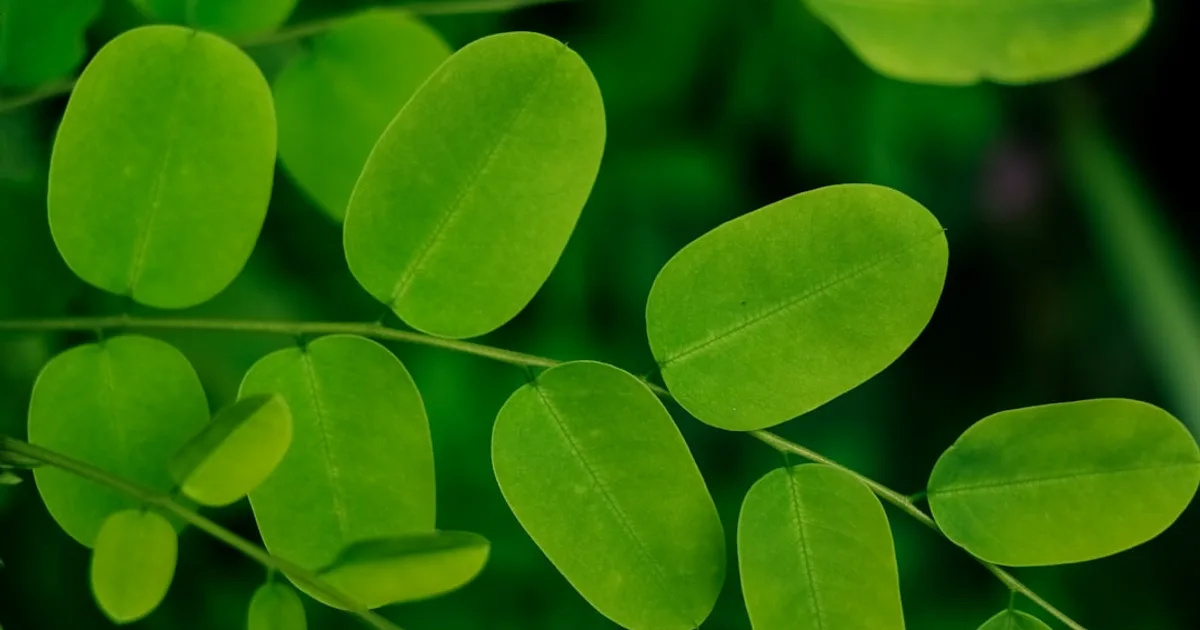
Moringa is a tropical tree where nearly every part is edible and nutritionally exceptional: leaves (fresh or dried to powder), pods (when immature, cooked like green beans), seeds (pressed for oil, roasted like nuts), and flowers (eaten raw or fried). The dried leaf powder - marketed in the US as a superfood supplement - retails for $15-40/lb. The fresh leaves are used daily as a cooking green across South Asia, West Africa, and Southeast Asia.
In zones 9-11, moringa grows as a fast-growing perennial tree reaching 15-30 feet. In colder zones, it can be grown in large containers, managed as a heavy-pruned shrub, or treated as a warm-season annual - cutting the tree to the ground before frost and starting from stored roots or new seed the following spring.
What it actually is
Moringa oleifera is a tree in the monogeneric family Moringaceae, native to northwestern India. It grows remarkably fast - 15-20 feet in the first year in tropical conditions - and tolerates drought, poor soil, and heat that would devastate most trees. It has been used as a food and medicine across South Asia, East Africa, Southeast Asia, and the Caribbean for thousands of years.
The nutritional profile of moringa leaves is unusual. Per 100g fresh weight, moringa leaves contain approximately 9g protein (higher than most vegetables), 2mg iron, 185mg calcium, and significant quantities of vitamins A, C, and B vitamins (Gopalakrishnan et al., Journal of Medicinal Plants Studies, 2016). Dried leaves concentrate these values further.
Edible parts:
| Part | Common name | Use | Notes |
|---|---|---|---|
| Young leaves | Moringa leaves, drumstick leaves | Fresh cooking green, dried powder | Mild, slightly peppery |
| Pods | Drumsticks | Cooked like green beans | Harvest before fibrous (before 12 inches) |
| Seeds (immature) | - | Boiled or roasted | Removed from pods when green |
| Seeds (mature) | - | Oil extraction | 35-40% oil content |
| Flowers | - | Raw in salads, fried | Slightly sweet, honey-mushroom flavor |
The ROI case
Moringa’s value depends heavily on climate zone and how it’s managed.
| Scenario | Yield | Value | Seed cost | Net |
|---|---|---|---|---|
| Annual container (zone 6-7): fresh leaves only | 1-2 lb leaves | $10-20 | $1.75* | $8.25-18.25 |
| Perennial tree (zone 9-11): full production | 5-10 lb leaves + pods | $50-120 | $3.49 | $46.51-116.51 |
| Dried leaf powder (zone 9-11, established tree) | 1-2 lb dried powder | $30-80 | - | High |
*Estimated from $3.49 packet.
For zone 9-11 gardeners, a mature moringa tree producing both fresh leaves and drumstick pods - available at Indian and African markets for $4-8/lb - represents substantial annual production value. For northern gardeners, the value is fresh-leaf access to a crop that’s commercially available only as dried powder.
Growing requirements
Climate: moringa is killed by frost. The minimum safe temperature for outdoor planting is 32°F; sustained cold damages or kills even the roots. In zone 9-11, plant outdoors in the ground. In zones 7-8 with mild winters, a south-facing wall or heavy mulch can protect the roots (above-ground growth dies, roots resprout in spring). In zones 5-6, container culture or annual replanting is the approach.
Annual culture approach (zones 5-7): start seeds 6 weeks before last frost indoors. Transplant after soil warms and last frost has passed. The tree grows extremely fast in warm weather - 6-10 feet in a single season. Harvest leaves continuously through summer and fall. Before first frost, dig the root (the thick taproot stores energy), pot in a container, and overwinter in a warm location. Or simply allow it to freeze and start from seed the following year.
Direct sowing (zones 9-11): sow seeds 1-2 inches deep after soil temperature reaches 70°F. Germination in 7-14 days. Thin to one plant per location.
Soil: remarkably adaptable. Tolerates poor, sandy, rocky soils with low fertility. The only requirement is good drainage - moringa is extremely drought-tolerant but dies in waterlogged soil.
Water: very light once established. Moringa has evolved in drought-prone environments; overwatering is a more common failure than underwatering. In container culture, allow soil to dry somewhat between waterings.
Growing from cuttings (the faster path): moringa grows easily from stem cuttings, and this method skips the slow juvenile phase of seed-started trees. Take hardwood cuttings 18-36 inches long and at least 1 inch in diameter from established plants. Plant directly in well-drained soil, burying 4-6 inches. Cuttings root readily in warm, moist conditions and can produce a harvestable size tree in the first season - faster than seed-started plants by 2-4 months. The limitation is access: you need a friend with an established moringa or a nursery that sells cuttings. In zones 9-11, cuttings taken in late winter root quickly as temperatures rise.
Pruning and coppicing (the cut-and-come-again shrub model): left unmanaged, moringa is a tree - eventually 15-30 feet tall with leaves accessible only to a ladder. The alternative is treating it as a coppiced shrub. Cut the main trunk to 2-4 feet above ground each late winter. The tree responds by sending out multiple lateral branches - 6-12 vigorous new shoots from the cut stump. Each shoot grows rapidly and produces leaves at a harvestable height for the entire season. This coppice model keeps a moringa at 6-8 feet maximum height, increases total leaf surface area per plant, and converts a tree into a manageable continuous-harvest shrub. The productivity is higher than allowing the tree to grow unpruned - more light reaches more leaves, and the fresh growth is more tender. In zones 9-11, coppice in late winter before spring growth begins; in container culture, heavy pruning before bringing indoors for winter accomplishes the same reset.
What goes wrong
Frost damage: the most common failure in zones 7-8. Even in borderline zones, a hard freeze kills the above-ground tree. The thick taproot often survives and regrows, but relies on temperatures staying above 20°F.
Root rot from overwatering or poor drainage is the primary in-ground failure. Moringa roots have limited tolerance for wet conditions even in warm climates. Plant on a slight slope or in raised beds if drainage is questionable.
Spider mites on leaves in hot, dry conditions. Increase humidity around the plant; insecticidal soap.
Slow growth in cool conditions: moringa doesn’t grow aggressively below 70°F. In a cool summer, growth slows. Wait for genuine heat.
Container culture challenges: moringa develops a thick taproot quickly. A container that is too small limits growth severely. Use the largest feasible container (20-25 gallons for a productive tree); pot up annually.
Harvest and use
Leaves: harvest young, tender leaves and leaflets from the growing tips. Strip leaflets from the central stem of each leaf. Both young leaves and mature leaves are edible; young leaves are more tender and less fibrous.
Pods (drumsticks): harvest before 12-14 inches long, when still tender and before the outer skin becomes fibrous. Snap one end to test: if it bends cleanly, it’s still edible; if it’s stringy, it’s too mature.
Fresh leaf preparation: moringa leaves have a mild, slightly peppery flavor - less assertive than most cooking greens. They wilt quickly; use within 2-3 days of harvest.
Drying for powder: spread leaflets on a screen in shade (direct sun degrades heat-sensitive nutrients including vitamin C and some carotenoids). Dry at room temperature for 3-5 days until completely crisp, or dehydrate at 95-105°F for 6-8 hours - keeping below 120°F preserves more of the nutritional value. Grind in a blender or coffee grinder. The result should be a fine, bright green powder. Store in an airtight glass jar away from light; oxygen and UV are the primary degraders. Properly stored dried powder lasts 12-18 months.
Core preparations:
-
South Indian sambar with drumsticks: the classic preparation for moringa pods. Drumstick pieces simmered in toor dal-based broth with tamarind, tomato, and sambar spice blend. The pods don’t taste like green beans - the outer skin is not eaten; you scrape the inner flesh and seeds from the pod with your teeth.
-
Moringa leaf dal (muringayila curry): South Indian preparation. Fresh moringa leaflets added to coconut-based curry with green chili, garlic, and curry leaves. Common in Kerala home cooking.
-
Moringa leaf stir-fry: simplest preparation. Sauté leaflets with onion, garlic, and chili in oil. Season with salt. Served over rice.
-
Moringa powder in smoothies: 1 teaspoon of dried moringa powder added to fruit or vegetable smoothies. The flavor is mild and earthy; easily masked. The nutritional addition is substantial.
Market Value and Premium Positioning
Dried moringa leaf powder is the primary commercial form in the US, sold in the supplement aisle rather than the produce section. Retail pricing runs $15-30 per 8-oz bag ($30-60/lb) at natural food stores and $10-20/lb in bulk from supplement suppliers. The markup is substantial and the product is shelf-stable for 1-2 years when kept sealed and away from light.
Fresh moringa leaves are rarely found outside major cities with South Asian or West African communities. When available at Indian grocery stores, they typically run $4-8/lb for loose leaves, or $3-5/bunch for stem-on leaves. The fresh product commands less than dried powder per pound but requires zero processing.
The restaurant angle: South Indian restaurants, Jamaican or Trinidadian restaurants, and West African restaurants regularly use moringa pods (drumsticks) and leaves as featured ingredients. Fresh drumstick pods sell at Indian grocery stores for $2-4/lb; the same pods sold directly to a restaurant for daily use command a small premium and provide a reliable outlet for excess production. A moringa tree in zone 9-11 can produce 20-50 pods per flush, in 3-4 annual flushes - enough drumstick volume to supply a local restaurant that uses them consistently.
For northern gardeners with container moringa, the realistic market is fresh leaf sales in the growing season. A single large container plant managed with coppicing can produce 3-5 lb of fresh leaves per season, representing $30-75 at specialty market prices. The primary value for northern growers is access to the fresh product at all - not market income.
Related reading: Lemongrass - tropical perennial companion for zone 9-11 gardens; Turmeric - fellow tropical managed as annual in colder zones; Perennial Garden Economy - long-term ROI of perennial food crops
Growing Moringa? Track your harvest value and break-even date in the Garden ROI app.
Get the App