
Pigeon Pea
Cajanus cajan
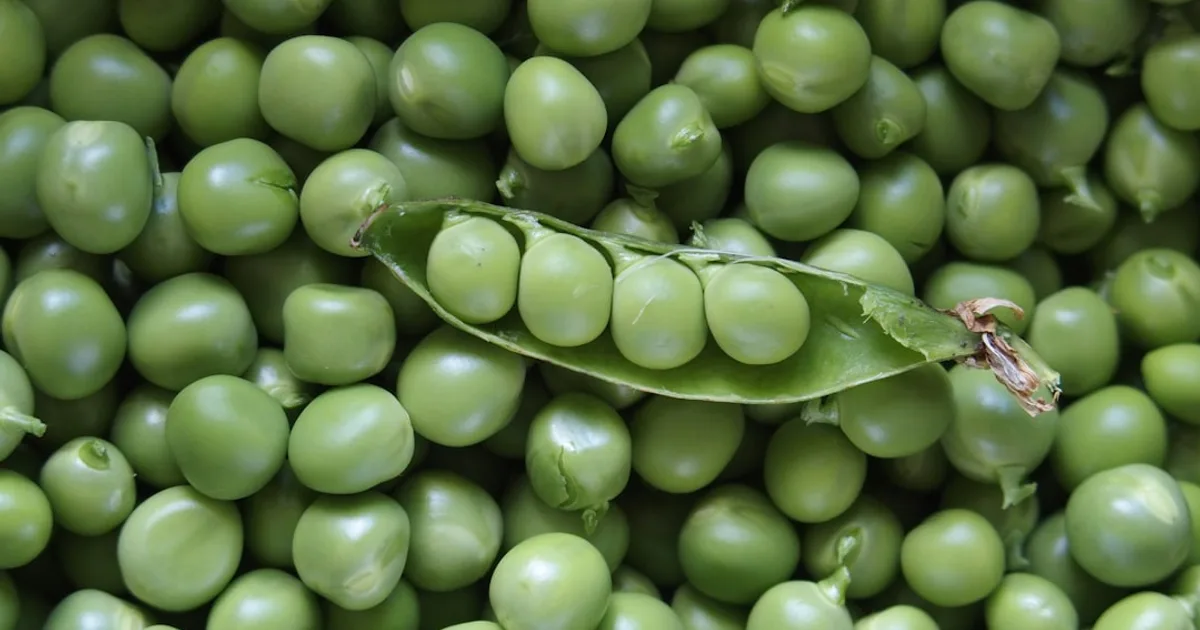
Pigeon pea is one of the most important legume crops in the world - a staple in South Asia, the Caribbean, and sub-Saharan Africa - and it’s almost invisible at US farmers markets and garden centers outside areas with large diaspora communities. At Indian grocery stores, split dried pigeon peas (toor dal or arhar dal) run $3-5/lb and are a pantry staple. Fresh green pigeon peas (hara toor) are rarer and fetch $4-6/lb when available. Dried whole pigeon peas command $3-4/lb. The plant is a deep-rooted nitrogen fixer that tolerates drought, poor soil, and neglect that would kill most vegetables.
In zones 9-11 it behaves as a woody perennial shrub that produces for 3-5 years from a single planting before declining. The perennial plants require no re-seeding, develop deeper root systems with more efficient nitrogen fixation each year, and produce progressively larger yields through their peak years (years 2-4). After 5-7 years, individual shrubs become unproductive and should be replaced; the roots by then have deposited real nitrogen into the surrounding soil. In zones 6-8, treat it as a warm-season annual: start early, give it a full season, and harvest before frost.
What it actually is
Cajanus cajan is a tropical shrub-legume in the family Fabaceae, native to South Asia and domesticated at least 3,500 years ago (van der Maesen, Cajanus DC. and Stylosanthes SW., Wageningen University, 1990). Unlike garden peas or beans, which are annual vines or low bushes, pigeon pea is woody - it forms a shrub 3-8 feet tall in a single season in good conditions. The roots go deep, which is why it tolerates drought but also why it resists transplanting.
Short-duration vs. long-duration types:
The main practical distinction for home gardeners is flowering time. Commercial varieties are bred for either short or long duration:
- Short-duration (120-150 days): bred for intensive agriculture; flowers and sets pods early; best for northern gardens with limited frost-free season. Examples: ‘ICPL 87119’ (Asha), ‘UPL Ps 21’.
- Medium-duration (150-180 days): compromise between yield and season length; appropriate for zones 7-9 with long frost-free seasons. Less commonly sold as named varieties in US seed catalogs.
- Long-duration (180-270 days): higher yield, larger plants, better suited for zones 9-11 where the season allows full development. Often sold generically as “pigeon pea” without variety names at Indian grocery stores (the seeds are viable for planting). If you buy toor dal from an Indian grocery and plant the seeds, you’re likely getting a long-duration variety - fine for zones 9-11, not suited for zone 6-8 gardens.
| Characteristic | Short-duration | Long-duration |
|---|---|---|
| Days to maturity | 120-150 | 180+ |
| Plant height | 3-5 ft | 5-8+ ft |
| Yield | Lower | Higher |
| Best zones | 6-9 | 9-11 |
| Perennial potential | No (annual use) | Yes (zones 9-11) |
Protein content: pigeon peas are 20-22% protein by dry weight - comparable to other legumes, and one of the primary plant protein sources across South Asia, East Africa, and the Caribbean. Globally, pigeon pea is the sixth most important legume crop (FAO, FAOSTAT, 2023). The dietary significance in these cuisines is immense: toor dal (split, hulled) eaten as a daily staple is the rough equivalent of rice in terms of how often it appears at meals in Indian households.
Culinary geography: the same crop appears under different names and preparations across cuisines. In India: toor dal (South Indian), arhar dal (North Indian). In the Caribbean: gandules (Puerto Rican arroz con gandules), gungo peas (Jamaican rice and peas). In East Africa: used whole in stews. Understanding which preparation you’re growing for helps determine which variety and harvest timing to target.
The ROI case
Pigeon pea’s value case rests on three things: dried seed value, fresh green seed value (higher per pound), and nitrogen fixation that benefits subsequent crops.
A 5-foot-wide plant in a full-season zone 7-8 garden produces 1.5-3 lb of dried shelled peas per plant, or 2-4 lb fresh green pods. Multiple plants of short-duration types in a 10-foot row yield correspondingly more.
| Harvest mode | Yield (3 plants) | Value | Seed cost | Net |
|---|---|---|---|---|
| Dried (mature toor dal) | 4-8 lb | $16-40 | $1.50* | $14.50-38.50 |
| Fresh green pods | 6-12 lb | $24-72 | $1.50* | $22.50-70.50 |
*Estimated from $2.99 packet at approximately 6-8 seeds per plant planting.
The nitrogen fixation benefit is harder to quantify but real. USDA research on pigeon pea estimates nitrogen fixation at 40-230 kg/ha per year depending on growing conditions (Peoples et al., Biological Nitrogen Fixation, Springer, 1995). For a home garden bed, this translates to measurably improved fertility for whatever follows in rotation.
Growing requirements
Heat requirement: pigeon pea needs heat, not just warmth. Soil temperature at planting should be 65-70°F minimum. In zones 6-7, this means late May or early June - even later than warm-season crops like squash. The plant establishes slowly in marginal temperatures.
Direct sowing: preferred. Pigeon pea roots are sensitive to disturbance; direct sowing avoids transplant shock. Sow 1-1.5 inches deep, 2-3 feet apart (the shrub gets big). In zones 6-7 with short seasons, a 4-week indoor start in biodegradable pots can add enough season length to matter.
Soil: remarkably adaptable. Pigeon pea tolerates poor, sandy, slightly acidic to neutral soils that would limit most vegetables. It does poorly in waterlogged conditions - good drainage is the one requirement. It does not need supplemental nitrogen fertilization once root nodules establish (use Bradyrhizobium spp. inoculant, same as for cowpeas, if pigeon pea hasn’t been grown in that soil).
Water: moderate until established, then drought-tolerant. The deep root system allows the plant to access subsoil moisture that shallow-rooted crops can’t reach. This makes it useful in drought-prone summer gardens where watering is inconsistent.
Pruning: optional but useful. Pinching the growing tip when the plant reaches 2-3 feet encourages branching and more pod-bearing stems. In perennial zones, hard pruning after harvest encourages fresh growth.
What goes wrong
Short season is the primary failure mode north of zone 8. Long-duration varieties won’t produce a harvest in a 120-day season. Specifically selecting short-duration (120-150 day) varieties is essential for reliable harvest in zones 6-8. Grocery-store toor dal seeds are typically long-duration varieties developed for tropical agriculture - don’t rely on them for northern gardens.
No pods / late pods from improper variety selection or planting too late. If your plants are still flowering in September in zone 7, frost will take them before the pods fill.
Root rot in poorly drained soils, especially if planted in clay with poor structure. Raised beds or berms help in clay-heavy gardens.
Fusarium wilt (Fusarium udum) is the primary disease concern. It causes sudden wilting and yellowing; infected plants die quickly. Rotate pigeon pea on a 3-4 year cycle. No effective home treatment once infected.
Pod borer (Maruca vitrata) is the main insect pest - larvae bore into pods and damage developing seeds. More problematic in humid conditions. Bt spray (Bacillus thuringiensis) applied at first pod set controls young larvae.
Harvest and use
Fresh green harvest: at 90-120 days (short-duration types), when pods are plump and green. The whole pod is not eaten - shell the pods to extract the green seeds, which look like small green peas. They cook in 10-15 minutes and have a denser, earthier flavor than garden peas.
Dried harvest: allow pods to brown and dry completely on the plant. The seeds inside should rattle when you shake the pod. Harvest whole plant branches, dry further in a warm location for 1-2 weeks, then shell by hand or by rolling the dried pods in a sack and threshing out the seeds. To make toor dal (split, hulled pigeon peas), dried seeds need hulling and splitting - a grain mill set loosely accomplishes this, though most home growers simply cook them whole with slightly longer cooking time. Whole dried pigeon peas require an overnight soak and 45-60 minutes of simmering before they’re tender.
Core preparations:
-
Toor dal (South Indian style): simmer 1 cup split pigeon peas in 3 cups water until completely soft (30-45 minutes). Temper: heat oil, add mustard seeds, curry leaves, dried red chili, asafoetida; pour over cooked dal. Season with salt and turmeric. This is the preparation eaten daily across South India, served over rice.
-
Dal makhani variation: whole pigeon peas slow-cooked with black lentils, butter, and cream. Requires overnight soaking and 2-3 hour cooking. The homegrown version has better texture and flavor than canned.
-
Rice and pigeon peas (arroz con gandules): Puerto Rican staple. Fresh or dried pigeon peas cooked with rice, sofrito, tomato, and recao (culantro). The definitive Caribbean preparation; fresh green pigeon peas found locally are a genuine advantage.
-
Pigeon pea soup: standard in West African and Caribbean cooking. Pigeon peas simmered with root vegetables, coconut milk, and scotch bonnet pepper.
Perennial Management in Zones 9-11
In zones where pigeon pea overwinters as a perennial, management changes from the annual approach. After each harvest season, cut the plants back by one-third to one-half to encourage fresh productive growth the following year. The shrubs develop a woody trunk over time; this is normal and doesn’t indicate decline. Prune in late winter before new spring growth begins.
A pigeon pea shrub at year 3 or 4 in zone 10 - well-established, heavily branching, with a developed root system and active nodules - can produce 5-10 lb of dried peas per season. Compare this to the 1.5-3 lb from a first-year planting and the case for the perennial approach in suitable zones is clear. The nitrogen fixation also increases as the root system expands; a well-established perennial patch continuously improves soil fertility in the surrounding area.
In a designed food forest or perennial polyculture, pigeon pea often serves as a pioneer species: planted to fix nitrogen and create canopy, then removed or heavily pruned after 5-7 years when larger overstory trees have established enough to replace it. Its coppice character (resprouting vigorously after cutting) makes it useful as a chop-and-drop nitrogen source in this system.
Related reading: Cowpea - drought-tolerant annual legume companion; Lemongrass - perennial companion for zone 9-11 tropical planting; Perennial Garden Economy - comparing perennial vs. annual crop economics
Growing Pigeon Pea? Track your harvest value and break-even date in the Garden ROI app.
Get the App